Showing posts sorted by relevance for query material. Sort by date Show all posts

BTR's Anode Material Sales Up 17.6% Amid Price Pressures

No comments

Chinese battery material producer BTR reported a 17.6% increase in anode material sales for the first half of 2024, reaching over 200,000 tons compared to 170,000 tons during the same period last year. This growth is attributed to the steady expansion in the lithium-ion battery and new energy vehicle sectors.

Challenges with Revenue and Prices

Despite the rise in sales volume, BTR's revenue from the anode material sector fell by 18.2% to 5.18 billion yuan ($730 million) due to intense price competition. Additionally, revenue from graphite flake materials also dropped by 18.1% to 31 million yuan, reflecting a decline in flake prices.

China's production of new energy vehicles (NEVs) saw a significant increase, totaling 4.929 million units, up 30% from the previous year, with sales rising by 32% to 4.944 million units. The newly installed power battery volume also surged by 33.7% to 203.3 GWh.

BTR is expanding its operations internationally, launching the first phase of its anode material plant in Indonesia on August 7, with a total capacity of 160,000 tons per year. The initial phase has a capacity of 80,000 tons per year. Additionally, BTR began construction of a cathode material plant in Tangier, Morocco, on April 8, with a planned capacity of 50,000 tons per year. The company also plans to build an anode material plant in Tangier, with a designed capacity of 60,000 tons per year.

Shidai Ruixiang Launches LMFP Battery Material Plant in Gansu

No comments
Shidai Ruixiang Launches LMFP Battery Material Plant in Gansu
Baiyin Nonferrous Group

China’s Shidai Ruixiang has launched a new LMFP battery material plant with a production capacity of 20,000 tonnes per year. Located in Baiyin city, Gansu province, this marks the first phase of what will become the world’s largest LMFP facility. Once complete, the site will scale to 100,000 t/yr in lithium ferro-manganese phosphate production for next-generation EV battery applications.

The LMFP battery material plant is operated by Shidai Ruixiang, a joint venture between Gansu Elephent Energy and Baiyin Nonferrous Group, a major Chinese state-owned metals producer. The full project will be developed in three phases, although details for the next stages remain undisclosed. This launch reinforces China’s dominant position in advanced battery cathode material (CAM) supply chains.

China Expands LMFP Footprint in Global EV Market

LMFP materials offer higher energy density and longer driving range than traditional LFP cathodes, while keeping manufacturing costs low. However, they have shorter life cycles and reduced charge-discharge capacity, making them more suitable for mid-range EVs or power tools. Despite this, China’s battery sector is accelerating investment in LMFP research and production.

Other major CAM players such as Hunan Yuneng and Ningbo Ronbay are also expanding LMFP production. Ronbay announced a dual LMFP and sodium-ion CAM plant in Xiantao, Hubei, while Yuneng is constructing a dedicated LMFP facility. These efforts position LMFP as a potential mainstream solution for future battery platforms balancing cost, safety, and range.

Strategic Role of State-Backed Metals Companies in CAM Expansion

The Shidai Ruixiang LMFP battery material plant highlights growing integration between state-backed metals enterprises and energy storage innovation. Baiyin Nonferrous brings decades of expertise in copper and zinc processing—critical metals for battery infrastructure—into the cathode materials space. The partnership reflects China's strategy to leverage existing industrial assets for clean tech scalability.

As battery chemistries diversify in response to cost and performance demands, China’s control over both upstream raw materials and downstream manufacturing provides a distinct competitive edge in the global energy transition economy.


The Metalnomist Commentary

The LMFP battery material plant in Gansu represents a strategic shift toward diversified CAM solutions for scalable EV deployment. As Chinese producers push LMFP into the mainstream, global automakers and battery buyers will need to weigh performance trade-offs against cost and availability.

SUPER METAL PRICE Launches 'The Metals Grade Atlas' eBook: A Definitive Handbook for the Specialty Metals Industry

No comments
'The Metals Grade Atlas' eBook
eBook: 'The Metals Grade Atlas'

An 815-page authoritative guide to titanium, nickel, and iron alloys sets a new global standard in advanced materials selection.

SUPER METAL PRICE, a global intelligence platform specializing in metals markets, has officially released The Metals Grade Atlas, a comprehensive digital reference for high-performance specialty metals used in modern industries.

A Complete Guidebook for Extreme Industrial Conditions in the 21st Century

This 815-page volume presents a systematic overview of materials engineered to withstand extreme environments, including aerospace, power generation, chemical processing, medical devices, and offshore platforms.

The Metals Grade Atlas provides essential data for materials capable of enduring ultra-high temperatures, corrosion, and mechanical stress—such as jet turbine blades operating above 1000°C, or gas turbines in power plants that function under thermal extremes exceeding 1200°C.

Covering the Full Spectrum of Titanium, Nickel, and Iron Alloys

The publication categorizes cutting-edge alloys into three key material families:

◎ Titanium Alloys – Lightweight and corrosion-resistant innovations

  • Core material in aerospace applications for airframes, engine components, and landing gear
  • Exceptional strength-to-weight ratio enhances fuel efficiency and payload
  • Proven durability in chloride- and H₂S-rich offshore environments
  • High biocompatibility and long-term stability for medical implants

◎ Nickel-based Superalloys – Designed to conquer extreme temperatures

  • Resilient beyond 1200°C with excellent thermal and mechanical stability
  • Ideal for turbine blades, combustors, and disks in power generation systems
  • High resistance to creep, oxidation, and thermal cycling in jet engine hot zones
  • Key material in high-temperature petrochemical reactors and heat exchangers

◎ Special Iron Alloys – The structural backbone of industrial infrastructure

  • High-strength steels for shipbuilding, construction, automotive, and renewable energy
  • Covers a wide range from ultra-high-strength to abrasion-resistant grades
  • Enhanced fatigue performance and weldability in marine applications
  • Delivers both weight reduction and crash safety in automotive structures
  • Specialized grades for wind turbine towers and heavy-duty bearings

A Practical Data Library for Industry Professionals

Each alloy in The Metals Grade Atlas includes:
  • Chemical composition and mechanical properties
  • Corrosion resistance and high-temperature performance
  • Fatigue strength and weldability indexes
  • Real-world application examples and selection criteria
  • Cost-performance considerations to support design decisions

Supporting Engineering Decision-Making

Going beyond material specifications, the book offers a structured framework for material selection in actual engineering practice. It assists professionals in benchmarking, processability assessment, and cost-performance analysis to guide optimal alloy choices.

A Strategic Companion for Industrial Innovation

SUPER METAL PRICE stated, "We sincerely hope this publication becomes a trusted and indispensable reference for design engineers, material scientists, and quality professionals striving to make precise, performance-driven, and economically sound material decisions."
The company further emphasized, "This book aims to serve as a compass for understanding, developing, and applying advanced metals in the pursuit of next-generation industrial innovation."

Global Market Insights and Future Outlook

With net-zero targets and energy transitions accelerating worldwide, demand for high-performance specialty metals is rising sharply. Policies such as the EU’s CBAM and the U.S. IRA have further highlighted the strategic value of specialty alloys. Industry experts have praised The Metals Grade Atlas as a long-awaited professional handbook that offers both comprehensive coverage and practical utility in the field.

Publication Details

  • Title: The Metals Grade Atlas (eBook)
  • Publisher: SUPER METAL PRICE
  • Release Date: June 1, 2025
  • Language: English
  • File Size: 12.9MB
  • Length: 815 pages

About SUPER METAL PRICE

SUPER METAL PRICE is a global intelligence platform delivering in-depth analysis and real-time news on the metal markets. Its coverage spans steel, non-ferrous metals, rare earths, and energy-transition materials, with expert insights into pricing trends, tariffs, trade policies, and technical innovations across major regions including the U.S., Europe, China, and India.

Following The Metals Grade Atlas, the company plans to expand its specialty metals portfolio with future publications, including a Rare Earth Handbook and a Recycling Technology Guide.

Contact


This press release is based on publicly available information from SUPER METAL PRICE.

China Anode Material Production Cuts Deepen as Putailai Slows Output

No comments
China Anode Material Production Cuts Deepen as Putailai Slows Output
China Anode Material

China anode material production cuts intensified in 2024 as Shanghai Putailai New Energy reduced both output and sales due to oversupply and price pressure. The firm’s production dropped 18% to 136,707 tonnes, while sales declined 15% to 132,311 tonnes compared to 2023. The decline underscores the challenges faced by China’s battery material producers amid a saturated market.

Delays and Terminations Amid Market Imbalance

Putailai postponed the launch of its Sichuan plant’s first phase due to weak anode prices and funding constraints. Originally slated for December 2024, the 100,000 t/yr capacity line began operation in February. The second phase, also with 100,000 t/yr capacity, is now expected to come online by late 2026. Meanwhile, the company canceled its planned Swedish plant after failing to secure government approval.

Oversupply Challenges China’s Battery Sector

Despite strong EV sector growth, China’s anode material production cuts highlight growing pains in the supply chain. In 2024, China’s production capacity reached 3.5mn t/yr, but only 2.12mn tonnes were produced. Domestic demand stood at 1.83mn tonnes, according to ICC Sino, leaving a large volume of underutilized capacity.

The Metalnomist Commentary

China anode material production cuts reflect deeper structural issues in the battery materials market. Without pricing recovery or export diversification, producers like Putailai may face further consolidation or capacity rationalization.

Uncertainty Looms Over Russian Ferro-Titanium Market Amid EU Sanctions

No comments
Ferro-Titanium (Fe-Ti)

The European ferro-titanium (FeTi) market is facing a period of uncertainty as the EU sanctions on Russian ferro-alloys are set to be fully enforced. Market participants are divided over whether the sanctions will have a lasting impact on Russian FeTi supplies or if the overhang of Russian units in Europe, coupled with low demand from steel mills, will continue to create downward pressure on prices in 2025. A key point of concern is the potential for circumvention, with fears that Russian material may be rerouted or rebranded through non-EU countries.

Legal Framework and Market Response to Sanctions

Under the sanctions, ferro-titanium imports from Russia that were contracted before 19 December 2023 and presented to customs before 20 December 2024 may still enter free circulation within the EU. However, despite the clear framework outlined in Council Regulation 833/2014, uncertainty continues to surround how the market will react once these conditions change.

"Everyone is waiting for 20 December, it seems nobody understands what will happen," commented a European producer. There is significant ambiguity as to how the market will balance the loss of Russian material, particularly in light of high inventories of Russian ferro-titanium already present in warehouses in the Netherlands, Estonia, Latvia, and Germany. Imports in 2024 have already been lower than in previous years, but it remains unclear where the remaining stock will end up, especially as many buyers continue to avoid Russian FeTi.

Trade Dynamics and Impact on the Market

Despite sanctions, imports of Russian ferro-titanium to the EU remained significant in 2024, particularly in Estonia, Germany, and the Netherlands. In fact, Estonian imports in October 2024 reached a 10-year high of 591 tonnes, signaling that sanctions have not entirely stopped the flow of Russian material into the EU. Westbrook Resources, a UK producer, has called for increased vigilance among buyers to ensure they are not inadvertently purchasing smuggled or rerouted material, highlighting the difficulty of tracking the origin of ferro-titanium in the current market environment.

As of 20 December 2024, no fresh Russian ferro-alloys will be allowed into the EU, leading to a projected loss of 766 tonnes per month based on 2023 averages. While EU and UK producers may be able to cover this shortfall with unused capacity, the reduction in available supply is likely to increase demand for raw materials, driving up prices for scrap and raising production costs for ferro-titanium. However, overall demand from steel mills and cored wire manufacturers has been weak, due to an economic downturn and lower steel prices. This will likely temper any significant price increases, though temporary spikes may occur if first-quarter tenders prompt urgent purchases.

Circumvention Risks: Material Rerouting and Relabelling

Despite the official ban on Russian ferro-titanium imports, there are ongoing concerns about circumvention. The EU regulation explicitly prohibits releasing goods if there are grounds to suspect circumvention, but market sources argue that loopholes remain. Materials may be rerouted, relabelled, or blended through countries such as Turkey, India, China, or Kazakhstan, creating a potential grey market for Russian FeTi in Europe. Chinese imports of Russian ferro-titanium have already been on the rise, suggesting that circumvention may already be in play, though Europe has not yet seen significant volumes of these rerouted materials.

Logistics challenges, including the extra costs of rerouting and repackaging, may limit the feasibility of circumvention unless steel prices in Europe increase. Additionally, there are reports that Russian producers may shift to exporting titanium scrap, a material not covered under the EU sanctions. This could provide an alternative route for Russian producers to bypass restrictions, further complicating the market dynamics.

Conclusion

As the sanctions on Russian ferro-titanium fully come into force in December 2024, European market participants remain in a state of uncertainty, unsure of how the market will respond to the loss of Russian material and the potential for circumvention. While EU producers may absorb some of the shortfall with existing capacity, broader market conditions, including weak demand from steelmakers and rising production costs, could create a complex and volatile pricing environment.

China's BTR Expands Global Footprint with New Anode Material Plant in Indonesia

No comments

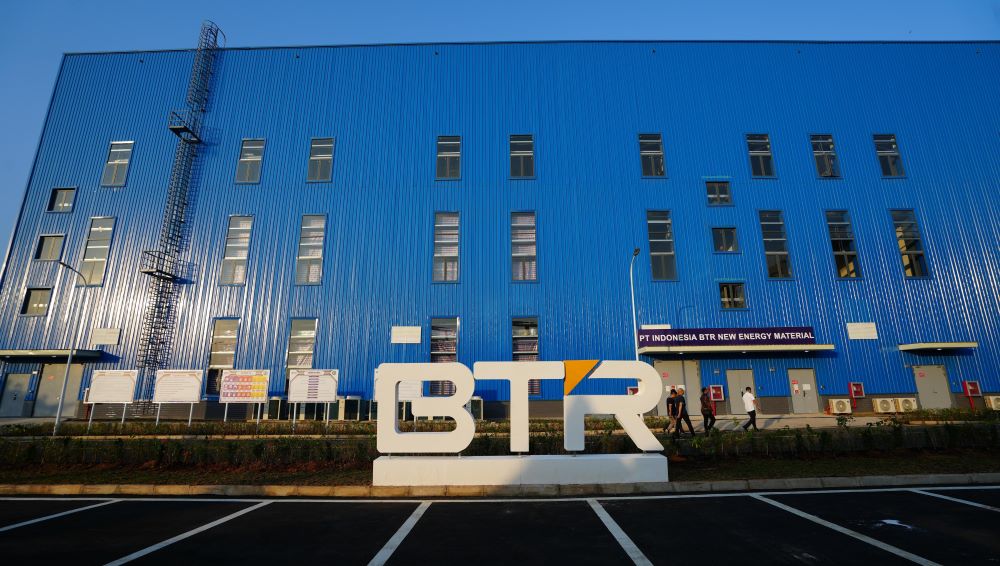
Chinese battery material producer BTR has inaugurated its first overseas anode material plant in Indonesia, marking a significant step in the company’s global expansion strategy. Located in central Sulawesi, the plant is set to bolster the supply chain for lithium-ion batteries across Indonesia and the broader ASEAN region.

The new facility boasts a total production capacity of 160,000 metric tonnes per year (t/yr) of anode material, with the first phase, launched today, contributing 80,000 t/yr. This initial phase required an investment of $478 million, according to BTR Chairman He Xueqin. "The commencement of this plant will fill a crucial gap in anode material production for lithium-ion batteries, not only in Indonesia but across the ASEAN region, strengthening the entire new energy lithium battery industry chain," He stated.

This Indonesian project is BTR’s first operational venture outside of China, but the company is not stopping there. BTR Mediterranean, a subsidiary, broke ground on a new plant in Tangier, Morocco, on April 8th. This facility, designed to produce 50,000 t/yr of cathode materials, represents another strategic move to expand BTR's influence in the global battery materials market, though its commissioning date remains unannounced.

BTR continues to grow its production capacity within China as well. On June 16th, the company launched the first phase of an anode material plant in Lijiang, Yunnan province, which will eventually have a total capacity of 200,000 t/yr. The initial phase, with a capacity of 50,000 t/yr, began construction in May 2022. Additionally, BTR is on track to start production at another anode material plant in Shanxi province by the end of this year, which will add 40,000 t/yr to its capacity.

In 2023, BTR’s overall production capacity for anode materials reached 477,500 t/yr, a 45.6 percent increase from the previous year. The company produced 376,899 tonnes of anode materials in 2023, up 10.7 percent year-on-year.

BTR Expands Anode Material Sales Amid Global EV Demand Surge

No comments
BTR Expands Anode Material Sales Amid Global EV Demand Surge
BTR

Strong Growth in Anode Segment Offsets Cathode Decline

BTR increased its anode material sales in 2024, driven by growth in lithium-ion batteries and new energy vehicles (NEVs). The Chinese battery material firm sold 437,762 tonnes of anode materials last year, up 21% from 2023. This performance reinforces BTR’s leading role in the global anode material market, a critical segment for EV battery production.

However, revenue from anode sales dropped by 13% year-on-year due to intensified price competition and expanded industry capacity. Despite that, BTR’s anode output rose 20% to 453,535 tonnes, supported by its new 50,000 t/yr plant in Dali, Yunnan province.

Overseas Expansion and Cathode Setbacks

BTR expanded globally in 2024, launching an 80,000 t/yr anode facility in Sulawesi, Indonesia, and beginning construction on another plant in Semarang. It is also building an integrated site in Tangier, Morocco, including both anode and cathode material capacity. Meanwhile, cathode material sales dropped sharply by over 50%, falling to just 19,760 tonnes amid fewer orders and tougher pricing.

As a result, cathode revenue plunged 75% and BTR chose not to increase its cathode capacity, which remains at 63,000 t/yr. The company’s graphite flake revenue also fell significantly, down 67%, due to global oversupply and weak prices.

China’s Dominance in Anode Market Continues

China shipped 2.12mn tonnes of anode materials in 2024, making up 96% of global shipments, according to EV Tank. Synthetic graphite accounted for 84% of the Chinese total, underlining its dominance in high-performance EV battery materials. BTR’s growing output and international expansion position it well to benefit from this trend despite ongoing pricing pressures.

The Metalnomist Commentary

BTR's aggressive expansion in anode materials reflects China’s strategic positioning in the EV battery race. However, the sharp cathode decline shows the market's volatility, highlighting the need for margin resilience amid global oversupply cycles.

Easpring Finland CAM Plant Construction to Begin in 2025

No comments
Chinese-Finnish joint venture targets 60,000 t/yr cathode material output by 2027
Easpring Finland

Chinese-Finnish joint venture targets 60,000 t/yr cathode material output by 2027

Easpring Finland launches €800mn CAM plant project

Easpring Finland CAM plant construction will begin in April 2025, targeting commercial operations by 2027. The joint venture includes Beijing Easpring Material Technology (70%) and Finnish Minerals Group (30%). This facility will supply cathode active material (CAM) for electric vehicle batteries and other energy storage systems. As a result, Finland continues to solidify its role in Europe's battery supply chain strategy.

The initial production capacity will reach 60,000 t/yr, with scalability for future expansion.
This aligns with Finland’s ambition to become a sustainable battery materials hub in northern Europe.

Finnish government backs project with €100mn investment

The total project cost is €800mn, with Finland contributing €100mn via its state-owned entity Finnish Minerals Group. This support highlights the country’s industrial policy focus on energy transition and raw material self-sufficiency.

Meanwhile, Beijing Easpring brings proven CAM manufacturing expertise to the partnership, ensuring production readiness by 2027. This collaboration is one of several European initiatives aiming to localize critical battery material manufacturing.

The Metalnomist Commentary

The Easpring Finland CAM plant reflects a broader shift toward cross-border industrial cooperation in the battery sector. By merging Chinese know-how with Finnish resources and EU policy support, this project could reshape CAM supply in Europe. It also reflects a growing preference for diversification away from Asia-only supply chains.

US Critical Mineral Processing Funding Targets Domestic Battery Supply Chain

No comments
US Critical Mineral Processing Funding Targets Domestic Battery Supply Chain
Critical Mineral

US critical mineral processing funding is moving into another major round as the Department of Energy prepares to allocate up to $500mn for processing, recycling, and derivative battery manufacturing projects. The funding opportunity is designed to support US-based projects that can strengthen domestic supply of critical minerals and battery materials.

The Department of Energy will target projects that process raw feedstocks, recycle critical materials, or manufacture battery materials and components. The agency specifically identified battery-related materials such as lithium, graphite, nickel, copper, and aluminum among its areas of focus.

US critical mineral processing funding is becoming a central tool in Washington’s effort to reduce dependence on offshore refining and battery material supply chains. The latest funding round also shows that the US is not only focused on mining, but on the midstream capacity needed to convert raw materials into usable industrial inputs.

DOE Funding Pushes Midstream Capacity Beyond Mining

Critical mineral processing remains one of the most difficult gaps in the US battery supply chain. Mining projects can expand raw material availability, but domestic industrial resilience depends on refining, chemical conversion, recycling, and component manufacturing.

The new funding opportunity will support projects that can process critical minerals from raw feedstocks and recycle valuable materials back into the supply chain. This approach reflects the growing importance of black mass, scrap, and secondary materials as strategic inputs for battery production.

DOE battery materials funding also gives policy support to companies working across lithium chemicals, graphite processing, nickel products, copper materials, aluminum inputs, and battery component manufacturing. These segments are essential for electric vehicles, grid storage, defense electrification, and industrial energy systems.

Battery Manufacturing Policy Enters Third Funding Round

The latest funding notice marks the third round in recent years under the DOE’s battery materials processing and battery manufacturing and recycling programs. In September 2024, the agency selected 25 projects to receive more than $3bn to expand domestic battery, component, and critical material supply.

The new $500mn opportunity extends that policy direction. It gives the US another mechanism to move from strategic mineral rhetoric toward physical processing capacity, especially in areas where China still dominates global refining and battery material production.

Applicants must submit non-binding letters of intent by 27 March, with full applications due by 24 April. The timeline signals that the DOE wants near-term project visibility and a faster pipeline of investable domestic capacity.

US critical mineral processing funding will be especially important for companies that can prove commercial readiness, feedstock security, and scalable production. The strongest projects will likely be those that connect raw material access with downstream battery customers and recycling loops.

The Metalnomist Commentary

The US is now treating processing capacity as the real bottleneck in critical minerals security. Funding can accelerate projects, but the strategic test will be whether supported companies can deliver cost-competitive, qualified material at industrial scale.

China’s CNGR Launches CAM Precursor Production in Morocco to Expand Global Battery Supply Chain

No comments
CNGR Advanced Material

CNGR Advances Lithium-Ion Battery Materials Production in Africa

China’s leading lithium-ion battery cathode active material (CAM) precursor manufacturer, CNGR Advanced Material, has officially started production in Morocco. On January 23, the company launched its first batch of ternary precursor production lines, strengthening its global presence in the battery material supply chain.

Strategic Partnership and Project Scope

CNGR has partnered with Moroccan private investment fund Al Mada to develop the project. The joint venture, formed in 2023, aims to produce lithium-ion battery ternary CAM precursors, lithium iron phosphate (LFP), and recycle black mass from used batteries. CNGR’s subsidiary, CNGR Morocco New Energy, holds a 50.03% stake, while Al Mada’s subsidiary, NGI, owns 49.97%.

The production plant boasts an annual capacity of 120,000 tons for CAM precursors, 60,000 tons for LFP, and 30,000 tons for black mass recycling. The facility is a key step in CNGR’s plan to establish a fully integrated industrial park with a 70GWh/year battery material production capacity, which could support over one million electric vehicles.

Commitment to Sustainability and Renewable Energy

CNGR aims to achieve 100% renewable energy utilization by 2026 at its Moroccan site, significantly reducing its carbon footprint. By prioritizing local renewable energy sources, the company seeks to align with global sustainability goals and contribute to a greener battery supply chain.

Global Expansion and Market Reach

The project's output will supply markets in Europe, the United States, and other global new energy sectors. Morocco has become a strategic hub for Chinese battery manufacturers, with other key players such as BTR also developing anode material plants in the country. This expansion highlights Morocco’s growing role in the global electric vehicle (EV) battery ecosystem.

European Stainless Tube Trade Shifts as Policy, Imports and Data Centres Reshape Demand

No comments
European Stainless Tube Trade Shifts as Policy, Imports and Data Centres Reshape Demand
European Stainless Steel

European stainless tube trade is entering a more selective phase as producers defend margins through higher-value applications, tighter specifications and regional supply advantages. The market remains stable, but it is no longer driven mainly by volume growth.

European stainless tube trade is being reshaped by three forces at once. Imports continue to pressure commodity and process pipe segments. Policy measures such as CBAM and revised safeguards are changing cost structures. At the same time, automotive exhaust demand is declining as electrification advances.

Speakers at SMR’s Stainless Steel Tube and Pipe Market Insights Day in Dusseldorf said Europe is behaving like a mature and cyclical market. Asia remains the main centre of stainless steel consumption and commodity production, while Europe depends more on technical applications, certification and regulatory positioning.

European stainless tube trade is therefore moving away from simple price competition. Producers are increasingly competing on quality, traceability, sustainability, lead times and the ability to serve complex end uses.

Italy-based Marcegaglia Specialties said traditional sectors such as construction, energy, oil and gas, automotive, water and food processing remain the backbone of demand. However, the next stage of competition will depend more on sustainability and product complexity than on basic market expansion.

CBAM and Import Pressure Are Regionalising Stainless Tube Supply

European stainless tube trade is becoming more regional because policy and geopolitics are increasing the value of local supply. CBAM, revised safeguard measures and wider instability are pushing buyers to look more carefully at origin, emissions, delivery risk and compliance.

European producers already operate inside the EU regulatory framework. This gives them an advantage in some higher-value applications where customers require reliable documentation, stable quality and shorter supply chains.

But the policy environment is not simple. Some industry speakers warned that CBAM could become more protectionist than environmental if it raises costs for European downstream processors without fully addressing import competition.

This concern is especially relevant for stainless tube makers. They buy input material under EU cost structures, but still compete with imported finished or semi-finished products in certain market segments.

OSTP chief executive Andrea Gatti argued that CBAM and revised tariff-rate quotas are creating a difficult environment for downstream processors. He said the measures can raise raw material costs for European producers while leaving import pressure unresolved in some product categories.

One concern is the way carbon steel and stainless steel products remain grouped in some quota categories. This can obscure the real level of import pressure in specific stainless segments.

The issue is most visible in process pipe. Overall import penetration in European welded stainless pipe may look moderate, but import pressure is much stronger in process pipe than in automotive or structural applications.

Some imported process pipe is arriving at prices close to European producers’ raw material costs. This creates a serious margin problem for EU producers, especially when they must meet higher regulatory, labour and energy costs.

Asian imports are particularly competitive in pipe and fittings made to ASTM specifications. Around 15-20% of the European market still requires ASTM-based products, often because older engineering standards and end-user specifications remain in place.

This creates an opening for Asian suppliers. Many have long experience producing ASTM-based products and can compete aggressively in segments where buyers focus mainly on price and basic compliance.

Asian producers are also becoming more capable of supplying European-standard material. However, some barriers remain. Hot-rolled feedstock availability, customer qualification and more complex technical requirements still protect parts of the European market.

CBAM adds another layer of uncertainty. Importers and buyers still lack full visibility on the actual carbon values that overseas suppliers will declare. Some emissions disclosures remain incomplete or unreliable.

This creates pricing uncertainty. If importers use default emissions values, CBAM costs may rise sharply. If suppliers provide certified actual data, costs may be lower. But the market does not yet know which overseas suppliers can verify emissions credibly.

For European producers, this uncertainty is both an opportunity and a risk. It may make some imports less attractive, but it also complicates raw material sourcing and customer negotiations.

The broader result is regionalisation. Buyers are increasingly weighing whether cheaper imported material is worth the compliance, delivery and emissions risk. European producers can benefit if they turn regulation into a trusted supply advantage.

However, they cannot rely on regulation alone. Imports will continue to pressure standard grades and process pipe where price remains decisive. Europe’s defence must therefore come from technical capability, service and qualification depth.

Automotive Decline and Data Centres Redefine Growth Applications

European stainless tube producers also face structural demand change in automotive applications. Exhaust-related stainless tube demand is declining as electric vehicle adoption reduces the long-term need for combustion engine systems.

German tubemaker Schoeller Werk said about 40% of its business is still linked to automotive. Around 95% of that automotive exposure is tied to combustion engine applications.

This creates a clear transition risk. Combustion engine exhaust systems have historically used stainless tube because of heat resistance, corrosion performance and durability. Electric vehicles remove much of that demand.

Industry speakers described this shift as irreversible, even if the speed varies by region. Combustion vehicles may remain relevant for some years, but the structural direction is clear.

Marcegaglia also described the shift away from combustion-engine vehicles as a trend that stainless tube producers must manage. The market cannot assume that traditional automotive exhaust demand will return.

This forces producers to find new growth areas. Data centres emerged as one of the clearest near-term opportunities during the Dusseldorf discussions.

Data centre stainless demand is growing because cooling systems are becoming more important. AI workloads, higher server density and larger hyperscale facilities require more advanced thermal management.

Stainless tubes can be used in cooling circuits, heat exchangers and wider water infrastructure. These applications often require corrosion resistance, reliability and long service life.

Gatti said the strongest opportunity may not only sit in outer water infrastructure. Inner cooling circuits also present growth potential as specifications increasingly exclude carbon steel and favour copper or stainless steel.

Copper’s high price is helping stainless steel compete. In some data centre applications, stainless can win substitution from copper on cost grounds while still meeting performance requirements.

This creates a valuable opening for European producers. Data centres are not only a volume market. They require quality, traceability, reliability and tight specifications, which fit Europe’s competitive strengths.

However, Asian competition remains a threat. If data centre projects are specified to ASTM standards, Asian suppliers may still compete strongly. This means European producers need early involvement in specifications and project qualification.

Other higher-value markets may also support growth. Specialist energy systems, premium process pipe, food processing, water treatment and industrial heat exchangers all require more complex tube products.

The key difference is that these markets reward performance rather than only price. European producers are better positioned when customers value certification, documentation, short lead times, sustainability and technical support.

This is why Europe’s competitive advantage increasingly lies in complexity. Producers cannot win every commodity segment against lower-cost imports. But they can defend and grow in applications where failure risk, qualification standards and technical requirements matter.

The next decade will likely reward producers that invest in advanced materials and difficult applications. This includes higher corrosion resistance, special dimensions, better surface quality, stronger traceability and lower-carbon documentation.

Policy could help if it is implemented carefully. CBAM and safeguards may support regional supply, but they must avoid damaging downstream processors through higher input costs or poorly designed quota structures.

The real test for Europe is execution. Producers must turn sustainability and regulation into commercial value, not only compliance costs. That means proving lower carbon intensity, shorter logistics chains and stronger product reliability.

European stainless tube trade will therefore become more segmented. Commodity and ASTM process pipe will remain import-sensitive. Automotive exhaust demand will decline. Data centres and complex industrial applications will become more important.

For producers, the strategy is clear. Europe must compete where technical standards, certification, sustainability and customer proximity matter most.

The Metalnomist Commentary

European stainless tube producers are being pushed out of low-margin commodity competition and into higher-specification markets. The winners will be companies that convert regulation, traceability and technical complexity into pricing power, especially in data centres, energy systems and premium process pipe.

China's Putailai Cancels Sweden Battery Anode Project Amid Regulatory Hurdles

No comments
Shanghai Putailai

Chinese battery anode material manufacturer Shanghai Putailai has announced the termination of its planned battery anode material project in Sundsvall, Sweden, after failing to secure approval from the Swedish government. The decision, disclosed on December 19, follows extensive regulatory reviews and negotiations regarding investment conditions.

The project, initially designed to have a production capacity of 100,000 tonnes per year (t/yr), was expected to roll out in two phases: 50,000 t/yr by 2025, followed by another 50,000 t/yr by late 2026 or early 2027. Putailai had earmarked a maximum investment of 15.7 billion Swedish kronor ($1.4 billion) for the venture, which was part of its broader strategy to expand outside of China.

Regulatory Hurdles and Project Termination

Putailai’s foreign direct investment (FDI) declaration was submitted to Sweden’s Strategic Products Supervision Bureau in February 2024, with an official review beginning in June 2024. However, on December 3, the Swedish government imposed conditions regarding equity control, management composition, intellectual property rights, and corporate supervision for Putailai’s Swedish subsidiary, Zichen Sweden.

After failing to reach an agreement on these terms, Sweden ultimately rejected Putailai’s investment application, though specific reasons were not disclosed. The company had already invested 14 million yuan ($1.9 million) in a feasibility study, though it noted that this cost would not impact its operations.

Expanding Anode Production in China Amid Western Setbacks

Despite the setback in Sweden, Putailai remains committed to increasing its anode material production capacity. The company reported 68,197 tonnes of anode material sales in H1 2024, marking a 24% year-on-year increase. It currently operates 150,000 t/yr of total capacity and is constructing an additional 100,000 t/yr plant in Qionglai, Sichuan province, set to launch by the end of December.

Several Chinese battery material firms, including Shanshan, have sought expansion into Europe, with Shanshan planning a 100,000 t/yr anode production complex in Finland to cater to overseas demand. However, geopolitical uncertainties and economic challenges have created obstacles for Chinese firms seeking foreign investments and partnerships.

Lopal and Cornex Sign Landmark LFP Supply Deal to Strengthen China’s Battery Chain

No comments
Lopal and Cornex Sign Landmark LFP Supply Deal to Strengthen China’s Battery Chain
Lopal

Strategic Agreement Secures 150,000t of LFP Through 2029

Lopal and Cornex have signed a major lithium iron phosphate (LFP) supply deal, securing 150,000 tonnes of LFP cathode active material over five years. The Focus Keyphrase "LFP supply deal" reflects a growing trend of long-term procurement strategies across the EV battery value chain.

Under the agreement, Jiangsu Lopal will deliver LFP to three Cornex subsidiaries in Wuhan, Xiaogan, and Yichang between 2025 and 2029. The deal is valued at over 5 billion yuan ($694 million), marking one of China’s largest bilateral LFP commitments to date. This collaboration comes as LFP demand surges in both domestic and export EV markets.

Lopal Expands Production Footprint Across China and Indonesia

Lopal has rapidly scaled its LFP production capabilities following its acquisition of the LFP business from Shenzhen BTR New Energy Material. It now operates multiple LFP plants across Jiangsu, Shandong, Tianjin, Sichuan, and Hubei, giving it geographic reach and production redundancy.

In 2024, Lopal’s LFP output surged to 184,697 tonnes, a 56% increase from the previous year, with sales rising 65% to 178,287 tonnes. Lopal has also begun overseas expansion, completing the first 30,000 t/yr phase of an Indonesian plant, with a second 90,000 t/yr phase in planning. These moves position Lopal as a global LFP leader with diversified supply capabilities.

Term Contracts Signal Confidence from Global OEMs

Lopal has not only secured deals with domestic players but also signed term supply contracts with Ford and LG Energy Solution. These partnerships highlight Lopal’s growing credibility in supplying high-volume, high-quality LFP material for global EV platforms.

Meanwhile, Cornex—formally Chuneng—is increasing battery production in central China, supported by reliable LFP sourcing. The LFP supply deal ensures material stability for future gigafactory-scale battery production, a critical factor amid rising input volatility and tightening market conditions.

The Metalnomist Commentary

The LFP supply deal between Lopal and Cornex reflects the tightening integration of China’s battery supply chain, with long-term contracts emerging as a buffer against future material risk. As global automakers seek cobalt-free alternatives, LFP’s role will only grow, and producers like Lopal are positioning themselves at the center of this transition.

US Vanadium Pentoxide Purchase Signals Stronger Defense Support for Aerospace Supply

No comments
US Vanadium Pentoxide Purchase Signals Stronger Defense Support for Aerospace Supply
US Vanadium

The US vanadium pentoxide purchase marks a strategic move to strengthen aerospace materials security. The Defense Logistics Agency plans to buy high-purity V2O5 from US Vanadium and Largo through five-year fixed-price contracts. These materials are intended for aerospace applications. As a result, the US vanadium pentoxide purchase supports both defense readiness and supply chain stability.

This decision matters because vanadium processing capacity remains limited in the United States. US Vanadium is the only at-scale domestic producer of aerospace-qualified V2O5. Largo also plays a major role as a leading supplier of aerospace-grade material to the US market. Therefore, the US vanadium pentoxide purchase reflects a targeted effort to secure trusted suppliers.

The scale of the tender also shows seriousness of intent. The DLA initially sought up to 2,876 metric tonnes of V2O5. That is not a symbolic procurement action. Consequently, the contract structure suggests the government wants predictable supply rather than spot-market exposure.

Aerospace Grade V2O5 Is Becoming a Strategic Material

Aerospace grade V2O5 is now being treated more clearly as a strategic material. High-purity vanadium pentoxide supports aerospace applications that require strict quality standards and reliable sourcing. That makes supplier qualification just as important as simple volume availability. As a result, the government is focusing on producers that already meet aerospace-grade requirements.

The supplier mix also highlights how narrow this market remains. US Vanadium provides domestic refining strength through its Arkansas flaking plant. Largo adds supply from its Maracás Menchen operation in Brazil. Therefore, the US vanadium supply chain still depends on a combination of local processing and allied foreign production.

That dependence helps explain the fixed-price structure. Long-term contracts can reduce uncertainty for both buyers and producers. They can also help keep strategic capacity alive in markets where pricing volatility and trade disruption create operating stress. Consequently, the DLA appears to be using procurement as an industrial policy tool.

US Vanadium Supply Chain Still Faces Fragility

The US vanadium supply chain remains fragile despite this support. The DLA noted that Largo faces financial pressure and could be at risk of failure for reasons beyond its control. That warning is important because it shows supply security cannot be assumed even when qualified producers exist. Therefore, the procurement effort is also a stabilization measure.

Trade policy has already added pressure to the market. Largo previously delayed and defaulted on some vanadium shipments to US customers because of tariffs on Brazilian imports and liquidity challenges. That combination of trade friction and financial strain shows how quickly critical mineral supply can weaken. As a result, the US vanadium pentoxide purchase may help prevent a deeper break in supply continuity.

The broader lesson is clear. Defense supply chains need more than access to raw materials. They need qualified processing, financially viable producers, and predictable contract support. Consequently, this V2O5 procurement may become a model for how the US handles other specialty minerals with narrow supplier bases.

The Metalnomist Commentary

This is more than a routine procurement contract. It is a reminder that critical minerals security often depends on keeping a very small number of qualified producers alive. In vanadium, the challenge is not just finding material. It is preserving the industrial capability to deliver aerospace-grade material consistently.

Japan Tungsten Plant to Cut Sumitomo Electric’s Reliance on China

No comments
Japan Tungsten Plant to Cut Sumitomo Electric’s Reliance on China
Sumitomo Electric

Japan tungsten plant investment by Sumitomo Electric Industries will expand domestic tungsten powder capacity and strengthen Japan’s critical mineral supply chain. The company plans to build a new facility in Toyama city with about ¥15.9bn, or $100mn, in investment.

The new plant will be operated by group company Allied Material and is scheduled to start operations in the first half of fiscal 2028. Sumitomo Electric said the project will expand its tungsten supply capacity by around 50%.

Japan tungsten plant development matters because tungsten is essential for cemented carbide cutting tools, semiconductors, electronic components and advanced industrial manufacturing. The investment also reflects Tokyo’s wider effort to reduce exposure to China-dominated critical material supply chains.

Tungsten Powder Capacity Supports High-End Manufacturing

The Toyama facility will expand production capacity for tungsten powder near Sumitomo Electric’s existing plant. The company has not yet disclosed the precise capacity of the new line.

Tungsten powder is a key input for cemented carbide tools used in metal cutting and precision machining. These tools support automotive, aerospace, electronics, machinery and industrial equipment production.

The material also has strategic relevance in semiconductors and electronic components. This makes tungsten more than a tooling metal; it is part of the materials base behind advanced manufacturing and technology supply chains.

Japan Backs Domestic Recycling and Supply Security

The Japanese government will cover about ¥7.5bn of the investment through a subsidy aimed at securing critical mineral supply chains. This public support shows that tungsten is now treated as a strategic industrial material.

Global tungsten supply remains heavily dependent on China. Sumitomo Electric said it currently relies on China for about 30% of its tungsten imports.

The new Japan tungsten plant will help the company strengthen its domestic recycling system and gradually reduce that dependence. Recycling will be especially important because secondary tungsten can improve supply resilience without relying only on new mined material.

The Metalnomist Commentary

Sumitomo Electric’s investment shows that tungsten security is becoming a manufacturing competitiveness issue. Japan is not only adding capacity; it is building a recycling-backed buffer for cutting tools, semiconductors and advanced components.

Syrah Graphite Offtake Supports Non-China Anode Supply Chain Strategy

No comments
Syrah Graphite Offtake Supports Non-China Anode Supply Chain Strategy
Syrah resources

Syrah graphite offtake plans with NextSource Materials could strengthen non-China graphite supply routes for battery anode production. The Australian producer may sell 34,000-68,000t of natural graphite fines over seven years, subject to commercial production at NextSource’s planned Abu Dhabi anode material plant.

The Syrah graphite offtake agreement depends on several conditions. NextSource has not yet made a final investment decision on the Abu Dhabi project, and both NextSource and its customers must approve the use of Syrah’s graphite fines. This makes the deal strategically important, but still dependent on qualification, financing, and project execution.

Syrah will supply the material from its Balama graphite mine in Mozambique. The mine produced 34,400t of natural graphite in October-December 2025, up from 25,700t in the previous quarter and no production a year earlier.

Balama Graphite Gains Value as Buyers Seek Supply Diversity

Balama graphite is becoming more important as battery supply chains seek alternatives to China-linked material flows. Syrah said the NextSource agreement prices Balama graphite at a premium to market indices, suggesting that qualified non-China supply is gaining strategic value.

Syrah’s average realised graphite price, including fines and coarse flakes, rose by 11pc year on year to $506/t fob Nacala in October-December 2025. Higher realised pricing supports the company’s effort to rebuild sales momentum after production interruptions and weak market conditions.

The deal also fits Syrah’s long-standing plan to increase graphite sales outside China. The company signed a six-year offtake agreement with South Korean producer Posco in 2024 and agreed to supply graphite to US producers Graphex Technologies and Westwater in 2023.

Graphite Trade Restrictions Increase Supply Chain Urgency

Graphite is moving deeper into the critical minerals policy debate because it is essential for lithium-ion battery anodes. China remains dominant in graphite processing, so automakers, battery makers, and governments are trying to develop alternative sources of feedstock and anode material production.

NextSource’s planned Abu Dhabi anode material plant could add a new processing node outside China if it reaches commercial production. Syrah’s graphite fines would provide feedstock for that strategy, while Mozambique would remain an important upstream source.

The timing matters because graphite trade restrictions are increasing. China recently banned sales of dual-use products, including graphite, to some Japanese producers. This reinforces the need for diversified supply chains that can connect African mine output, Middle Eastern processing, and battery customers in allied markets.

The Metalnomist Commentary

The Syrah-NextSource agreement shows that graphite supply security now depends on qualification pathways, not only mine output. Non-China anode supply chains will need reliable feedstock, bankable processing projects, and customers willing to pay for geopolitical resilience.

Enduring Reliance Amid Sanctions: Europe’s Russian Titanium Dilemma

No comments
Enduring Reliance Amid Sanctions: Europe’s Russian Titanium Dilemma
VSMPO Titanium

Introduction: A Supply Chain Unbroken in Wartime

Despite sweeping economic sanctions imposed by the West following Russia’s invasion of Ukraine in February 2022, one supply chain has proved remarkably resilient: Russian titanium sponge. Europe’s quandary over this advanced material—indispensable to aerospace, defense, and medical-device manufacturing—has only deepened.

Russia’s Command of Titanium

Russia ranks among the world’s largest titanium producers. VSMPO-AVISMA, the country’s flagship producer, accounts for 90% of Russia’s titanium output and exports to some 50 countries. The company is estimated to control up to 30% of the global titanium market and nearly half of aerospace-grade supply.

Russia’s dominance rests on abundant raw-material reserves and comparatively low energy costs. Because titanium smelting is energy-intensive, commercial viability depends on cheap power and gas—conditions Russia has historically met.


Airbus A380

Trade that Continues Despite Sanctions

On 7 March 2022, Boeing announced it would halt purchases of Russian titanium used in aircraft manufacturing. Rolls-Royce and Boeing subsequently suspended procurement from VSMPO-AVISMA indefinitely.

Europe, however, charted a different course. Airbus urged the European Union to keep Russian titanium outside future sanctions packages. As Airbus chief executive Guillaume Faury argued, titanium represents a small share of Russia’s total exports, so sanctions would inflict little pain on Moscow while dealing a heavy blow to Europe’s aerospace industry.

Today, Airbus still sources roughly half of its titanium from VSMPO-AVISMA. Boeing, by contrast, once relied on Russia for about one-third of its titanium but has since stopped buying Russian material.

The Limits—and Exceptions—of EU Sanctions

Notably, while the EU has restricted imports of Russian steel and coal, titanium has not been sanctioned. The metal remains a strategic material used in fuselages, turbine blades, satellites, and other critical systems.

Dependence on Russian metals endures in other segments as well. From March to June 2022, combined EU-US imports of Russian aluminum and nickel rose to $1.98 billion—more than 70% above the prior-year period.

Washington and Brussels have generally refrained from designating industrial metals as sanction targets. Europe continues to import large volumes of Russian natural gas, and Russia supplies about 40% of global palladium—vital for semiconductors—implicating everything from automobiles to smartphones.


CBAM

CBAM: A New Variable

The EU’s Carbon Border Adjustment Mechanism (CBAM), introduced in October 2023, adds another layer of complexity. CBAM initially covers cement, electricity, fertilizers, iron and steel, aluminum, hydrogen, and certain downstream products in steel and aluminum. After a transition phase through 2025, full implementation begins in 2026, imposing carbon costs on imports equivalent to those borne by EU producers.

While fertilizers, cement, hydrogen, and non-exported electricity may see limited near-term impact, aluminum stands out as a key target sector. Most exports to the EU beyond steel and aluminum are not yet covered, though the European Commission has signaled possible expansion to high-leakage categories such as organic chemicals and plastics.

Russia is structurally disadvantaged under CBAM. Steel production in Russia, Ukraine, and Türkiye tends to be more carbon-intensive, implying higher embedded-carbon costs at the border.

Ambiguities in Sanctions and Industry’s Dilemma

The United States placed VSMPO-AVISMA on its “military end-user” list, restricting access to advanced technologies, but stopped short of a direct ban on titanium sales—an acknowledgment of global industry’s reliance on the material.

Indeed, during the early stages of the war, VSMPO-AVISMA avoided sweeping US and European sanctions. Although Washington temporarily listed the company in December 2020, the measure was later rescinded.

Recent moves, however, suggest a tightening environment. In April 2024, a joint US-UK action prompted the CME and LME to prohibit trade in newly produced Russian aluminum, copper, and nickel dated after 13 April—an effort widely read as constraining Russia’s influence in metals markets.


Ukraine Titanium Mine

Ukraine: A Viable Alternative?

Against this backdrop, Ukraine has emerged as a potential alternative. Until 2020, the country supplied 90% of Russia’s ilmenite—the feedstock for titanium sponge. With that supply chain severed by war, Ukrainian resources could help challenge Russia’s dominance.

US companies have begun talks with Kyiv on a joint venture anchored by the Zaporizhzhia Titanium-Magnesium Plant (ZTMP). Such partnerships could forge a new titanium hub in Eastern Europe, strengthening Ukraine’s economic footing for decades.
The risks are significant. Ongoing conflict and occupation threaten both Donbas deposits and the ZTMP facilities, which remain exposed to shelling and sabotage.

Aviation’s Growth—and Its Dilemma

The aerospace-titanium market was valued at roughly $100 million in 2022 and is projected to grow at a CAGR exceeding 5% from 2023 to 2032—reflecting the rebound in air travel and a pipeline of commercial aircraft programs.

Despite supply-chain turbulence from war, energy constraints, and labor shortages, passenger traffic continues to recover, lifting titanium demand. In October 2022, Airbus announced plans to deliver more than one aircraft per week to India, persisting with expansion despite engine-supply challenges and domestic carrier capacity constraints—developments that further complicate titanium sourcing.

The Reality of Diversification

Boeing reportedly began diversifying away from Russian titanium after the 2014 annexation of Crimea. Airbus, by contrast, remains heavily reliant on Russian supply.
Globally, China produced around 100,000 t of titanium in 2013—twice the combined output of Russia and Japan at the time—making it the world’s largest producer. Japan ranked third, with Osaka Titanium Technologies standing as the world’s second-largest producer of titanium sponge.

The Metalnomist Commentary: An Unfinished Dilemma

Europe’s struggle over Russian titanium sponge epitomizes the knotty realities of modern supply chains. Between economic sanctions and security imperatives, between industrial competitiveness and moral principle, Europe has yet to find a definitive answer.

With CBAM’s full force arriving in 2026, higher carbon-cost pass-throughs on Russian metals seem likely, intensifying pressure to rewire supply. Yet, as Airbus’s position illustrates, displacing Russian titanium in the short term remains daunting.

The gap between industrial necessity and political sanction endures—witness VSMPO-AVISMA’s August 2025 statement that it stands ready to resume cooperation with Boeing. For now, Europe must navigate this dilemma with prudence: balancing sanction principles, industrial realities, and emergent environmental rules—while accelerating the use of recycled titanium wherever feasible.

Tungsten Market Faces Disruptions as China Imposes Export Controls on APT

No comments
Ammonium Paratungstate

The recent announcement by China to place ammonium para-tungstate (APT) and tungsten concentrate under strict export controls has sparked significant price increases in the European market. As buyers scramble to secure material, European consumers are seeking to build "safety stocks" to ensure supply continuity amid the uncertainty surrounding these export restrictions.

China's Export Controls Create Supply Chain Concerns

China's decision to add APT and tungsten concentrate to its list of dual-use items has left global tungsten buyers on edge. With this new regulation, Chinese suppliers have hesitated to provide fresh price quotes, waiting for clearer instructions and permits from the Chinese government. This delay in pricing is expected to persist for around 45 days, further exacerbating concerns in the tungsten market.

As the export controls limit available material, European and Japanese markets are expected to feel the greatest impact. While U.S. buyers primarily rely on tungsten scrap for their needs, prices for this resource are also expected to rise due to the overall global tightness in tungsten supply. European buyers are particularly active in sourcing material outside of China, not due to increased demand, but to secure stock ahead of anticipated supply disruptions.

Verification of End-Use Creates Delays and Bottlenecks

The new export regulations require Chinese exporters to notify authorities of the final end-user and application of the tungsten products, adding another layer of complexity to the supply chain. The verification process, which ensures that the material isn't being used for military purposes, is expected to create significant delays. With approximately 70% of Japan's tungsten imports coming from China, these controls are likely to disrupt the Japanese market the most. The European Union also faces similar challenges, with imports from China making up a substantial portion of its tungstate needs.

Impact on Global Markets and Price Forecasts

While the Chinese export restrictions are expected to drive prices up, particularly in Europe and Japan, the full impact remains uncertain. Tungsten is crucial for a variety of industrial applications, with APT serving as the intermediate material for producing tungsten oxides and powders. However, with limited available stock and supply chain disruptions, some market participants worry that the price increases could become more drastic.

The situation has drawn comparisons to China's antimony export delays, which have significantly disrupted the European market and caused prices to surge. The tungsten market may face similar challenges as supply becomes even more constrained, with both APT and tungsten concentrate prices continuing to climb.

Conclusion: A Fragile Market with Rising Prices

As the global tungsten market grapples with China's export controls, prices for APT and tungsten concentrates are likely to remain volatile. The duration and enforcement of these new controls will determine the severity of the price hikes, and the market will need time to adjust to the changing dynamics. With Europe and Japan facing the most significant challenges, the tungsten supply chain will need to adapt to avoid further disruption.

China Gallium Production Expands as Jiayuan Prepares Shandong Trial Plant

No comments
China Gallium Production Expands as Jiayuan Prepares Shandong Trial Plant
Jiayuan New Material

China gallium production is set to expand again as Binzhou Jiayuan New Material prepares to put its 30 t/yr gallium plant in Shandong province into trial operation at the end of April. The facility marks the first phase of a two-stage project designed for total capacity of 60 t/yr.

The new plant is located in Lingang Industry Park in the Zhanhua zone of Binzhou city. Domestic producer Zhuhai Fangyuan holds a 24% stake in Jiayuan, giving the project a link to China’s established gallium production base.

China gallium production has become more strategically important since Beijing introduced strict dual-use export controls on the metal in August 2023. Gallium is a critical feedstock for compound semiconductors, power electronics, radio-frequency devices, optoelectronics and other advanced technologies.

Alumina Integration Strengthens Jiayuan’s Feedstock Position

Jiayuan’s feedstock will come from nearby Binzhou Huihong New Material, a subsidiary of major Chinese alumina producer Shandong Weiqiao. Huihong is located in the same industrial park, giving the gallium project a close raw material supply base.

This matters because gallium is typically recovered as a by-product of alumina production. Alumina refineries can extract gallium from process streams, making alumina scale, process control and recovery technology central to gallium supply growth.

Huihong plans to gradually raise alumina output to 8mn t/yr from the current 4mn t/yr. Gallium production is expected to increase to 120 t/yr accordingly, creating a larger integrated alumina-gallium platform in Shandong.

The project therefore shows how China gallium production is increasingly tied to major alumina producers. Companies with large alumina capacity can add gallium recovery as a higher-value by-product route, especially when prices and strategic demand justify investment.

Export Controls and Semiconductor Demand Drive Capacity Additions

Chinese alumina producers have accelerated gallium capacity investment in recent years after prices surged in 2022. Demand from domestic high-tech sectors and the metal’s strategic role in semiconductor manufacturing have raised the value of integrated gallium recovery.

China’s export controls have further increased the importance of domestic capacity. Gallium is used in gallium arsenide and gallium nitride materials, which support semiconductors, LEDs, lasers, satellite communications, radar systems, chargers and power devices.

Several new Chinese production lines have recently entered the market. Facilities with combined capacity of 140 t/yr came on stream in Guizhou province in the fourth quarter of 2024.

Additional capacity followed in 2025. Vital launched an 80 t/yr facility in Chongqing in the second quarter, while Luoyang Heungkong Wanji started its 60 t/yr smelter and ramped output close to full capacity by September.

More projects are under development. Guizhou Qiya began construction of a 20 t/yr third-phase project in Kaili in September 2025, while Guangxi Xinfa received approval in November 2025 for a 100 t/yr project in Jingxi.

These projects show that China gallium production is expanding across several provinces. However, export licensing still gives Beijing significant control over how much material reaches overseas buyers.

The Metalnomist Commentary

Jiayuan’s Shandong plant reinforces China’s ability to turn alumina scale into strategic gallium supply. For global semiconductor and defense supply chains, the key issue is not only how much gallium China can produce, but how much it will allow to leave the country.