Showing posts sorted by relevance for query NEVs. Sort by date Show all posts

China to Boost NEV Use in Government Departments

No comments
China EV

In an effort to accelerate its energy transition and meet ambitious decarbonisation goals, China has mandated a significant increase in the use of new energy vehicles (NEVs) across government departments. This move aligns with the country's broader strategy to reduce its carbon footprint and transition to cleaner, more sustainable transportation options.

NEV Purchase Requirements for Government Departments

The Ministry of Finance has issued new guidelines stipulating that at least 30% of all new cars purchased by government departments in 2025 must be NEVs, which include battery electric vehicles (EVs), plug-in hybrid electric vehicles (PHEVs), and fuel cell vehicles (FCVs).

For government cars with confidential communication systems, typically used on fixed routes and within urban areas, the mandate is even stricter, with a requirement for 100% of these vehicles to be NEVs. Additionally, departments are now encouraged to prioritize renting NEVs when acquiring vehicles for official use.

By the end of 2022, China had approximately 5 million government-owned cars, and this new initiative will have a substantial impact on the overall market share of NEVs in the country’s public sector.

A Major Step in China’s NEV Transition

China has been a global leader in NEV adoption, with sales of electric vehicles surging over the past decade. In 2024, the country is expected to sell nearly 12 million NEVs, marking a 20% increase over 2023. The government’s latest directive further solidifies its role as a major player in the global electric vehicle (EV) market.

China’s policy of incentivizing NEV adoption, along with its ambitious decarbonisation targets, is expected to support continued growth in the sector. The push for government departments to transition to NEVs is not only a step toward meeting environmental goals but also a demonstration of the country's commitment to advancing green technologies.

Market participants predict that the Chinese government will continue to implement supportive policies in the coming years to boost domestic demand for NEVs and navigate the growing geopolitical pressure from other nations.

China’s NdFeB Output Capacity Set for Strong Growth on Rising Demand

No comments
China’s NdFeB Output Capacity Set for Strong Growth on Rising Demand
China NdFeB

Surge in Humanoid Robot and NEV Markets Fuels Expansion

China’s rare earth producers are ramping up NdFeB magnet output capacity as demand from humanoid robots and new energy vehicles (NEVs) accelerates. Each humanoid robot requires over 40 servo motors, translating to 2–4kg of NdFeB magnets. Global humanoid robot production could rise from under 100,000 units in 2026 to 890,000 by 2030, pushing magnet demand from below 35t to 3,200t.

NEVs are another major driver. China produced 4.43mn NEVs in January–April 2025, up 48pc year-on-year. Global demand for rare earth magnetic materials from NEVs is forecast to surpass 60,000t in 2025, with China’s share expected to exceed 70pc, supported by policy incentives.

Major Investments from Northern Rare Earth and Partners

Robust demand has prompted large-scale investments. Inner Mongolia NRE Magnetic Materials, part of Northern Rare Earth (NRE), is building the country’s largest single NdFeB plant, with 50,000 t/yr alloy capacity and 10,000 t/yr hydrogen crushing capacity. NRE has also launched joint ventures — including Northern Zhaobao Magnet and Advanced Northern Technology — to add more than 8,000 t/yr of NdFeB magnet production.

NRE’s Baotou Huamei facility, which began operations in October 2024, now stands as the world’s largest rare earth feedstock production base, with 106,661 t/yr REO extraction capacity. A second phase will start in late 2025. Additional expansions include recycling capacity upgrades at Baogang Xinli Rare Earth and Baotou Jinmeng Rare Earth, strengthening NRE’s full-cycle rare earth supply chain.

The Metalnomist Commentary

China’s dominance in the NdFeB magnet market is being reinforced through massive capacity expansions and integrated recycling systems. With humanoid robotics and NEVs providing long-term demand momentum, producers like NRE are securing their leadership. However, the global supply chain will need to monitor potential overcapacity risks if technological adoption rates slow.

BYD's February EV Production and Sales Soar on Strong Domestic and Overseas Demand

No comments
BYD, EV

BEVs and PHEVs Drive China's Top NEV Manufacturer to New Heights

China’s top new energy vehicle (NEV) producer, BYD, recorded major growth in EV output and sales in February 2024. The rise was fueled by expanding consumer demand and BYD’s broad product lineup across low- and high-end NEV segments.

BYD’s February NEV production totaled 327,864 units, up 1.9% from January and threefold year-on-year. This includes 4,913 commercial NEVs and 329,211 passenger NEVs.

Among passenger NEVs, battery electric vehicle (BEV) output surged 194% to 126,419 units, while plug-in hybrid (PHEV) output more than tripled to 202,792 units.
In total, BYD’s NEV production in 2024 so far has risen 41% to 4.304 million units compared with last year.

NEV Sales More Than Double; Overseas Expansion Accelerates

BYD sold 322,846 NEVs in February, up 7.4% from January and more than double year-on-year. This includes 4,613 commercial and 318,233 passenger vehicles.

Passenger BEV sales jumped 127% to 124,902 units, while PHEV sales soared 189% to 193,331 units. The company’s total 2024 NEV sales reached 4.272 million units, a 41% increase from 2023. Analysts expect BYD will reach 5–6 million units in 2025.

BYD has also expanded its global footprint with EV manufacturing projects in Hungary, Thailand, Brazil, Uzbekistan, Cambodia, Morocco, India, Turkey, and Vietnam.
In February, overseas passenger vehicle sales reached 67,025 units, nearly triple the 23,291 units sold a year earlier.

Battery Output Continues to Surge Alongside NEV Growth

As one of China’s top battery makers, BYD installed 16.695 GWh of power and energy storage batteries in February. This is more than double the figure from a year earlier, reinforcing BYD’s scale in both vehicle and battery manufacturing.

With strong domestic momentum and accelerating overseas expansion, BYD continues to lead China’s NEV market.

China Surpasses 10 Million Electric Vehicle Charging Points as NEV Adoption Soars

No comments

China's electric vehicle (EV) infrastructure has reached a significant milestone, with the number of charging points surpassing 10 million by the end of June, according to the National Energy Administration (NEA). This marks a 54% increase from the previous year, underscoring the country’s rapid expansion in new energy vehicle (NEV) infrastructure.

As of June 30, China had installed 10.244 million NEV charging points, divided between 3.122 million public stations and 7.122 million private ones. The public charging points alone offer a total rated power of 110 million kW, sufficient to meet the charging needs of 24 million NEVs. In the first half of the year, NEVs consumed 51.3 billion kWh of electricity, a 40% increase compared to the same period in the previous year.

China's extensive charging network now includes 27,200 points at expressway service areas across nearly all provinces, reflecting the government’s push to bolster infrastructure even in rural areas. This initiative aims to address one of the key barriers to NEV adoption—limited access to charging facilities, particularly in smaller cities and rural regions.

The country's aggressive expansion of its charging infrastructure is anticipated to further accelerate the adoption of NEVs. In the first half of 2024, China accounted for 64.5% of global NEV passenger car sales, a figure expected to rise as the government targets 45% of all vehicle sales to be NEVs by 2027.

China Extends NEV and Electronics Incentives into 2025, Boosting Metals Demand

No comments
China New Energy Vehicles

The Chinese government has announced the continuation of incentives in 2025 to stimulate consumption of new energy vehicles (NEVs) and electronics, key downstream sectors for nonferrous metals.  This decision aims to bolster demand in these crucial industries and support economic growth.

NEV Subsidies and Expansion of Eligible Vehicles

The government will continue offering subsidies for NEV purchases. Consumers who scrap an old vehicle to buy a new NEV will receive a subsidy of up to 20,000 yuan ($2,729), while those trading in an old vehicle will receive up to 15,000 yuan.  Importantly, the minimum standard for old internal combustion engine vehicles eligible for the scrappage subsidy has been eased to the "National IV Emission" standard from National III, expanding the program's reach. These subsidies represent a significant portion (8-11%) of the average NEV price in China, according to industry estimates. NEVs in China include battery electric vehicles (EVs), plug-in hybrids, and fuel cell vehicles.  Beijing will also provide an 80,000 yuan subsidy for replacing new energy buses over eight years old or bus power batteries past their warranty, accelerating the electrification of public transport. Subsidies will also promote electric bicycle replacement in 2025.

Impact on Metals Markets

These incentives are an extension of the program launched last March to promote the replacement of old industrial equipment and consumer products, with NEVs being a central component. China's NEV sales in 2024 are projected to reach nearly 12 million units, a 20% increase year-on-year, with government incentives playing a crucial role.  The NEV industry is a major consumer of nonferrous metals.  

Each NEV typically uses over 200kg of metal minerals, including an estimated 50-70kg of lithium carbonate and 0.75kg of praseodymium-neodymium.  In 2025, subsidies will also be available for new electronics purchases (phones, tablets, smartwatches, etc.) up to 500 yuan (for devices under 6,000 yuan) and for replacing home appliances (refrigerators, washing machines, TVs, etc.) up to 2,000 yuan. The extension of these incentives is expected to provide support to metals markets facing pressure from oversupply or weak demand amid an economic slowdown.

China's EV Producers Sustain Sales Growth in 2024

No comments
China's EV

Most Chinese electric vehicle (EV) manufacturers managed to maintain sales growth from January through August. However, this growth has been slower compared to the period between January and July, as indicated by recent company reports.

Government Incentives Drive NEV Adoption

The Chinese government continues to support the adoption of new energy vehicles (NEVs) through various incentives. Notably, Beijing's local government is offering a 15,000 yuan ($2,111) subsidy from September to December to encourage residents to replace their old vehicles with NEVs. This move aims to boost the city's NEV sales and support the broader national initiative for cleaner transportation.

Seres, in partnership with Huawei for software support, has reported the highest growth among domestic manufacturers for August and the year-to-date period. Xiaomi, traditionally known for its mobile phones, has also made significant strides, selling over 10,000 NEVs for the third consecutive month in August. This performance suggests that Xiaomi could meet its annual sales target of 100,000 units well ahead of schedule, potentially by November.

Future Market Dynamics

The competitive landscape for Chinese EV manufacturers is expected to remain highly competitive in the upcoming months. Concerns about oversupply and geopolitical restrictions may prompt more Chinese auto manufacturers to explore international markets as they seek to expand their presence beyond domestic borders.


BYD's Record-Breaking January: Surge in NEV Output and Sales

No comments
BYD NEV

In January 2025, China's BYD, the largest new energy vehicle (NEV) manufacturer, reported impressive growth in both output and sales. This continued surge in production solidifies BYD’s dominance in the NEV market, setting a high standard for the industry.

Strong Increase in NEV Output

BYD's NEV production soared by 59% in January 2025, compared to the previous year. The company manufactured a total of 327,864 units, which included 4,053 commercial NEVs and 323,811 passenger vehicles. Notably, BYD's passenger BEVs (battery electric vehicles) saw a 20% increase, with a total of 136,931 units produced. Meanwhile, the production of PHEVs (plug-in hybrid electric vehicles) skyrocketed, more than doubling from the previous year to reach 186,880 units.

In 2024, BYD’s total NEV production reached 4.304 million units, marking a 41% increase compared to 2023. The company has firmly positioned itself as China’s leading EV producer since March 2022, when it transitioned away from gasoline-fueled vehicle production in favor of BEVs and PHEVs.

BYD’s Impressive Sales Performance

BYD also reported a 49% rise in sales for January 2025, with a total of 300,538 NEVs sold. The breakdown of these sales includes 4,092 commercial vehicles and 296,446 passenger vehicles. Among the passenger vehicles, BEV sales increased by 19%, reaching 125,377 units, while PHEV sales surged by 79%, totaling 171,069 units.

Overall, BYD’s 2024 sales reached 4.272 million NEVs, accounting for the entirety of the company’s vehicle sales. The company's future prospects are equally optimistic, with forecasts predicting sales could hit between 5 million and 6 million units in 2025.

Expanding Global Footprint

In addition to its stellar domestic performance, BYD is aggressively expanding its global footprint. The company has been establishing production facilities in multiple countries, including Hungary, Thailand, Brazil, Uzbekistan, Cambodia, Morocco, India, Turkey, and Vietnam. These international sites are expected to contribute a combined capacity of 1 million EVs per year.

BYD’s commitment to the NEV market is further solidified by its role as a major player in battery manufacturing. In January 2025 alone, the company installed 15.511 GWh of power and energy storage batteries, marking a 37% year-over-year increase.

Shanghai Extends Free License Plates for EVs Through 2025 to Boost NEV Adoption

No comments
Shanghai EV, Free License

Policy extension aligns with China’s broader push for greener, smarter vehicle consumption

Shanghai has extended its free license plate policy for new energy vehicles (NEVs) until the end of 2025. The move supports national efforts to replace older internal combustion engine (ICE) vehicles with cleaner alternatives and ease urban emissions.

The city continues to exempt NEV buyers from license plate auction fees, which remain mandatory for conventional vehicles. With over 5 million vehicles on its roads, Shanghai aims to encourage faster turnover of aging cars while reducing emissions and congestion in line with national climate goals.

Beijing and other top-tier cities ramp up NEV incentives

China’s central government confirmed in January 2025 that it would continue subsidies for both NEVs and ICE vehicles. These incentives aim to stimulate domestic demand and replace older, less efficient vehicles.

On 24 January, the Ministry of Commerce released a plan encouraging local governments to ease vehicle purchase restrictions through 2027. Major cities including Beijing, Guangzhou, and Shenzhen are adjusting quotas to prioritize NEV adoption. Beijing, for example, will raise its NEV purchase quota in 2025.

These changes form part of a broader strategy to optimize vehicle ownership systems in high-density cities where congestion is a persistent challenge.

NEV market continues to grow nationwide

As of the end of 2024, China had 31.4 million NEVs, comprising battery electric vehicles (BEVs), plug-in hybrids, and fuel cell vehicles. BEVs account for 22.09 million of that total, according to government data.

This figure represents 8.9% of China’s entire automobile population and reflects the country’s accelerating transition toward low-emission transport. Continued policy support from cities like Shanghai will likely further boost NEV sales and domestic battery demand in 2025.

Global Magnet Demand Trends and Forecasts for 2024

No comments
Magnet

The global demand for rare earth neodymium-iron-boron (NdFeB) magnets is set to experience varied trends across different sectors in 2024, according to the latest insights from Chen Zhanheng, the secretary-general of China's Rare Earth Industry Association, Acrei. This analysis reveals significant fluctuations influenced by technological advances and market dynamics.

Key Sector Insights

The New Energy Vehicles (NEVs) sector remains the primary consumer of NdFeB magnets, accounting for 35% of the global demand. Chen projects an increase in magnet demand for NEVs by 2.42% to 43,018 tonnes in 2024. Conversely, other sectors like wind turbines and electric bicycles are expected to see a downturn in demand. Specifically, magnet demand for wind turbines is anticipated to drop significantly by 32% to 4,848 tonnes.

Inverter air conditioners are another significant sector, with expected demand to rise by approximately 29% to 30,154 tonnes, demonstrating robust growth. However, the forecast for the smartphone industry shows a minor decrease of 0.87% in magnet demand.

Economic and Production Factors

Chen attributes these demand shifts to multiple factors including economic policies, production outputs, and sector-specific growth. For instance, China's elevator production saw a decline, which correlates with the decreased magnet demand in the energy-saving elevator sector.

The overall output of air conditioners globally is also expected to rise by 10.75% in 2024, reflecting a direct impact on magnet demand in this sector. However, the slowdown in China's real estate and infrastructure development has negatively impacted several sectors, including elevators and wind turbines.

China's EV Sales Surge in 2024: Metals Demand Skyrockets Amidst Global Market Shifts

No comments
China's EV

Government Incentives and Consumer Demand Drive Unprecedented Growth; 2025 Outlook and Market Impacts

Chinese new energy vehicle (NEV) manufacturers experienced unprecedented sales growth in 2024, driven by robust government incentives and escalating consumer adoption. This surge significantly impacts the metals market, particularly for lithium, nickel, cobalt, and rare earth elements, essential for electric vehicle (EV) batteries and motors.

Record-Breaking Sales Across Major Manufacturers

Company reports indicate widespread sales increases throughout the sector. Notably, state-owned Chery reported the highest annual sales growth, surpassing 10 million units in monthly sales for the first time in December. Xiaomi, a mobile phone manufacturer, successfully expanded into the EV market, selling over 135,000 vehicles in 2024, with a target of 300,000 units in 2025 following the launch of its Xiaomi SU7 model on March 28, 2024.

Government Support and Market Projections

The Chinese government’s strategic support has been pivotal to this growth. Incentives, including subsidies of up to 20,000 yuan ($2,751) for consumers trading in old cars for NEVs and additional local subsidies, have fueled consumer demand. Industry estimates suggest continued government support in 2025, with subsidies ranging from 8-11% of the average NEV price.

China's dominance in the global NEV market remains unchallenged, holding a 70% market share from January to November and 76% in October and November. This contrasts sharply with a slowdown in non-Chinese markets due to reduced government support.

Forecasts project China’s NEV sales to reach 13 million units in 2024 and 16 million in 2025. However, the sector faces potential challenges in 2025, including increased geopolitical risks. The rising demand for NEVs directly correlates with increased demand for essential battery metals, indicating that the metals market will see changes based on the success of the NEV market.


China's Easpring Boosts Battery CAM Output Amid Rising NEV Demand

No comments

Chinese lithium-ion battery cathode active material (CAM) manufacturer, Beijing Easpring, has reported a significant increase in production for the first half of 2024. The surge is attributed to the growing demand from the new energy vehicle (NEV) industry. Easpring's total CAM output rose by 24% year-on-year, reaching 35,955 tons, driven by the increasing adoption of NEVs in China.

Among the output, 20,902 tons were lithium nickel-cobalt-manganese oxide (NCM), 1,755 tons were lithium cobalt oxide (LCO), and 13,298 tons were lithium (manganese) iron phosphate. The company's growth aligns with China’s accelerated shift from internal combustion engine vehicles to NEVs, which now hold over 40% of the domestic market share. This transition has propelled China’s lithium-ion battery shipments to 459GWh in the first half of the year, reflecting a 21% year-on-year increase.

To support this growth, Easpring and Sichuan Shudao New Material Technology established a joint venture, Easpring Shudao (Panzhihua) New Material, in 2022. The joint venture is constructing a large-scale CAM production complex in Panzhihua city, Sichuan province, with a total annual capacity of 300,000 tons. This includes the first phase of 120,000 tons per year for lithium (manganese) iron phosphate and an additional 200,000 tons per year for NCM. Production of lithium (manganese) iron phosphate commenced in the first half of 2024, though details about other phases of the project remain undisclosed.

Additionally, Easpring expanded its global presence by partnering with Finnish Minerals and South Korean battery producer SK in November 2021 to establish a European CAM joint facility. This made Easpring the first Chinese CAM manufacturer to set up a nickel-cobalt-manganese plant in Europe, solidifying its position in the global market.

Easpring’s main products, NCM and LCO, are supplied to major battery manufacturers including SK On, Samsung SDI, LG, Murata, EVE Energy, BatteroTech, and Yichun Qingtao Energy Technology.

China's Rare Earth Exports Hit 18-Year High in 2024 Driven by Strong Demand

No comments
China's Rare Earth

Increased Overseas Restocking Drives Export Growth Amidst Fluctuating Prices

China's rare earth exports surged to their highest level in 18 years in 2024, reaching 55,431 tonnes. This represents a 6% increase from 2023 and marks the highest export volume since 2006, according to Chinese customs data. This growth was primarily fueled by robust restocking demand from overseas buyers.

Market Dynamics and EV Sector Influence

Despite the increased demand, the average export price for rare earths in 2024 fell to $8,818/t, a 39% decrease from 2023. This price decline can be attributed to several factors, including ample spot supplies and a slowdown in magnet demand. However, the long-term outlook for China's rare earth exports remains positive, driven by the growing demand in sectors such as the burgeoning electric vehicle (EV) industry.

The rapid expansion of the global EV market, particularly the production of new electric vehicles (NEVs), significantly boosted the consumption of magnetic materials and rare earth feedstocks in 2024. China, a dominant player in the NEV market, produced a record 12.888 million NEVs in 2024, a 34% increase from the previous year, according to the China Association of Automobile Manufacturers (CAAM).

Ningbo Yunsheng NdFeB Magnet Output Rises on NEV and AI Terminal Demand

No comments
Ningbo Yunsheng NdFeB Magnet Output Rises on NEV and AI Terminal Demand
Ningbo Yunsheng

Ningbo Yunsheng NdFeB magnet output increased in 2025 as demand from new energy vehicles, consumer electronics, industrial motors and robots supported China’s rare earth permanent magnet sector. The company produced 14,856t of finished neodymium-iron-boron magnets during the year, up 11% from 2024.

Ningbo Yunsheng NdFeB magnet output growth was matched by stronger sales. The company sold 14,197t of finished NdFeB magnets in 2025, up 10% from a year earlier, while inventories rose by 47% to 2,055t.

The inventory increase shows that supply growth remains strong even as downstream demand improves. For China’s magnet industry, the key question is whether expanding production capacity can stay aligned with demand from EVs, AI devices, robots and high-efficiency motors.

NEVs and Consumer Electronics Strengthen Magnet Revenue

Yunsheng’s revenue rose by 6% on the year to 5.46bn yuan, while profit increased sharply to 330.82mn yuan from 95mn yuan in 2024. The improvement reflected stronger demand in its core downstream sectors and higher-value magnetic component sales.

Revenue from NdFeB permanent magnetic materials sold as magnetic components rose by 60% to 705mn yuan. This suggests that Yunsheng is gaining value not only from magnet volume, but also from more advanced component-level products.

The NEV sector remained the company’s largest growth driver. Yunsheng’s sales revenue from new energy vehicle applications rose by 9.6% to 2.55bn yuan in 2025.

China sold 12.8mn NEV passenger cars in 2025, up 18% from a year earlier. NEVs accounted for 54% of total domestic passenger car sales, reinforcing the role of electric drivetrains in magnet demand.

NdFeB magnets are critical for high-efficiency motors used in electric vehicles, power steering systems, industrial automation and robotics. As vehicle electrification deepens, magnet suppliers remain closely tied to demand for neodymium, praseodymium, dysprosium and terbium.

Consumer electronics also supported Yunsheng’s performance. Revenue from the sector rose by 0.8% to 1.3bn yuan, helped by rapid growth in AI terminal product shipments and continued development of generative AI technologies.

Baotou Expansion Adds High-Performance Magnet Capacity

Ningbo Yunsheng NdFeB magnet output is set to receive further support from capacity expansion. The company had 26,000 t/yr of rough NdFeB magnet capacity and 10,000 t/yr of grain boundary diffusion capacity by the end of 2025.

Grain boundary diffusion is strategically important because it improves magnet performance while helping manage the use of heavy rare earths. This matters for high-performance applications where heat resistance, magnetic stability and material efficiency are critical.

Yunsheng is expanding its Baotou site to 15,000 t/yr of high-performance permanent magnetic materials by June 2026. The first 5,000 t/yr phase has been operating since June 2025, and the second 10,000 t/yr phase is expected to come on line in 2026.

Baotou is a strategically important location because it sits close to China’s rare earth resource and processing base. This gives magnet producers logistical and supply-chain advantages in sourcing rare earth materials and scaling downstream manufacturing.

The expansion also highlights China’s continued dominance in the rare earth magnet value chain. As global demand rises from EVs, AI hardware, robotics, industrial motors and clean-energy systems, Chinese producers are still adding capacity faster than most overseas competitors.

The Metalnomist Commentary

Yunsheng’s results show that rare earth magnet demand is broadening from EVs into AI terminals, robotics and high-efficiency motors. The next strategic risk is not only demand growth, but whether rising Chinese magnet capacity creates inventory pressure while tightening demand for high-quality rare earth feedstock.

China's BYD Begins EV Production in Uzbekistan

No comments

China's top electric vehicle (EV) maker, BYD, has officially kicked off EV production in Uzbekistan through a joint venture. Back in December 2022, BYD teamed up with Uzbekistan's Uzavtosanoat JSC (UzAuto) to cater to the rising demand for EVs in Central Asia. The first phase of production aims to roll out 50,000 units annually, focusing on BYD's Song Plus DM-i and Destroyer 05 hybrid plug-in EVs. Specific details about future development phases haven't been revealed yet.

Located in Jizzakh state in eastern Uzbekistan, the plant produced its first BYD Song Plus DM-i vehicle on June 27. This event marks the beginning of mass production at the facility and is expected to significantly boost vehicle electrification in the country, said BYD chairman Wang Chuanfu.

BYD has also signed a green transportation cooperation initiative with the Uzbek government to promote the country's EV development. The company began selling EVs in Uzbekistan in March 2023.

Chinese EV makers, including BYD, have been ramping up their global expansions to manage potential oversupply and address geopolitical challenges from the US and Europe. BYD has invested in EV production in Hungary, Thailand, Brazil, Morocco, India, and Vietnam, with a total planned capacity of around 1 million units per year.

Since 2022, BYD has been the world's largest producer of new energy vehicles (NEVs), manufacturing 1.29 million NEVs from January to May, a 26% increase compared to the previous year. During the same period, sales rose by 27% to 1.27 million units. In 2023, BYD's NEV sales surged to 3.024 million units, up 62% from the previous year. The company is also a leading EV exporter in China, with over 176,000 units shipped from January to May.

Global Rare Earth Magnet Production Set to Surge Amid Expanding NEV and Wind Sectors

No comments
Global Rare Earth Magnet Production Set to Surge Amid Expanding NEV and Wind Sectors
Rare Earth Magnet

Expanding Global Demand for Rare Earth Permanent Magnets

Global rare earth permanent magnet output is poised for sustained growth as new and expanded manufacturing facilities come online worldwide. Demand from new energy vehicles (NEVs), wind turbines, and energy-efficient technologies is driving this acceleration. According to market participants, global output is projected to climb from 270,000 tonnes in 2023 to 310,000 tonnes in 2025, exceeding 330,000 tonnes by 2027.
China remains dominant, expected to control up to 89% of global magnet output by 2027, despite global diversification efforts spurred by export controls on medium and heavy rare earths.

China’s NEV production reached 8.23 million units between January and July 2025, marking a 39% increase year-on-year, while exports surged 85%. The China Association of Automobile Manufacturers (CAAM) forecasts total sales of 16 million NEVs in 2025, up from 12.9 million in 2024. Each vehicle uses 3–5 kilograms of rare earth magnets, boosting magnet demand to an estimated 87,000 tonnes by 2027. Similarly, the wind turbine sector will require 19,620 tonnes of magnets in 2025, compared with 12,880 tonnes in 2020, underscoring the link between clean energy growth and rare earth magnet consumption.

Supply Chain Expansion Beyond China

Leading magnet manufacturers are racing to expand production capacity. In China, Jinli Magnet (JLM) plans to raise its high-performance NdFeB magnet output to 60,000 t/yr by 2027, up from 35,000 t/yr today. Ningbo Yunsheng is expanding its Baotou plant to 15,000 t/yr, with phased commissioning through 2026. Zhongke Sanhuan increased its sintered NdFeB capacity to 25,000 t/yr and bonded magnets to 1,500 t/yr, serving NEV, robotics, and advanced transportation sectors.

Outside China, MP Materials aims to produce 10,000 t/yr of magnets by 2028 with U.S. Department of Defense backing, while Neo Performance Materials will begin 2,000 t/yr of sintered NdFeB magnet output in 2026. Vulcan Elements and E-VAC Magnetics are also advancing U.S. production, with the latter supporting General Motors’ EV lineup under a long-term contract. These moves reflect a broader global effort to localize magnet supply chains and mitigate reliance on China amid rising geopolitical risk.

The Metalnomist Commentary

The sharp expansion in rare earth magnet capacity reflects the industrial urgency to secure critical materials for the energy transition. While China’s dominance will persist, Western and Japanese investments signal a strategic realignment toward supply chain resilience. The balancing act between technological advancement and resource independence will define the next decade of the magnet and rare earth industries.

DMEGC Magnet Output Falls as Competition and Export Controls Pressure Sales

No comments
DMEGC Magnet Output Falls as Competition and Export Controls Pressure Sales
DMEGC

DMEGC magnet output fell in 2025 as tougher competition and China’s export restrictions on some rare earth permanent magnets weighed on sales. Hengdian Group DMEGC Magnetics produced 221,690t of magnetic materials during the year, down 2.5% from 2024.

DMEGC magnet output declined even as the broader Chinese magnet market benefited from stronger demand in new energy vehicles, smart appliances, data centres and consumer electronics. The company’s magnetic material sales fell by 5.9% to 218,282t, while inventories rose by 22% to 19,074t.

DMEGC magnet output weakness shows that rising end-market demand does not guarantee growth for every producer. Fiercer competition in China and overseas, combined with tighter controls on medium and heavy rare earth magnet exports, created pressure across the company’s magnet business.

China imposed export restrictions in April 2025 on permanent magnets containing seven medium and heavy rare earth elements. These included dysprosium, terbium, yttrium, lutetium, gadolinium, scandium and samarium.

The restrictions affected a sensitive part of the magnet supply chain. Dysprosium and terbium are especially important for high-performance magnets used in electric vehicles, wind turbines, robotics, aerospace systems and defence-related applications.

Magnetic Materials Lag as DMEGC Revenue Rises Elsewhere

DMEGC’s overall business still expanded in 2025 despite weaker magnet volumes. Revenue rose by 22% on the year to 22.6bn yuan, while profit increased by 1.3% to 1.85bn yuan.

The strongest revenue growth came from photovoltaic products. Sales from that segment rose by 29% to 14.3bn yuan, making solar products a major earnings driver for the group.

Revenue from magnetic materials increased by 5% to 4bn yuan, even though output and sales volumes declined. This suggests that pricing, product mix or higher-value material sales partly offset weaker physical shipments.

Lithium battery revenue also increased. Sales rose by 12% to 2.72bn yuan, while component sales climbed by 30% to 995mn yuan.

The result shows DMEGC’s advantage as a diversified materials and energy technology supplier. Weakness in one product line did not prevent group revenue growth, because photovoltaics, batteries and components supported the wider business.

Still, the magnet segment remains strategically important. DMEGC had designed magnetic materials capacity of 300,000 t/yr by the end of 2025, placing it among China’s leading magnetic material producers by sales scale.

The company’s battery and component capacity also reached 23GW and 21GW, respectively, while lithium battery output capacity stood at 8GWh. This gives DMEGC exposure to several electrification markets, including solar, batteries, motors and electronic components.

The inventory increase in magnetic materials deserves attention. Rising inventories during a year of falling sales can signal slower customer offtake, tougher competition or weaker export channels.

Export restrictions may have added to that pressure. When overseas buyers face licensing uncertainty, shipment delays or compliance risk, purchasing patterns can change even if underlying demand remains strong.

This is particularly important for rare earth permanent magnets. Buyers in automotive, robotics, wind power and electronics supply chains require stable delivery, traceability and qualification. Policy disruption can therefore affect procurement decisions quickly.

NEVs, Appliances and Data Centres Support Long-Term Magnet Demand

China’s magnet demand outlook remains positive despite DMEGC’s weaker 2025 volume performance. China produced 1.62mn t of magnetic materials in 2025, accounting for about 80% of global output.

This total included 750,000t of permanent magnetic ferrite, 600,000t of soft magnets and 270,000t of rare earth permanent magnets. The scale confirms China’s dominant role across both low-cost and high-performance magnet supply chains.

New energy vehicles remain one of the strongest demand drivers. China’s automobile output rose by 10% to 34.5mn units in 2025, while NEV production increased by 29% to 16.6mn units.

NEVs consume more magnetic materials because electric drivetrains, sensors, power steering, braking systems, pumps and comfort systems all require motors and magnetic components. As vehicles become more automated, intelligent and comfort-oriented, magnet intensity per vehicle is likely to increase.

Smart home appliances are another major demand source. China’s output of air conditioners, refrigerators and washing machines reached 266.97mn, 109.24mn and 125.17mn units, respectively, in 2025.

These appliances support demand for soft magnets and ferrite materials used in motors, compressors, power electronics and control systems. Energy efficiency standards and inverter technologies can further raise the need for higher-performance magnetic components.

Data centres are becoming a newer growth channel. Global server shipments rose by 1.9% to 16.3mn units in 2025, while AI server shipments increased by 25% to 2.04mn units.

Cooling systems in data centres require fans, motors and magnetic components. As AI infrastructure expands, heat management becomes more important, adding another source of demand for rare earth permanent magnets and soft magnetic materials.

Consumer electronics also supported the market. Global smartphone shipments rose by 2% to 1.25bn units, while personal computer shipments increased by 9.2% to 280mn units.

This broad demand base gives Chinese magnet producers a strong long-term market. However, it also attracts capacity expansion and intensifies competition. Producers must now compete not only on volume, but also on product quality, export compliance, heavy rare earth efficiency and downstream qualification.

The market is therefore entering a more selective phase. Producers with strong customer relationships, stable rare earth supply, advanced magnet technologies and diversified end-market exposure will be better positioned.

DMEGC’s 2025 results reflect that transition. Demand for magnets is rising, but policy controls, competition and inventory pressure can still weaken individual company performance.

The Metalnomist Commentary

DMEGC’s results show that China’s magnet market is growing, but not evenly. The next competitive divide will come from export-control management, high-performance magnet capability and access to reliable rare earth feedstock.

China's Charging Network Expands Alongside EV Growth : NDRC

No comments

China's electric vehicle (EV) charging infrastructure is expanding in tandem with its growing EV fleet, according to the National Development and Reform Commission (NDRC).

By the end of May, China had 9.92 million EV charging points, a 56% increase from the previous year. This total includes 3.05 million public devices and 6.87 million private devices, reflecting annual increases of 46% and 61%, respectively.

"China has established the world's largest EV charging infrastructure in terms of quantity, service scope, and variety," stated the NDRC.

As of the end of 2023, China's battery EV population reached 15.52 million units, making up 76% of its 20 million new energy vehicle (NEV) fleet. NEVs in China include battery EVs, plug-in hybrids, and fuel cell vehicles. The total number of automobiles in the country reached 336 million by the end of 2023.

To meet the rising demand for NEVs, particularly battery EVs, China plans to continue expanding its charging infrastructure. This year, the country aims to add more charging stations and parking lots along highways and in rural areas.

According to NDRC data, China's compound annual growth rate for NEV sales was 82.1% from 2012 to 2023. This rapid growth is largely driven by Beijing's decarbonization targets for 2030 and 2060 and its efforts to compensate for slower development in internal combustion engine (ICE) vehicles.

The China Association of Automobile Manufacturers (CAAM) projects that NEV penetration will rise to 40% by the end of 2024. CAAM also noted that the number of buyers intending to purchase an NEV is now comparable to those looking to buy ICE vehicles.

However, China's NEV industry faces several challenges, including insufficient charging infrastructure in smaller cities and rural areas, potential oversupply issues, and increasing geopolitical measures from the US and EU.

Mixed Prospects for China's NEV Exports in 2025 Amid Rising Costs and Geopolitical Challenges

No comments
China NEV

Unpredictable Growth Trajectories:

Balancing Innovation and International Trade Tensions The future of China’s New Energy Vehicle (NEV) exports looks uncertain in 2025, as geopolitical tensions and rising costs may impede the expansion of Chinese vehicles into global markets. Despite a 6.7% increase in exports in 2024, amounting to 1.284 million units, the ongoing geopolitical curbs could dampen this upward trend.

Technological Edge vs. Geopolitical Barriers Chinese NEVs, renowned for their innovative technology in battery and autonomous driving systems, have seen a rising acceptance in diverse markets, including Southeast Asia, Europe, and South America. Leading companies like BYD and CATL are spearheading advancements, notably BYD’s blade battery with 180 Wh/kg energy density and CATL’s Qilin battery, boasting 255 Wh/kg and a 1,000km range. Moreover, Huawei is enhancing the intelligence of NEVs with high-precision mapping and sensor integration.

Navigating Through Trade Barriers:

The Impact on Exports However, trade barriers pose significant threats to this growth. Western governments, including the EU and North America, have imposed heavy tariffs and other protective measures, complicating China’s export strategies. Despite these challenges, the initial 11 months of 2024 saw robust import numbers from countries like Belgium, Brazil, the UK, Thailand, and the Philippines.

The Road Ahead: Stability or Stagnation in the Face of Adversity With the EU imposing countervailing duties and continuous trade negotiations showing slow progress, the outlook for 2025 remains cautiously stable. This stability is further threatened by high manufacturing costs and the need for substantial investment in new technologies, set against the backdrop of intense competition and reducing government subsidies.

China's Graphite Market to Grow in 2025 Despite Oversupply and Geopolitical Challenges

No comments
China Graphite

China's graphite flake market is set to expand further in 2025, driven primarily by sustained demand from the new energy vehicle (NEV) industry. Despite challenges such as oversupply and geopolitical uncertainties, the market remains resilient due to the critical role of graphite in producing lithium-ion battery components like anodes.

The NEV industry, a major consumer of graphite, has grown exponentially in China over the past decade, supported by the country's decarbonization agenda. In 2023, NEV production reached 11.345 million units (up 35% year-on-year), with sales climbing 36% to 11.262 million units. By October 2023, NEVs accounted for 46.8% of China's auto market, up from 26% in 2022.

To meet rising demand, China's domestic graphite flake production increased from 930,000 tons in 2020 to 1.2 million tons in 2023. Major companies, such as China Minmetals Heilongjiang Graphite, have launched large-scale projects, including a 6 million tons/year graphite flake ore production complex. Additional capacity expansions are underway, including projects by Heilongjiang Ruitong, Heilongjiang Longda, and Inner Mongolia Hengyu.

Export Licensing Challenges and Geopolitical Headwinds

However, Beijing's introduction of export licensing controls on graphite products like flake and spherical graphite is curbing exports. From January to October 2023, Chinese graphite flake exports dropped 23% year-on-year to 49,647 tons. Exports to India plummeted to zero, compared with 9,379 tons in the same period last year, largely due to the new regulatory restrictions.

Exporters must now comply with stringent licensing procedures that require detailed documentation, including technical descriptions, end-user identity verification, and export contracts. This move aligns with China's broader export control legislation for dual-use items, which applies to goods that have both civilian and military applications.

China also reduced tax rebates for spherical graphite exports, an essential component in lithium-ion batteries, from 13% to 9%, effective December 1, 2023. Meanwhile, stricter inspections on US-bound graphite shipments reflect escalating trade tensions between the two countries. Policies such as the US Inflation Reduction Act and the EU's Critical Raw Materials Act are further encouraging global battery manufacturers to diversify supply chains away from China.

Global Battery Producers Adapt

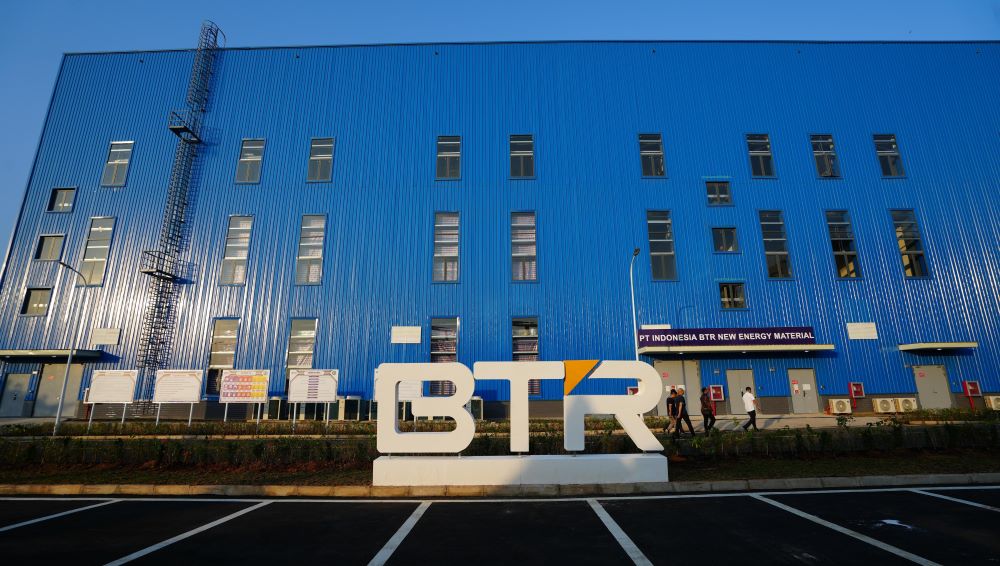
In response to export restrictions and potential US tariff hikes, Chinese battery manufacturers are increasing overseas investments. BTR, a major battery material producer, recently launched an 80,000 tons/year anode material plant in Indonesia and began building additional facilities in Morocco. Similarly, Shijiazhuang Shangtai is investing $154 million to establish a 50,000 tons/year anode material plant in Malaysia.

Such initiatives are helping companies hedge against geopolitical risks while ensuring a stable supply of raw materials for the growing global battery market.

Uncertain Political Climate

Political developments, such as a potential re-election of Donald Trump as US president, could further disrupt the global electric vehicle (EV) market. Trump's policies favor traditional energy sources and could lead to increased tariffs on lithium-ion batteries and related raw materials. This uncertainty underscores the importance of diversifying supply chains and expanding overseas production.

BTR's Anode Material Sales Up 17.6% Amid Price Pressures

No comments

Chinese battery material producer BTR reported a 17.6% increase in anode material sales for the first half of 2024, reaching over 200,000 tons compared to 170,000 tons during the same period last year. This growth is attributed to the steady expansion in the lithium-ion battery and new energy vehicle sectors.

Challenges with Revenue and Prices

Despite the rise in sales volume, BTR's revenue from the anode material sector fell by 18.2% to 5.18 billion yuan ($730 million) due to intense price competition. Additionally, revenue from graphite flake materials also dropped by 18.1% to 31 million yuan, reflecting a decline in flake prices.

China's production of new energy vehicles (NEVs) saw a significant increase, totaling 4.929 million units, up 30% from the previous year, with sales rising by 32% to 4.944 million units. The newly installed power battery volume also surged by 33.7% to 203.3 GWh.

BTR is expanding its operations internationally, launching the first phase of its anode material plant in Indonesia on August 7, with a total capacity of 160,000 tons per year. The initial phase has a capacity of 80,000 tons per year. Additionally, BTR began construction of a cathode material plant in Tangier, Morocco, on April 8, with a planned capacity of 50,000 tons per year. The company also plans to build an anode material plant in Tangier, with a designed capacity of 60,000 tons per year.