Showing posts sorted by relevance for query battery anode. Sort by date Show all posts

ExxonMobil battery anode graphite deal signals new push into EV batteries

No comments
ExxonMobil battery anode graphite deal signals new push into EV batteries
ExxonMobil

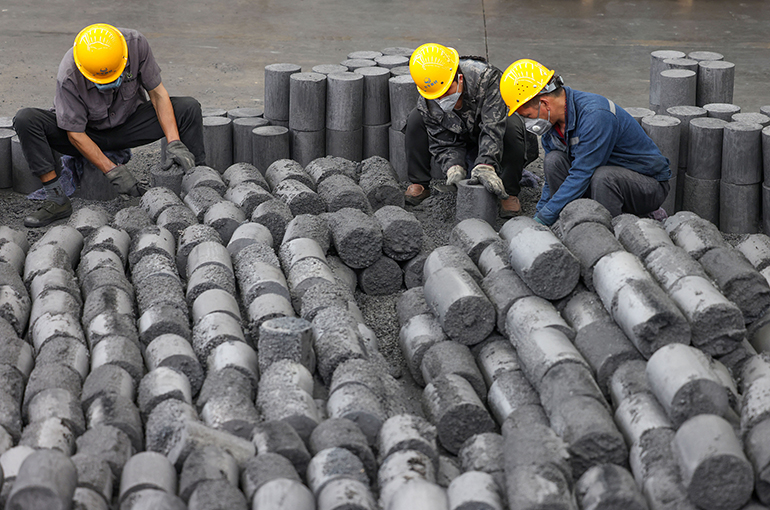
The ExxonMobil battery anode graphite deal marks a strategic shift toward advanced battery materials. The company will acquire the US assets and technology of Superior Graphite to gain a foothold in battery anode graphite. As a result, the ExxonMobil battery anode graphite deal aims to convert refining-derived carbon streams into higher value synthetic graphite products.

Synthetic graphite strategy builds on ExxonMobil refining strengths

ExxonMobil battery anode graphite deal execution leans heavily on the group’s refining skills and feedstock access. Synthetic graphite production can use carbon-rich streams from existing oil refineries, rather than rely on traditional mined graphite. Therefore, the company can integrate battery anode graphite manufacturing into current industrial sites with established utilities and logistics.

Producing synthetic graphite is also less labour intensive than conventional mining operations. This shift supports more predictable quality and supply for high performance battery anodes, especially for EV and energy storage systems. Meanwhile, Superior Graphite’s technology portfolio should help accelerate product qualification with cell manufacturers and automotive OEMs.

ExxonMobil expects demand for higher performance batteries and advanced graphite materials to grow significantly. As a result, the company views synthetic graphite as a natural extension of its downstream product chain. However, it still needs to prove that oil-to-anode economics can compete with incumbent graphite suppliers in Asia.

Energy transition focus must still compete for capital

The ExxonMobil battery anode graphite deal fits into a broader energy transition strategy built around familiar skill sets. The company is already investing in carbon capture, hydrogen and low-emission fuels that leverage existing process and project expertise. Therefore, battery anode graphite offers another pathway where ExxonMobil can combine scale, engineering and feedstock advantages.

Yet internal capital allocation remains disciplined and competitive. Management has repeatedly stressed that new technologies, including carbon capture and hydrogen, must compete with core oil and gas projects for investment. Likewise, the ExxonMobil battery anode graphite deal will need to deliver attractive returns against upstream and petrochemical options. This requirement could limit speed of expansion if market conditions or pricing weaken.

In addition, graphite remains a politically sensitive material within global battery supply chains. Western buyers seek alternatives to Chinese-dominated supply, but must balance cost, performance and ESG criteria. If ExxonMobil can demonstrate low emission synthetic graphite at scale, it may win premium contracts from OEMs under pressure to de-risk their anode sourcing.

The Metalnomist Commentary

ExxonMobil’s move into battery anode graphite shows how oil majors now seek value in critical mineral adjacencies rather than pure mining. Success will depend on whether integrated refinery-based synthetic graphite can match Asian competitors on cost and performance. Market participants should watch for offtake deals with cell makers, which will reveal how quickly this new graphite platform gains traction.

XFH Anode Material Sales Rise as China Battery Demand Expands

No comments
XFH Anode Material Sales Rise as China Battery Demand Expands
Anode Material

XFH anode material sales increased in 2025 as demand from China’s lithium-ion power battery and energy storage battery industries continued to grow. Shanghai XFH Technology sold 83,885t of anode materials during the year, up 22% from 2024.

XFH anode material sales outpaced production growth, showing stronger downstream offtake from battery manufacturers. The company’s anode material output rose by 11% on the year to 83,426t.

XFH anode material sales also lifted revenue. The company’s anode material revenue rose by 21% to 1.7bn yuan, supported by higher shipment volumes into battery supply chains.

The result reflects continued expansion in China’s battery ecosystem. Power battery shipments exceeded 1,000GWh in 2025, up by more than 50% from a year earlier, while energy storage battery shipments rose by 85% to 630GWh.

Suining Complex Expands XFH’s Anode Capacity

XFH increased anode material production capacity to 114,660 t/yr in 2025, up 27% from the previous year. The increase followed the production launch of its 60,000 t/yr complex in Suining, Sichuan province, at the end of 2025.

The new capacity gives XFH more room to serve fast-growing battery demand. Anode materials are a core input for lithium-ion batteries, influencing charging performance, cycle life, safety and energy density.

China’s rapid growth in power batteries and storage batteries is driving expansion across the anode supply chain. Producers are adding capacity to meet demand from electric vehicles, grid storage, industrial storage systems and consumer battery applications.

The Suining project also strengthens XFH’s position in a market where scale, cost control and customer qualification are critical. Larger capacity can improve operating efficiency, but it also requires stable demand to avoid inventory and pricing pressure.

Energy Storage Growth Supports Anode Demand

Energy storage is becoming an increasingly important driver for China anode materials. Storage battery shipments grew faster than power batteries in 2025, rising by 85% from a year earlier.

This matters because energy storage systems require large volumes of battery materials even when they have different performance priorities from electric vehicles. Cost, cycle life, safety and supply reliability are especially important in storage applications.

Power battery demand remains the largest driver. China’s battery shipments above 1,000GWh show the scale of the domestic EV and battery manufacturing base.

For anode producers, the opportunity is large but competitive. Demand growth supports shipments, but capacity expansion across China can still create margin pressure if supply grows faster than customer orders.

XFH’s stronger sales and output show that qualified anode producers remain tied closely to downstream battery expansion. The next challenge will be maintaining utilisation and profitability as China’s battery materials sector continues to scale.

The Metalnomist Commentary

XFH’s growth shows that China’s battery materials chain is still expanding quickly, especially in anodes. However, rising capacity means producers must compete on qualification, cost and customer access, not only shipment growth.

Dongdao Anode Production Expansion Adds More Capacity to China’s Battery Materials Chain

No comments
Dongdao Anode Production Expansion Adds More Capacity to China’s Battery Materials Chain
Dongdao Anode Production

Dongdao anode production expansion in Guangdong province shows that China continues to build scale across graphite and next-generation battery materials. Guangdong Dongdao New Material has started construction of two anode processing lines and one silicon-carbon anode line in Zhanjiang.

The two new processing lines will each have 10,000 t/yr of capacity. One line will produce synthetic graphite anode materials, while the other will produce natural graphite anode materials. The silicon-carbon anode line will have 500 t/yr of capacity, giving Dongdao a foothold in higher-performance battery material development.

Dongdao anode production growth matters because anode materials remain a core part of the lithium-ion battery value chain. China already dominates graphite processing, and the company’s latest investment reinforces the country’s ability to expand both conventional and advanced anode supply.

Graphite Anode Capacity Continues to Scale in China

Dongdao already operates 100,000 t/yr of natural graphite anode capacity and 100,000 t/yr of synthetic anode capacity. The new Zhanjiang lines will add more processing flexibility across both major graphite anode routes.

The company is also building much larger synthetic anode projects elsewhere in China. These include 300,000 t/yr of capacity in Leizhou, Guangdong, and 150,000 t/yr in Yilong, Guizhou. This shows that synthetic graphite remains a major investment focus as battery producers seek consistent performance, controlled quality, and scalable supply.

Dongdao’s subsidiary, Zhanjiang Juxin New Energy, also plans to build a 20,000 t/yr spherical graphite facility in Zhanjiang. A commissioning date has not yet been set, but the project would add another processing step that supports natural graphite use in battery anodes.

Silicon-Carbon Line Signals Next-Generation Battery Focus

The planned 500 t/yr silicon-carbon anode line is smaller than the graphite lines, but it carries strategic importance. Silicon-carbon anodes can improve battery energy density and performance, although commercial scaling remains more technically demanding than conventional graphite.

Dongdao’s decision to build this line alongside graphite processing capacity suggests a dual strategy. The company is expanding mainstream anode capacity while preparing for future demand from higher-performance battery chemistries.

All three Zhanjiang lines are scheduled to start operations in December 2027. By then, battery supply chains may be more focused on cost reduction, fast charging, energy density, and material efficiency. Producers with both graphite scale and silicon-carbon development capacity could be better positioned for that transition.

The Metalnomist Commentary

Dongdao’s expansion shows that China is not slowing its grip on the anode materials chain. The strategic issue for global battery supply chains is no longer only graphite availability, but who controls processing scale, qualification, and next-generation material development.

China Graphite Spherical Graphite Output Falls as Natural Anode Demand Weakens

No comments
China Graphite Spherical Graphite Output Falls as Natural Anode Demand Weakens
China Graphite Group

China Graphite spherical graphite output fell in 2025 as weak demand from the natural graphite anode material sector and existing inventories pressured production. The Hong Kong-listed natural graphite producer produced 2,300t of spherical graphite during the year, down 28% from 2024.

The decline reflects a broader shift in China’s anode materials market. Battery producers are still expanding overall anode consumption, but natural graphite is losing share to artificial graphite because of performance and price competition.

China Graphite spherical graphite output weakness shows that battery material growth does not benefit all feedstock routes equally. Natural graphite remains important, but artificial anode materials are gaining ground because they offer stronger cycling life and rate performance for many lithium-ion battery applications.

Spherical graphite sales also fell in 2025, although less sharply than production. China Graphite sold 5,815t of spherical graphite, down 6.9% from a year earlier, suggesting the company partly relied on existing inventory to meet demand.

Artificial Graphite Competition Pressures Natural Anode Feedstock

China’s anode material shipments rose strongly in 2025, reaching 2.9mn t, up 39% from a year earlier. However, natural graphite anode materials moved in the opposite direction.

Natural graphite anode shipments fell to 210,000t in 2025, down 19% from the previous year. Their share of China’s total anode material shipments dropped to 7.2%, showing that natural graphite is becoming a smaller part of the domestic anode mix.

This matters directly for spherical graphite producers. Spherical graphite is a key processed feedstock for natural graphite anode materials. When natural anode production slows, spherical graphite demand weakens quickly.

China Graphite attributed the decline to price competition and lower output of natural graphite anode materials. The company also pointed to the shorter cycling life and weaker rate performance of natural graphite compared with artificial anode materials.

Artificial graphite has become dominant in China’s battery supply chain because many battery makers prioritise consistency, fast charging performance and long cycle life. These factors are especially important for electric vehicles and energy storage systems.

The result is a margin squeeze for natural graphite processors. Even when total battery demand grows, spherical graphite producers must compete against artificial graphite suppliers that are more closely aligned with mainstream cell performance requirements.

Flake Graphite Output Rises Despite Spherical Graphite Weakness

China Graphite’s upstream natural graphite flake business performed better than its spherical graphite segment. The company produced 57,600t of natural graphite flake in 2025, up 10.8% from a year earlier.

The increase was supported by equipment upgrades, showing that China Graphite improved mining or processing efficiency even as downstream spherical graphite demand weakened. Flake graphite sales also edged higher by 1.3% to 46,020t.

This creates a mixed operating picture. Upstream flake output increased, but downstream spherical graphite production fell sharply. The gap suggests that the company may need to manage feedstock allocation carefully if natural anode demand remains weak.

Natural graphite still has strategic value. It can support lower-cost anode production and remains important for battery supply-chain diversification. However, its competitiveness depends on purification, coating, consistency, performance and customer qualification.

For China Graphite, the next challenge is not only producing more flake graphite. It must defend its position in higher-value downstream graphite products as the anode market shifts toward artificial materials and more demanding battery specifications.

The company’s results also highlight a wider issue for natural graphite markets. Supply growth alone is not enough. Producers need downstream demand from qualified anode makers, battery customers and applications where natural graphite retains a cost or performance advantage.

The Metalnomist Commentary

China Graphite’s results show that battery demand growth is becoming more selective across the graphite value chain. Natural graphite suppliers must improve processing quality and downstream integration if they want to compete against artificial graphite in high-performance batteries.

Zhongke Anode Material Sales Surge as Energy Storage Demand Accelerates

No comments
Zhongke Anode Material Sales Surge as Energy Storage Demand Accelerates
Zhongke

Zhongke anode material sales rose sharply in 2025 as China’s lithium-ion battery sector expanded across new energy vehicles and power storage. Hunan Zhongke Electric sold 363,253t of anode materials during the year, up 62% from 2024.

Zhongke anode material sales were supported by strong downstream demand and higher operating rates. The company’s output increased by 66% to 378,469t, reflecting a rapid scale-up in response to battery market growth.

Zhongke anode material sales also lifted revenue. Revenue from anode materials rose by 60% to 7.99bn yuan, broadly in line with the increase in shipment volumes.

The result shows how anode materials remain one of the key beneficiaries of battery expansion. Demand is no longer driven only by electric vehicles. Grid storage, industrial storage and AI-related power demand are becoming increasingly important.

Capacity Utilisation Tightens as China Battery Demand Expands

Zhongke’s anode material capacity reached 348,683 t/yr in 2025, up 46% from a year earlier. The increase followed equipment and technology upgrades across its production base.

Capacity utilisation rose to 108.6% from 95.7% in 2024. This shows that Zhongke was operating above nameplate capacity as demand outpaced available production capability.

The company is now expanding further. A third-phase project at its Zhaotong site in Yunnan province is under construction and will add 100,000 t/yr of anode material capacity by the end of 2026.

Zhaotong has become a key growth platform. The first phase, with 15,000 t/yr of capacity, started production in April 2020. The second phase, with 100,000 t/yr of capacity, began operations in March 2024.

Zhongke is also planning a 300,000 t/yr anode material complex in Luzhou, Sichuan province. This would further strengthen its position in China’s graphite anode supply chain.

The expansion reflects a broader industry trend. Anode producers are adding capacity to serve battery makers that need reliable supply, stable quality and lower-cost materials for high-volume cell production.

Overseas Expansion Targets Storage and Non-China Customers

Zhongke is also building a 100,000 t/yr anode material plant in Tangier, Morocco. The project targets customers outside China and reflects the growing need for regionalised battery material supply chains.

Morocco offers strategic value because it is close to European markets and has become more attractive for battery-related investment. For Chinese anode producers, overseas capacity can help serve customers facing localisation, trade and supply-chain security requirements.

Energy storage is becoming a major long-term demand driver. Global energy storage battery shipments reached 651.5GWh in 2025, up 76.2% from a year earlier. Chinese companies accounted for 614.7GWh, or 94.4% of global shipments.

EV Tank expects global energy storage battery shipments to exceed 2TWh by 2030. If this forecast materialises, anode material demand will continue rising across China and overseas markets.

Policy is also supporting growth. China is moving new energy storage from mandatory allocation toward a more market-oriented system, including capacity pricing support for independent grid-side storage.

AI data centres are adding another demand layer. Rapid growth in electricity consumption from AI infrastructure is increasing the need for power storage, grid stability and backup capacity.

Europe is also expanding storage under energy security strategies. EU member states installed 27.1GWh of new battery energy storage systems in 2025, up 45% from the previous year.

For Zhongke, this demand mix supports a larger and more international anode strategy. The company is positioning itself to serve China’s dominant battery ecosystem while preparing for overseas demand linked to storage, EVs and grid resilience.

The Metalnomist Commentary

Zhongke’s growth shows that anode materials are moving from an EV-driven market into a broader energy infrastructure market. The next competitive phase will depend on overseas localisation, graphite supply security and the ability to serve storage demand outside China.

Cornex-Shanshan Battery Anode Deal Signals Aggressive EV Supply Chain Securing

No comments
Cornex-Shanshan Battery Anode Deal Signals Aggressive EV Supply Chain Securing
Cornex

The Cornex-Shanshan battery anode deal locks in critical anode supply for fast growth. The agreement is worth over 10bn yuan ($1.39bn). The firms did not disclose volumes or tenor. The Cornex-Shanshan battery anode deal follows Cornex’s rapid feedstock contracting. Therefore, it strengthens cell output visibility in a volatile market. The Cornex-Shanshan battery anode deal also consolidates Yunnan-to-coastal anode logistics advantages.

Strategic supply and capacity signals

Shanshan increased anode output to 354,605t in 2024, up 27% year over year. Sales reached 339,536t, up 28% from 2023. Therefore, Shanshan can support large, multi-year awards. Cornex also secured cathode and foil inputs this year. It booked 150,000t LFP from Jiangsu Lopal in May. It added 152,000t LFP from Eve Energy in June. In July, it locked 160,000t copper foil from Nuode over five years. Consequently, Cornex de-risks key battery bill-of-materials.

Implications for feedstock, pricing, and EV supply chains

This contract tightens premium graphite and silicon-blend availability. However, scale should improve Cornex’s unit costs and yields. Downstream EV and storage demand continues to expand. Metalnomist sees EV sales reaching 60mn by 2035. The CAGR from 2025 is 12%, supporting anode expansion. Therefore, stable offtakes will matter for financing and capacity ramps. Banks and OEMs will seek transparency on pricing formulas.

The Metalnomist Commentary

This tie-up prioritizes supply certainty over perfect price timing. Expect further vertical coordination across cathode, anode, and foil. Watch qualification timelines and cost pass-through mechanisms into 2026 contracts.

China’s Guizhou Kaijin Expands Battery Anode Capacity

No comments
China’s Guizhou Kaijin Expands Battery Anode Capacity
Kaijin battery

Expansion Strengthens Position in Lithium-Ion Battery Market

China’s Guizhou Kaijin has expanded its lithium-ion battery anode production capacity to 120,000 tonnes per year. The facility in Tongren city, Guizhou province, began operations in May 2022 with six lines producing 100,000 t/yr. Following upgrades and the installation of two additional lines, trial production for the seventh and eighth lines is set to begin by the end of July.

Kaijin’s sales performance reflects this rapid expansion. Between January and April 2025, the company sold 50,000 tonnes of anode materials, compared with just 10,000 tonnes during the same period in 2023. As a subsidiary of Guangdong Kaijin, one of China’s top five anode producers, the company strengthens its foothold in the global battery supply chain.

NEV Boom Drives Rising Demand for Anode Materials

China’s fast-growing new energy vehicle (NEV) industry is fueling strong demand for lithium-ion battery anode materials. National shipments of anode materials reached 2.12mn tonnes in 2024, up 24% from 2023. This growth aligns with rising NEV production and sales, supported by robust consumer demand and government incentives.

China produced 5.7mn NEVs from January to May 2025, a 45% increase compared with the same period in 2024. Sales also grew by 44% to 5.61mn units. As a result, overall production of power and energy storage batteries rose by 63% year-on-year to 568.1GWh during January-May, according to the China Automotive Battery Innovation Alliance (Cabir).

The Metalnomist Commentary

Guizhou Kaijin’s expansion demonstrates the strategic scaling of China’s battery materials industry in response to surging NEV demand. As global automakers diversify supply chains, Kaijin’s growth reinforces China’s dominance in anode materials. However, international competition and technology shifts, such as LFP adoption, will challenge long-term market positioning.

Japan-Australia Graphite Anode Supply Chain Targets Battery Security

No comments
Japan-Australia Graphite Anode Supply Chain Targets Battery Security
Graphite

The Japan-Australia graphite anode supply chain is becoming a serious strategic project for battery materials security. Idemitsu, Marubeni, NSC, and Graphinex have agreed to develop a cross-border supply chain for natural graphite anode material. The plan links graphite mining in Queensland with refining and processing in Japan. As a result, the Japan-Australia graphite anode supply chain could reduce reliance on more concentrated supply routes.

This matters because graphite remains one of the most important battery raw materials. Demand continues to rise with electric vehicles and renewable energy storage. Japan has relied heavily on imports for graphite procurement. Therefore, the Japan-Australia graphite anode supply chain directly addresses a critical supply risk.

The industrial structure of the deal is also clear. Idemitsu and Graphinex will handle graphite extraction in Australia. Marubeni and NSC will focus on refining and processing in Japan. Consequently, the project is designed as a full upstream-to-midstream partnership rather than a simple trading agreement.

Natural Graphite Anode Material Is Becoming a Strategic Priority

Natural graphite anode material is now central to battery manufacturing competitiveness. Without secure graphite supply, downstream battery production becomes more vulnerable to trade shocks and export restrictions. That makes source diversification more important than ever. As a result, Japan is moving to secure a more stable anode material base.

China’s role helps explain the urgency. Japan wants alternative import sources as it reduces dependence on the world’s largest graphite producer and exporter. Export controls have made that concentration risk harder to ignore. Therefore, the new partnership reflects both industrial logic and geopolitical caution.

Idemitsu’s earlier investment in Graphinex also shows this strategy did not begin overnight. The companies have already been building ties around Australian graphite mining. This new agreement pushes that relationship into a more integrated supply chain phase. Meanwhile, it strengthens confidence that the project has real strategic intent.

Graphite Anode Plant in Japan Could Deepen Domestic Battery Capacity

The graphite anode plant in Japan is the most important downstream element of the plan. The companies are exploring a Japanese production site and aim to start operations in 2028. That would give Japan more domestic control over an essential battery input. Consequently, the graphite anode plant in Japan could become a meaningful industrial anchor.

The partnership also aligns with the wider Japan-Australia critical minerals agenda. Both countries have been working to deepen cooperation on energy security and supply chains. This project fits that framework well because graphite sits at the core of battery manufacturing. Therefore, the deal supports both national policy and commercial demand.

The broader market significance is clear. Battery supply chains are no longer judged only by cell production capacity. They are increasingly judged by who controls upstream and midstream materials. As a result, the Japan-Australia graphite anode supply chain could become a notable model for allied critical mineral cooperation.

The Metalnomist Commentary

This partnership matters because it targets one of the most overlooked battery bottlenecks: graphite anodes. Japan is not only seeking more raw material. It is trying to secure processing and manufacturing depth as well. If execution stays on track, this project could become an important example of how allied supply chains move beyond dependence and into real industrial coordination.

Hubei STR anode recycling plant will start in March 2026 as China’s battery scrap accelerates

No comments
Hubei STR anode recycling plant will start in March 2026 as China’s battery scrap accelerates
Lithium-Ion Battery

Hubei STR will start the Hubei STR anode recycling plant in March 2026. The project targets 50,000 t/yr of recycled anode materials for lithium-ion batteries. The company began site construction in January 2022. As a result, the facility enters the market as battery recycling volumes rise sharply.

Battery scrap volumes will surge as China’s first NEV wave reaches end-of-life. Lithium-ion batteries usually retire when capacity falls to 80%. The US Advanced Battery Consortium links this threshold to an 8–12 year service life. Therefore, post-2025 retirements should expand the available feedstock for anode material recycling.

China’s EV scale is turning recycling into a supply chain priority

China’s EV scale is making the Hubei STR anode recycling plant strategically timed. China pushed NEV output above one million units in 2018. NEVs reached 40.9% of total auto sales in 2024. Meanwhile, October NEV sales hit 1.72mn units and took 51.6% market share.

Recycling capacity must follow that growth curve. China Association of Automobile Manufacturers forecasts NEV sales near 16mn units in 2025, up from 12.86mn in 2024. China Automotive Engineering Society estimates retired power batteries exceeded 580,000t in 2023. It expects retirements to reach 6mn t by 2030. Consequently, anode recycling becomes a cost, ESG, and security lever for battery makers.

Graphite recovery and copper foil separation define the value capture

Graphite recovery drives much of the anode recycling economics. The lithium-ion battery recycling process starts with dismantling and material separation. Recyclers can recover plastics and the diaphragm from anode-side components. They can also extract aluminium foil from cathode materials.

Graphite recovery then becomes the key upgrade step. Recyclers separate graphite from copper foil in spent anodes. They purify the graphite and sell it back into the battery materials chain. Therefore, the Hubei STR anode recycling plant can support a more circular anode supply. It can also reduce exposure to price swings in battery-grade inputs.

The Metalnomist Commentary

China’s recycling race is shifting from metals recovery to materials performance. Therefore, graphite purity and consistent output will decide who wins long-term contracts. However, recyclers must prove traceability and ESG compliance to unlock premium pricing.

Global Battery Expansion Set to Propel Anode Material Demand

No comments
Battery Anode Materials

NEV Growth and Energy Storage Boom Drive Anode Market Outlook

Rapid growth in the global battery industry is poised to boost long-term demand for anode materials and feedstocks, according to panelists at the 2024 Battery and Anode Summit in Changzhou, Jiangsu province. This demand surge reflects ongoing expansion in new energy vehicles (NEVs), energy storage systems, and consumer electronics.

Battery and Anode Output Set for Major Expansion

Global battery output is expected to reach 1,852GWh in 2025, while anode material production may hit 2.17 million tonnes. By 2028, this figure could exceed 4 million tonnes, according to ICC Sino. China produced 2.12 million tonnes of anode materials in 2024, with domestic demand reaching 1.83 million tonnes. Demand is forecast to rise steadily, reaching 3.4 million tonnes by 2028.

China’s NEV sector continues to lead global momentum, driven by sustained policy support. NEV sales in China rose 36% to 12.87 million units in 2024. Sales are projected to grow to 16 million units in 2025, supported by extended government incentives.

Renewable Energy and Silicon Anodes Add Tailwinds

Energy storage demand is also rising, with major wind and solar infrastructure developments underway in China’s Xinjiang, Gansu, Ningxia, and Inner Mongolia. Dalat county's solar generation saved 680,000 tonnes of coal in 2024 and curbed carbon emissions by 1.65 million tonnes.

Silicon-based anode materials, with energy densities up to 4,000 mAh/g, are seeing significant traction. Shipments are projected to surge from 5,300 tonnes in 2024 to nearly 81,900 tonnes by 2030, according to producer C-One.


China's Putailai Cancels Sweden Battery Anode Project Amid Regulatory Hurdles

No comments
Shanghai Putailai

Chinese battery anode material manufacturer Shanghai Putailai has announced the termination of its planned battery anode material project in Sundsvall, Sweden, after failing to secure approval from the Swedish government. The decision, disclosed on December 19, follows extensive regulatory reviews and negotiations regarding investment conditions.

The project, initially designed to have a production capacity of 100,000 tonnes per year (t/yr), was expected to roll out in two phases: 50,000 t/yr by 2025, followed by another 50,000 t/yr by late 2026 or early 2027. Putailai had earmarked a maximum investment of 15.7 billion Swedish kronor ($1.4 billion) for the venture, which was part of its broader strategy to expand outside of China.

Regulatory Hurdles and Project Termination

Putailai’s foreign direct investment (FDI) declaration was submitted to Sweden’s Strategic Products Supervision Bureau in February 2024, with an official review beginning in June 2024. However, on December 3, the Swedish government imposed conditions regarding equity control, management composition, intellectual property rights, and corporate supervision for Putailai’s Swedish subsidiary, Zichen Sweden.

After failing to reach an agreement on these terms, Sweden ultimately rejected Putailai’s investment application, though specific reasons were not disclosed. The company had already invested 14 million yuan ($1.9 million) in a feasibility study, though it noted that this cost would not impact its operations.

Expanding Anode Production in China Amid Western Setbacks

Despite the setback in Sweden, Putailai remains committed to increasing its anode material production capacity. The company reported 68,197 tonnes of anode material sales in H1 2024, marking a 24% year-on-year increase. It currently operates 150,000 t/yr of total capacity and is constructing an additional 100,000 t/yr plant in Qionglai, Sichuan province, set to launch by the end of December.

Several Chinese battery material firms, including Shanshan, have sought expansion into Europe, with Shanshan planning a 100,000 t/yr anode production complex in Finland to cater to overseas demand. However, geopolitical uncertainties and economic challenges have created obstacles for Chinese firms seeking foreign investments and partnerships.

Shangtai to Build $154mn Battery Anode Plant in Malaysia

No comments
Shangtai Tech

Chinese lithium-ion battery anode manufacturer Shijiazhuang Shangtai has announced plans to establish a production facility in Kedah, Malaysia. The Shenzhen-listed company approved the creation of a wholly-owned subsidiary, Shangtai Technology Malaysia, to oversee the development of the plant, which is projected to cost $154 million and have a production capacity of 50,000 tons per year for battery anode materials.

Construction Timeline and Strategic Expansion

While the site is expected to be completed within 24 months, Shangtai has yet to disclose the start date for construction. This new facility forms part of Shangtai's broader strategy to expand its production capacity and gain a competitive edge in the global battery market.

In the first half of 2024 alone, Shangtai sold 83,800 tons of anode materials, marking a 61% increase compared to the 52,200 tons sold during the same period in 2023. The company is also constructing a 100,000-ton-per-year production plant in Wuji County, Shijiazhuang City, Hebei Province, China, which is set for completion by 2026. Additionally, Shangtai operates a 200,000-ton-per-year complex in Xiyang County, Jinzhong City, Shanxi Province.

Context of Chinese Companies' Global Expansion

The move by Shangtai reflects a larger trend of Chinese companies seeking overseas expansion to mitigate rising geopolitical restrictions, such as the US Inflation Reduction Act and the EU's Critical Raw Material Act. Another key player, BTR, recently launched its first phase of an overseas anode material plant in Indonesia with an 80,000-ton-per-year capacity on August 7. Furthermore, BTR is also developing cathode and anode material plants in Tangier, Morocco, with capacities of 50,000 tons and 60,000 tons per year, respectively.

This strategic push not only strengthens China's position in the global battery material supply chain but also enhances production capabilities to meet growing demand for electric vehicle components and renewable energy storage solutions.

Sunstone Anode Output Soars in 2024 Amid Surging Lithium-Ion Battery Demand

No comments
Sunstone Anode Output Soars in 2024 Amid Surging Lithium-Ion Battery Demand
China Shandong Sunstone

China’s Shandong Sunstone significantly increased its anode output and sales in 2024, driven by booming lithium-ion battery production. The Sunstone anode output rose in both traditional prebaked carbon anodes and synthetic graphite materials used in EV battery supply chains.

Prebaked Carbon Anode and Synthetic Material Output Surge

Sunstone’s production of anode materials jumped to 54,100 tonnes in 2024, marking an 83% increase from 29,600 tonnes in 2023. Corresponding sales rose 66% to 43,800 tonnes. This growth reflects rising demand for lithium-ion batteries, which rely on synthetic graphite and carbon-based anodes.

In addition, Sunstone produced 3.26 million tonnes of prebaked carbon anodes in 2024, a 10% increase from the previous year. Sales for these anodes also rose 11% to 3.32 million tonnes. The company sources over 3 million tonnes of petroleum coke annually to fuel this growing demand.

EV Battery Growth Accelerates Feedstock Consumption

The lithium-ion battery market continues to expand at a rapid pace. Global shipments reached 1,545.1 GWh in 2024, up 29% from 2023. China led the way with 1,214.6 GWh in shipments, marking a 37% year-on-year increase. As a result, firms like Sunstone are scaling up production capacity to keep pace with downstream EV and energy storage demands.

Petroleum coke remains a critical feedstock for anode manufacturing, tying Sunstone’s operations closely to oil refining supply chains. This strategic positioning enables the company to support China's dominant role in global battery exports.

The Metalnomist Commentary

Sunstone’s rapid output expansion reflects the deepening integration between China’s anode manufacturers and the global EV battery market. As demand for graphite-based materials surges, securing raw materials like petroleum coke will become increasingly strategic.

BTR Expands Anode Material Sales Amid Global EV Demand Surge

No comments
BTR Expands Anode Material Sales Amid Global EV Demand Surge
BTR

Strong Growth in Anode Segment Offsets Cathode Decline

BTR increased its anode material sales in 2024, driven by growth in lithium-ion batteries and new energy vehicles (NEVs). The Chinese battery material firm sold 437,762 tonnes of anode materials last year, up 21% from 2023. This performance reinforces BTR’s leading role in the global anode material market, a critical segment for EV battery production.

However, revenue from anode sales dropped by 13% year-on-year due to intensified price competition and expanded industry capacity. Despite that, BTR’s anode output rose 20% to 453,535 tonnes, supported by its new 50,000 t/yr plant in Dali, Yunnan province.

Overseas Expansion and Cathode Setbacks

BTR expanded globally in 2024, launching an 80,000 t/yr anode facility in Sulawesi, Indonesia, and beginning construction on another plant in Semarang. It is also building an integrated site in Tangier, Morocco, including both anode and cathode material capacity. Meanwhile, cathode material sales dropped sharply by over 50%, falling to just 19,760 tonnes amid fewer orders and tougher pricing.

As a result, cathode revenue plunged 75% and BTR chose not to increase its cathode capacity, which remains at 63,000 t/yr. The company’s graphite flake revenue also fell significantly, down 67%, due to global oversupply and weak prices.

China’s Dominance in Anode Market Continues

China shipped 2.12mn tonnes of anode materials in 2024, making up 96% of global shipments, according to EV Tank. Synthetic graphite accounted for 84% of the Chinese total, underlining its dominance in high-performance EV battery materials. BTR’s growing output and international expansion position it well to benefit from this trend despite ongoing pricing pressures.

The Metalnomist Commentary

BTR's aggressive expansion in anode materials reflects China’s strategic positioning in the EV battery race. However, the sharp cathode decline shows the market's volatility, highlighting the need for margin resilience amid global oversupply cycles.

Silicon Anode Technology Gears Up for Mass Production

No comments
HPQ Silicon

As the electric vehicle (EV) industry continues to expand, the demand for more efficient and sustainable battery technologies is reaching unprecedented levels. Among the leading innovations in this sector is the development of silicon anode materials, which are poised to revolutionize the market currently dominated by traditional lithium-ion batteries with graphite anodes.

HPQ Silicon Advances Toward Commercial Manufacturing

Canada-based HPQ Silicon is at the forefront of this shift, having recently inked an initial agreement to construct a facility in northern Germany for producing silicon-based battery anode materials. This collaboration with a German industrial partner aims to leverage HPQ's proprietary Purevap Quartz Reduction Reactor (QRR) technology. This technology not only manufactures high-purity silicon—the critical feedstock for anode materials—but also incorporates a carbon off-gas capture system to produce green synthetic fuels, thus enhancing the sustainability of the production process.

NanoGraf and Other U.S. Advances

In parallel, U.S.-based NanoGraf has launched Onyx, a silicon oxide anode material that claims cost parity with synthetic graphite while improving battery cell energy density by 30%. Such advancements are not only a testament to the potential of silicon anodes to enhance lithium-ion batteries but also reflect significant strides in reducing production costs and increasing stability.

NanoGraf's expansion includes a new plant in Flint, Michigan, supported by a $60 million grant from the U.S. Department of Energy. This facility is expected to dramatically increase production capacity, aiming to meet the growing demand for silicon anode materials necessary to power up to 1.5 million EVs annually.

Growing Silicon Anode Landscape

The landscape for silicon anode production is also becoming more geographically diverse. Companies like Sila Nanotechnologies and Group14 Technologies are investing heavily in facilities in Moses Lake, Washington, to ensure a steady supply of essential materials like silane gas and silicon-carbon composites. These developments are crucial as they contribute to the overall resilience and sustainability of the supply chain in the battery manufacturing sector.

As these technologies move from pilot scales to full commercial production, the industry faces several challenges, including scaling up production and managing supply chain dynamics. However, the ongoing investments and collaborations signal a robust commitment to overcoming these hurdles, promising a significant shift in the battery technology landscape by 2030.

Syrah Graphite Offtake Supports Non-China Anode Supply Chain Strategy

No comments
Syrah Graphite Offtake Supports Non-China Anode Supply Chain Strategy
Syrah resources

Syrah graphite offtake plans with NextSource Materials could strengthen non-China graphite supply routes for battery anode production. The Australian producer may sell 34,000-68,000t of natural graphite fines over seven years, subject to commercial production at NextSource’s planned Abu Dhabi anode material plant.

The Syrah graphite offtake agreement depends on several conditions. NextSource has not yet made a final investment decision on the Abu Dhabi project, and both NextSource and its customers must approve the use of Syrah’s graphite fines. This makes the deal strategically important, but still dependent on qualification, financing, and project execution.

Syrah will supply the material from its Balama graphite mine in Mozambique. The mine produced 34,400t of natural graphite in October-December 2025, up from 25,700t in the previous quarter and no production a year earlier.

Balama Graphite Gains Value as Buyers Seek Supply Diversity

Balama graphite is becoming more important as battery supply chains seek alternatives to China-linked material flows. Syrah said the NextSource agreement prices Balama graphite at a premium to market indices, suggesting that qualified non-China supply is gaining strategic value.

Syrah’s average realised graphite price, including fines and coarse flakes, rose by 11pc year on year to $506/t fob Nacala in October-December 2025. Higher realised pricing supports the company’s effort to rebuild sales momentum after production interruptions and weak market conditions.

The deal also fits Syrah’s long-standing plan to increase graphite sales outside China. The company signed a six-year offtake agreement with South Korean producer Posco in 2024 and agreed to supply graphite to US producers Graphex Technologies and Westwater in 2023.

Graphite Trade Restrictions Increase Supply Chain Urgency

Graphite is moving deeper into the critical minerals policy debate because it is essential for lithium-ion battery anodes. China remains dominant in graphite processing, so automakers, battery makers, and governments are trying to develop alternative sources of feedstock and anode material production.

NextSource’s planned Abu Dhabi anode material plant could add a new processing node outside China if it reaches commercial production. Syrah’s graphite fines would provide feedstock for that strategy, while Mozambique would remain an important upstream source.

The timing matters because graphite trade restrictions are increasing. China recently banned sales of dual-use products, including graphite, to some Japanese producers. This reinforces the need for diversified supply chains that can connect African mine output, Middle Eastern processing, and battery customers in allied markets.

The Metalnomist Commentary

The Syrah-NextSource agreement shows that graphite supply security now depends on qualification pathways, not only mine output. Non-China anode supply chains will need reliable feedstock, bankable processing projects, and customers willing to pay for geopolitical resilience.

China Graphite Cuts Output in 2024 Amid Shifting Anode Material Demand

No comments
China Graphite

China Graphite sees output decline as downstream buyers move to synthetic alternatives, reshaping the anode materials landscape.

Drop in Spherical Graphite Output Reflects Market Shift

China Graphite significantly reduced its spherical graphite production in 2024 due to weakened demand and seasonal production halts. The company produced 3,200t of spherical graphite, a steep 63% drop from 8,700t in 2023, citing low winter temperatures and market changes. Meanwhile, concentrate output also fell to 5,200t, down by 8.8% from 57,000t last year.

Sales of spherical graphite halved to 3,089t, while concentrate sales increased to 45,432t, up 25% year-on-year. The shift reflects a broader industry trend, as more battery makers turn to synthetic graphite due to cost efficiencies and stable feedstock supply.

Synthetic Graphite Dominates Battery Market

The battery industry increasingly favors synthetic anode materials over natural graphite. According to EV Tank, synthetic anode materials accounted for 84.4% of China's total battery anode shipments in 2024. Shipments rose to 2.12mn t, up 24% from 2023, underscoring the rising dominance of synthetic options.

Meanwhile, China Graphite’s natural graphite products found greater demand from non-battery sectors like refractories, flame retardants, and graphene. This diversification may offer some relief, but the pressure from synthetic graphite remains a key challenge.

The Metalnomist Commentary

China Graphite’s 2024 results highlight a structural pivot in anode materials.
As synthetic graphite strengthens its market position, natural graphite producers must adapt or risk marginalization in battery supply chains.

Japan EU battery recycling alliance aims to cut China dependence

No comments
Japan EU battery recycling alliance aims to cut China dependence
Japan, EU battery alliance

Japan EU battery recycling alliance marks a strategic push to reduce reliance on China in battery materials. The new Japan EU battery recycling alliance brings together key industry groups to strengthen recycling, black mass handling and data sharing. As a result, the Japan EU battery recycling alliance targets a more resilient and transparent battery supply chain across both regions.

Japan EU battery recycling alliance links tech strength and market scale

The Japan EU battery recycling alliance is built around three core industry associations. Japan’s Battery Association for Supply Chain, the European Battery Alliance and Brussels based Recharge have signed an initial agreement. Together, they will cooperate on improving recycling processes, materials flows and supply chain governance.

The agreement covers information exchange on issues such as data sharing and regulatory interpretation. It also includes joint studies on black mass classification, a key bottleneck for cross border recycling flows. Black mass refers to shredded cathode material containing nickel, cobalt and lithium from spent batteries. Therefore, clear definitions and standards for black mass are critical for trade, permitting and ESG compliance.

Japanese officials highlight the importance of combining Japan’s technology strength with Europe’s market size. Japan offers advanced recycling technologies and process know how developed over decades of battery manufacturing. Meanwhile, Europe provides a rapidly growing battery market driven by EV mandates and energy storage deployment. This mix gives the Japan EU battery recycling alliance strong industrial foundations.

Reducing strategic exposure to China dominated battery materials

The Japan EU battery recycling alliance clearly responds to geopolitical supply concerns. Officials from Japan’s trade and industry ministry note that the current battery supply chain depends heavily on one country. Although unnamed, the reference clearly points to China’s dominance in processed lithium, nickel, cobalt and anode materials.

By deepening cooperation, Tokyo and Brussels aim to reduce vulnerability to export controls or political friction. Recycling and black mass trade can partially offset primary supply risks from Chinese refineries and processors. In addition, improved data sharing should help track origin, quality and ESG performance of recovered materials. As a result, the Japan EU battery recycling alliance supports compliance with emerging battery passport and due diligence rules.

The initiative also fits within the broader Japan EU competitiveness alliance launched in July. That framework seeks closer coordination on semiconductors, clean energy, critical minerals and industrial standards. Battery recycling now becomes a visible test case for how quickly the partnership can move from statements to practical projects.

The Metalnomist Commentary

This partnership underlines how recycling is moving from a niche activity to a core pillar of battery security strategy. If the Japan EU battery recycling alliance can harmonise black mass standards and data systems, it will lower barriers for serious cross regional recycling investment. Market participants should watch for pilot projects, joint ventures and regulatory tweaks that follow this initial, largely framework level agreement.

Gotion Slovakia battery plant anchors new EU battery supply hub

No comments
Gotion Slovakia battery plant anchors new EU battery supply hub
Gotion Slovakia battery plant

Gotion Slovakia battery plant construction has begun, marking a major step in Europe’s race for local EV cell capacity. The Gotion Slovakia battery plant will be the country’s first gigafactory and a key node in China–EU battery supply chains. As a result, the Gotion Slovakia battery plant positions Slovakia as a new player in Europe’s electrification map.

Gotion Slovakia battery plant targets EU gigafactory scale

The first phase of the Gotion Slovakia battery plant will add 20GWh a year of lithium-ion capacity. Gotion plans pilot production in 2026, with commercial volumes starting in 2027 and feeding customers across EU markets. This timing aligns with accelerating European EV and energy storage demand, as automakers seek diversified cell suppliers.

Meanwhile, the Surany facility will be Slovakia’s first battery gigafactory, strengthening Central Europe’s role as an automotive manufacturing corridor. Products will likely support both passenger EVs and stationary storage, given Gotion’s broad lithium-ion portfolio. Therefore, OEMs and Tier-1 suppliers in the EU gain another large-scale, non-European cell source inside the single market.

Chinese battery makers accelerate overseas footprint

Gotion has rapidly expanded outside China, with projects in Morocco, Thailand, Japan and the US adding to 20 global plants. The company targets 300GWh a year of installed capacity by 2025, including 100GWh outside China, to serve regionalised EV supply chains. However, its planned Michigan cathode and anode plant was cancelled after policy disagreements with local authorities.

As a result, Europe and emerging markets now absorb more of Gotion’s outbound investment as geopolitical trade risks rise. Chinese battery makers are building overseas to diversify customers, reduce tariff exposure and align with “local-for-local” industrial policies. These projects also hedge against potential future export controls on advanced battery materials and equipment.

Export controls delayed but policy risk remains

China has postponed planned export restrictions on certain high-end lithium batteries, key equipment, cathode materials and artificial graphite. The one-year delay followed talks between Xi Jinping and Donald Trump and removes an immediate brake on Chinese firms’ overseas expansion. However, the episode underscores how quickly regulation can reshape the global battery value chain.

In the near term, Gotion and its peers gain critical time to lock in projects and qualify products with Western OEMs. Longer term, governments may still tighten controls around strategic battery technologies and materials. Therefore, assets like the Gotion Slovakia battery plant will be increasingly valued for their on-shore, policy-resilient capacity.

The Metalnomist Commentary

Gotion’s Slovakia project is another sign that gigafactory competition is shifting from pure cost to geopolitical resilience. For European automakers, Chinese-backed plants inside the EU offer cost-effective capacity but deepen strategic interdependence. The next question is whether Brussels and national governments will pair such investments with stronger upstream and recycling policies to secure the full battery value chain.

Toyota Tsusho PPESNA Stake Strengthens North American Battery Supply Chain

No comments
Toyota Tsusho PPESNA Stake Strengthens North American Battery Supply Chain
Toyota Tsusho

Toyota Tsusho PPESNA stake acquisition gives the Japanese trading firm a stronger role in building Toyota Group’s North American battery supply chain. The company acquired a 20% stake in Prime Planet Energy and Solutions’ North American subsidiary, PPESNA.

The Toyota Tsusho PPESNA stake is designed to support stable battery production across procurement, materials, components, production equipment and recycling. The move shows how Japanese industrial groups are deepening control over regional battery supply chains as North American electrification investment expands.

PPESNA was established in September 2025 to improve service and response capabilities for PPES customers and Toyota Group’s battery business in North America. Toyota Tsusho’s investment gives the subsidiary a broader commercial and supply-chain platform.

Toyota Tsusho Targets Battery Procurement and Recycling Integration

Toyota Tsusho said the investment will help develop a supply chain covering equipment procurement, battery materials, components and recycling. This is important because battery production increasingly depends on coordinated sourcing across cathode materials, anode materials, separators, electrolytes, cells, modules and recycling routes.

The company already has exposure to Toyota Battery Manufacturing North Carolina, which can produce 30GWh/yr of batteries at full capacity. That gives Toyota Tsusho a direct link to one of Toyota Group’s key North American battery manufacturing assets.

The Toyota Tsusho PPESNA stake also complements the company’s recycling strategy. Toyota Tsusho has established a joint venture with LG Energy Solution to recycle batteries in North Carolina, giving it another position in the circular battery materials chain.

North America Becomes a Strategic Battery Manufacturing Base

North America is becoming a core region for Japanese battery supply-chain investment. Automakers and trading houses are trying to localise procurement, reduce logistics risk and prepare for tighter regional content requirements.

Toyota Tsusho’s role is especially important because trading companies often connect raw materials, equipment suppliers, manufacturers and recyclers. In battery supply chains, that coordination can reduce bottlenecks and improve long-term production stability.

For Toyota Group, the PPESNA investment supports a more integrated North American platform. It links battery production, upstream procurement and recycling at a time when battery costs, material security and regional manufacturing incentives remain central to electric vehicle competitiveness.

The Metalnomist Commentary

Toyota Tsusho’s PPESNA investment shows that battery competitiveness is moving beyond cell production alone. The real advantage will come from controlling the full supply chain, from equipment and materials procurement to recycling and closed-loop recovery.