Showing posts sorted by relevance for query China Graphite. Sort by date Show all posts

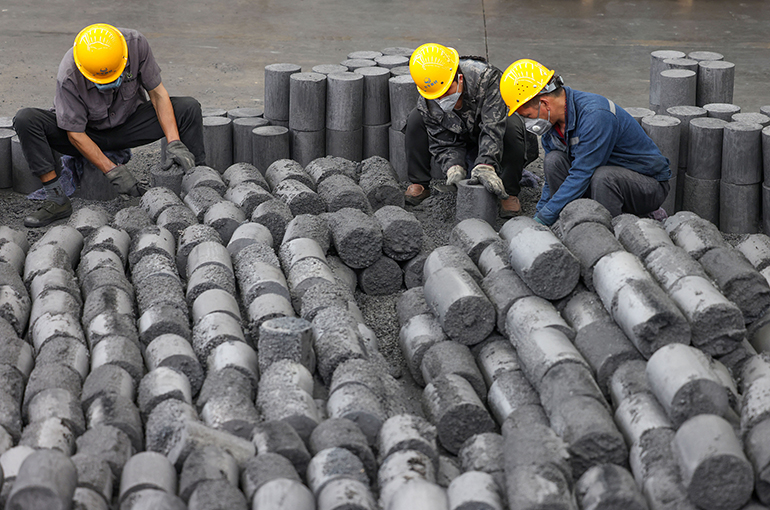
China Graphite Spherical Graphite Output Falls as Natural Anode Demand Weakens

No comments
China Graphite Spherical Graphite Output Falls as Natural Anode Demand Weakens
China Graphite Group

China Graphite spherical graphite output fell in 2025 as weak demand from the natural graphite anode material sector and existing inventories pressured production. The Hong Kong-listed natural graphite producer produced 2,300t of spherical graphite during the year, down 28% from 2024.

The decline reflects a broader shift in China’s anode materials market. Battery producers are still expanding overall anode consumption, but natural graphite is losing share to artificial graphite because of performance and price competition.

China Graphite spherical graphite output weakness shows that battery material growth does not benefit all feedstock routes equally. Natural graphite remains important, but artificial anode materials are gaining ground because they offer stronger cycling life and rate performance for many lithium-ion battery applications.

Spherical graphite sales also fell in 2025, although less sharply than production. China Graphite sold 5,815t of spherical graphite, down 6.9% from a year earlier, suggesting the company partly relied on existing inventory to meet demand.

Artificial Graphite Competition Pressures Natural Anode Feedstock

China’s anode material shipments rose strongly in 2025, reaching 2.9mn t, up 39% from a year earlier. However, natural graphite anode materials moved in the opposite direction.

Natural graphite anode shipments fell to 210,000t in 2025, down 19% from the previous year. Their share of China’s total anode material shipments dropped to 7.2%, showing that natural graphite is becoming a smaller part of the domestic anode mix.

This matters directly for spherical graphite producers. Spherical graphite is a key processed feedstock for natural graphite anode materials. When natural anode production slows, spherical graphite demand weakens quickly.

China Graphite attributed the decline to price competition and lower output of natural graphite anode materials. The company also pointed to the shorter cycling life and weaker rate performance of natural graphite compared with artificial anode materials.

Artificial graphite has become dominant in China’s battery supply chain because many battery makers prioritise consistency, fast charging performance and long cycle life. These factors are especially important for electric vehicles and energy storage systems.

The result is a margin squeeze for natural graphite processors. Even when total battery demand grows, spherical graphite producers must compete against artificial graphite suppliers that are more closely aligned with mainstream cell performance requirements.

Flake Graphite Output Rises Despite Spherical Graphite Weakness

China Graphite’s upstream natural graphite flake business performed better than its spherical graphite segment. The company produced 57,600t of natural graphite flake in 2025, up 10.8% from a year earlier.

The increase was supported by equipment upgrades, showing that China Graphite improved mining or processing efficiency even as downstream spherical graphite demand weakened. Flake graphite sales also edged higher by 1.3% to 46,020t.

This creates a mixed operating picture. Upstream flake output increased, but downstream spherical graphite production fell sharply. The gap suggests that the company may need to manage feedstock allocation carefully if natural anode demand remains weak.

Natural graphite still has strategic value. It can support lower-cost anode production and remains important for battery supply-chain diversification. However, its competitiveness depends on purification, coating, consistency, performance and customer qualification.

For China Graphite, the next challenge is not only producing more flake graphite. It must defend its position in higher-value downstream graphite products as the anode market shifts toward artificial materials and more demanding battery specifications.

The company’s results also highlight a wider issue for natural graphite markets. Supply growth alone is not enough. Producers need downstream demand from qualified anode makers, battery customers and applications where natural graphite retains a cost or performance advantage.

The Metalnomist Commentary

China Graphite’s results show that battery demand growth is becoming more selective across the graphite value chain. Natural graphite suppliers must improve processing quality and downstream integration if they want to compete against artificial graphite in high-performance batteries.
China Graphite Cuts Output in 2024 Amid Shifting Anode Material Demand

No comments
China Graphite

China Graphite sees output decline as downstream buyers move to synthetic alternatives, reshaping the anode materials landscape.

Drop in Spherical Graphite Output Reflects Market Shift

China Graphite significantly reduced its spherical graphite production in 2024 due to weakened demand and seasonal production halts. The company produced 3,200t of spherical graphite, a steep 63% drop from 8,700t in 2023, citing low winter temperatures and market changes. Meanwhile, concentrate output also fell to 5,200t, down by 8.8% from 57,000t last year.

Sales of spherical graphite halved to 3,089t, while concentrate sales increased to 45,432t, up 25% year-on-year. The shift reflects a broader industry trend, as more battery makers turn to synthetic graphite due to cost efficiencies and stable feedstock supply.

Synthetic Graphite Dominates Battery Market

The battery industry increasingly favors synthetic anode materials over natural graphite. According to EV Tank, synthetic anode materials accounted for 84.4% of China's total battery anode shipments in 2024. Shipments rose to 2.12mn t, up 24% from 2023, underscoring the rising dominance of synthetic options.

Meanwhile, China Graphite’s natural graphite products found greater demand from non-battery sectors like refractories, flame retardants, and graphene. This diversification may offer some relief, but the pressure from synthetic graphite remains a key challenge.

The Metalnomist Commentary

China Graphite’s 2024 results highlight a structural pivot in anode materials.
As synthetic graphite strengthens its market position, natural graphite producers must adapt or risk marginalization in battery supply chains.

Syrah Graphite Offtake Supports Non-China Anode Supply Chain Strategy

No comments
Syrah Graphite Offtake Supports Non-China Anode Supply Chain Strategy
Syrah resources

Syrah graphite offtake plans with NextSource Materials could strengthen non-China graphite supply routes for battery anode production. The Australian producer may sell 34,000-68,000t of natural graphite fines over seven years, subject to commercial production at NextSource’s planned Abu Dhabi anode material plant.

The Syrah graphite offtake agreement depends on several conditions. NextSource has not yet made a final investment decision on the Abu Dhabi project, and both NextSource and its customers must approve the use of Syrah’s graphite fines. This makes the deal strategically important, but still dependent on qualification, financing, and project execution.

Syrah will supply the material from its Balama graphite mine in Mozambique. The mine produced 34,400t of natural graphite in October-December 2025, up from 25,700t in the previous quarter and no production a year earlier.

Balama Graphite Gains Value as Buyers Seek Supply Diversity

Balama graphite is becoming more important as battery supply chains seek alternatives to China-linked material flows. Syrah said the NextSource agreement prices Balama graphite at a premium to market indices, suggesting that qualified non-China supply is gaining strategic value.

Syrah’s average realised graphite price, including fines and coarse flakes, rose by 11pc year on year to $506/t fob Nacala in October-December 2025. Higher realised pricing supports the company’s effort to rebuild sales momentum after production interruptions and weak market conditions.

The deal also fits Syrah’s long-standing plan to increase graphite sales outside China. The company signed a six-year offtake agreement with South Korean producer Posco in 2024 and agreed to supply graphite to US producers Graphex Technologies and Westwater in 2023.

Graphite Trade Restrictions Increase Supply Chain Urgency

Graphite is moving deeper into the critical minerals policy debate because it is essential for lithium-ion battery anodes. China remains dominant in graphite processing, so automakers, battery makers, and governments are trying to develop alternative sources of feedstock and anode material production.

NextSource’s planned Abu Dhabi anode material plant could add a new processing node outside China if it reaches commercial production. Syrah’s graphite fines would provide feedstock for that strategy, while Mozambique would remain an important upstream source.

The timing matters because graphite trade restrictions are increasing. China recently banned sales of dual-use products, including graphite, to some Japanese producers. This reinforces the need for diversified supply chains that can connect African mine output, Middle Eastern processing, and battery customers in allied markets.

The Metalnomist Commentary

The Syrah-NextSource agreement shows that graphite supply security now depends on qualification pathways, not only mine output. Non-China anode supply chains will need reliable feedstock, bankable processing projects, and customers willing to pay for geopolitical resilience.

China's Graphite Market to Grow in 2025 Despite Oversupply and Geopolitical Challenges

No comments
China Graphite

China's graphite flake market is set to expand further in 2025, driven primarily by sustained demand from the new energy vehicle (NEV) industry. Despite challenges such as oversupply and geopolitical uncertainties, the market remains resilient due to the critical role of graphite in producing lithium-ion battery components like anodes.

The NEV industry, a major consumer of graphite, has grown exponentially in China over the past decade, supported by the country's decarbonization agenda. In 2023, NEV production reached 11.345 million units (up 35% year-on-year), with sales climbing 36% to 11.262 million units. By October 2023, NEVs accounted for 46.8% of China's auto market, up from 26% in 2022.

To meet rising demand, China's domestic graphite flake production increased from 930,000 tons in 2020 to 1.2 million tons in 2023. Major companies, such as China Minmetals Heilongjiang Graphite, have launched large-scale projects, including a 6 million tons/year graphite flake ore production complex. Additional capacity expansions are underway, including projects by Heilongjiang Ruitong, Heilongjiang Longda, and Inner Mongolia Hengyu.

Export Licensing Challenges and Geopolitical Headwinds

However, Beijing's introduction of export licensing controls on graphite products like flake and spherical graphite is curbing exports. From January to October 2023, Chinese graphite flake exports dropped 23% year-on-year to 49,647 tons. Exports to India plummeted to zero, compared with 9,379 tons in the same period last year, largely due to the new regulatory restrictions.

Exporters must now comply with stringent licensing procedures that require detailed documentation, including technical descriptions, end-user identity verification, and export contracts. This move aligns with China's broader export control legislation for dual-use items, which applies to goods that have both civilian and military applications.

China also reduced tax rebates for spherical graphite exports, an essential component in lithium-ion batteries, from 13% to 9%, effective December 1, 2023. Meanwhile, stricter inspections on US-bound graphite shipments reflect escalating trade tensions between the two countries. Policies such as the US Inflation Reduction Act and the EU's Critical Raw Materials Act are further encouraging global battery manufacturers to diversify supply chains away from China.

Global Battery Producers Adapt

In response to export restrictions and potential US tariff hikes, Chinese battery manufacturers are increasing overseas investments. BTR, a major battery material producer, recently launched an 80,000 tons/year anode material plant in Indonesia and began building additional facilities in Morocco. Similarly, Shijiazhuang Shangtai is investing $154 million to establish a 50,000 tons/year anode material plant in Malaysia.

Such initiatives are helping companies hedge against geopolitical risks while ensuring a stable supply of raw materials for the growing global battery market.

Uncertain Political Climate

Political developments, such as a potential re-election of Donald Trump as US president, could further disrupt the global electric vehicle (EV) market. Trump's policies favor traditional energy sources and could lead to increased tariffs on lithium-ion batteries and related raw materials. This uncertainty underscores the importance of diversifying supply chains and expanding overseas production.

China Graphite Anode Capacity Expansion Accelerates with Xintaihe’s Phase-Two Build

No comments
China Graphite Anode Capacity Expansion Accelerates with Xintaihe’s Phase-Two Build
Graphite Anodes

China graphite anode capacity expansion is gaining speed as Xintaihe commits to a second-phase plant. The China graphite anode capacity expansion plan adds 50,000 t/yr in Laixi, Shandong. This China graphite anode capacity expansion targets surging lithium-ion battery demand from EVs and energy storage.

Xintaihe doubles down on Laixi capacity

Xintaihe will start site work on 6 May 2026. It plans completion by 5 May 2029. The second phase adds 50,000 t/yr of graphite anode output. The first 50,000 t/yr phase entered production in August 2023. Therefore, the site will reach 100,000 t/yr at full ramp. The location supports clustered battery and materials logistics.

Rising competition and a larger market

Chinese peers are also expanding capacity. Guangzhou Rongjie Energy finished a 50,000 t/yr line and will begin trials this month. Meanwhile, the global graphite market should rise to $13.35bn by 2032. It stood at $8.32bn in 2025. EVs, stationary storage, electronics, and power tools drive this growth.

NEV momentum underpins anode demand

China’s NEV output hit 8.232mn units in January–July. Sales reached 8.22mn units. Both rose 39% year on year. As a result, anode demand looks firm into 2026–2029. Producers will compete on cost, yield, and fast-charge performance. Long lead times also favor early movers on capacity.

The Metalnomist Commentary

China’s graphite anode surge strengthens midstream dominance across EV supply chains. Watch feedstock diversification, energy intensity, and domestic recycling. These factors will shape cost curves as new capacity ramps.

China Graphite's Flake Sales Skyrocket on Battery Demand

No comments
China Graphite's

China Graphite, a major natural graphite producer, has reported a remarkable surge in flake sales during the first half of the year. The rise, driven by robust downstream demand from the lithium-ion battery industry, highlights the growing importance of graphite in the production of electric vehicle (EV) batteries.

From January to June, China Graphite sold 10,109 tonnes of graphite flake, marking a 174% increase compared to the 3,689 tonnes sold in the same period last year. The revenue from flake sales grew by 111% to 25.1 million yuan ($3.6 million), up from 11.9 million yuan in the previous year.

Spherical Graphite Decline Due to Production Suspension

However, while flake sales thrived, spherical graphite sales saw a steep decline. The company’s spherical graphite output fell by 51% to 923 tonnes during the first half, as production was halted in the first quarter due to colder winter temperatures. As a result, spherical graphite revenue dropped 71% to 10.2 million yuan from 34.9 million yuan the previous year.

The demand for graphite is closely linked to the electric vehicle market. China's new energy vehicle (NEV) production rose by 29% year-on-year to 7.008 million units between January and August. Sales of NEVs increased by 31% to 7.037 million units during the same period. The NEV penetration rate in August reached 45%, up from 32% in 2023, reflecting the booming EV market and the essential role of graphite in this sector.

Dongdao Anode Production Expansion Adds More Capacity to China’s Battery Materials Chain

No comments
Dongdao Anode Production Expansion Adds More Capacity to China’s Battery Materials Chain
Dongdao Anode Production

Dongdao anode production expansion in Guangdong province shows that China continues to build scale across graphite and next-generation battery materials. Guangdong Dongdao New Material has started construction of two anode processing lines and one silicon-carbon anode line in Zhanjiang.

The two new processing lines will each have 10,000 t/yr of capacity. One line will produce synthetic graphite anode materials, while the other will produce natural graphite anode materials. The silicon-carbon anode line will have 500 t/yr of capacity, giving Dongdao a foothold in higher-performance battery material development.

Dongdao anode production growth matters because anode materials remain a core part of the lithium-ion battery value chain. China already dominates graphite processing, and the company’s latest investment reinforces the country’s ability to expand both conventional and advanced anode supply.

Graphite Anode Capacity Continues to Scale in China

Dongdao already operates 100,000 t/yr of natural graphite anode capacity and 100,000 t/yr of synthetic anode capacity. The new Zhanjiang lines will add more processing flexibility across both major graphite anode routes.

The company is also building much larger synthetic anode projects elsewhere in China. These include 300,000 t/yr of capacity in Leizhou, Guangdong, and 150,000 t/yr in Yilong, Guizhou. This shows that synthetic graphite remains a major investment focus as battery producers seek consistent performance, controlled quality, and scalable supply.

Dongdao’s subsidiary, Zhanjiang Juxin New Energy, also plans to build a 20,000 t/yr spherical graphite facility in Zhanjiang. A commissioning date has not yet been set, but the project would add another processing step that supports natural graphite use in battery anodes.

Silicon-Carbon Line Signals Next-Generation Battery Focus

The planned 500 t/yr silicon-carbon anode line is smaller than the graphite lines, but it carries strategic importance. Silicon-carbon anodes can improve battery energy density and performance, although commercial scaling remains more technically demanding than conventional graphite.

Dongdao’s decision to build this line alongside graphite processing capacity suggests a dual strategy. The company is expanding mainstream anode capacity while preparing for future demand from higher-performance battery chemistries.

All three Zhanjiang lines are scheduled to start operations in December 2027. By then, battery supply chains may be more focused on cost reduction, fast charging, energy density, and material efficiency. Producers with both graphite scale and silicon-carbon development capacity could be better positioned for that transition.

The Metalnomist Commentary

Dongdao’s expansion shows that China is not slowing its grip on the anode materials chain. The strategic issue for global battery supply chains is no longer only graphite availability, but who controls processing scale, qualification, and next-generation material development.

Hubei STR anode recycling plant will start in March 2026 as China’s battery scrap accelerates

No comments
Hubei STR anode recycling plant will start in March 2026 as China’s battery scrap accelerates
Lithium-Ion Battery

Hubei STR will start the Hubei STR anode recycling plant in March 2026. The project targets 50,000 t/yr of recycled anode materials for lithium-ion batteries. The company began site construction in January 2022. As a result, the facility enters the market as battery recycling volumes rise sharply.

Battery scrap volumes will surge as China’s first NEV wave reaches end-of-life. Lithium-ion batteries usually retire when capacity falls to 80%. The US Advanced Battery Consortium links this threshold to an 8–12 year service life. Therefore, post-2025 retirements should expand the available feedstock for anode material recycling.

China’s EV scale is turning recycling into a supply chain priority

China’s EV scale is making the Hubei STR anode recycling plant strategically timed. China pushed NEV output above one million units in 2018. NEVs reached 40.9% of total auto sales in 2024. Meanwhile, October NEV sales hit 1.72mn units and took 51.6% market share.

Recycling capacity must follow that growth curve. China Association of Automobile Manufacturers forecasts NEV sales near 16mn units in 2025, up from 12.86mn in 2024. China Automotive Engineering Society estimates retired power batteries exceeded 580,000t in 2023. It expects retirements to reach 6mn t by 2030. Consequently, anode recycling becomes a cost, ESG, and security lever for battery makers.

Graphite recovery and copper foil separation define the value capture

Graphite recovery drives much of the anode recycling economics. The lithium-ion battery recycling process starts with dismantling and material separation. Recyclers can recover plastics and the diaphragm from anode-side components. They can also extract aluminium foil from cathode materials.

Graphite recovery then becomes the key upgrade step. Recyclers separate graphite from copper foil in spent anodes. They purify the graphite and sell it back into the battery materials chain. Therefore, the Hubei STR anode recycling plant can support a more circular anode supply. It can also reduce exposure to price swings in battery-grade inputs.

The Metalnomist Commentary

China’s recycling race is shifting from metals recovery to materials performance. Therefore, graphite purity and consistent output will decide who wins long-term contracts. However, recyclers must prove traceability and ESG compliance to unlock premium pricing.

Japan-Australia Graphite Anode Supply Chain Targets Battery Security

No comments
Japan-Australia Graphite Anode Supply Chain Targets Battery Security
Graphite

The Japan-Australia graphite anode supply chain is becoming a serious strategic project for battery materials security. Idemitsu, Marubeni, NSC, and Graphinex have agreed to develop a cross-border supply chain for natural graphite anode material. The plan links graphite mining in Queensland with refining and processing in Japan. As a result, the Japan-Australia graphite anode supply chain could reduce reliance on more concentrated supply routes.

This matters because graphite remains one of the most important battery raw materials. Demand continues to rise with electric vehicles and renewable energy storage. Japan has relied heavily on imports for graphite procurement. Therefore, the Japan-Australia graphite anode supply chain directly addresses a critical supply risk.

The industrial structure of the deal is also clear. Idemitsu and Graphinex will handle graphite extraction in Australia. Marubeni and NSC will focus on refining and processing in Japan. Consequently, the project is designed as a full upstream-to-midstream partnership rather than a simple trading agreement.

Natural Graphite Anode Material Is Becoming a Strategic Priority

Natural graphite anode material is now central to battery manufacturing competitiveness. Without secure graphite supply, downstream battery production becomes more vulnerable to trade shocks and export restrictions. That makes source diversification more important than ever. As a result, Japan is moving to secure a more stable anode material base.

China’s role helps explain the urgency. Japan wants alternative import sources as it reduces dependence on the world’s largest graphite producer and exporter. Export controls have made that concentration risk harder to ignore. Therefore, the new partnership reflects both industrial logic and geopolitical caution.

Idemitsu’s earlier investment in Graphinex also shows this strategy did not begin overnight. The companies have already been building ties around Australian graphite mining. This new agreement pushes that relationship into a more integrated supply chain phase. Meanwhile, it strengthens confidence that the project has real strategic intent.

Graphite Anode Plant in Japan Could Deepen Domestic Battery Capacity

The graphite anode plant in Japan is the most important downstream element of the plan. The companies are exploring a Japanese production site and aim to start operations in 2028. That would give Japan more domestic control over an essential battery input. Consequently, the graphite anode plant in Japan could become a meaningful industrial anchor.

The partnership also aligns with the wider Japan-Australia critical minerals agenda. Both countries have been working to deepen cooperation on energy security and supply chains. This project fits that framework well because graphite sits at the core of battery manufacturing. Therefore, the deal supports both national policy and commercial demand.

The broader market significance is clear. Battery supply chains are no longer judged only by cell production capacity. They are increasingly judged by who controls upstream and midstream materials. As a result, the Japan-Australia graphite anode supply chain could become a notable model for allied critical mineral cooperation.

The Metalnomist Commentary

This partnership matters because it targets one of the most overlooked battery bottlenecks: graphite anodes. Japan is not only seeking more raw material. It is trying to secure processing and manufacturing depth as well. If execution stays on track, this project could become an important example of how allied supply chains move beyond dependence and into real industrial coordination.

Syrah Resumes Graphite Shipments From Balama After Protest Disruptions

No comments
Syrah Resumes Graphite Shipments From Balama After Protest Disruptions
Syrah Resources

Syrah resumes graphite shipments ahead of plan after months of protests in Mozambique. The company lifted the December 2024 force majeure. It is loading 10,000t at Nacala for industrial buyers outside China. It plans a large US shipment by late September.

Balama restart and logistics

Balama returned to operation after Syrah reached a farmer agreement. The mine suffered no damage during the protests. Syrah had targeted large shipments in September–December. However, it accelerated the schedule after gaining site access in May. First-quarter sales fell 94% to 1,300t as inventories covered customers.

Implications for the anode supply chain

The restart broadens graphite supply beyond China amid policy uncertainty. Industrial buyers gain an alternative source of natural graphite flakes. EV anode projects in the US benefit from diversified feedstock. Freight through Nacala supports stable exports from northern Mozambique.

Market exposure still requires careful community engagement and security planning. Non-violent protests blocked access in September 2024. Tensions escalated after a disputed election. Effective stakeholder management now underpins Balama reliability.

Syrah resumes graphite shipments as it pivots toward North American demand. The company aims to grow sales outside China in 2025. Execution on logistics and customer qualification remains critical.

The Metalnomist Commentary

Balama’s early restart strengthens non-China graphite options for industrial and battery supply chains. Pricing power now hinges on dependable exports and stable community relations. Watch US intake and customer qualification, which will determine utilization rates this year.

Evion to Export Expandable Graphite to Europe and Double Production Capacity

No comments
Evion

Evion, an Australian graphite mining company, is set to export 400 tons of expandable graphite to Europe during the first quarter of 2025. The exports will come from its joint venture facility, Panthera Graphite Technologies, in Pune, India, which began production in November and December 2024. The company plans to double its production capacity by the end of the year to meet growing global demand.

Production Growth and Market Strategy

Evion's Panthera Graphite Technologies joint venture, in partnership with Metachem Manufacturing, has already produced high-value expandable graphite for immediate export. According to Evion’s January 16 presentation, the company remains on track to complete its first 400-ton shipment to Europe by March.

To secure steady production over the next six months, Evion has 500 tons of graphite concentrate on-site, purchased on favorable terms in November 2024. This stockpile ensures stable pricing and supply certainty for the company’s ongoing operations.

Pricing, Cost Efficiency, and Expansion Plans

Panthera has locked in first-quarter pricing between $3,000-$3,300 per ton FOB, with expectations of a 10% price increase for second- and third-quarter sales. Production costs range between $1,500-$1,750 per ton, and the company sees potential for short-term cost savings.

Evion is executing a three-stage expansion plan:
  • Stage 1: Current production of 2,000-2,500 tons per year
  • Stage 2: Expansion to 4,000-4,500 tons per year by end of 2025
  • Stage 3: Full-scale production of 10,000 tons per year by 2026-2027
If successful, Panthera will become one of the largest producers of expandable graphite outside of China, strengthening its position in key markets such as Europe, Japan, and the U.S. This strategy aligns with the global supply shift following China's export ban on artificial graphite in December 2023.

Future Expansion in Battery and EV Markets

Beyond expandable graphite, Evion is advancing its Maniry project in Madagascar and exploring plans to establish a battery anode materials plant in Germany. This facility would process fine flake graphite from Maniry into uncoated spherical purified graphite, serving the lithium-ion battery and EV sectors. The company is currently negotiating financing, offtake agreements, and potential locations for the plant.

Expandable graphite is a crucial material for industries such as electric vehicles (EVs), aerospace, energy storage, and electronics. As global demand rises, Evion's strategic investments position it as a key supplier for the fast-growing graphite market.

Syrah Resumes Graphite Production at Mozambique’s Balama Mine

No comments
Syrah Resumes Graphite Production at Mozambique’s Balama Mine
Syrah Resources

Restart of Graphite Operations After Protests

Syrah Resources has resumed graphite production at its Balama mine in Mozambique, with plans to restart large-scale shipments between September and December. The mine, which has a 350,000 t/yr capacity, was shut down due to prolonged protests that blocked access since late 2023.

The company declared force majeure in December, which remains active, but production is now restarting to rebuild inventories. Shipments will resume in September, targeting customers outside China as Syrah seeks to expand its global market share.

Strategic Focus on Ex-China Markets

Syrah chairman Jim Askew confirmed the company aims to increase sales from Balama this year, focusing on diversifying exports away from China. From January to March, Syrah only sold 1,300t of graphite using existing inventories, falling short of obligations.

By ramping up production, the company intends to re-establish stable supply chains and reassure buyers in key ex-China markets, including Europe and North America. This shift aligns with broader industry strategies to reduce dependence on Chinese-dominated graphite supply.

The Metalnomist Commentary

Syrah’s Balama restart underscores the volatility of global graphite supply chains amid political and social challenges in producing countries. While resuming shipments will ease near-term supply pressure, the company’s long-term success will depend on balancing local community concerns with its ambition to secure a stronger foothold in non-Chinese markets.

Zhongke Anode Material Sales Surge as Energy Storage Demand Accelerates

No comments
Zhongke Anode Material Sales Surge as Energy Storage Demand Accelerates
Zhongke

Zhongke anode material sales rose sharply in 2025 as China’s lithium-ion battery sector expanded across new energy vehicles and power storage. Hunan Zhongke Electric sold 363,253t of anode materials during the year, up 62% from 2024.

Zhongke anode material sales were supported by strong downstream demand and higher operating rates. The company’s output increased by 66% to 378,469t, reflecting a rapid scale-up in response to battery market growth.

Zhongke anode material sales also lifted revenue. Revenue from anode materials rose by 60% to 7.99bn yuan, broadly in line with the increase in shipment volumes.

The result shows how anode materials remain one of the key beneficiaries of battery expansion. Demand is no longer driven only by electric vehicles. Grid storage, industrial storage and AI-related power demand are becoming increasingly important.

Capacity Utilisation Tightens as China Battery Demand Expands

Zhongke’s anode material capacity reached 348,683 t/yr in 2025, up 46% from a year earlier. The increase followed equipment and technology upgrades across its production base.

Capacity utilisation rose to 108.6% from 95.7% in 2024. This shows that Zhongke was operating above nameplate capacity as demand outpaced available production capability.

The company is now expanding further. A third-phase project at its Zhaotong site in Yunnan province is under construction and will add 100,000 t/yr of anode material capacity by the end of 2026.

Zhaotong has become a key growth platform. The first phase, with 15,000 t/yr of capacity, started production in April 2020. The second phase, with 100,000 t/yr of capacity, began operations in March 2024.

Zhongke is also planning a 300,000 t/yr anode material complex in Luzhou, Sichuan province. This would further strengthen its position in China’s graphite anode supply chain.

The expansion reflects a broader industry trend. Anode producers are adding capacity to serve battery makers that need reliable supply, stable quality and lower-cost materials for high-volume cell production.

Overseas Expansion Targets Storage and Non-China Customers

Zhongke is also building a 100,000 t/yr anode material plant in Tangier, Morocco. The project targets customers outside China and reflects the growing need for regionalised battery material supply chains.

Morocco offers strategic value because it is close to European markets and has become more attractive for battery-related investment. For Chinese anode producers, overseas capacity can help serve customers facing localisation, trade and supply-chain security requirements.

Energy storage is becoming a major long-term demand driver. Global energy storage battery shipments reached 651.5GWh in 2025, up 76.2% from a year earlier. Chinese companies accounted for 614.7GWh, or 94.4% of global shipments.

EV Tank expects global energy storage battery shipments to exceed 2TWh by 2030. If this forecast materialises, anode material demand will continue rising across China and overseas markets.

Policy is also supporting growth. China is moving new energy storage from mandatory allocation toward a more market-oriented system, including capacity pricing support for independent grid-side storage.

AI data centres are adding another demand layer. Rapid growth in electricity consumption from AI infrastructure is increasing the need for power storage, grid stability and backup capacity.

Europe is also expanding storage under energy security strategies. EU member states installed 27.1GWh of new battery energy storage systems in 2025, up 45% from the previous year.

For Zhongke, this demand mix supports a larger and more international anode strategy. The company is positioning itself to serve China’s dominant battery ecosystem while preparing for overseas demand linked to storage, EVs and grid resilience.

The Metalnomist Commentary

Zhongke’s growth shows that anode materials are moving from an EV-driven market into a broader energy infrastructure market. The next competitive phase will depend on overseas localisation, graphite supply security and the ability to serve storage demand outside China.

China Expands Export Controls on Critical Minerals Amid Trade Tensions

No comments
China Critical Minerals

New Restrictions on Tungsten, Indium, and Other Critical Metals

China has intensified its trade strategies by imposing new export controls on additional critical minerals. This move is seen as a countermeasure against higher tariffs recently imposed by the United States. The newly restricted materials include various metals and compounds of tungsten, indium, tellurium, bismuth, and molybdenum. The export restrictions came into effect on February 4, as announced by China’s Ministry of Commerce.

Impact on Global Supply Chains

This expansion of export controls follows the introduction of similar measures in 2023-24, which included key materials such as gallium, germanium, graphite, and antimony. With the recent addition, the scope now covers more crucial metals used in various industries globally. According to industry estimates, China holds a dominant share of the global supply for metals like tungsten and bismuth. For instance, it is the world’s largest producer and exporter of tungsten, controlling nearly 80% of the global market. Similarly, China is responsible for 70-80% of the world's bismuth supply, which further underscores its influential role in the global supply chain.

The new export controls will allow China greater flexibility in deciding which countries can receive these critical minerals. Market participants have indicated that the export restrictions could drive up global prices, especially for tungsten and bismuth, due to China's near-monopoly on these materials. This is likely to cause disruptions for industries that rely heavily on these metals, from electronics to energy production.

Global Repercussions and Market Shifts

The broader implications of these controls may be felt across various sectors. As China continues to tighten its grip on critical mineral exports, consumers outside of China will face challenges in securing alternative sources of supply. However, some experts suggest that this move might spur increased investments in local production capabilities in non-China markets, as countries seek to reduce their dependence on Chinese supplies.

In the short term, global markets will likely experience higher prices for the affected minerals, particularly as exporters must follow a stringent verification process before shipping these critical materials. The procedural delays and uncertainty about permitted shipments will add to the volatility of the market.

Conclusion: Strategic Maneuver in Global Trade

China's latest export controls reflect a growing trend of resource nationalism, where nations leverage their dominance in critical industries to secure economic and political advantages. These measures come amidst heightened trade tensions, particularly with the United States, and are designed to protect China’s national security and economic interests. As the global demand for these minerals continues to rise, China’s role in the critical metals supply chain remains pivotal, making it essential for businesses worldwide to monitor these developments closely.


Canada’s NextSource Sets Sights on $280 Million Graphite Plant in Saudi Arabia

No comments
Canada’s NextSource

NextSource Materials, a Canadian mining company, has unveiled ambitious plans to establish a state-of-the-art battery anode facility in Saudi Arabia, dedicated to producing graphite for electric vehicles (EVs). According to a technical study released on Thursday, the proposed plant is set to produce 20,000 tonnes per year of graphite anode active material within the first 16 months of operation. This initiative is part of NextSource's broader strategy to develop an anode processing hub over the next five years, aiming for a total production capacity of up to 100,000 tonnes per year of coated spheronised purified graphite.

Last June, NextSource commenced the production of graphite concentrate at its Molo mine in southern Madagascar. The output supplies leading EV manufacturers such as Tesla and Toyota. The company is targeting a phase 1 nameplate capacity of 17,000 tonnes per year of graphite concentrate by next month.

Looking ahead, the company has set a phase 2 production guidance to reach 150,000 tonnes per year of graphite within two years, a significant increase from the current 45,000 tonnes per year reported in September. Notably, NextSource's 4GWh solar and battery hybrid power plant at the Molo site achieved full operational status in October, capable of supplying one-third of the plant’s power needs.

In April, NextSource signed a long-term lease agreement to construct a second graphite plant in the Freeport Zone of Port-Louis, Mauritius. This facility will initially have a nameplate capacity of 3,600 tonnes per year of battery-grade graphite, with plans to scale up to 14,400 tonnes per year by next year, pending successful negotiations with the government.

The company is also exploring potential expansion into the UAE and North America, as part of its strategic effort to diversify global supply chains for battery-grade graphite anodes. According to trade data, China accounted for over 80 million kilograms of flake graphite imports last year, representing 83% of global imports and underscoring the critical need for diversified sources of this essential raw material for natural graphite anodes.

China to Overpower Brazil in Rare Earths Through 2050

No comments
China to Overpower Brazil in Rare Earths Through 2050
Brazil in Rare Earths

China to overpower Brazil in rare earths as processing capacity stays highly concentrated in China. Brazil holds vast reserves, but processing lags. Therefore, China to overpower Brazil in rare earths remains the base case through 2050. Brazil eyes offshore and onshore reserves to raise output. However, processing bottlenecks still define market power.

Processing Dominance Shapes Market Power

China to overpower Brazil in rare earths reflects processing, not geology. China handled 90% of rare earth processing in 2022. Malaysia held 9% and Estonia 1%. Meanwhile, China produced 68% of rare earths in 2022. The US and Australia followed at 11% and 9%. IEA sees China’s magnet REE mine supply up 24% by 2035. Australia may quadruple output to 14,570t by 2035. Yet processing concentration keeps China’s strategic lead intact.

Brazil’s Resource Scale Meets Early-Stage Industry

Brazil holds 23% of global rare earth reserves. It also holds 26% of graphite and 94% of niobium. Even so, commercial production is nascent. Serra Verde is Brazil’s only REE producer today. New entrants target Brazil’s clays and carbonatites. REA and Aclara plan Dy, Tb, and NdPr projects. Government ambitions include the Rio Grande Rise offshore. Success still requires midstream plants and clean leach circuits.

The Metalnomist Commentary

Processing remains the real chokepoint, not reserves. Brazil’s path runs through solvent extraction investment and ESG-credible reagents. Watch pilot circuits, offtakes, and financing signals that enable non-China midstream scale.

China Imposes Export Controls on Rare Earths, Shaking Global Supply Chains

No comments
China Imposes Export Controls on Rare Earths, Shaking Global Supply Chains
China Rare Earths

New Export Restrictions Target Samarium, Terbium, Dysprosium, and Other Critical Elements

China has imposed immediate export controls on a wide array of rare earth elements, including samarium, terbium, dysprosium, and yttrium. The controls also affect alloys, NdFeB magnets, and samarium-cobalt permanent magnets, deepening global concerns about rare earth supply security.

This move aligns with China’s dual-use item control scheme, formalized last year through new legislation. The Ministry of Commerce stated the action reflects international norms for items with both civilian and military applications.

However, the timing is widely viewed as retaliation against recent US tariffs. Over the past two years, China has imposed controls on other strategic metals, including gallium, germanium, and graphite, amid intensifying geopolitical tensions with Western nations.

Global Markets Brace for Disruption as Permit Delays and Shortages Loom

Exporters must now submit documentation verifying both end-user and end-use, with immediate suspension of exports if changes occur. Though the official permit process takes 45 days, actual approvals may be delayed depending on destination countries.

Past implementation of similar schemes caused price spikes in metals like antimony and bismuth, as exporters struggled to receive permits. The European antimony market currently trades at historically high premiums due to such restrictions.

In this new round, heavy and medium rare earth exports may decline significantly, given the processing uncertainties. The rules apply globally—not just to the US—raising concerns across Japan, Korea, and Europe.

US and Japan Face Supply Shock as China Tightens Rare Earth Dominance

China supplies over 90% of the world’s rare earths, making the new controls especially impactful for US and Japanese industries. The US lacks alternative sources for heavy rare earths like dysprosium and terbium, with Lynas Malaysia not expected to deliver separated output until 2025.

Japan, a key importer of dysprosium and terbium, is highly exposed. Traders warn that non-Chinese suppliers may raise prices in response, although ramp-up timelines for new mines remain uncertain.

Meanwhile, Chinese imports of US rare earth ores may fall due to Beijing’s new 34% retaliatory tariffs, though this will have limited domestic impact, as China sources much of its supply from Myanmar, Laos, and internal mines.

The Metalnomist Commentary

China's rare earth export controls signal a new escalation in materials diplomacy. With the West struggling to develop non-China supply chains, this move could accelerate diversification efforts—but not without short-term disruptions. For global industries relying on permanent magnets and high-tech alloys, the clock is ticking.

Norge Mining Set to Acquire Europe's Largest Graphite Mine, Skaland, from MRC

No comments
Norge Mining

Norge Mining, based in London, has announced its plan to purchase Skaland Graphite, Europe's largest natural graphite mine, from Australia's Mineral Commodities (MRC). This strategic acquisition is aimed at meeting the escalating demand for battery-grade graphite, essential for the burgeoning electric vehicle market and other green technologies.

Expanding into Battery-Grade Graphite Production

Located on the island of Senja, approximately 200 kilometers from Tromsø, Norway, Skaland Graphite currently has an annual output of about 10,500 tons, primarily serving industrial customers. With this acquisition, Norge Mining not only plans to continue serving these established markets but also to expand into the production of battery-grade graphite. The company is optimistic about the potential for significant resource expansion at Skaland, with the last estimated mineral resource in 2021 showing 1.84 million tons at 23.6% total graphitic carbon.

Strategic Importance Amidst Global Supply Chain Concerns

The acquisition, expected to be finalized in the first quarter of 2025 following customary conditions and regulatory approvals, comes at a critical time. Graphite has been designated as a strategic raw material by the EU in 2023, highlighting its vital role in the green energy transition. Moreover, recent export controls on graphite by China, effective from December 2023, have underscored the urgent need to diversify supply chains and mitigate geopolitical risks. This acquisition by Norge Mining is poised to enhance Europe's graphite self-sufficiency and secure a stable supply for essential technologies.

In addition to the Skaland project, Norge Mining is actively developing several early-stage deposits in southwest Norway, which are rich in raw materials crucial for producing vanadium, phosphate, phosphorus, and titanium—further contributing to its portfolio of critical minerals.

China Imposes Export Controls on Heavy Rare Earths in Retaliation to US Tariffs

No comments
China Rare Earths

New Legislation Strengthens Dual-Use Item Export Control Scheme

In a move likely aimed at countering US President Donald Trump’s recent tariffs, China has extended its export control measures to cover several medium and heavy rare earths. The new controls, announced on April 4, target elements such as samarium, gadolinium, terbium, dysprosium, lutetium, scandium, and yttrium. These minerals are critical in various high-tech and defense applications, and their export restrictions will likely have significant geopolitical and market implications.

China’s Dual-Use Export Control Scheme

The Chinese Ministry of Commerce emphasized that the materials affected by these new controls possess "dual-use" properties, which means they can be used for both civilian and military applications. Export controls on such items are considered a standard international practice. This move aligns with China’s enhanced dual-use item management scheme, which was bolstered by new legislation passed in October 2023. The new regulations require exporters to submit detailed documents confirming the end-user and the intended use of the items. Should the end-user or the intended use change, exporters are required to halt the shipment immediately.

While the export control scheme is part of a broader effort to regulate strategic materials, it has been widely viewed as a retaliatory response to the US’s 34% reciprocal tariffs, announced on April 2. In recent years, China has also placed export controls on other critical minerals like gallium, germanium, and graphite, in response to escalating tensions with the US and Western nations.

Strategic Implications and Market Reactions

China is a dominant player in the global rare earth market, accounting for over 90% of global supplies. The country’s total shipments of rare earths dropped by 3% in January-February 2024, compared to the same period the previous year, according to customs data. The US, recognizing its dependence on China for these materials, has taken steps to boost domestic production and diversify its supply sources, including funding initiatives in countries like Greenland, which has significant rare earth reserves.

Most market participants previously expected China to hold back on using rare earths as a "last card" in the trade war due to the strategic importance of these materials in many high-tech applications. However, China’s decision to implement these export controls highlights its readiness to leverage its position in the rare earth market. This policy shift is expected to further strain the rare earth supply chain and could result in higher prices for materials such as antimony and bismuth, which have already seen price surges following previous export restrictions.

China Stands Firm on Metals Export Controls, Future Moves Remain Unclear

No comments

China is intensifying its export controls on crucial materials and metals but has left the international community guessing about what might be next on the list. Beginning on September 15, antimony—a metal with significant dual-use applications—will fall under these new restrictions, a move consistent with recent measures applied to gallium, germanium, and graphite over the past year.

During a press briefing, when asked whether tungsten, another key material where China holds a dominant market share, might soon face similar controls, He Yadong, spokesperson for the Chinese Ministry of Commerce, remained vague. He reiterated that China will continue to implement export controls "in accordance with laws and regulations," without specifying additional metals that might be affected.

He emphasized that the controls on antimony, used primarily in fire-retardant materials and solar glass, align with "prevailing international practices" and are not targeted at any particular country or region. Despite these assurances, the timing of the announcement has fueled speculation that China's tightening grip on critical materials could be a response to recent trade frictions with the European Union.

In particular, some analysts view the new controls as a reaction to the EU's countervailing duties on Chinese battery electric vehicles (EVs). After the EU imposed provisional duties in July, Beijing requested consultations, seeking to have the tariffs reduced or eliminated. However, the final duties remained only slightly adjusted. In retaliation, China has filed a case with the World Trade Organization (WTO) challenging these duties.

The impending antimony export controls have already driven up prices in China, with foreign buyers scrambling to secure supplies amid an increasingly tight market. European buyers, in particular, are finding it challenging to source antimony, exacerbating market pressures.

Further escalating trade tensions, China has launched an investigation into EU dairy product imports, following the EU's imposition of provisional anti-dumping duties on Chinese biodiesel imports. He Yadong downplayed suggestions that this move was retaliatory, explaining that it was initiated in response to a petition from China's domestic industry, contrasting it with the EU's unprompted investigation into Chinese EVs.

These developments underscore the growing strain in trade relations between China and several Western nations. As these tensions mount, concerns over the security of global supply chains have intensified. At the same time, Chinese companies are increasingly looking to expand their production capabilities overseas as a way to navigate these emerging trade barriers.