Showing posts sorted by relevance for query South Korea’s. Sort by date Show all posts

AI Drives ICT and Manufacturing Growth in Asia-Pacific: A Look at South Korea and Taiwan

No comments
TSMC

The explosive growth of artificial intelligence (AI) infrastructure, particularly in the United States, is significantly shaping the electronics and related manufacturing sectors in South Korea and Taiwan. Government data from both countries highlights the importance of AI and its impact on semiconductors, electronics, and other ICT-related exports.

In South Korea, AI demand is offsetting declines in exports to China, showcasing the country's leading role in the global tech supply chain. The latest figures from South Korea’s Ministry of Trade, Industry, and Energy (Motie) show a 14.8% increase in ICT exports for November, totaling over $20 billion for the fourth consecutive month. Semiconductors, computers, and peripherals were the major drivers of this growth. Despite this, year-on-year growth showed signs of slowing, dipping from 22% in October to 14.8%. This slowdown was partly attributed to a 2.2% drop in exports to China and Hong Kong, primarily due to waning demand for mobile phones and displays.

Notably, South Korea's semiconductor exports skyrocketed, with a 30.3% rise year-on-year, reaching $12.5 billion. Exports to the United States surged by nearly 110%, driven by the increasing need for server equipment and data centers fueled by AI systems. These advancements in AI are rapidly driving the need for upgraded infrastructure, such as high-performance servers and data centers, essential for processing the vast amounts of data generated by AI algorithms.

South Korea’s semiconductor industry is globally influential, with giants like Samsung Electronics and SK Hynix at the forefront, along with smaller players such as DB HiTek and Hana Micron. As the world’s second-largest semiconductor supplier, South Korea is poised to benefit as AI continues to push demand for microchips and computing hardware to new heights.

Taiwan's Semiconductor Boom Fuels AI and Tech Growth

In Taiwan, the demand for semiconductors to support AI infrastructure is also expanding rapidly. Taiwan holds a dominant position in global semiconductor production, accounting for more than 60% of worldwide manufacturing and nearly 90% of advanced semiconductor output. This dominance is largely due to the presence of Taiwan Semiconductor Manufacturing Corp (TSMC), the world’s largest foundry, along with companies like MediaTek, ASE Technology Holdings, and United Microelectronics Corp (UMC).

Taiwan’s Ministry of Economic Affairs reports a 26.6% year-on-year increase in equipment purchases for the manufacturing sector in Q3, amounting to 462.4 billion New Taiwan Dollars (about $14.2 billion). The surge was largely driven by semiconductor factories expanding to meet the needs of emerging technologies, including AI, high-performance computing, and cloud services. The country's semiconductor production continues to boom, fueling revenue growth in both electronics and information technology industries.

The semiconductor-driven demand for AI technologies in Taiwan is evident, with a significant 46.4% increase in purchases of fixed assets in the electronic components sector, which accounts for 65.1% of total manufacturing purchases. This increase reflects the ongoing investments in AI-related equipment, including the expansion of wafer foundries, packaging, testing, and memory factories. Meanwhile, the machinery and equipment sector also reported a 26.6% rise in year-on-year purchases, largely driven by semiconductor companies' capital expenditures for new factory expansions and production lines.

Despite these gains, other sectors like chemical materials and fertilizers saw a decline in equipment purchases, highlighting the uneven impact of AI across different industries.

As Taiwan continues to be a hub for semiconductor production, the country is expected to see sustained investments in high-end production capacity and the introduction of low-carbon, automated equipment. This is set to drive further advancements in AI technologies and their applications, solidifying Taiwan's position as a key player in the global tech landscape.

Ronbay Begins High-Nickel NCM Precursor Shipments from South Korea

No comments
Ronbay Begins High-Nickel NCM Precursor Shipments from South Korea
Ronbay

Strategic Expansion into Global Supply Chains

Chinese battery material giant Ningbo Ronbay has started shipping ultra-high nickel NCM precursors from its Chungju, South Korea plant. The product contains a minimum of 90pc nickel and targets global battery makers. Current NCM precursor capacity totals 66,000 t/yr — 60,000 t/yr in China and 6,000 t/yr in South Korea.

South Korea’s extensive free trade agreements offer Ronbay significant advantages in bypassing rising trade barriers. The company expects these shipments to strengthen ties with clients in Japan, South Korea, Europe, the US, and Southeast Asia, especially amid the US Inflation Reduction Act and EU Critical Material Act.

Capacity Growth and Recycling Initiatives

Ronbay plans to expand South Korean NCM capacity to 26,000 t/yr and build a 20,000 t/yr plant in Indonesia by 2026. Competitors CNGR, Huayou Cobalt, and GEM are also investing in precursor facilities overseas to mitigate trade restrictions.

The company will launch a global battery recycling system in 2027, with plants in the US, Europe, Japan, and Southeast Asia. This network will process black powder from waste batteries into high-purity precursor materials, though capacity figures remain undisclosed.

Ronbay produced 137,351 t of CAM in 2024, up 34pc year-on-year. NCM accounted for around 120,000 t of sales, while LMFP was added to its portfolio in 2022 through the acquisition of Tianjin Skylandone. The firm targets 130,000–150,000 t of CAM production in 2025, and is building a 20,000 t/yr NCM plant in Poland, with the first phase due this year.

The Metalnomist Commentary

Ronbay’s move to produce high-nickel NCM precursors in South Korea is a calculated response to geopolitical trade pressures. By leveraging South Korea’s trade agreements and diversifying production locations, the firm is securing market access in key EV regions. This multi-pronged strategy — combining capacity expansion with recycling — positions Ronbay strongly in the global energy transition supply chain.

Japan and South Korea Prepare for Economic Impact of US Metal Tariffs

No comments
Japan Manufacturing

Japan Takes a Cautious Approach, While South Korea Moves Quickly to Shield Its Automotive Industry

The imposition of US tariffs on metal products has left Japanese and South Korean industries scrambling to mitigate potential damages. Following US President Donald Trump's announcement of sweeping tariffs, Japan’s metal firms are proceeding with caution. Tokyo is currently working on a strategy to strike a middle ground while preparing for any potential long-term effects. South Korea, on the other hand, has moved quickly to put measures in place to support its automotive industry, which stands to be significantly impacted by the tariffs.

Japan's Response to US Tariffs

In 2024, Japanese exports of machinery and electrical equipment to the US amounted to ¥7.8 trillion ($53 billion), reflecting a 5.3% increase from the previous year. Despite this growth, Japan's metal industry is not experiencing significant immediate impact from the new 24% tariffs imposed on steel and automobile products. However, companies are still closely monitoring the situation to understand the full extent of the potential damages. While some industry leaders remain uncertain, one Tokyo-based battery material producer noted that no damage had been reported yet from clients. Still, Japanese authorities are wary of long-term effects, especially in sectors like electronics and automotive, which would face major setbacks should the tariffs persist.

The Japanese government is refraining from retaliatory measures as negotiations with the US government continue. Japan hopes to reach an agreement that could either reduce the tariffs or potentially exempt the country from them entirely. On April 8, Japan’s Ministry of Trade and Industry (METI) will hold a ministerial meeting to discuss comprehensive measures in response to the tariffs.

South Korea Takes Swift Action to Support Its Economy

South Korea, with a more direct approach, is preparing to unveil measures aimed at mitigating the negative effects on its automotive sector. In 2024, South Korea exported $127.8 billion in goods to the US, including nearly $34.7 billion worth of passenger automobiles, $7 billion in auto parts, and nearly $3 billion in lithium-ion batteries. With such significant exports to the US, the potential impact of these tariffs could be severe.

The South Korean government, led by acting president Han Duck-soo, has vowed to work with the private sector to minimize damage. The government is planning follow-up measures to protect vulnerable sectors, such as small-medium enterprises and mid-sized companies. However, the country’s political instability, with the impeachment of former president Yoon Suk Yeol, may delay the response. South Korea’s aluminium sector is also on high alert, with companies looking to devise strategies to weather the storm.

Additionally, South Korean tech giant LG Electronics has warned that any further escalation in tariffs could have a pronounced impact on its operations, especially if the US introduces import quotas or safeguard measures. The company’s major production sites are spread across South Korea, China, Mexico, and Vietnam. LG's CFO, Changtae Kim, emphasized that higher tariffs would directly affect the company’s competitive position.

Looking Ahead

Both Japan and South Korea face uncertain futures as they navigate the complex landscape of US tariffs. Japan remains cautious, hoping for negotiations to alleviate the pressure, while South Korea moves swiftly to protect key sectors like automotive manufacturing. The coming weeks will be crucial in determining how both nations adapt to the evolving trade situation and whether their efforts to shield their industries from the tariffs will be successful.

CNGR to End Investment in Nickel Joint Venture with Posco Amid Weak EV Market

No comments
Posco

China’s CNGR will liquidate its joint venture with South Korea’s Posco due to slowing electric vehicle demand.

Chinese battery materials producer CNGR has decided to terminate its investment in a nickel refinery joint venture with South Korea’s Posco Holdings. The joint venture, Posco CNGR Nickel Solution, will be liquidated as part of CNGR’s efforts to reduce investment risks and protect investor interests. This decision comes amid a slowdown in the global electric vehicle (EV) market, which has impacted the demand for battery materials.

Slowing EV Demand Leads to Strategic Adjustments

The global EV market has seen slower growth in 2024 compared to the previous year, which has affected the demand for battery materials like nickel and lithium. According to South Korean market intelligence firm SNE Research, the slowdown in EV sales has resulted in reduced battery installations. This trend prompted CNGR to reassess its joint venture with Posco, leading to the decision to dissolve the partnership.

Joint Venture and Production Facility Plans

CNGR and Posco first announced their joint venture plans in June 2023, aiming to build a production facility in Pohang, South Korea. The facility was designed to produce 50,000 tonnes per year of nickel sulphate and 110,000 tonnes per year of lithium-ion battery precursors. The plant was expected to support the production of batteries for 1.2 million EVs. However, with the weakening EV market, CNGR has chosen to withdraw from the venture to avoid further exposure to the slowing demand.

Conclusion

The termination of the joint venture with Posco marks a strategic shift for CNGR in response to the challenges facing the EV market. As demand for EVs continues to fluctuate, companies in the battery materials sector are re-evaluating their investments to mitigate risks and ensure financial stability.

China's Jiangsu Lopal to Boost LFP Battery Supply to South Korea's LG Energy Solution

No comments
Jiangsu Lopal

In a significant development for the electric vehicle (EV) battery market, Jiangsu Lopal, a major Chinese producer of lithium iron phosphate (LFP) batteries, has announced plans to increase its LFP supply to South Korea's LG Energy Solution (LGES). This move is expected to solidify the partnership between the two and cater to the growing demand for cost-effective EV batteries.

Expansion of Supply Agreement

Lopal revised its existing supply agreement with LGES on December 24, aiming to deliver 260,000 tons of LFP material over the period from 2024 to 2028. This represents a substantial 60% increase from the previously agreed 160,000 tons. The expanded agreement underscores both companies' commitment to long-term collaboration amidst the burgeoning EV market.

The LFP material will be supplied by Lopal's subsidiaries, Changzhou Liyuan New Energy Technology (LBM) and LBM New Energy (AP). Notably, the latter sources its LFP from a production facility in Indonesia, highlighting the global scope of Lopal's operations.

Strategic Investments in Production Capacity

LBM has committed approximately $290 million to establish a production plant in Indonesia with a nameplate capacity of 120,000 tons per year. The project is planned in two phases: the first phase, already completed, has a capacity of 30,000 tons per year, and the second phase, scheduled to start production in 2025, will add 90,000 tons per year.

Global Shift Towards LFP Battery Adoption

The shift towards LFP batteries is gaining momentum globally, with major automakers such as Tesla, VW, General Motors, Stellantis, Hyundai, and Renault opting for LFP cells to reduce EV manufacturing costs. Previously favoring ternary batteries, these automakers are now recognizing the economic benefits of LFP technology. Furthermore, Chinese battery material firms are increasingly investing in overseas LFP production, not only to diversify supply but also to meet specific market entry conditions, as evidenced by Zhejiang Youshan New Material Technology's recent initiative in Indonesia.

SoftBank Osaka Battery Production Targets AI Data Centre Energy Demand

No comments
SoftBank Osaka Battery Production Targets AI Data Centre Energy Demand
SoftBank

SoftBank Osaka battery production plans will add a new Japanese platform for next-generation battery cells and battery energy storage systems. The company aims to start production at its GX Factory in Osaka by March 2028.

SoftBank Osaka battery production will focus partly on zinc-halogen battery technology developed with South Korea’s COSMOS Lab. The partners aim to begin mass production during the April 2027-March 2028 fiscal year.

SoftBank Osaka battery production is strategically linked to rising electricity demand from artificial intelligence infrastructure. As AI data centres expand, operators need safer, scalable and more resilient energy storage systems to support grid stability and power management.

The GX Factory is part of SoftBank’s planned AI data centre development at Sakai in Osaka prefecture, on a site formerly owned by Sharp. The wider project also includes the AX Factory, which will focus on AI data centre operations and infrastructure hardware manufacturing.

Zinc-Halogen Technology Targets Safety and Local Supply

SoftBank is positioning zinc-halogen batteries as a safer alternative to lithium-ion systems. The company said the technology removes lithium-ion fire risk by using a halogen-based cathode material, zinc anode and water-based electrolyte.

This chemistry also supports supply-chain resilience. Zinc and halides are available in Japan, reducing exposure to imported lithium, nickel, cobalt or graphite supply chains.

That matters because energy storage is becoming more strategically important as AI data centres, renewable power and grid balancing needs grow together. Battery systems must be safe, affordable and scalable.

Zinc-halogen batteries may be especially relevant for stationary storage, where safety, durability and material availability can matter more than maximum energy density.

SoftBank’s plan shows that AI infrastructure is beginning to shape battery demand beyond electric vehicles. Data centres require large and reliable power systems, and that could create a new demand channel for non-lithium battery chemistries.

BESS Manufacturing Adds Industrial Scale Ambition

SoftBank will also partner with South Korea’s DeltaX to develop and manufacture high-energy-density battery energy storage systems. The partnership will use DeltaX’s cell-connecting system design and cell-to-pack technology.

SoftBank aims to reach 1 GWh/yr of BESS mass production by the 2028-29 fiscal year. That would give the company a meaningful platform for grid, industrial and data-centre storage customers.

The company plans to expand sales into grid-storage, industrial and residential applications. It is also considering overseas markets in the medium term.

SoftBank wants the battery business to generate more than ¥100bn in annual revenue by the 2030-31 fiscal year. That target shows the company sees batteries as an infrastructure business, not only a technology experiment.

For Japan, the project strengthens domestic battery manufacturing around AI infrastructure and energy security. It also diversifies battery chemistry development beyond the lithium-ion supply chain.

The industrial implication is clear. As AI power demand accelerates, battery storage will become a strategic layer between data centres, grids and renewable energy supply.

The Metalnomist Commentary

SoftBank’s Osaka plan shows that AI infrastructure is now pulling battery innovation in a new direction. Zinc-halogen technology may not replace lithium-ion in vehicles, but it could become strategically important for safer, locally sourced stationary storage.

Posco Invests $40 Million in Black Rock's Tanzanian Graphite Project

No comments

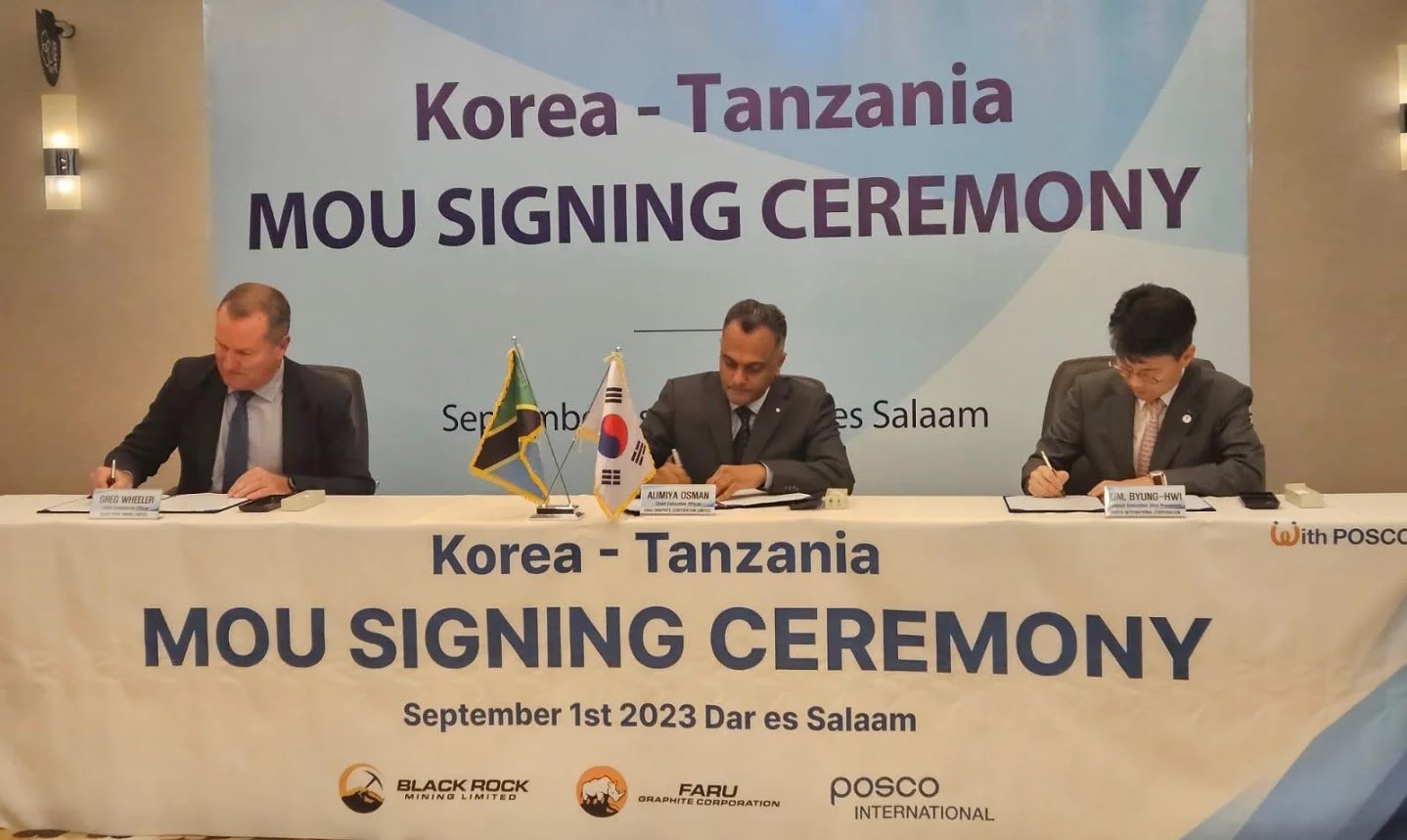
South Korea's Posco International has inked a $40 million investment agreement with Australia’s Black Rock Mining, aiming to double its graphite supply from Tanzania's Mahenge project to 60,000 tonnes per year.

As part of the deal, Posco now holds a 19.9% stake in Black Rock Mining. The investment ensures Posco early access to graphite, a crucial material for its integrated battery supply chain. The Mahenge project is set to begin construction this year, with full-scale production slated for 2026.

Last year, Posco funded the first phase of the mine’s development, securing 30,000 tonnes per year for 25 years. The new Phase 2 contract will supply an additional 30,000 tonnes annually over the same period, bringing the total to 60,000 tonnes per year.

The company plans to use non-Chinese graphite for cathode materials, aligning with the U.S. Inflation Reduction Act and the EU’s Critical Raw Materials Act, which mandate compliant raw material sourcing for electric vehicle (EV) batteries.

As China continues to curb graphite exports, Posco is leveraging reduced EV battery demand to invest in raw material assets with long-term growth potential, such as lithium and graphite.

Additionally, Posco expects to expand its graphite operations globally by securing a sales agreement with Black Rock for industrial graphite used in steel, cement, and automotive components. This could also bolster South Korea’s mineral resource security.

Fastmarkets Ferroalloys Asia 2025 Positions Bangkok as Key Global Hub for Ferroalloy Trade

No comments
Fastmarkets Ferroalloys Asia 2025

India, China, and South Korea Showcase Market Strength as Global Players Tackle Tariffs and Sustainability Goals

The Fastmarkets Ferroalloys Asia Conference 2025 concluded in Bangkok with more than 800 global industry professionals in attendance. Held from April 8–10, this flagship event solidified its role as Asia’s largest ferroalloy trading platform, focusing on trade flows, tariffs, sustainability, and supply chain strategies.

This year’s conference drew key stakeholders from across the ferroalloy value chain. Attendees participated in active deal-making, high-level panels, and targeted networking—further reinforcing Asia’s position as the world’s dominant ferroalloy market.

Indian and Chinese Firms Expand Regional Influence Amid Tariff Pressures

Ferroalloy giants from India and China made a strong statement at the event. Companies such as BFCL, INDIANO, MORTX, BERRY ALLOYS, MTALX, and CCMA attended as sponsors. Their presence underlined a strategic shift to deepen market penetration in Asia while mitigating challenges from recent U.S. tariff policies.

By sponsoring the event, these companies emphasized regional alliances and adaptability to global trade shifts. With India and China playing leading roles in global ferroalloy production and exports, their efforts at Fastmarkets Asia 2025 signal a robust push for market resilience and growth.

Producing Ferro-Titanium in Korea

South Korea’s Dong-A Special Metal stood out by announcing its expansion in Ferro-Titanium and Ferro-Titanium Powder production. The company uses eco-friendly pretreatment methods to manufacture high-quality products, gaining attention as one of Korea’s few domestic Ferro-Titanium producers.

This development strengthens Korea’s presence in specialty ferroalloys and aligns with rising global demand for lightweight, corrosion-resistant alloys in aerospace and defense sectors.

Focus on Asia’s Role in a Changing Global Alloy Market

The conference underscored Asia’s growing dominance in ferroalloys, especially through China and India. Fastmarkets emphasized this trend, with expert panels addressing topics like supply chain optimization, carbon reduction, and long-term demand outlook. As trade dynamics evolve, Asia is becoming the central pivot for pricing and policy trends in the ferroalloy industry.

TheMetalnomist continues to track how international conferences like these shape global metal market strategies and investment priorities.

Japan’s Imports of Russian Palladium Rise for First Time Since Ukraine Invasion

No comments
Russian Palladium

2024 Sees 22% Year-on-Year Growth Despite Lingering Uncertainty

Japan’s palladium imports from Russia increased in 2024 for the first time since the start of the Russia-Ukraine war in 2022, signaling a potential shift in trade dynamics. According to Japan’s Finance Ministry, total imports reached 12 tonnes, up 22% from the previous year, breaking a six-year streak of decline.

Despite this rebound, it remains uncertain whether Russian deliveries will return to pre-invasion levels of 17–20 tonnes per year. The modest growth comes amid ongoing geopolitical tensions and evolving global trade strategies.

Import Diversification Efforts Appear Short-Lived

Following the 2022 invasion of Ukraine, Japan dramatically cut Russian palladium imports, which fell to 14.5t in 2022 (−19%) and then further to 9.9t in 2023 (−32%). Although palladium was not subject to direct sanctions, Japanese firms voluntarily reduced purchases over stakeholder concerns.

In response, Japan diversified supply in 2022, doubling imports from the U.S. (6.4t) and Italy (1t), while Taiwan and South Korea also saw sharp increases. However, these gains proved short-lived: in 2023, U.S. imports fell by over 50% to 2.8t, Taiwan’s dropped to 56kg, and South Korea’s dropped to 256kg, down 75% from 2022.

Since June 2024, Russian palladium shipments to Japan have exceeded 1 tonne monthly for seven consecutive months, suggesting tentative signs of recovery—but not yet a strong trend.

South Africa Remains Japan’s Dominant Supplier

While Russian supply fluctuates, Japan continues to lean heavily on South Africa, which delivered 23 tonnes in 2024—up 1.7% year-on-year. South Africa now accounts for 58% of Japan’s total palladium imports, marking the third consecutive year above 50%.

Analysts caution that despite recent increases, Japanese imports of Russian palladium are still well below historical averages. Whether a long-term recovery is underway will depend on market signals, policy sentiment, and the global palladium trade environment in 2025 and beyond.

India's Fastener Market to Expand at a CAGR of 7.9% by 2030

No comments

According to a report by the consulting firm Strait, the industrial fastener market in India was valued at $9.064 billion in 2022 and is projected to grow at a compound annual growth rate (CAGR) of 7.9%, reaching $17.868 billion by 2030.

The industrial fastener market in India is one of the fastest-growing sectors within the manufacturing industry, driven by the country's rapid industrialization and infrastructure development. Notably, the automotive sector stands out as a primary consumer of industrial fasteners. The increase in automobile production, coupled with the transition to electric vehicles (EVs), is generating substantial demand for high-quality industrial fasteners. Furthermore, the Indian government's emphasis on infrastructure projects, including roads, bridges, airports, and public housing initiatives, is significantly propelling the growth of the fastener market.

In addition, numerous fastener manufacturers are focusing on the development of recyclable products with reduced carbon emissions, fostering a shift towards a more sustainable and environmentally friendly fastener market.

Key trends in the Indian fastener market include the adoption of multifunctional fasteners that enhance overall productivity by reducing assembly time, the emergence of fasteners utilizing advanced materials such as ceramics, alloys, and carbon fiber, improvements in corrosion resistance, lightweight designs aligning with the trend of vehicle electrification, and a rising demand for security fasteners.

In recent years, India has experienced a notable increase in fastener imports due to the growth of the manufacturing sector and the escalating demand for industrial products. The rising demand for high-quality and specialized fasteners is a significant factor driving the import growth.

The demand for specialty fasteners that meet international quality standards is increasing, particularly in industries such as automotive, aerospace, and electronics, which require fasteners with specific features like corrosion resistance, high tensile strength, and lightweight design.

In 2023, India’s fastener imports amounted to $488 million, reflecting a 14.4% increase from the previous year. China held the largest market share, followed by Japan, South Korea, Germany, and Thailand. Imports from South Korea were valued at $61.5 million in 2023, a 3.9% increase from the previous year, although the market share declined by 1.3 percentage points to 12.6%.

India's basic customs duty on fasteners is 25%, with a final duty rate of 58.57%. The Department for Promotion of Industry and Internal Trade (DPIIT) under the Ministry of Commerce and Industry has been enforcing quality certification regulations through the "Quality Control Order 2023" for fasteners since January 20 of this year.

Recently, the influx of low-cost Chinese products has prompted India to implement stronger measures against Chinese imports. The Directorate General of Trade Remedies (DGTR) under the Ministry of Commerce has initiated an anti-dumping investigation on fastener imports from China. The investigation is ongoing, and the imposition of anti-dumping duties has yet to be announced.

Although the final results are pending, India’s intensified scrutiny of Chinese imports is expected to create opportunities for South Korean fasteners to increase their market share in India.

The Indian fastener market is experiencing rapid growth, bolstered by the expansion of the manufacturing sector, infrastructure development, and increased automobile production. The demand for fasteners in India is projected to grow at an accelerated pace as the government focuses on initiatives like "Make in India" and increases investments in sectors such as automotive, construction, and electronics.

The Secretary General of the Fasteners Association of India (FAI) stated, "The Indian fastener market presents promising opportunities for the South Korean fastener industry to expand its market presence. Leveraging South Korea’s reputation for quality and technical expertise, Korean fastener manufacturers can forge strong partnerships with Indian companies and capitalize on the demand for fasteners in India’s booming industrial sectors."

Tragic Crash Landing in South Korea Leaves 47 Dead

No comments
South Korea Muan Airport

Overview of the Incident

In a devastating accident early Sunday morning, at least 47 individuals lost their lives when a Boeing 737-800, operated by Jeju Air, crash-landed at an airport in Muan County, South Korea. The flight, numbered 7C 2216, originated from Bangkok and was carrying 175 passengers along with six crew members. The incident occurred just after 9 a.m. local time (7 p.m. ET Saturday), with a reported landing gear malfunction as the preliminary cause, according to official sources.

Response and Investigation

Following the crash, emergency teams, including firefighters, were dispatched to the scene where they used water cannons to combat the intense flames engulfing the aircraft. The wreckage, which was described by a fire department official as "almost completely destroyed," also littered the runway and surrounding areas, highlighting the severity of the crash.

The South Korean government, under the acting president Choi Sang-mok, has pledged full support, mobilizing all available resources to aid in the response efforts. Meanwhile, the South Korea’s Incident Investigation Committee has initiated a thorough investigation to determine the exact cause of the disaster, with investigators arriving on site by 10:10 a.m. local time.

Titanium Grade 7 Ingot Production Achieved by DongA Special Metal Using Recycled Scrap

No comments
Titanium Grade 7 Ingot Production Achieved by DongA Special Metal Using Recycled Scrap
DongA Special Metal's Titanium Grade 7 Ingot

Korea’s first Ti Gr.7 ingot production from scrap marks breakthrough in domestic titanium alloy manufacturing

PAM and ISM technologies enable supply chain innovation for chemical and nuclear-grade titanium products

South Korea’s DongA Special Metal has successfully achieved titanium Grade 7 ingot production using palladium-added scrap, marking a first in the nation’s metallurgical history. The company announced that the Titanium Grade 7 ingot production was completed using plasma arc melting (PAM) technology and sold entirely to a U.S.-based metal processing company.

Advanced melting meets global demand for high-purity corrosion-resistant alloys

Titanium Grade 7 is a high-value alloy used in harsh chemical environments, thanks to its outstanding corrosion resistance. However, its production from recycled scrap is notoriously difficult, due to the high melting point and the need for precise composition control. To overcome this, DongA adopted PAM technology and integrated it with ISM (Induction Skull Melting) equipment—enabling simultaneous refining, remelting, and continuous casting.

This approach contrasts with the global standard, where 75% of titanium ingots are still made using vacuum arc remelting (VAR). DongA’s use of PAM-ISM fusion technology positions it ahead in recycling-based alloy innovation, especially for critical industries.

Domestic production reduces import dependence for chemical, nuclear, and desalination sectors

The company’s 1-ton titanium ingot facility, the largest in Korea, now supports local sourcing for semiconductor, display, and chemical process equipment manufacturers. Titanium Grade 7 is essential for chlorine process systems, wet chlorine coolers, ion exchange membrane equipment, nuclear condenser tubing, and desalination heat exchangers.

This milestone also opens the door for strategic collaboration with Korean industrial players and public R&D institutions. The successful export to the U.S. underscores DongA’s technical competitiveness in alloy design and electrochemical understanding of the palladium-titanium system.

The Metalnomist Commentary

DongA Special Metal’s innovation in Titanium Grade 7 ingot production signals Korea’s move up the titanium value chain. By mastering scrap-based high-purity alloy production, the firm reduces import dependency and strengthens national capabilities in strategic sectors like nuclear energy, semiconductors, and chemical equipment.

Almonty Tungsten Revenue Stable at C$7.9 Million Despite US Relocation Costs

No comments
Almonty Tungsten Revenue Stable at C$7.9 Million Despite US Relocation Costs
Almonty

Almonty tungsten revenue increased modestly by 1% to C$7.9 million in Q1 despite significant relocation expenses related to US incorporation. The Canadian tungsten miner's Almonty tungsten operations demonstrated resilience with mining income rising 24% to C$752,000, primarily driven by increased production at the Panasqueira mine in Portugal while managing substantial corporate restructuring costs.

Production Growth Offsets Corporate Restructuring Impact

Almonty tungsten mining operations delivered improved operational performance despite challenging circumstances. Income from mining activities increased 24% to C$752,000, reflecting enhanced production efficiency at the company's Portuguese Panasqueira facility. However, operating expenses more than doubled from C$4.3 million to C$9.5 million, primarily due to costs associated with the US incorporation process.

Meanwhile, the company reported a substantial C$34.6 million loss compared to C$3.8 million in 2024, largely attributed to non-cash losses from equity value changes during US incorporation. Almonty initiated this strategic relocation in January to enhance competitiveness in global tungsten and molybdenum markets, positioning itself closer to key North American defense contractors and technology companies.

Sangdong Project Drives Future Growth Expectations

However, Almonty tungsten prospects improve significantly with the approaching Sangdong project production in South Korea. The company secured a comprehensive offtake agreement in January, selling 100% of Sangdong Molybdenum project output to South Korean ferro-molybdenum producer SeAH. This strategic partnership provides guaranteed revenue streams and eliminates marketing risks for the high-grade molybdenum operation.

Therefore, the Sangdong facility represents a transformative asset for Almonty's production portfolio and revenue diversification strategy. South Korea's established metals processing infrastructure and SeAH's long-term commitment create optimal conditions for sustained project success. The molybdenum market's strong fundamentals support premium pricing for high-quality concentrate production.

Defense Applications Strengthen Market Position

Furthermore, Almonty secured critical defense sector contracts that demonstrate tungsten's strategic importance. The company signed a binding three-year agreement with Tungsten Parts Wyoming (TPW) to supply 40 metric tonnes monthly of tungsten oxide for defense applications. This contract provides stable revenue streams while supporting US national security supply chain objectives.

As a result, tungsten demand continues expanding in defense and technology sectors due to the metal's exceptional properties. Tungsten carbide applications in cutting tools leverage the material's high melting point and hardness for machining operations. Growing defense spending and advanced manufacturing requirements create sustained demand for reliable tungsten suppliers like Almonty.

The Metalnomist Commentary

Almonty's strategic US relocation, despite near-term costs, positions the company advantageously for North American defense and technology market access while the Sangdong project provides substantial production growth potential. The combination of established Portuguese operations, emerging South Korean molybdenum production, and secured US defense contracts creates a diversified revenue base supporting long-term tungsten market leadership.

Australia's Lithium Concentrate Exports Surge in First Half of 2024

No comments

Australia's lithium concentrate (spodumene) exports saw a significant increase in the first half of 2024, reaching approximately 1.94 million metric tons. This growth was largely driven by robust demand in the second quarter, particularly from South Korea and Indonesia, as they began to ramp up their imports of Australian lithium supplies.

From April to June, exports surged by 49% year-over-year to 1.26 million tons, contributing to a 9.9% rise in total first-half shipments, according to data from the Australian Bureau of Statistics. China remained the dominant importer, accounting for nearly 95% of Australia's lithium concentrate exports, with volumes rising by 4.6% to 1.84 million tons. This surge is closely tied to China's continued growth in new energy vehicle (NEV) sales and production, which remains strong despite global concerns about slowing electric vehicle (EV) growth in other regions such as Europe and the United States.

South Korea's imports of spodumene experienced a dramatic increase, rising to 71,441 tons in the first half of the year from just 1,240 tons a year earlier. This spike follows the completion of the country's first lithium hydroxide plant late last year, which has since started production. The plant, a joint venture between Australian lithium producer Pilbara Minerals and South Korean conglomerate Posco, delivered its first lithium hydroxide order in April.

Indonesia also saw a sharp increase in spodumene imports, reaching 25,098 tons from a mere 60 tons the previous year. This growth coincides with the launch of pilot production at a lithium plant in Indonesia by Chinese lithium salts producer Chengxin Lithium, which extracts lithium from hard rock ores.

Despite these gains, the lithium market faces challenges. While most Australian lithium producers reported higher spodumene output in the second quarter—including companies like Pilbara Minerals, Mineral Resources, and Core Lithium—Core Lithium has paused its processing operations since June due to the weak lithium market conditions.

Australia's lithium concentrate exports (t)


* Source : Australian Bureau of Statistics

China's Titanium Sponge Exports Rise While Imports Decline in 2024

No comments
Titanium Sponge

Increased Demand from Key Markets Drives Export Growth

China's titanium sponge exports rose in 2024 due to increased demand from South Korea, the US, and Japan. According to customs data, exports reached 5,993 tonnes, marking a 2.7% increase from 2023 levels. In December alone, exports surged to 752 tonnes, more than doubling from 359 tonnes a year earlier. South Korea, Japan, and Taiwan emerged as the primary buyers, importing 191 tonnes, 290 tonnes, and 80 tonnes, respectively.

South Korea’s imports of Chinese titanium sponge tripled in 2024, reaching 1,565 tonnes compared to 515 tonnes in 2023. Japan’s purchases more than doubled to 1,162 tonnes, while the US saw an almost eight-fold increase, acquiring 1,098 tonnes.

Declining Imports Due to Domestic Supply and Price Differentials

China’s titanium sponge imports fell by 24% in 2024, dropping to 101.9 tonnes from 133.8 tonnes in 2023. The decrease was attributed to sufficient domestic supply and high international prices. In December, China imported only 0.3 tonnes, contrasting with zero imports recorded in November 2024 and December 2023.

The average price for 99.7% grade titanium sponge in China stood at 49,666 yuan ($6,841) per tonne in 2024, or $6.86 per kilogram. In comparison, European titanium sponge prices averaged $11.50 per kilogram, making imports less economically viable for Chinese buyers.


ReElement Posco Magnet Production JV Targets Integrated US Rare Earth Supply Chain

No comments
ReElement Posco Magnet Production JV Targets Integrated US Rare Earth Supply Chain
ReElement, Posco

ReElement Posco magnet production plans will create a new US-based platform for rare earth separation, metallization and permanent magnet manufacturing. ReElement Technologies has formed a joint venture with South Korea’s Posco International to develop integrated rare earth and magnet capacity in the US.

ReElement Posco magnet production is strategically important because the US still lacks a complete domestic supply chain for rare earth magnets. Mining and separation alone are not enough. The country needs oxide refining, metal production, alloying and finished magnet manufacturing.

ReElement Posco magnet production will be backed by a planned $200mn investment. The partners are still finalising site selection, while ownership details have not been disclosed.

The joint venture aims to produce around 3,000 t/yr of separated rare earth oxides by 2028. Capacity is expected to expand to 6,000 t/yr by 2030.

Separation and Metallization Fill Key US Supply Gaps

The joint venture will develop feedstock sourcing, light and heavy rare earth metallization and permanent magnet manufacturing. This gives the project a wider scope than a conventional refining facility.

Separated rare earth oxides are an important step, but magnet supply chains require further conversion. Oxides must be turned into metals, then alloys, then finished magnets before they can serve automotive, defence, industrial and electronics customers.

Metallization remains one of the biggest bottlenecks outside China. Without it, separated oxides cannot easily become usable magnet inputs.

ReElement will contribute its separation and refining technologies to the joint venture. This gives the project a technology platform for producing refined rare earth products in the US.

The inclusion of both light and heavy rare earth metallization is also important. Heavy rare earths such as dysprosium and terbium are critical for high-performance magnets that must withstand heat and stress.

Posco Adds Automotive and Industrial Market Access

Posco International brings strong relationships in automotive and industrial markets. That customer access is important because rare earth projects need demand visibility, qualification pathways and long-term commercial outlets.

The partnership also adds South Korean industrial depth to the US rare earth strategy. South Korea is a major manufacturing economy with strong positions in automotive, batteries, steel, electronics and industrial materials.

For US magnet supply chains, the JV could help connect rare earth processing with downstream users that need qualified, reliable and non-China material. That is increasingly important as manufacturers seek supply security around electric motors, robotics, defence systems and industrial automation.

The 2028 and 2030 capacity targets show a staged approach. The first phase would establish oxide separation, while later expansion could support deeper integration into metal and magnet production.

Execution will be the key test. The project must secure feedstock, complete site selection, scale technology, qualify products and build customer confidence.

If successful, the ReElement-Posco venture could become a meaningful building block in the US effort to create a complete rare earth magnet supply chain.

The Metalnomist Commentary

The ReElement-Posco JV shows that rare earth strategy is moving from isolated projects toward integrated industrial partnerships. The decisive advantage will come from connecting feedstock, separation, metallization, magnets and qualified customers in one supply chain.

Energy Fuels and Posco Forge Rare Earth Partnership for EV Supply Chain

No comments
Energy Fuels

Deal Could Power Over 30,000 EVs and Reduce Dependence on Chinese Rare Earths

U.S.-Korea Pact Targets EV Magnet Materials

U.S. rare earths producer Energy Fuels has entered a strategic agreement with South Korea’s Posco International to supply neodymium-praseodymium (NdPr) oxide. The material is essential for permanent magnets used in electric vehicle (EV) and hybrid electric vehicle (HEV) drivetrains.

Energy Fuels recently shipped NdPr samples to Posco, which will test them for use in magnet alloy and metal manufacturing. These magnets will be integrated into traction motor cores supplied to automakers across the U.S., Europe, South Korea, and Japan.

Pending successful validation, Energy Fuels and Posco intend to sign a commercial supply agreement. This deal would cover enough NdPr to support magnets for over 30,000 EVs annually, potentially expanding into a longer-term production partnership.

Rare Earth Diversification Strategy Gains Momentum

The collaboration marks a step forward in diversifying the global rare earth supply chain, which remains heavily dominated by China. According to the U.S. Geological Survey, China produced 69%—around 270,000 metric tonnes—of global rare earth ore in 2024.

Energy Fuels aims to challenge that dominance by expanding its rare earth production capacity. The company operates its White Mesa Mill in Utah, producing oxides from monazite concentrates sourced as a by-product of heavy mineral sands.

The company currently has a capacity of 1,000 t/yr for NdPr oxide and plans to scale this up to between 4,000–6,000 t/yr. Future expansions will also include additional rare earth elements such as dysprosium and terbium, which are crucial for high-temperature magnet performance in EVs.

Almonty Tungsten Oxide Supply for US Defense Strengthens Critical Mineral Chain

No comments
Almonty Tungsten Oxide Supply for US Defense Strengthens Critical Mineral Chain
Tungsten Parts Wyoming

Strategic Agreement Secures Domestic Defense Supply

Almonty Industries has signed a binding deal to supply tungsten oxide for US defense programs through Tungsten Parts Wyoming (TPW). The agreement ensures a monthly minimum of 40t of tungsten oxide for three years, reinforcing North America's critical mineral security. The agreement includes a hard price floor and automatic annual renewal, though pricing details remain undisclosed.

Multi-National Processing and Supply Chain

TPW will send the tungsten oxide to Metal Tech, an Israeli processor, for conversion into tungsten metal powder. Processing will occur in Israel or the US, after which the powder will feed into TPW’s products used in US military programs. These include tungsten super shot, blasting media, and specialized components for defense-grade applications.

Sandong Mine to Anchor Long-Term Supply

Tungsten oxide deliveries will begin once Almonty launches commercial-scale output from its Sandong mine in South Korea. The mine targets 2.3mn t/yr of oxide in its first phase, with nearly half committed to US-based Global Tungsten & Powders. Almonty also signed an offtake agreement with South Korea’s SeAH for all molybdenum output from the same project.

The Metalnomist Commentary

This deal marks a critical step toward onshoring and diversifying tungsten supply chains for US defense. As geopolitical risks mount, multi-national processing and guaranteed offtakes offer essential redundancy and resilience.

South Korea's SK Innovation Anticipates Recovery in Refining Margins and Battery Demand in Second Half of the Year

No comments

South Korean refiner SK Innovation forecasts an improvement in refining margins and a rebound in battery demand during the second half of the year. This anticipated recovery is expected to enhance the utilization rates at its battery factories. The company attributes the projected strong refining margins to OPEC+ production cuts, which are likely to elevate oil prices, along with increased demand for transportation, cooling, and industrial purposes. These factors are expected to outweigh the delayed demand recovery from China and other emerging markets, as well as the ongoing challenge of high interest rates.

In the second quarter, SK Innovation's revenue fell slightly to 18.8 trillion won ($13.8 billion) from 18.9 trillion won in the previous quarter, but it was slightly higher than the 18.7 trillion won reported a year earlier. Energy and chemical sales constituted 92% of the total revenue, with battery and material sales making up the remaining 8%.

The company reported operating losses of 45.8 billion won in the second quarter, a significant reversal from an operating profit of 625 billion won in the first quarter, but an improvement from an operating loss of 107 billion won a year ago. The quarter-on-quarter loss was primarily due to weak oil refining margins and the burden of fixed costs from lower utilization rates in the battery business.

Operating profit from refining dropped sharply from 591.1 billion won in the first quarter to 144.2 billion won in the second quarter, driven by lower refining margins amidst concerns over prolonged high interest rates and China's sluggish economic recovery.

In the second quarter, oil product crack spreads decreased, with gasoline falling by $4.80 per barrel to $8.50 per barrel, diesel by $8.30 per barrel to $14.80 per barrel, and kerosene by $7.90 per barrel to $13.20 per barrel.

SK Innovation's Ulsan refinery, with a capacity of 840,000 barrels per day (b/d), operated at 78% of its capacity in the second quarter, down from 85% in the previous quarter. In contrast, the Incheon refinery, with a capacity of 275,000 b/d, saw an increase in its operating rate to 89% from 84% in the previous quarter. There are currently no planned turnarounds for the third quarter.


Battery Business Struggles

The battery business faced significant challenges, with operating losses widening to 460.1 billion won from 331.5 billion won in the previous quarter. Revenue dropped by 7.7% quarter-on-quarter and by 58% year-on-year to 1.55 trillion won. Utilization rates at battery factories declined in the first half of 2024 due to sluggish demand from automakers, though a gradual recovery is expected in the second half, according to subsidiary SK On. The company's battery production capacity is projected to reach 132 GWh this year, with plans to expand to at least 199 GWh by 2025.

Summary
SK Innovation expects a recovery in refining margins and battery demand in the second half of 2024. The company's revenue fell slightly in Q2, with significant operating losses due to weak refining margins and fixed costs in the battery business. Despite current challenges, SK Innovation anticipates improved utilization rates and expansion in battery production capacity.

Hashtags
#SKInnovation #RefiningMargins #BatteryDemand #OPEC #OilPrices #EnergySector #SouthKorea #BatteryProduction #EconomicRecovery #MarketTrends


Posco Argentinian Lithium Projects Delayed Amid Prolonged Price Slump

No comments
Posco Argentinian Lithium Projects Delayed Amid Prolonged Price Slump
Argentinian Lithium Projects

South Korea’s Posco has delayed completion of its Argentinian lithium projects by six months, citing sluggish lithium price recovery. The Posco Argentinian lithium projects were originally set to complete Phase 2 by Q3 2025 but are now rescheduled for Q1 2026.

Phase 2 Pushed Back as Market Conditions Weaken

Posco began operating its 25,000 t/yr lithium hydroxide plant in Argentina last year. The planned Phase 2 would have doubled capacity to 50,000 t/yr through a connected upstream brine project. However, weak lithium prices and soft global demand forced a schedule revision. The company now aims to optimize production systems and ramp up Phase 1 by late 2025.

This move reflects Posco’s strategic adjustment amid a volatile market. In its April 24 report, Posco highlighted the need for operational flexibility in response to sustained pricing pressures.

Lithium Price Pressure Forces Broader Strategic Realignment

The lithium downturn also contributed to Posco ending its nickel refinery joint venture with China’s CNGR. The JV’s liquidation will complete by June, marking a retreat from previously planned upstream battery material partnerships.

Meanwhile, Posco Future M—Posco's battery materials subsidiary—posted quarterly revenue growth of 17% but a 26% decline year-on-year. Profitability rebounded modestly, helped by rising sales of high-nickel cathode active material (CAM) and growing demand for non-Chinese anode active material (AAM).

China Price Slide Highlights Global Supply Chain Fragility

Chinese lithium carbonate prices remain under pressure due to weakened demand and US-China trade tensions. As of 22 April, lithium carbonate prices dropped to ¥69,000–72,000/t ($9,463–9,874/t), extending a multi-week decline. This pricing environment complicates investment timelines and return expectations for global lithium projects.

The Metalnomist Commentary

Posco’s delay reflects broader capital discipline across the lithium sector amid persistent price volatility. With Phase 2 postponed, the company is signaling caution, while still committing to its long-term battery supply chain strategy in South America.