Showing posts sorted by relevance for query DOD. Sort by date Show all posts

DOD Stake in Trilogy Metals: US Backs Alaska Copper and Critical Minerals

No comments
DOD Stake in Trilogy Metals: US Backs Alaska Copper and Critical Minerals
White House: Alaska mining

The DOD stake in Trilogy Metals marks a strategic US move into Alaska’s Upper Kobuk Minerals Projects. The DOD stake in Trilogy Metals brings $35.6mn to advance copper, zinc, lead, and cobalt resources. As a result, the DOD stake in Trilogy Metals aligns defense supply chains with domestic critical mineral development.

Why the deal matters for US critical minerals

The US Department of Defense will buy 10pc of Trilogy Metals. The purchase includes 16.4mn shares and a 10-year call option. South32 will transfer its option and sell part of its holding. The DOD may appoint a board director for three years. This structure strengthens governance and long-term offtake optionality. It also signals federal intent to accelerate strategic metals projects.

Path to development: UKMP and Ambler Access road

The UKMP sits in Alaska’s Ambler mining district. Trilogy and South32 jointly own Ambler Metals. The partners and Washington will coordinate on permitting and financing. They will also pursue expedited mine approvals. The Ambler Access road would link the district to the Dalton Highway. That logistics link remains the key unlock for project economics.

Copper focus with multi-metal upside

Copper leads the project’s value proposition. However, zinc, lead, and cobalt add revenue diversity. US policy now prioritizes resilient energy transition supply chains. This deal connects that policy to on-the-ground execution. It also broadens capital access for US-anchored base-metal assets. The DOD investment reduces perceived permitting risk for lenders.

The Metalnomist Commentary

Defense participation de-risks early-stage funding and accelerates timelines. If the Ambler Access road advances, project financing options should multiply. Expect midstream talks on concentrates and potential US refining routes to follow.

US DoD investment in MP Materials accelerates magnets and heavy rare earths

No comments
US DoD investment in MP Materials accelerates magnets and heavy rare earths
MP Materials

US DoD investment in MP Materials totals $400 million in preferred stock. US DoD investment in MP Materials also includes a warrant and offtake. The 10-year NdPr offtake sets a $110/kg floor. The package backs heavy rare earth separation and magnets.

Financing, capacity, and the 10X Facility

US DoD investment in MP Materials unlocks the 10X magnet Facility. MP secured $1 billion in bank financing for construction. The 10X site will be announced later. Commissioning is expected in 2028 under a phased ramp.

Total magnet capacity will reach 10,000 tonnes per year after start-up. Independence Texas operates at 1,000 tonnes today. It plans an expansion to 2,000 tonnes next. Therefore, 10X adds roughly 7,000 tonnes of magnets.

For ten years after start-up, DoD will ensure full magnet offtake. Sales will serve defense and commercial customers with shared upside. The price floor stabilizes revenues across market cycles.

Policy context and supply chain impact

China’s heavy rare earth export controls raise supply risk for magnets. Washington answers with domestic separation and magnet scale. MP will add heavy rare earth separation at Mountain Pass. A $150 million loan is expected to support this work.

The integrated plan reduces import dependence for NdPr and heavies. It also shortens lead times for defense platforms. As a result, OEMs gain a Western magnet source at scale. The strategy aligns capital, offtake, and policy in one package.

The Metalnomist Commentary

This deal converts industrial policy into bankable capacity growth. Execution now hinges on site selection, power contracts, and permitting. Watch separation yields and 10X ramp curves into 2028.

US DoD Invests in Domestic Niobium Production to Secure Supply

No comments
The US Department of Defense (DoD)

The US Department of Defense (DoD) is taking significant steps to secure the domestic supply of niobium, a metal essential for defense and aerospace applications. In a strategic move to reduce reliance on imports, the DoD has awarded a $26.4 million grant to Global Advanced Metals (GAM) under the Defense Production Act Investments (DPAI) program. This funding will enable GAM to enhance production of high-purity niobium oxide at its Pennsylvania facility. The investment aligns with the National Defense Industrial Strategy, prioritizing the expansion of domestic production to mitigate supply chain risks.

Niobium's Role in Defense and Aerospace

Niobium, known for its high strength-to-weight ratio and refractory properties, plays a crucial role in aerospace components. Its lower density compared to other refractory metals makes it ideal for reducing mass in systems like jet engines, solid rocket motor skirts, and turbine nozzles. As China accelerates its development of hypersonic weapons, the US government has expressed concern about securing a reliable supply of niobium for applications in these advanced defense platforms.

The grant to GAM will also enable the company to refine its production processes, integrating new workflows that are expected to increase efficiency. As niobium oxide is currently predominantly sourced from Brazil, this move marks a critical step toward reducing US dependence on foreign sources.

America's Response to Global Competition

In addition to GAM's efforts, the DoD is also supporting projects aimed at enhancing the cost-efficiency of niobium-based materials. The Powder Alloy Development of Additive Manufacturing (PADAM) project, led by America Makes and financed by the Air Force Research Laboratory (AFRL), is focused on improving niobium alloy production, particularly Nb C-103. This project seeks to expand the supply base while making niobium powder feedstocks more affordable and versatile for defense applications.

The increased focus on niobium highlights its importance in the defense sector, particularly as the US faces growing competition from nations like China, which is developing hypersonic missiles that rely heavily on niobium components. The success of these initiatives will not only secure the US niobium supply but also support the nation's defense systems for years to come.

Global Germanium Demand Soars as Buyers Seek New Supply and Alternatives

No comments
The U.S. Department of Defense (DoD)

With rising demand for germanium in defense and advanced computing, global consumers are seeking alternatives as China’s export restrictions have tightened supply. Germanium’s applications in artificial intelligence (AI) and autonomous vehicles have driven increased consumption, especially for its use in high-performance computing and infrared optics. AI systems benefit from silicon-germanium's ability to operate at higher frequencies and lower power, making it critical in modern technological advancements.

Germanium Supply Chain Concerns and Strategic Moves

The U.S. Department of Defense (DoD) is actively working to secure a sustainable germanium supply. The DoD has teamed up with LightPath Technologies to replace germanium in some of its applications, especially in optics, in a bid to reduce supply chain vulnerabilities. Meanwhile, other initiatives focus on increasing germanium consumption for defense purposes. The DoD is investing $14.4 million in 5N Plus, a Canadian semiconductor materials firm, to expand its capacity for producing germanium wafers for solar cells, ensuring continued supply for defense and satellite industries.

Producers are also responding to the supply crunch. Companies in Australia and Canada are exploring germanium-rich mining projects, while Hong Kong Sinomine Rare Metals is pushing to commercialize germanium production at its copper smelting line in Namibia. Belgium’s Umicore, meanwhile, has secured a deal with STL1 in the Democratic Republic of Congo to optimize domestic refining of germanium, further diversifying its global supply.

The rising price of germanium is likely to drive more refining and recycling initiatives, unless alternative materials become more widely adopted in its key applications.

IperionX Secures $47M DoD Funding to Advance U.S. Titanium and Rare Earth Supply Chain

No comments
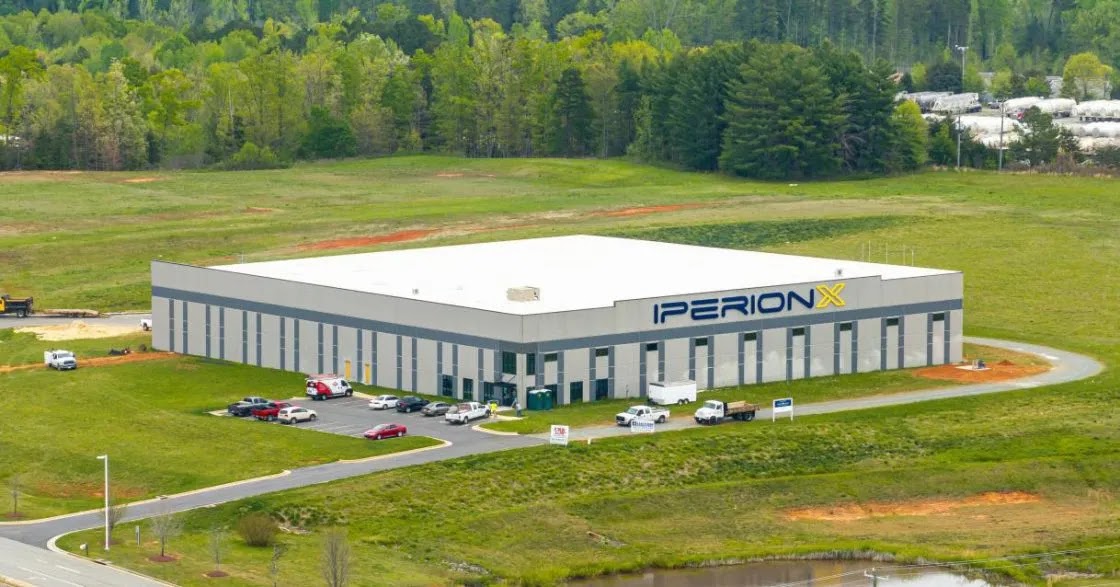
IperionX

Titan Project and Virginia Facility to Strengthen Critical Mineral Independence

IperionX has been awarded up to $47 million by the U.S. Department of Defense (DoD) to advance its Titan titanium and rare earth project in Tennessee and to boost production capacity at its Virginia manufacturing campus. This investment forms part of a larger $71 million public-private partnership aimed at reinforcing domestic critical mineral supply chains.

The funding will support a two-phase plan over the next two years. In Phase 1, the DoD will contribute $5 million toward a feasibility study to bring the Titan mineral sands project—located near Camden, Tennessee—to shovel-ready status. IperionX will add $1 million to this effort, which is expected to be completed within 12 months.

Titan Project to Deliver Multi-Metal Feedstocks for 25 Years

The Titan project, covering 11,000 acres, is fully permitted and expected to operate for 25 years. Once in production, it will yield a wide array of strategic minerals, including:

  • 4,600 t/yr of rare earth element (REE) concentrate
  • 16,700 t/yr of rutile
  • 95,500 t/yr of ilmenite
  • 22,400 t/yr of premium zircon
  • 16,100 t/yr of zircon concentrate

IperionX has signed non-binding offtake agreements with Chemours and Mario Pilato BLAT for approximately half of its titanium and zircon output. These firms serve the chemical, ceramics, glass, and refractory sectors, providing early validation of the project’s commercial viability.

Vertical Integration to Include REE Processing and Production Expansion

The remaining $42 million of the DoD funding will go toward expanding production and supporting vertical integration at IperionX’s Virginia facility. The company also plans to process REE concentrate from Titan at Energy Fuels' White Mesa mill in Utah, one of the only licensed facilities in the U.S. capable of refining both light and heavy rare earth oxides.

This strategic funding package highlights growing U.S. efforts to reduce reliance on foreign sources, especially China, for titanium, rare earths, and zirconium—all essential to defense, aerospace, and clean energy industries.

Metallium gallium recovery wins US DoD backing to scale critical metals

No comments
Metallium gallium recovery wins US DoD backing to scale critical metals
Metallium

Metallium gallium recovery secured initial US Defense Logistics Agency funding, positioning Metallium gallium recovery to commercialize waste-to-metal extraction in Texas and strengthen US critical materials security. The Phase I award of nearly $66,000 arrives within six months, while Phase II could provide up to $1mn and Phase III more than $10mn to launch full commercial operations. Metallium gallium recovery also benefits from a recent $33mn equity raise to accelerate scale-up toward a 2026 start of production.

Funding pathway and commercialization timeline

The staged DoD funding de-risks pilot development and accelerates technology validation for gallium recovery from waste streams at Metallium’s Texas site. Phase I supports early program work and reporting; Phase II would advance pilot-scale operations; Phase III targets commercial deployment exceeding $10mn. The company plans first commercial output in 2026, aligning public funding with private capital to bridge the valley between lab and market.

Technology scope and strategic metals impact

Metallium will apply proprietary flash joule heating to recover gallium and other strategic metals from complex waste feeds. The process targets antimony, indium, and germanium alongside gallium, offering multi-metal revenue and improved circularity. As a result, the Texas hub could diversify US supply chains for semiconductor, defense, and power electronics markets while reducing reliance on imported critical minerals.

The Metalnomist Commentary

Targeted DoD support signals urgency to localize gallium and allied metals amid geopolitical risk. Watch pilot yields, metal purity, and unit costs as key milestones; multi-metal recovery will define bankability and downstream offtake interest.

Nevada tungsten project secures $6.2mn DOD funding

No comments
Nevada tungsten project secures $6.2mn DOD funding
Nevada tungsten

Golden Metal Resources won $6.2mn for the Pilot Mountain site in Nevada. The Nevada tungsten project received Defense Production Act Title III funding. The Nevada tungsten project will complete a pre-feasibility study under the award. Therefore, the Nevada tungsten project advances US critical minerals strategy.

Why the funding matters

The DOD views tungsten as a critical and strategic priority. No commercial tungsten production exists in the US today. Therefore, Pilot Mountain could reduce import reliance if commercialized. The award is one of eight DPA approvals this year. It is the third tungsten sourcing award since 2024. Golden Metal Resources is a unit of Guardian Metal Resources.

Strategic implications for supply chains

China produced 83pc of global tungsten in 2024. Beijing also applied export controls in February. As a result, diversifying supply is a national priority. The project supports aerospace and defense alloy production. Downstream users include jet engines, electronics, and precision munitions.

The Metalnomist Commentary

DPA funding de-risks early studies and tightens links to defense demand. Watch PFS scope, permitting, and offtake formation, which will gauge bankability. If progress holds, Pilot Mountain could anchor a domestic tungsten chain.

Ucore Secures $18M DOD Grant to Expand U.S. Rare Earth Separation Plant

No comments
Ucore Secures $18M DOD Grant to Expand U.S. Rare Earth Separation Plant
Ucore Rare Metals

Strategic Metals Complex to Process Key REEs by 2026

Ucore Rare Metals has received $18.4 million from the U.S. Department of Defense to expand its rare earth separation plant in Louisiana, significantly advancing domestic REE processing capabilities. The Focus Keyphrase "Ucore rare earth separation plant" reflects the facility’s rising strategic value amid efforts to reduce U.S. dependence on Chinese supply chains.

This funding increases a previous $4 million agreement with the U.S. Army Contracting Command and will support Phase II development of the Louisiana Strategic Metals Complex (SMC) in Alexandria. The plant aims to commercially separate six critical rare earth elements — including neodymium, praseodymium, and dysprosium — all of which are vital for defense and clean energy technologies.

Kingston Prototype Expansion and Commercial Scale-Up

The DOD grant also backs the expansion of Ucore’s REE separation prototype facility in Kingston, Ontario, enhancing the company’s technical foundation for scaling commercial operations. Together, the Louisiana and Ontario sites will form an integrated North American rare earth supply chain.

Ucore’s SMC facility will process both light and heavy rare earth oxides at commercial volumes. These include materials used in permanent magnets for electric vehicles, wind turbines, and military applications. The company plans to begin construction and initial production in the second half of 2026.

Strengthening U.S. Rare Earth Independence

This investment demonstrates the U.S. government’s commitment to de-risking critical mineral supply chains, especially in response to China's tightening export controls on rare earths. Ucore’s project is one of the few in North America capable of separating multiple rare earth elements at commercial scale.

The development aligns with national defense priorities and the Inflation Reduction Act’s push to localize materials essential to the energy transition and strategic manufacturing.

The Metalnomist Commentary

Ucore’s rare earth separation plant, backed by the Department of Defense, signals a decisive step toward reshoring high-value critical mineral processing. With construction slated for 2026, the SMC could become a cornerstone of U.S. rare earth independence in an increasingly geopolitically charged market.

IperionX Secures $99mn DOD Contract to Supply Titanium Components

No comments
IperionX Secures $99mn DOD Contract to Supply Titanium Components
IperionX Team

Five-Year Deal Strengthens U.S. Defense Titanium Supply Chain

IperionX has been awarded a five-year U.S. Department of Defense (DOD) contract worth up to $99mn to supply titanium components for the U.S. Army. The agreement establishes a pre-approved funding mechanism, enabling sub-agencies to place direct orders for validated products, streamlining the procurement process.

The North Carolina-based company will begin initial production of titanium fasteners for defense applications in the coming months at its Virginia manufacturing campus. Under the contract, IperionX can also provide near-net-shape parts and semi-finished titanium goods, expanding its role in defense manufacturing.

The phase III contract was awarded under the Small Business Innovation Research (SBIR) program, administered by the Small Business Administration. IperionX highlights its fully integrated titanium production model, using scrap-to-forging technology to reduce costs and improve yields versus traditional manufacturing methods. This approach aligns with U.S. efforts to secure critical mineral supply chains and reduce dependence on foreign titanium sources.

The Metalnomist Commentary

This contract signals the Pentagon’s strategic intent to strengthen domestic titanium capabilities, ensuring supply resilience for defense manufacturing. IperionX’s scrap-to-forging technology could set a new benchmark for cost efficiency and sustainability in the U.S. titanium industry.

NioCorp Elk Creek critical minerals funding widens US Sc-Nb-Ti supply

No comments
NioCorp Elk Creek critical minerals funding widens US Sc-Nb-Ti supply
Elk Creek Project

DoD backs Elk Creek with $10mn milestone award

NioCorp Elk Creek critical minerals funding advances with a DoD award of up to $10mn. The funding supports scandium production at Elk Creek, Nebraska. The grant falls under Defense Production Act Title III with performance milestones. Therefore, NioCorp Elk Creek critical minerals funding strengthens US materials resilience. The project targets scandium, niobium, and titanium outputs for strategic supply chains.

Financing stack positions project for construction readiness

The company adds export credit support to the plan. NioCorp expects up to $200mn from UK Export Finance. It is also pursuing up to $800mn from US EXIM. As a result, NioCorp Elk Creek critical minerals funding now blends grants and debt. This stack could accelerate long-lead procurement and engineering. It also improves bankability for a polymetallic flow sheet.

The project targets multiple high-value markets. Scandium enhances aluminum alloys for aerospace and defense platforms. Niobium strengthens HSLA steel used in autos and infrastructure. Titanium adds corrosion resistance for energy and industrial uses. Meanwhile, domestic production can reduce import exposure and lead times. Offtake talks could unlock additional financing flexibility.

Execution risks remain despite policy support. The DoD award requires milestone delivery. Market prices for scandium and niobium can be thin and volatile. However, diversified revenue across Sc-Nb-Ti can help smooth cycles. Permitting, EPC readiness, and grid interconnects also matter. Robust ESG practices will aid lender diligence and OEM adoption.

The Metalnomist Commentary

US re-shoring needs scalable inputs beyond copper and lithium. Elk Creek’s blended financing suggests a maturing toolkit for niche critical minerals. Watch for binding offtakes and EPC notices; those will signal true project momentum.

Lynas Texas rare earth processing plant faces wastewater permitting hurdles

No comments
Lynas Texas rare earth processing plant faces wastewater permitting hurdles
Lynas Texas Rare Earth

The Lynas Texas rare earth processing plant now looks unlikely to proceed. Lynas Rare Earths flagged wastewater-related permitting barriers that have not eased. However, chairman John Humphrey said progress has stalled in recent months. Therefore, the Lynas Texas rare earth processing plant has shifted from growth option to execution risk.

The Lynas Texas rare earth processing plant targeted both heavy and light rare earth separation capacity. The plan covered 2,500–3,000 tonnes per year of heavy rare earths and 5,000 tonnes per year of light rare earths. Meanwhile, water treatment complexity pushed cost risk higher earlier in the year. As a result, management signaled deeper uncertainty around the project in October.

DoD support sharpens the strategic stakes for rare earth processing

US policy makers want faster rare earth processing capacity outside China. United States Department of Defense agreed in 2023 to provide up to $258mn in support for the proposed project. However, Lynas expects to pursue commercial offtake arrangements using material from Malaysia operations. Meanwhile, MP Materials received a NdPr price floor that can stabilize domestic magnet inputs. Therefore, permitting becomes a central constraint on supply chain security goals.

Operational outages add near-term uncertainty to feedstock flows

Lynas also faces operational headwinds beyond permitting. Power outages at Kalgoorlie disrupted feedstock production that supports downstream output. Meanwhile, the company expects to lose about one month of rare earth production at its Malaysian plant. However, it cannot yet quantify the full production impact. As a result, delivery planning and customer confidence may depend on clearer recovery timelines.

The Metalnomist Commentary

This case shows how wastewater permitting can reshape critical minerals timelines faster than capital support. However, DoD-backed demand signals still favor separated oxides and NdPr outside China. Therefore, execution will hinge on permitting solutions and resilient feedstock operations.

Western Rare Earth Projects Gear Up for 2025 Amid Growing Global Demand

No comments
Ucore Rare Metals

As the global demand for rare earth elements (REEs) escalates, largely driven by the burgeoning sectors of electric vehicles (EVs), wind turbines, and electronics, Western countries are intensifying their efforts to establish commercial-scale REE separation and processing capabilities outside China. With China currently dominating over 80% of the global REE refining market, Western initiatives are crucial in diversifying the supply chain and reducing dependency on Chinese exports.

Strategic Shifts in Rare Earth Processing

In response to China's recent bans on the export of RE extraction and separation technologies and key electronic metals to the US, Western governments and companies are pushing aggressively to develop alternative refining capacities. This includes the exploration of less polluting processes than the traditional solvent extraction methods prevalent in China. High-grade REE deposits in places like Northeast Wyoming are being developed by firms such as Wyoming Rare USA and Rare Element Resources, aiming to ramp up production over the next two years.

In addition to U.S. projects, Canada's Ucore Rare Metals recently received substantial DoD funding to advance REE separation at its RapidSX commercial demonstration facility in Ontario. This is part of a broader "friendshoring" strategy by the DoD, which also recognizes suppliers from Canada, Australia, and the UK as part of the domestic supply chain.

Expanding Western Production Capacities

Several U.S. facilities are already operational or are expanding their capacities to meet the increasing market demand. These include ReElement Technologies in Indiana, Rainbow Rare Earths in Florida, and Lynas in Texas. Notably, Phoenix Tailings in Massachusetts and Energy Fuels in Utah are also increasing their production volumes.

The expansion is not limited to North America. In Europe, projects like the expansion of Nd and NdPr processing at UK-based Less Common Metals and the new NdPr production facility by Solvay in France are underway. These efforts are complemented by plans for new production facilities in Norway and Sweden, aligning with Europe's strategic moves to boost its EV manufacturing and renewable energy sectors.

ReElement rare earth scaleup secures $22mn for US critical minerals

No comments
ReElement rare earth scaleup secures $22mn for US critical minerals
ReElement

ReElement rare earth scaleup takes a major step with $22mn in fresh funding. The US refiner will expand production of rare earth oxides, lithium carbonates and other defense critical minerals at its Indiana facilities. As a result, the ReElement rare earth scaleup directly supports Washington’s push for resilient, non Chinese critical mineral supply chains.

Funding package strengthens US rare earth separation capacity

The ReElement rare earth scaleup relies on a blended funding package from private and federal sources. Maxus Capital Group provided a $20mn equipment leasing facility to finance large scale processing equipment. This capital will expand production lines at ReElement’s Marion and Noblesville sites in Indiana.

In parallel, the US Department of Defense awarded ReElement an additional $2mn grant. The DoD support aims to strengthen domestic separation and purification of critical minerals for defense applications. Therefore, the ReElement rare earth scaleup aligns directly with US national security priorities and allied sourcing strategies.

The combined $22mn allows ReElement to move from pilot scale toward more meaningful commercial volumes. However, the company must still demonstrate consistent operations and competitive unit costs against established Asian processors. Successful ramp up would mark a significant milestone for US based rare earth refining.

Patented technology underpins ReElement rare earth scaleup

Advanced processing technology sits at the heart of the ReElement rare earth scaleup. The company uses a patented method to produce 99.5% pure rare earth oxides. These include neodymium, dysprosium and terbium, which are essential for high performance permanent magnets.

ReElement can treat diverse feedstocks, including ores, recycled magnets and manufacturing waste. This flexibility supports both primary mining projects and a growing magnet recycling ecosystem. Meanwhile, the Marion facility also produces lithium carbonate from lithium iron phosphate black mass. That capability links the ReElement rare earth scaleup to battery recycling, not just magnet supply chains.

By combining rare earth separation and lithium carbonate production, ReElement positions itself as a multi stream critical mineral refiner. Therefore, its growth trajectory will matter for magnet makers, EV battery supply chains and defense contractors alike. Investors will watch how quickly the company can qualify products with downstream customers.

The Metalnomist Commentary

ReElement’s progress shows how relatively modest capital injections can unlock strategic capacity in rare earths and battery materials. The mix of DoD backing and private leasing underscores growing comfort with asset light financing structures in critical minerals. Market participants should track offtake deals and product qualification, which will determine whether this scaleup becomes a true pillar of US magnet and battery raw material supply.

US antimony supply chain strengthened by $43mn Nova funding

No comments
US antimony supply chain strengthened by $43mn Nova funding
Alaska Range Resources

The US antimony supply chain is taking a strategic step forward with new defense-backed funding for production in Alaska. The US antimony supply chain has long depended on imports, but Nova Minerals’ subsidiary Alaska Range Resources (ARR) now plans domestic mining and refining at the Estelle project. The US Department of Defense has awarded $43.4mn to ARR, targeting military-grade antimony trisulfide and reinforcing the US antimony supply chain for critical applications.

DoD-backed investment targets military-grade antimony trisulfide

The new funding will help ARR develop antimony trisulfide production from stibnite ore at Estelle, creating an integrated mine-to-product operation. This integrated flow from ore to antimony trisulfide is designed to meet stringent military specifications for ammunition, pyrotechnics, and specialized defense systems. As a result, the project moves the US beyond basic concentrate supply and into value-added processing.

Antimony trisulfide is essential for ammunition, flame retardants and certain semiconductor applications, linking this project directly to both defence and advanced manufacturing demand. Meanwhile, the initiative aligns with broader US efforts to rebuild critical minerals capacity onshore, especially for materials that have faced supply disruptions and geopolitical risks. By backing a specific site with targeted capital, the DoD is signalling that antimony security is now a strategic priority alongside other defence-linked minerals.

From zero output to a domestic antimony production base

The US produced no antimony at commercial scale in 2024, underscoring how exposed domestic industries are to foreign supply. This new project therefore acts as a potential anchor asset for a future US production base. If Estelle reaches commercial scale, it could support downstream processors and catalyst, alloy and chemicals producers that currently depend on imported antimony feedstock.

At the same time, integrated mine and refining capacity in Alaska could stimulate associated infrastructure, from logistics to environmental technologies, creating a broader critical minerals hub. However, project execution, permitting, and ESG performance will determine whether the investment translates into reliable long-term volumes. Market participants will watch closely how quickly ARR can move from funding to sustained output, and how its costs compare with established suppliers.

The Metalnomist Commentary

This funding marks a meaningful, though early-stage, pivot from import dependence toward strategic domestic capacity in antimony. If Estelle delivers on its integrated vision, it could become a template for how defence funding accelerates critical mineral projects in North America. Yet the project must still prove it can compete on costs and sustainability in a market historically dominated by overseas producers.

US Defense Stake in Trilogy Metals Signals Strategic Copper Push

No comments
US Defense Stake in Trilogy Metals Signals Strategic Copper Push
Trilogy Metals

US defense stake in Trilogy Metals marks a new phase in American critical minerals policy. The US Department of Defense will acquire a 10pc equity position in Trilogy Metals through a $35.6mn investment, directly supporting the Upper Kobuk Minerals Projects in Alaska. This US defense stake in Trilogy Metals aligns with Washington’s broader effort to secure domestic supplies of copper, zinc, lead and cobalt for energy transition and defense applications. The funding targets early-stage exploration and development, giving the government a financial foothold in a key North American resource district.

US defense stake in Trilogy Metals reshapes project governance

The share deal will significantly reshape the ownership and governance structure around the Ambler district assets. Trilogy, South32 and their joint venture vehicle Ambler Metals have agreed that the DOD will purchase 16.4mn Trilogy shares, split evenly between new issuance and stock sold by South32. As a result, the US defense stake in Trilogy Metals will include a 10pc holding in the company plus a transferred 10-year call option over an additional 6.2mn shares. In parallel, the DOD gains the right to appoint an independent director to Trilogy’s board for three years, embedding strategic oversight at the governance level. This board presence reinforces how the US defense stake in Trilogy Metals goes beyond financing and moves into influence over long-term project direction.

Ambler Access road and permitting move to the forefront

The investment also targets the bottlenecks that have slowed development of the Ambler district. The partners and the US government plan to collaborate on permitting, financing and construction of the Ambler Access road, linking the remote Upper Kobuk Minerals Projects to the Dalton Highway. As a result, the package couples capital with political support for a key piece of Arctic infrastructure. The parties also intend to pursue expedited mine permitting, although environmental and community scrutiny in Alaska remains intense. If successful, the integrated approach could shave years off the path to first production and turn the Ambler district into a meaningful copper and zinc supplier for North American smelters.

The Metalnomist Commentary

This transaction shows how security concerns are pulling US government capital directly into junior mining equity, not just downstream refining. For Trilogy and South32, the partnership de-risks infrastructure and permitting, but it will likely raise expectations on ESG performance and project transparency. The Ambler district could become a test case for whether state-backed critical minerals strategies can overcome the permitting gridlock that has stalled many US copper projects.

US Awards $20 Million to Electra for North America's First Cobalt Sulfate Refinery

No comments

The U.S. Department of Defense (DOD) has awarded $20 million to Canadian company Electra Battery Materials to support the completion of North America's first cobalt sulfate refinery, located in Ontario. This strategic investment aims to boost the production of critical materials essential for lithium-ion batteries used in electric vehicles (EVs) and other advanced technologies.

The Ontario refinery, once operational, will produce 5,000 metric tons per year of precursor cathode active material (pCAM), a key component for EV batteries. The funding, sourced from the 2022 Additional Ukraine Supplemental Appropriations Act, will help Electra overcome financial shortfalls that had stalled the $250 million project. As of mid-May, Electra reported needing an additional $60 million to finish construction.

Electra has yet to announce when the refinery will begin operations, but the company has secured key supply and offtake agreements. In April, Electra signed a three-year deal with Eurasian Resources Group (ERG) to source 3,000 metric tons of cobalt hydroxide annually. Additionally, in July 2023, Electra extended an offtake agreement with LG Energy Solutions, committing to supply 19,000 metric tons of cobalt sulfate over a five-year period starting in 2025.

This project aligns with the DOD's broader goal of strengthening domestic supply chains and reducing U.S. reliance on China, which currently dominates the global cobalt refining market. Electra is also exploring the possibility of establishing a second cobalt sulfate refinery in Quebec and constructing a nickel sulfate plant elsewhere in North America.

In addition to its cobalt production plans, Electra is advancing its efforts to recycle critical minerals from battery scrap. As part of a pilot program, the company has successfully recovered nickel, lithium, and cobalt from 40 metric tons of black mass. In June, the Canadian government awarded Electra $5 million to further these recycling initiatives.

The completion of Electra's cobalt sulfate refinery is expected to play a pivotal role in securing a stable and sustainable supply chain for North America's burgeoning EV market, contributing to the continent's energy independence and technological advancement.

US Strategic Mineral Reserve at Hawthorne Signals New Industrial Policy

No comments
US Strategic Mineral Reserve at Hawthorne Signals New Industrial Policy
Volato Group

The US strategic mineral reserve at Nevada’s Hawthorne Army Depot marks a new security play. The US strategic mineral reserve will store, refine, and distribute critical materials. Therefore, the US strategic mineral reserve directly targets defense and semiconductor bottlenecks.

Public-private structure ties industry to national security

Volato Group and M2i Global will develop and operate the reserve. The partnership includes the DoD, DLA, and DOE. As a result, governance spans procurement, logistics, and technology. The consortium plans to add private and international partners. This broad network aims to scale capacity and resilience quickly.

What the reserve will hold—and why it matters

The reserve will prioritize gallium, graphite, and copper. These metals underpin missiles, chips, EVs, and grid storage. Meanwhile, the US still lacks domestic processing depth. Gaps persist in cobalt, nickel, lithium, and rare earths. Consequently, a refining and distribution hub can shorten lead times. It can also stabilize supply during geopolitical shocks.

The Metalnomist Commentary

This move shifts the conversation from stockpiling to an operating capability. Watch whether gallium and graphite refining reach commercial cadence. Execution at Hawthorne will signal if the US can finally derisk upstream inputs for chips and defense.

Metallium flash joule heating partnership targets US gallium and scandium from red mud

No comments
Metallium flash joule heating partnership targets US gallium and scandium from red mud
Metallium

The Metallium ElementUSA partnership aims to unlock gallium and scandium supply inside the US. The companies will recover gallium and scandium recovery streams from alumina red mud in Louisiana. Therefore, the Metallium ElementUSA partnership positions red mud as a strategic critical minerals feedstock.

Metallium will deploy its flash joule heating technology at a demonstration facility ElementUSA is developing in Gramercy, Louisiana. The project targets gallium, scandium, and other critical minerals. Meanwhile, the work builds on growing pressure to diversify supply chains away from China.

DoD funding accelerates pilot work and scale-up options

US defense funding has moved the project into an implementation pathway. The US Department of Defense awarded $29.9mn to ElementUSA in November for the facility and early work in Texas. As a result, ElementUSA can move faster from concept to pilot operations.

ElementUSA also committed up to $10.1mn to help Metallium install flash joule heating units in Anahuac, Texas. The teams will run pilot-scale testing on red mud feedstock. However, the longer-term plan targets capacity ramp-up at the Gramercy site.

Red mud volumes create a large domestic feedstock base

Red mud availability anchors the economics of any recovery process. ElementUSA has up to 30mn tonnes of red mud under contract at the Gramercy alumina refinery. Therefore, the Metallium ElementUSA partnership can test at scale without sourcing constraints.

Gallium and scandium sit at the intersection of defense demand and supply risk. Both metals support advanced electronics, radar systems, and lightweight alloys. Meanwhile, recent Chinese export controls have tightened Western supply and elevated strategic urgency.

The Metalnomist Commentary

This project matters because red mud converts a liability into a domestic critical minerals option. However, investors will watch recovery yields, purity specs, and unit costs versus imported material. Therefore, the pilot results will decide whether flash joule heating becomes a scalable US pathway for gallium and scandium.

IperionX titanium track pins order signals US defense shift to recycled titanium

No comments
IperionX titanium track pins order signals US defense shift to recycled titanium
Rheinmetall

IperionX titanium track pins are moving from lab validation to real military prototyping. IperionX received a $300,000 purchase order from American Rheinmetall for titanium track pins used in US Army heavy ground vehicles. IperionX titanium track pins will be delivered as 700 prototype units within 8–9 months.

IperionX titanium track pins will be produced from recycled titanium feedstock. The company will use its Hydrogen Assisted Metallothermic Reduction and Hydrogen Sintering and Phase Transformation routes. As a result, the order tests both production repeatability and mechanical performance for rugged tracked platforms.

Why titanium track pins matter for weight and readiness

Titanium substitution can cut component weight by roughly 40–45% versus steel. Therefore, IperionX titanium track pins could reduce total vehicle weight by several hundred kilograms. Lighter vehicles can improve mobility, extend component life, and reduce fuel burn in high-duty cycles.

American Rheinmetall supports major US ground platforms, including the M1 Abrams and M2 Bradley. Meanwhile, the US defense supply chain is pushing for resilient domestic sourcing. A proven titanium track pin pathway would strengthen US manufacturing optionality for wear parts.

DoD support accelerates recycled titanium scale-up

IperionX recently received the final $4.6mn of a previously announced $47.1mn Department of Defense award. The US government also transferred about 290t of high-quality 6Al-4V scrap to the company at no cost. This material equals about 1.5 years of feedstock at IperionX’s current 200 t/yr operating capacity.

This structure reduces two common bottlenecks at once. However, prototypes still need qualification discipline, stable properties, and cost visibility at scale. If IperionX titanium track pins meet wear and toughness targets, follow-on orders could expand into broader tracked-vehicle components.

The Metalnomist Commentary

This order is small, but it is strategically loud. It forces recycled titanium to compete on repeatability, not marketing. If qualification succeeds, titanium could enter a wider set of armored wear parts.

Ucore–Critical Metals REE Offtake Deal Signals North American Processing Push

No comments
Ucore–Critical Metals REE Offtake Deal Signals North American Processing Push
Ucore

Ucore–Critical Metals REE offtake deal secures Greenland feedstock for Ucore’s US processing plans. The Ucore–Critical Metals REE offtake deal covers 10,000t/yr of rare earth concentrate. The Ucore–Critical Metals REE offtake deal runs for ten years and targets US magnet supply chains.

Long-term feedstock from Greenland to Louisiana

Ucore will receive 10,000t/yr of REE concentrate from Tanbreez. That equals about 10% of Tanbreez’s initial output. The non-binding LOI sets a ten-year term. Ucore plans conversion at its Strategic Metals Complex in Alexandria, Louisiana. The complex will produce separated rare earth oxides from mixed carbonates. Initial volumes will run through Ucore’s commercial demo facility in Kingston, Ontario. This staged ramp reduces technical and logistics risk.

Financing, permitting, and industrial context

The Louisiana plant broke ground in May with federal and state backing. US DoD funding totals $18.4mn. Additional state support underpins site development. The agreement diversifies feedstock away from China-centric processing. Therefore, the deal aligns with US critical minerals policy. It also advances a North American heavy and light rare earth pathway. Timing still depends on Tanbreez’s execution and shipping cadence.

Ucore positions the complex as a mid-stream anchor. Meanwhile, OEMs seek reliable NdPr, Dy, and Tb oxide supply. Consistent feed should strengthen offtake terms downstream. As a result, magnet makers may gain qualification optionality in North America.

The Metalnomist Commentary

This LOI is strategically important, even if non-binding today. Watch for binding conversion, shipping schedules, and oxide qualification milestones. Execution at Tanbreez and Alexandria will determine real market impact.