Showing posts sorted by relevance for query REEs. Sort by date Show all posts

LKAB Begins Construction of Swedish REE Processing Demo Plant

No comments
LKAB

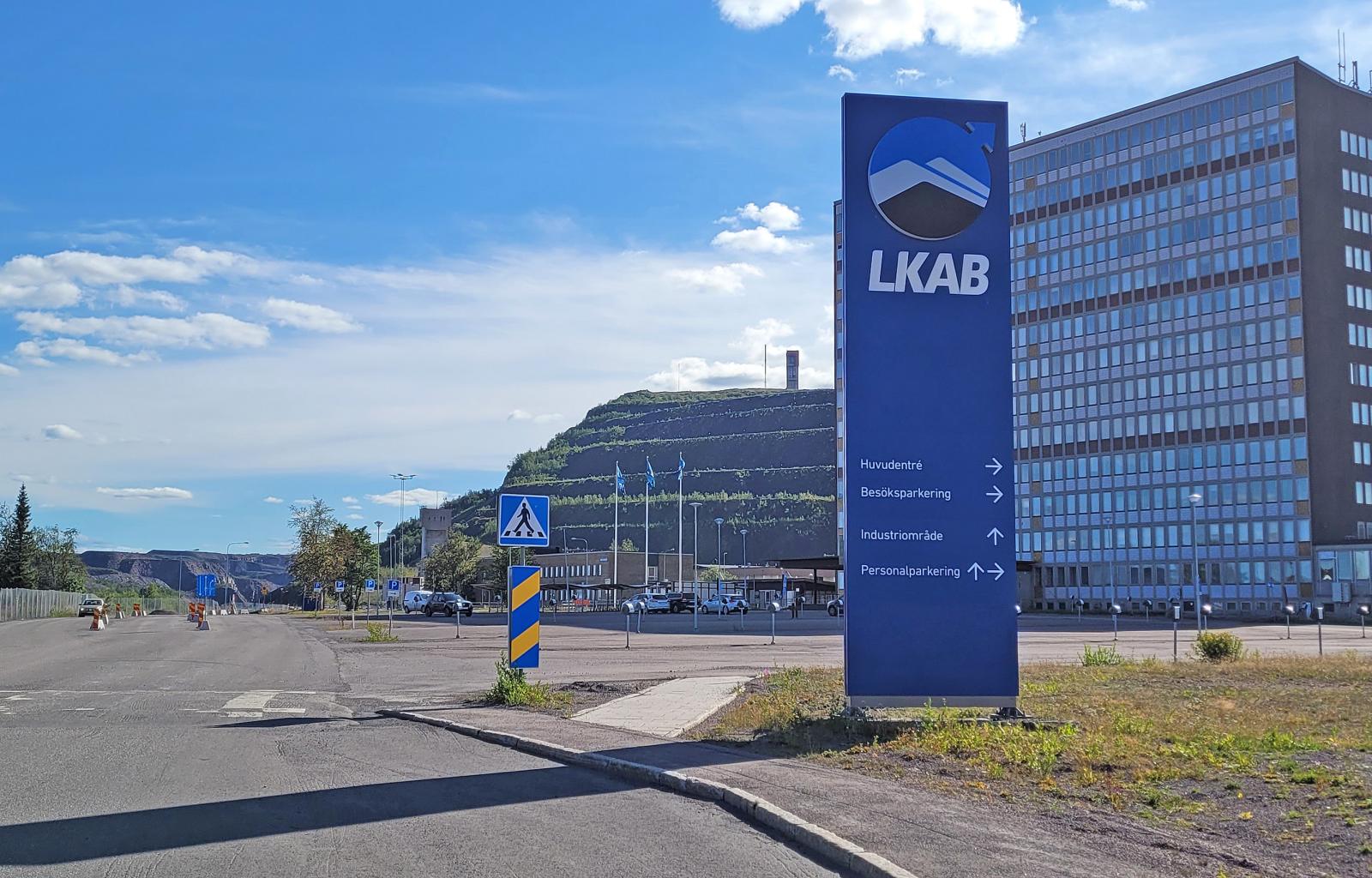
LKAB has initiated construction of a demonstration plant in Lulea, Sweden, to process rare earth elements (REEs) from iron ore mining waste. This effort marks a significant step towards European REE independence.

Demonstration Plant to Validate Extraction Processes

LKAB is investing 800mn kronor ($72.65mn) in the plant, aiming for a 2026 startup at a new Lulea industrial park. The demonstration plant will validate and refine extraction processes for a future full-scale facility. The company plans to produce REEs, phosphorus, and gypsum from its Gallivare iron ore mine by processing apatite concentrate, utilizing current waste streams. Operations will scale up with additional processing over time, targeting full operation in the 2030s. The permit process for LKAB's full operation, including the Gallivare apatite plant, anticipates a decision by late 2025.

Strategic Expansion and European REE Independence

Furthermore, LKAB intends to extract REEs from other mineralizations. Future scale-up decisions hinge on the demonstration plant's results and industrial park environmental permits. LKAB's Per Geijer iron deposit in Kiruna, estimated at 1.7mn t of REEs, stands as one of Europe's largest. Europe currently lacks REE extraction capacity, relying on Chinese imports. REEs are crucial for electric vehicle motors, wind turbines, and various electronic and military applications. LKAB has applied for Strategic Project classification under the EU's Critical Raw Materials Act for its Gallivare iron ore mine, Lulea industrial park, and REE-rich Per Geijer iron ore deposit.

Rare Element Resources Secures Final Approval for Wyoming Rare Earth Plant

No comments
Rare Element Resources

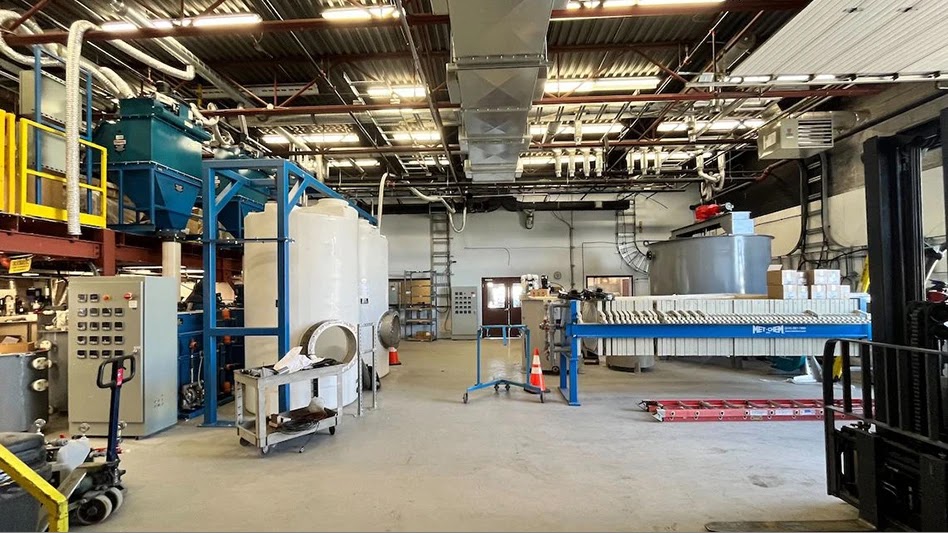
Rare Element Resources, a strategic materials company specializing in rare earth products, has received final operational approval from the US Nuclear Regulatory Commission (NRC) for its rare earth processing and separation plant in Upton, Wyoming. This milestone marks a significant step forward in the company’s efforts to strengthen the domestic supply chain for critical rare earth elements (REEs).

A Game-Changer for Rare Earth Processing

The Upton facility will process materials sourced from the Bear Lodge Rare Earth Project, a highly mineralized district known for its abundance of critical REEs essential to advanced technologies. These materials are indispensable for sectors such as technology, energy, and defense, which rely on REEs for manufacturing components like semiconductors, batteries, and magnets.

The plant is equipped with proprietary processing and separation technology aimed at delivering operational efficiency and economic insights that will serve as a blueprint for a future commercial-scale facility. Currently, the facility is undergoing pre-startup testing for its processes and a proprietary control system.

Strengthening the US Rare Earth Supply Chain

With this approval, Rare Element Resources contributes to reducing the United States reliance on foreign REE suppliers. The plant’s operations are expected to play a critical role in securing a stable and sustainable domestic supply chain.

While a production commencement date has not been disclosed, the company is focused on completing testing phases and preparing for full-scale operations.

Jaguar Land Rover Backs Cyclic Materials in Rare Earth Recycling Expansion

No comments
Cyclic Materials

Cyclic Materials Secures Investment to Boost Rare Earth Processing in US and Europe

Canadian rare earth recycling start-up Cyclic Materials has secured a $2 million investment from InMotion Ventures, the investment arm of Jaguar Land Rover. This funding will support the launch of the company's first commercial rare earth element (REE) processing facilities in the United States and Europe. The investment extends Cyclic Materials’ Series B round to $55 million.

Expanding Rare Earth Recycling to Secure Supply Chains

Cyclic Materials is advancing its MagCycle and REEPure technologies to extract REEs from end-of-life electric vehicle (EV) motors, wind turbines, MRI machines, and data center waste. With less than 1% of REEs currently being recycled, increasing domestic processing capacity is crucial to reducing reliance on China, which dominates global REE processing. China’s export restrictions on rare earth technologies have heightened concerns about supply chain resilience.

Growing Investment in Critical Minerals Recycling

In September 2023, Cyclic Materials raised $53 million from key investors, including Microsoft, Hitachi, BMW i Ventures, ArcTern, and Fifth Wall. With InMotion Ventures' latest contribution, the company has raised over $85 million in equity financing. This funding will accelerate Cyclic Materials' North American and European expansion, refine its recycling processes, and enhance production capabilities.

Jaguar Land Rover’s investment aligns with its 2030 electrification strategy, which involves securing critical raw materials for battery repair, re-use, and recycling. The company is strengthening its upstream supply chain to support the transition to luxury electric vehicles.

Cyclic Materials has also partnered with Solvay, Vattenfall, Synetiq, and Vacuumschmelze to advance rare earth magnet recycling. The company operates Hub 100, a commercial demonstration facility in Kingston, Ontario, with an 8,000 t/yr MagCycle capacity and a 100 t/yr REEPure hydrometallurgical facility producing recycled mixed rare earth oxides (rMREO), nickel, and cobalt hydroxides.

Lynas Rare Earths expansion accelerates after $490mn capital raise

No comments
Lynas Rare Earths expansion accelerates after $490mn capital raise
Lynas Rare Earths

Lynas Rare Earths expansion gathers pace after a $490mn capital raise to scale mining and processing outside China. Lynas Rare Earths expansion will strengthen heavy and light rare earth supply for magnet makers in allied markets.

Lynas completed an A$750mn equity raise at A$13.25/share, a 10% discount. The company will also offer retail holders up to A$75mn at the same price. Management directs proceeds to expand upstream feedstock, separation capacity, and downstream conversion.

Lynas produced separated dysprosium and terbium oxides in Malaysia in May and June. This milestone makes Lynas the first producer of separated heavy rare earths outside China. As a result, the company will broaden its heavy rare earth product line.

Lynas is building a diversified midstream footprint. It signed a non-binding pact with Korea’s JS Link to develop a 3,000 t/yr magnet materials plant in Malaysia. Meanwhile, it is developing a US-funded Texas facility for 2,500–3,000 t/yr heavy REE and 5,000 t/yr light REE processing.

Upstream feedstock and NdPr growth at Mount Weld

Lynas is improving access to secure feedstock. It agreed with Malaysia’s Kelantan state to support ionic clay developers and accelerate future sourcing. The company is ramping the Mount Weld expansion, adding 2,400 t/yr to NdPr oxide capacity. Therefore, Lynas will increase magnet-critical output as demand rises.

China’s recent controls tighten private processing of rare earths. This policy shift has lifted NdPr oxide prices. Consequently, Lynas’ expanded capacity and product slate should capture firmer pricing and premium, non-Chinese supply contracts.

Strategic positioning for magnet supply chains

Lynas Rare Earths expansion targets downstream integration and customer proximity. The Texas project under US backing advances allied supply resilience. The Malaysia heavy-oxide capability shortens lead times for high-coercivity magnet chemistries. In parallel, the JS Link partnership moves closer to end-use magnet manufacturing.

Investors will watch execution on capex, commissioning, and product qualification. However, Lynas’ sequencing across feedstock, separation, and conversion reduces single-point risk. The portfolio now spans heavy REEs, light REEs, and emerging magnet partnerships.

The Metalnomist Commentary

Lynas is converting first-mover advantages into a regionalized value chain. Expect multi-year offtakes to price security and origin premiums as HREE supply remains concentrated. Successful ramp-ups in Malaysia and Texas are the catalysts to watch.

IperionX Launches Feasibility Study for U.S. Titanium and Rare Earth Project

No comments
IperionX Launches Feasibility Study for U.S. Titanium and Rare Earth Project
IperionX Project

Titan Project Targets Domestic Titanium, Rare Earths, and Zirconium Supply

U.S.-based IperionX has initiated a definitive feasibility study (DFS) for its Titan Critical Minerals project in Tennessee. The project, backed by more than $60 million in U.S. federal funding, aims to support a domestic titanium supply chain. The DFS is scheduled for completion by the second quarter of 2026.

Titan contains titanium, zirconium, and both light and heavy rare earth elements (REEs). Notably, it holds critical materials like dysprosium, terbium, neodymium, and praseodymium, which are essential for national defense and advanced technologies. IperionX says Titan has the potential to become the largest U.S. source of heavy REEs.

U.S. Strategic Goals Back Critical Mineral Development

The U.S. government’s financial support reflects the national urgency to reduce dependence on foreign critical mineral imports. These elements are vital for electric vehicles, wind turbines, and military technologies. Meanwhile, the ongoing progress at IperionX’s Virginia titanium facility signals broader ambitions to onshore titanium metal production.

IperionX is uniquely positioned as both a miner and metal producer, aligning with the Department of Defense’s push for vertical integration of strategic materials. Its titanium output, paired with rare earths from Titan, would significantly enhance U.S. resource security.

Focus Keyphrase: Titan Critical Minerals Project

The Titan Critical Minerals project represents a major leap toward domestic critical mineral self-sufficiency. With a unique mix of titanium, zirconium, and rare earths, Titan stands out among U.S. mineral assets. IperionX’s dual approach—upstream mining and downstream processing—further strengthens the value chain.

As global supply chains shift and geopolitical risks rise, Titan’s progress could redefine the U.S. role in global critical mineral markets.

The Metalnomist Commentary

Titan is more than a mine; it is a strategic asset. IperionX’s development could reshape America’s critical materials future—especially for defense and clean tech.

Integral Advances Rare Earth Projects in North America

No comments
Integral Advances Rare Earth Projects in North America
Integral Metals

Woods Creek and Burntwood Projects Target Key REEs

Integral Metals, a Canadian critical minerals explorer, is accelerating rare earth element (REE) development in Montana and Manitoba. The company aims to support a self-reliant North American REE supply chain amid tightening Chinese export controls.

The Woods Creek project in Montana has yielded samples rich in neodymium and praseodymium, essential for permanent magnets. Meanwhile, the Burntwood property in Manitoba shows signs of carbonatite-hosted mineralization with syenite intrusions, indicating both light and heavy REE potential.

Supply Chain Strategy Amid Chinese Export Controls

Integral's efforts align with growing geopolitical urgency to diversify away from China, which dominates global REE exports. In 2024, China imposed restrictions on the export of seven REEs, including samarium, dysprosium, and scandium.

In response, Integral is focusing on domestic exploration to ensure secure and resilient REE access for future clean tech and defense demand. CEO Paul Sparkes emphasized that these projects can help “reduce North America’s reliance on foreign sources.”

The company continues to evaluate mineralization, geological data, and infrastructure requirements to advance both sites toward production-readiness.

The Metalnomist Commentary

Integral Metals joins a rising cohort of junior miners seeking to rebalance global rare earth supply. If proven viable, these projects could contribute to reshoring REE value chains in North America, though long timelines and permitting challenges remain.

NioCorp Makes Strides in Rare Earth Recycling

No comments
NioCorp

NioCorp Developments, a critical minerals developer, has achieved a significant milestone in its rare earth element (REE) extraction efforts. The company successfully extracted REEs from end-of-life permanent rare earth magnets, utilizing a hydrometallurgical process that will be implemented at its Elk Creek project in Nebraska.

The company's pilot plant in Canada, in collaboration with a third-party partner, processed demagnetized and ground-up permanent magnets into separated rare earth oxides. While specific production volumes were not disclosed, the successful extraction process demonstrates the feasibility of recycling rare earth magnets.

NioCorp is now exploring the potential of a recycling program to complement the REE production at Elk Creek. By recovering valuable REEs from recycled magnets, the company aims to enhance its supply chain sustainability and reduce reliance on primary mining.

However, it's important to note that a comprehensive economic analysis for REE extraction at Elk Creek is still pending. The company will need to assess the financial viability of this venture before proceeding with construction and production.

While the primary focus of the Elk Creek project remains on niobium, scandium, and titanium production, the successful REE extraction from recycled magnets opens up new opportunities for NioCorp and contributes to the growing importance of sustainable rare earth sourcing.

ReElement Technologies Eyes $150mn Boost for US Rare Earth Refinery

No comments
ReElement Technologies Eyes $150mn Boost for US Rare Earth Refinery
ReElement Technologies

Expanding US Rare Earth Refining Capacity

ReElement Technologies has secured a letter of interest from the US Export-Import Bank for up to $150mn in funding to expand its rare earth element (REE) and critical mineral refinery in Indiana. The investment would support the Marion Advanced Technology Center, enhancing its ability to produce 99.5% purity rare earth oxides and compounds, including neodymium, dysprosium, terbium, samarium, yttrium, and gadolinium. This expansion aims to strengthen the United States’ domestic capacity to refine critical materials essential for clean energy, defense, and advanced manufacturing sectors.

The Marion facility, acquired in 2023, spans 50,000m² and is being transformed into a commercial-scale refining hub capable of producing not only rare earth oxides but also lithium carbonate, lithium hydroxide, and transition metals. This scale positions ReElement as a potential leader in US-based REE processing.

Competing with Chinese Production Costs

ReElement also operates a 700m² Commercial Validation Facility in Noblesville, Indiana, which produces REEs and battery-critical elements. The company claims to be one of the few — possibly the only — US commercial entity capable of producing these high-purity materials at costs competitive with, or lower than, Chinese production. This capability could significantly reduce the nation’s dependency on Chinese supply chains, a key strategic priority amid rising geopolitical tensions and growing demand for REEs in electric vehicles, wind turbines, and military technologies.

Industry analysts note that achieving cost parity with Chinese producers has historically been a major barrier for US refiners. If ReElement can scale production while maintaining cost efficiency, it could reshape the competitive landscape in the global REE market.

Strategic Implications for US Supply Chain Security

The potential $150mn financing aligns with Washington’s push to localize critical mineral supply chains. Rare earth elements are essential for energy transition technologies and high-performance defense systems, yet the US currently relies heavily on imports for refined materials. By expanding domestic refining capacity, ReElement could play a pivotal role in mitigating supply risks, fostering industrial resilience, and supporting US manufacturing competitiveness.

Furthermore, the partnership with the US Export-Import Bank underscores growing federal willingness to financially back strategic resource projects. This model of public-private collaboration may serve as a blueprint for accelerating critical mineral infrastructure nationwide.

The Metalnomist Commentary

ReElement’s potential funding deal is a milestone in US rare earth refining ambitions. By scaling production to commercial levels while competing with China on cost, the company could become a cornerstone of America’s critical mineral strategy. The challenge will be ensuring that operational efficiency and market demand grow in lockstep with expanded capacity.

US GreenMet, Tanbreez Partner on Greenland Rare Earths

No comments
US GreenMet, Tanbreez Partner on Greenland Rare Earths
Critical Metals Corp

Strategic Collaboration Targets Heavy Rare Earth Elements Supply

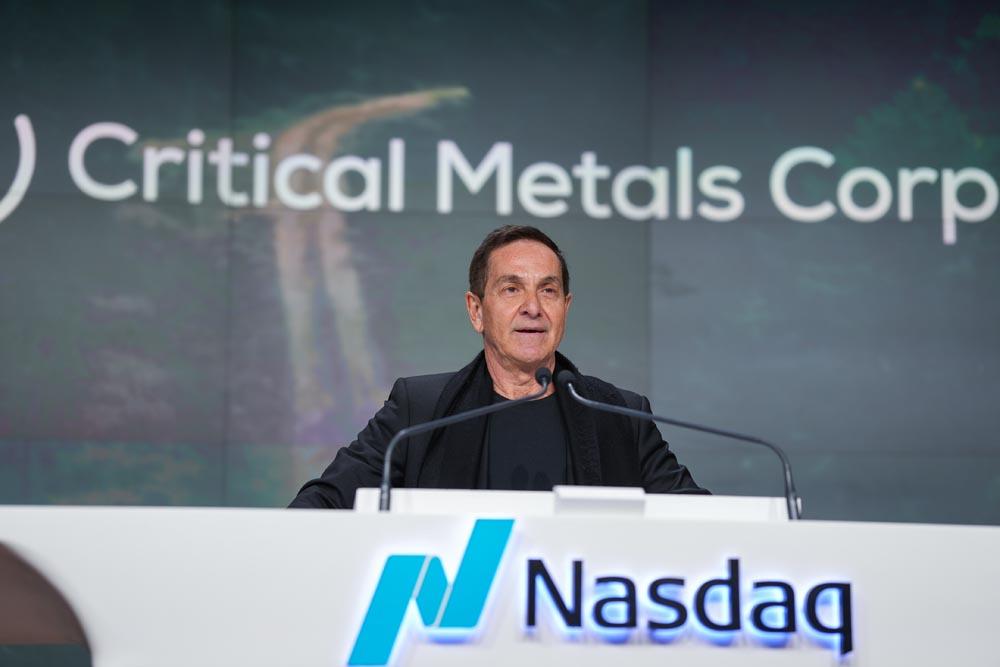
US GreenMet and Critical Metals Corp have formed a partnership to develop the Tanbreez Project in southern Greenland. This project aims to strengthen the US and allied nations' access to heavy rare earth elements (REEs) critical for defense and high-tech industries.

The Tanbreez Project holds nearly 45 million tonnes of indicated and inferred rare earth materials. This represents about 1% of the mineralized host rock, offering long-term development potential. The site features deep-water fjord access and existing infrastructure, with a mining license granted through 2050.

A Geopolitically Strategic Asset for US Supply Chains

Critical Metals Corp acquired Tanbreez Mining Greenland for $211 million in June, securing control amid concerns about Chinese investment. The deal ensures that this rare earth resource remains aligned with Western supply chain interests.

Once operational, the project will support the US defense sector and advanced technology manufacturing. This aligns with broader national efforts to reduce dependence on Chinese rare earth supplies. GreenMet’s involvement signals a coordinated US push to secure critical minerals from politically stable regions.

Expansion into Broader Critical Mineral Markets

Critical Metals is also progressing a lithium spodumene project in Austria, targeting the European battery industry. This dual focus reflects increasing demand for rare earths and lithium, as energy transition policies accelerate.

Meanwhile, Greenland’s regulatory environment and proximity to Europe and North America offer logistical advantages. The Tanbreez site’s location and scale position it as a cornerstone of Western rare earth strategies moving forward.

The Metalnomist Commentary

The Tanbreez Project exemplifies how strategic mineral development is now a pillar of geopolitical competition. With the US racing to onshore or ally-source REEs, Greenland’s rare earth wealth could prove to be a decisive lever in decoupling from Chinese critical mineral dominance.

China and Turkey Forge Rare Earth Partnership to Meet Growing Global Demand

No comments
China Mining 2024

China and Turkey have taken a significant step towards enhancing their cooperation in the rare earth sector, an industry critical to the global energy transition and high-tech manufacturing. Turkish Energy and Natural Resources Minister Alparslan Bayraktar announced on the social media platform X that the two nations signed a preliminary agreement to jointly develop rare earth resources. This move underscores the growing importance of rare earth elements (REEs) in industries such as electric vehicles (EVs) and renewable energy.

Turkey’s Rare Earth Potential

In July 2022, Turkey revealed the discovery of what it claims to be the world’s second-largest rare earth deposit in Eskisehir province, estimated at 694 million tons. This vast resource positions Turkey as a potential key player in the global rare earth market. Plans are already underway to establish rare earth separation and processing facilities capable of extracting 570,000 tons per year of REEs, as Bayraktar disclosed during the China Mining 2024 conference in Tianjin.

Strategic Partnership in Critical Minerals

The newly signed agreement between Bayraktar and China's Minister of Natural Resources Wang Guanghua highlights China's commitment to securing rare earth supplies amid escalating global demand. China, which possesses 44 million tons of rare earth reserves—38% of the global total—remains the world leader in rare earth production and refining, controlling nearly 70% of global output in 2023.

Global Market Implications

Rare earths are indispensable for producing NdFeB magnets, a key component in EVs, wind turbines, and industrial robotics. With increasing demand from the EV industry, China’s largest EV manufacturer, BYD, has also expanded its international production footprint. BYD’s partnership with Turkey’s industry ministry aims to produce 150,000 EVs annually, aligning with global electrification goals.

The Need for Diversification

Geopolitical tensions have driven western nations to reduce their reliance on Chinese rare earths. Companies like Australia’s Lynas Rare Earths and US-based MP Materials are investing in alternative supply chains, focusing on heavy rare earth (HRE) production.

This collaboration between China and Turkey not only secures Turkey’s strategic position in the rare earth market but also reflects the intensifying global race to secure critical minerals for the energy transition.

Defense Metals Secures $250mn Funding Interest for Wicheeda Rare Earths Project

No comments
Defense Metals Secures $250mn Funding Interest for Wicheeda Rare Earths Project
Defense Metals


Strategic Financing Boost for Canadian Rare Earth Development

Defense Metals has received a Letter of Interest from Export Development Canada (EDC) for up to $250mn in debt financing to advance its Wicheeda Rare Earth Element (REE) Project. The funding is contingent upon the completion of due diligence, marking a significant milestone for one of Canada’s most promising rare earth ventures.

Located in British Columbia, the Wicheeda REE Project covers 29,158 acres and is expected to operate for 15 years once in production. According to the 2025 pre-feasibility study, the project could yield an average of 31,900 tonnes per year of total rare earth oxide (TREO) in concentrate, translating to about 5,200 tonnes of TREO in mixed rare earth carbonate (MREC). This positions Wicheeda as a critical contributor to North America’s rare earth supply chain.

The project’s estimated capital cost stands at $2bn, with operating costs of $37.42 per kilogram of praseodymium-neodymium oxide in MREC. If developed, Wicheeda could provide a secure and sustainable supply of high-value REEs vital for electric vehicles, renewable energy systems, and defense applications.

Strengthening North America’s Rare Earth Supply Chain

The EDC’s potential financing underscores Canada’s commitment to building domestic capabilities in critical minerals. By supporting large-scale projects like Wicheeda, Canada can reduce reliance on overseas REE sources and reinforce supply security for industries vulnerable to geopolitical disruptions. Defense Metals’ progress also reflects a broader trend of aligning mining investment with strategic industrial policy in the face of growing global demand.

The Metalnomist Commentary

The $250mn funding interest from EDC could prove pivotal in moving Wicheeda toward production. With capital-intensive projects like this, early financial backing is essential to secure investor confidence and advance permitting. If realized, Wicheeda will strengthen North America’s independence in rare earth sourcing while tapping into rapidly expanding clean energy and technology markets.

Energy Fuels Reports 2024 Loss on Acquisition Costs, But Advances in Rare Earths Signal Long-Term Strategy

No comments
Energy Fuels

U.S. Miner Eyes NdPr Qualification, Expands Heavy Mineral Sands Sales After Australian Acquisitions

Energy Fuels Posts $48 Million Loss in 2024 Amid Strategic Expansion into Rare Earth and Mineral Sands Markets

Energy Fuels, a U.S.-based critical minerals producer, swung to a $48 million net loss in 2024, compared with a $99.76 million profit in 2023. The loss stemmed primarily from one-time acquisition and integration expenses tied to the purchase of Base Resources and its Donald Project in Australia. These expenses totaled $10.34 million and included increased operating costs from inherited personnel and reclamation liabilities.

Despite the financial dip, the acquisitions have significantly expanded Energy Fuels' footprint in heavy mineral sands and rare earth elements (REE), positioning the company for long-term strategic growth.

Heavy Mineral Sands Sales Strengthen While Rare Earth Separation Advances in Utah

In 2024, the company sold 17,529 tonnes of rutile, 48,302 tonnes of ilmenite, and 2,477 tonnes of zircon, generating $39.87 million in revenue from its mineral sands segment. The assets acquired include Kenya’s Kwale project, Madagascar’s Toliara project, and the Donald Project in Victoria, a joint venture with Astron Resources containing zircon, ilmenite, and untapped REEs.

Meanwhile, at its White Mesa Mill in Utah, Energy Fuels completed Phase 1 commissioning of its rare earth separation circuit, producing 38,000 kg of NdPr and 9,000 kg of high-purity heavy RE carbonates (including samarium and others). The company has sent NdPr samples to magnet manufacturers, seeking qualification for permanent magnet use, a key precursor to securing long-term offtake agreements.

Pathway to 60,000 t/yr Throughput and Expanded REE Output

The company is now updating its pre-feasibility study (PFS) for White Mesa to increase monazite feed capacity to 60,000 tonnes per year. The proposed upgrade targets annual output of 6,000 tonnes of NdPr, 150–225 tonnes of dysprosium, and 50–75 tonnes of terbium. The newly commissioned Phase 1 circuit accounts for about 17% of the full capacity, equivalent to 10,000 t/yr of monazite feed.

With rising geopolitical pressure to localize critical minerals supply chains, Energy Fuels continues to diversify away from uranium and strengthen its vertical integration in rare earths and heavy minerals.

Cobra Resources rare earth discovery expands Boland potential in South Australia

No comments
Cobra Resources rare earth discovery expands Boland potential in South Australia
Cobra Resources

Cobra Resources rare earth discovery adds dysprosium and terbium potential at the Boland Project. The Cobra Resources rare earth discovery emerged from re-analysis of historic uranium drilling. As a result, the Cobra Resources rare earth discovery positions South Australia for new magnet metal supply.

Ionic clay system offers low-intensity processing upside

Cobra reports ionic clay rare earths in the Gawler Craton. The Boland deposit hosts REEs adsorbed to fine clays in palaeochannel sands. Therefore, the company believes weak-acidity leaching can recover contained metal efficiently. Dysprosium and terbium support high-temperature permanent magnets. Meanwhile, ionic clays can enable shorter development timelines than hard-rock projects.

Next steps focus on higher grades and scale

Cobra cautions that rotary mud drilling limits representativeness. However, re-assays exceeded initial Boland results. The company will screen remaining samples to prioritise targets. It plans follow-up drilling with improved methods to lift grades. Targeted work aims to add scale and confirm processability. Investors will watch for metallurgy, grade continuity, and strip ratio indicators.

The Boland Project sits in central South Australia near existing infrastructure. This location could reduce logistics costs for reagents and product. Moreover, domestic REE supply supports Australia’s critical minerals strategy. Magnet metals demand from EVs, wind, and defense continues to rise globally.

The Metalnomist Commentary

Cobra’s ionic clay narrative fits today’s market need for lower-capex, faster-to-market REE projects. The key milestones now are leach recoveries, impurity management, and a credible flowsheet. If metallurgy holds, Boland could join Australia’s emerging non-China magnet metals pipeline.

Locksley REE and antimony exploration expands near Mountain Pass in Mojave

No comments
Locksley REE and antimony exploration expands near Mountain Pass in Mojave
Locksley Resources

Locksley REE and antimony exploration is accelerating in California’s Mojave Desert near Mountain Pass. The Locksley REE and antimony exploration program now covers more than 40km², directly adjacent to North America’s only rare earths mine. As a result, Locksley REE and antimony exploration gives investors leveraged exposure to a strategic US critical minerals district.

High-grade REE target beside Mountain Pass

Locksley’s Mojave Project anchors its rare earth strategy through the El Campo prospect. El Campo sits just 1.4km from MP Materials’ Mountain Pass operation, highlighting strong geological potential. Early work has returned grades up to 12.1pc total rare earth oxides and 3.2pc neodymium-praseodymium.

The El Campo site is already fully permitted, which reduces early-stage timeline risk for the company. Therefore, Locksley can move quickly from surface mapping into subsurface testing. Drilling is scheduled for the third quarter of this year to test depth continuity and tonnage potential. Success could position El Campo as a satellite or complementary rare earth source within the broader Mountain Pass district.

Locksley has also identified a historical shaft during recent surface mapping at Mojave. The shaft, estimated to exceed 15m, is now undergoing detailed evaluation. This work may reveal previously undocumented underground workings or mineralised zones that could guide future drill targeting.

Desert Antimony targets domestic US antimony revival

The Desert Antimony prospect gives the Mojave Project a second critical minerals pillar. It builds on a historic antimony mine with extensive surface mineralisation. Recent assays show grades reaching 46pc antimony in outcropping quartz-calcite-stibnite veins. Such grades are highly significant for a strategic metal with constrained Western supply.

Locksley is advancing drilling and permitting at Desert Antimony to support potential domestic antimony revival. Antimony is essential for flame retardants, alloys and some defence applications, making US supply diversification a policy priority. Meanwhile, combining REEs and antimony within one project portfolio increases strategic relevance for potential partners.

By consolidating ground around these prospects, Locksley strengthens its position in a heavily scrutinised critical minerals corridor. The enlarged land package also improves the chances of discovering additional REE or antimony targets. Over time, this could support a district-scale development concept rather than isolated deposits.

The Metalnomist Commentary

Locksley’s move in the Mojave shows how juniors can leverage location next to established assets to accelerate critical minerals stories. The combination of high-grade REE results near Mountain Pass and very strong antimony assays creates genuine strategic optionality. Market participants should watch upcoming drill results and any early interest from larger REE or defence-linked groups as key tests of project quality.

Energy Fuels Expands Rare Earth Production, Targets Key Elements for High-Tech Applications

No comments

Energy Fuels, a leading U.S. producer of uranium and rare earth elements (REEs), is set to significantly increase its production of neodymium-praseodymium (NdPr) in the third quarter of 2024. This follows the successful commissioning of the first phase of its commercial-scale rare earth separation circuit at the White Mesa uranium and vanadium mill in Utah, which began operations in the April-June quarter.

The company produced approximately 12 metric tons of separated NdPr during the second quarter, which remains in inventory, alongside an additional 9 metric tons of high-purity, partially separated mixed rare earth carbonate. Energy Fuels anticipates completing the processing of its remaining monazite stock early in the third quarter, leading to a total output of 25-35 metric tons of separated NdPr and 10-20 metric tons of a heavy samarium (Sm+) mixed rare earth carbonate.

Looking ahead, the company is not only focused on NdPr but is also fine-tuning its plans to produce dysprosium (Dy) and terbium (Tb), two other critical rare earth elements, as part of the mill's Phase 2 expansion. This phase aims to increase the facility’s capacity to process 40,000-60,000 metric tons per year of monazite, significantly boosting output to 4,000-6,000 metric tons per year of NdPr, along with 150-225 metric tons per year of Dy and 50-75 metric tons per year of Tb.

The ongoing expansion is supported by strategic acquisitions and partnerships aimed at securing a stable supply of monazite, a key feedstock for rare earth oxide production. Energy Fuels has acquired Perth-based Base Resources, which is developing the Toliara project in Madagascar, and owns the Bahia project in Brazil, both of which are expected to supply significant volumes of monazite to White Mesa. Additionally, the company is developing the Donald project in Australia through a joint venture with Astron.

These efforts are part of Energy Fuels’ broader strategy to meet the growing demand for rare earth elements, which are essential for high-tech applications, including electric vehicles, renewable energy, and advanced defense systems.

Cyclic Materials Invests $20mn in REE Recycling Facility

No comments
Cyclic Materials Invests $20mn in REE Recycling Facility
Cyclic Materials

Canada-based recycler expands rare earth recovery efforts with new Arizona plant to boost North American REE supply chain

Building a U.S. Rare Earth Recycling Hub

Cyclic Materials has committed $20mn to a new REE recycling facility in Mesa, Arizona. The investment marks a pivotal step in scaling rare earth element (REE) recovery from end-of-life components. The new plant will target waste streams from vehicles, electronics, and industrial devices. It will help process 155,000 metric tonnes annually across the U.S. Southwest.

Rare Earth Supply Chain Independence

The Mesa facility reinforces the company’s REE recycling strategy. Cyclic Materials aims to reduce reliance on foreign rare earth supplies, especially from China. CEO Ahmad Ghahreman emphasized the importance of circular supply chains for stable and sustainable access to critical materials. The company recovers REEs from EV motors, MRI equipment, wind turbines, and data centers.

Strategic Partnerships and Market Outlook

Cyclic Materials collaborates with major players like Solvay, Vattenfall, Synetiq, and Vacuumschmelze. These partnerships enhance its ability to extract permanent magnets from complex components. As a result, the project supports the U.S. ambition to localize clean tech materials and reduce REE import dependency.

The Metalnomist Commentary

Cyclic Materials’ $20mn investment signifies a long-term bet on REE recycling amid rising global demand for magnets used in EVs and wind energy. With strategic partnerships and domestic processing, this move strengthens North America's critical minerals security while aligning with decarbonization and supply chain goals.

Ucore Secures $18M DOD Grant to Expand U.S. Rare Earth Separation Plant

No comments
Ucore Secures $18M DOD Grant to Expand U.S. Rare Earth Separation Plant
Ucore Rare Metals

Strategic Metals Complex to Process Key REEs by 2026

Ucore Rare Metals has received $18.4 million from the U.S. Department of Defense to expand its rare earth separation plant in Louisiana, significantly advancing domestic REE processing capabilities. The Focus Keyphrase "Ucore rare earth separation plant" reflects the facility’s rising strategic value amid efforts to reduce U.S. dependence on Chinese supply chains.

This funding increases a previous $4 million agreement with the U.S. Army Contracting Command and will support Phase II development of the Louisiana Strategic Metals Complex (SMC) in Alexandria. The plant aims to commercially separate six critical rare earth elements — including neodymium, praseodymium, and dysprosium — all of which are vital for defense and clean energy technologies.

Kingston Prototype Expansion and Commercial Scale-Up

The DOD grant also backs the expansion of Ucore’s REE separation prototype facility in Kingston, Ontario, enhancing the company’s technical foundation for scaling commercial operations. Together, the Louisiana and Ontario sites will form an integrated North American rare earth supply chain.

Ucore’s SMC facility will process both light and heavy rare earth oxides at commercial volumes. These include materials used in permanent magnets for electric vehicles, wind turbines, and military applications. The company plans to begin construction and initial production in the second half of 2026.

Strengthening U.S. Rare Earth Independence

This investment demonstrates the U.S. government’s commitment to de-risking critical mineral supply chains, especially in response to China's tightening export controls on rare earths. Ucore’s project is one of the few in North America capable of separating multiple rare earth elements at commercial scale.

The development aligns with national defense priorities and the Inflation Reduction Act’s push to localize materials essential to the energy transition and strategic manufacturing.

The Metalnomist Commentary

Ucore’s rare earth separation plant, backed by the Department of Defense, signals a decisive step toward reshoring high-value critical mineral processing. With construction slated for 2026, the SMC could become a cornerstone of U.S. rare earth independence in an increasingly geopolitically charged market.

US Critical Materials and INL Partner on Rare Earth Pilot Plant

No comments
US Critical Materials and INL Partner on Rare Earth Pilot Plant
US Critical Materials

Advancing Domestic Rare Earth Processing Capacity

US Critical Materials has joined forces with Idaho National Laboratory (INL) to develop a pilot plant that will process rare earth elements (REEs) from Montana’s Sheep Creek deposit. The facility will handle 1–2 metric tonnes of ore per day, enabling the demonstration of advanced mineral processing and separation technologies. The partnership aims to strengthen the United States’ ability to produce critical minerals domestically, reducing reliance on foreign supply chains.

INL, serving as the US Department of Energy’s primary Separation Sciences R&D hub, will provide technical expertise to optimize recovery processes. Although no operational timeline has been announced, the project marks a significant step toward establishing a vertically integrated REE supply chain within the country.

Strategic Importance of Sheep Creek’s Mineral Profile

The Sheep Creek deposit contains a high-grade mix of critical minerals, including neodymium, praseodymium, niobium, and heavy rare earths such as gadolinium, terbium, dysprosium, and yttrium, along with gallium. These materials are essential for applications ranging from permanent magnets in electric vehicles and wind turbines to advanced defense systems and high-performance electronics.

By leveraging domestic feedstock, the pilot plant will support US efforts to secure stable supplies of these strategically vital resources. This aligns with national priorities to mitigate supply chain vulnerabilities, particularly given the concentration of global REE processing in China.

Building a Foundation for Scaled Production

The 1–2 t/d pilot plant is designed as a proof-of-concept facility that could pave the way for commercial-scale operations. If successful, the technologies validated here could be deployed across multiple REE-rich sites in the US, further decentralizing global supply and enhancing industrial resilience.

The collaboration also signals growing federal interest in funding and partnering on projects that align with defense, energy transition, and manufacturing needs. By working with INL, US Critical Materials gains access to specialized infrastructure and expertise that could accelerate commercialization.

The Metalnomist Commentary

This partnership highlights the strategic urgency of building a domestic rare earth supply chain. By combining US Critical Materials’ high-grade feedstock with INL’s separation expertise, the pilot plant could become a model for future US-based REE production. The next challenge will be scaling capacity while ensuring cost competitiveness against established global producers.

Geomega to Complete Rare Earth Magnet Recycling Plant in Quebec

No comments
Geomega to Complete Rare Earth Magnet Recycling Plant in Quebec
Geomega Resources

Advancing Sustainable Rare Earth Supply Through Recycling

Geomega Resources is on track to complete its rare earth magnet recycling plant in Quebec by the end of 2025. The Canadian rare earth elements (REEs) technology provider aims to produce recycled rare earth oxides from a variety of waste feedstocks, including neodymium-iron-boron (NdFeB) magnets, bauxite residue, and sulphide tailings. This initiative supports the growing demand for sustainable and secure rare earth supply chains.

Construction of the demonstration plant began in February 2024, with an expected timeline of two years. Originally, the project was scheduled for completion within six months after securing $1.2mn in a 2019 private placement. However, delays extended the timeline, partly due to permitting and development challenges. Geomega has already submitted its environmental permit request and awaits regulatory approval to proceed with commissioning after construction.

In 2019, chief executive Kiril Mugerman estimated operating costs at $3/kg for rare earths, with capital expenditure of $2.6mn to process 1.5 tonnes per day of magnet waste. Once operational, the facility is expected to contribute meaningfully to the recycling of critical materials, reducing dependence on primary mining and addressing environmental concerns related to waste disposal.

Strengthening the North American Rare Earth Ecosystem

The Quebec recycling plant aligns with broader North American efforts to secure rare earth supply chains amid global market concentration. By converting industrial waste into high-purity rare earth oxides, Geomega can help diversify sourcing away from dominant producers and improve regional self-sufficiency. This capability is increasingly vital as industries such as electric vehicles, wind energy, and electronics require stable and sustainable REE supplies.

The Metalnomist Commentary

Geomega’s Quebec project represents a critical step toward a circular economy for rare earths in North America. By recycling high-value magnets and other waste sources, the company not only reduces environmental impacts but also enhances supply chain resilience. If successful, this facility could become a model for scaling rare earth recycling across the region.

Maaden and MP Materials to Build Integrated Rare Earth Supply Chain in Saudi Arabia

No comments
Maaden and MP Materials to Build Integrated Rare Earth Supply Chain in Saudi Arabia
Maaden

US-Saudi Partnership Targets Full-Scale Rare Earth Value Chain

Maaden and MP Materials have signed a strategic agreement to build a fully integrated rare earth supply chain in Saudi Arabia, marking a pivotal move for both nations. The Focus Keyphrase "rare earth supply chain" reflects a growing push to secure critical mineral independence amid rising geopolitical and technological pressures.

The partnership will span mining, separation, refining, and permanent magnet production, creating a vertically integrated value chain within the Kingdom. MP Materials emphasized that the collaboration aligns with U.S. efforts to diversify rare earth sourcing beyond China, while also advancing Saudi Arabia’s industrial and economic diversification goals.

Saudi Arabia Expands Mining as Third Economic Pillar

Saudi Arabia is aggressively investing in its mineral wealth to reduce dependence on hydrocarbons. With newly raised mineral resource estimates valued at SAR9.4 trillion ($2.5 trillion), the government is prioritizing mining as the third pillar of Vision 2030. Of this, SAR238 billion is estimated to be in rare earth elements, vital for electric vehicles, wind turbines, and defense systems.

This partnership with MP Materials will leverage both parties' strengths: Maaden’s regional exploration expertise and infrastructure, and MP Materials’ advanced rare earth processing technology developed in the U.S.

Strengthening Strategic Supply Chains Between Allies

The deal also reflects growing US-Saudi alignment on critical minerals, reinforcing bilateral cooperation in global supply chain resilience. As countries race to secure reliable sources of rare earth elements (REEs), this joint venture positions Saudi Arabia as a future hub for REE manufacturing in the Middle East.

By localizing the full rare earth supply chain, the initiative will support downstream sectors like advanced manufacturing, energy transition technologies, and defense — while reducing reliance on Chinese processing capacity.

The Metalnomist Commentary

The Maaden–MP Materials agreement represents a transformational step in reshaping global rare earth supply dynamics. As the world diversifies away from China-centric supply routes, Saudi Arabia’s strategic investments — paired with U.S. technology — are positioning the Kingdom as a future leader in the rare earth economy.