Showing posts sorted by relevance for query iron ore. Sort by date Show all posts

Mitsui and Itochu Australian iron ore investment strengthens Asian steel supply chains

No comments
Mitsui and Itochu Australian iron ore investment strengthens Asian steel supply chains
Australian Iron Ore

The Mitsui and Itochu Australian iron ore investment strengthens long term raw material security for Asian steelmakers. The two Japanese trading houses will acquire a combined 15% stake in the Ministers North iron ore projects from BHP in Western Australia. As a result, they will secure offtake rights from an expected 20mn t/yr operation, pending a final investment decision by June 2026.

This Mitsui and Itochu Australian iron ore investment also deepens long standing partnerships with BHP in the Pilbara. Itochu will hold an 8% stake and targets 1.6mn t/yr of iron ore, mainly for Chinese customers. Mitsui will take a 7% stake and aims to offtake about 1.4mn t/yr, supplying Japan and other Asian markets. Therefore, each firm will align offtake volumes with its equity share, reinforcing stable contractual flows rather than spot exposure.

Ministers North steps in as Yandi successor

The Ministers North project will effectively replace the aging Yandi mine jointly operated by BHP, Mitsui and Itochu. Yandi is scheduled for a gradual production decline and eventual closure, although the final shutdown date remains undisclosed. Therefore, Ministers North functions as a crucial continuity asset, preserving existing rail, port and blending synergies in Western Australia.

Project timing remains tied to a final investment decision scheduled by June 2026. Commercial operations could then ramp up to the envisaged 20mn t/yr run rate. However, the consortium must still navigate cost inflation, permitting timelines and infrastructure coordination with other Pilbara projects. If delivered on schedule, Ministers North will smooth the transition from Yandi without a major gap in supply.

Broader Pilbara strategy behind Mitsui and Itochu Australian iron ore investment

The Mitsui and Itochu Australian iron ore investment also sits within a wider Pilbara growth strategy. Mitsui separately announced a $5.3bn commitment in February to acquire a 40% share in the Rhodes Ridge joint venture. The company aims to start commercial operations there by around 2030, although the final investment decision schedule is still under review.

Together, Ministers North and Rhodes Ridge will anchor Mitsui’s long term iron ore portfolio in Western Australia. Meanwhile, Itochu’s additional stake in Ministers North underpins its iron ore flows to China during a period of changing demand patterns. As a result, the Mitsui and Itochu Australian iron ore investment reinforces Japan’s broader goal of diversified, low risk iron ore sourcing across key Asian markets.

The Metalnomist Commentary

This deal shows how Japanese trading houses quietly rebuild long term security in iron ore rather than chase short term price cycles. By backing Ministers North as Yandi’s successor and supporting Rhodes Ridge, Mitsui and Itochu lock in future Pilbara options while steel demand in Asia matures. Market participants should watch how offtake contracts and quality specifications evolve, especially for blends tailored to China and Japan’s decarbonising steel sectors.

Japan’s Iron Ore Imports Drop in March Amid Weak Steel Demand

No comments
Japan’s Iron Ore Imports Drop in March Amid Weak Steel Demand
Iron Ore

March Iron Ore Imports Dip Despite Monthly Rebound

Japan's iron ore imports declined by 1.2pc year-on-year in March, reflecting weak steel demand and lower shipments from Brazil. The country imported 8.1mn tonnes of iron ore, although this marked a 28pc rise from February, according to preliminary finance ministry data.

The average import price was $102.20/t, down 17pc from the same month last year.
In yen terms, the price averaged ¥15,283, also a 17pc year-on-year decline, underscoring a softer raw materials market.

Brazil Shipments Fall Amid Weather and Maintenance Disruptions

Shipments from Brazil—Japan’s second-largest iron ore supplier—were disrupted by heavy rainfall and terminal maintenance. Brazil’s overall iron ore exports fell by 10pc year-on-year in February, reaching 24.5mn tonnes, the lowest level for that month since 2023.

Japan reportedly imported around 2.6mn tonnes from Brazil in March, but country-specific data will be confirmed later in April. The shortfall in Brazilian supply likely contributed to Japan’s reduced overall iron ore intake.

Domestic Steel Output Outlook Remains Sluggish

Japan's steel production is expected to fall by 4.9pc year-on-year in the April–June quarter. The trade and industry ministry (METI) projects steel output at 20.2mn tonnes, reflecting sluggish domestic demand in construction and manufacturing.

Lower steel production directly impacts iron ore requirements, weakening import volumes and softening global iron ore prices.

The Metalnomist Commentary

Japan's lower iron ore imports in March reflect a broader industrial slowdown and disrupted raw material flows. As steel production forecasts weaken, pressure mounts on iron ore prices and global supply chain predictability.

China’s Carbon Neutrality Push Expected to Reduce Demand for Raw Materials

No comments

China recently unveiled a "Special Action Plan for Carbon Reduction" aimed at enhancing carbon neutrality, energy efficiency, and reducing emissions. This initiative is anticipated to shift the steel industry towards electric arc furnace (EAF) production, thereby decreasing the demand for iron ore and coal.

The plan, announced by the National Development and Reform Commission (NDRC), emphasizes upgrading existing equipment and increasing the use of EAFs to significantly reduce the consumption of raw materials and emissions by 2030.

Although the immediate impact of this policy may be limited, market participants foresee a long-term negative effect on the demand for iron ore and coal. In June, the NDRC outlined specific goals to reduce energy consumption and emissions in the steel industry by the end of 2030. These include reducing per-ton energy consumption for blast furnace and converter processes by more than 1% from 2023 levels by 2025, and reducing energy consumption per ton of steel production by over 2% from 2023 levels, along with increasing the use of waste heat and pressure by at least 3%.

To achieve these objectives, the NDRC and related agencies plan to encourage the increased use of EAFs and accelerate upgrades of energy-intensive equipment. Industry insiders predict that while the visible impact may be minimal in 2024, the long-term demand for iron ore and coking coal will decline.

A representative from a steel company in northern China noted that the short-term impact on coking coal demand might be minor, but the long-term demand is likely to decrease. Similarly, a raw material supplier in Shanxi Province pointed out that the demand for iron ore and coking coal will diminish as EAF production replaces some blast furnace output.

In light of these policies, the proportion of EAF production is expected to rise, and the Chinese government and steel industry are likely to push for increased self-sufficiency in iron ore. According to the China Iron and Steel Association (CISA), Chinese mining companies plan to increase domestic iron ore concentrate production by 5-10 million tons in 2024 compared to 2023. CISA projects that domestic iron ore concentrate production will reach 370 million tons annually by 2025, aided by new iron ore projects.

Mysteel estimates that by 2025, total iron ore production from Chinese companies' overseas holdings will exceed 70 million tons per year, a more than 60% increase from 2020. As a result, with overall iron ore demand declining, iron ore production expansion projects are expected to continue, gradually reducing dependence on iron ore imports from this year onwards.

Australia's Export Revenues from Iron Ore and Metallurgical Coal Projected to Decline in FY2025

No comments

Australia's export revenues from iron ore and metallurgical coal are forecasted to decline significantly in FY2025 due to a general decrease in international prices, despite increased port inventories in China and rising demand from emerging markets.

The Australian Department of Industry, Science, and Resources recently released its "Q3 2024 Resources and Energy Report," predicting that export prices for iron ore will fall to $96 per ton in 2024, $84 per ton in 2025, and $77 per ton in 2026.

For the fiscal year 2025 (April 2024 - March 2025), Australia's iron ore export revenues are expected to drop by 17.4% from AUD 138 billion in the previous year to AUD 114 billion. Further decline is anticipated in FY2026 (April 2025 - March 2026) with revenues projected to be AUD 102 billion.

Earlier reports had estimated FY2025 iron ore export revenues to be AUD 107 billion. However, improved economic indicators from China, Australia's largest export market, have led to increased port inventories and improved market sentiment, prompting a revision of the forecasts.

Nonetheless, recent price declines pose challenges. Iron ore prices fell by $7-10 per ton in June compared to the previous month. As of June 28, iron ore on China's Dalian Commodity Exchange was 819 yuan per ton ($112.7 per ton), while on the Singapore Exchange it was $105.65 per ton.

The price drop is attributed to weakening steel demand in China during the off-season and increased port inventories. The most significant negative factor in the international iron ore market is the excess supply of iron ore not absorbed by China's existing demand.

Contrary to the Australian government's projections, HSBC Holdings, a British multinational commercial bank, anticipates that international iron ore prices will reach $100 per ton in 2024. The bank believes that strong demand from emerging markets will prevent a significant price drop despite China's real estate crisis.

Capital Economics, a British economic research firm, predicts that iron ore prices will fluctuate between $99 and $100 per ton this year. The firm forecasts prices at $100 per ton in Q2 and Q4, and $99 per ton in Q3, with a drop to $85 per ton by the end of next year. The firm attributes the expected decline to prolonged recessions in major economies and weak global steel demand.

For FY2025, metallurgical coal export revenues are projected to fall by 31.1% from AUD 61 billion in the previous year to AUD 42 billion.

While Australia's production of metallurgical coal is expected to increase during this period, the decline in export prices will likely reduce export revenues. Metallurgical coal export prices are anticipated to drop from $264 per ton in 2024 to $228 per ton in 2025, and further to $208 per ton in 2026.

The Australian government and mining industry forecast that reduced demand from China, the largest importer, along with adverse weather conditions such as La Niña, could negatively impact production. However, they do not foresee the price decline triggering a crisis for Australian mining companies.

Canada adds iron ore to the list of critical raw materials

No comments
Iron raw materials

High-quality iron ore is required for the production of environmentally friendly steel and is an integral part of the decarbonization process 

Natural Resources Canada has added high-quality iron ore to the list of critical minerals. This was reported by Mining.com with reference to the Ministry’s data.

The list of critical minerals, which has already reached 34 types of raw materials, also includes phosphorus and silicon.

"These raw materials are integral to a wide range of products that are critical to the energy transition, often in short supply, and critical to Canada’s future economic prosperity," the government said in a statement.

Silicon is used to make chips and semiconductors used in most electronic devices. High-quality iron ore is needed to make environmentally friendly steel and is an integral part of the decarbonization process. Phosphorus is in demand for fertilizers and batteries.

The list of critical minerals was first released in March 2021 as part of Canada’s emissions reduction plan, which aims to reduce Co2 emissions by 40-45% below 2005 levels by 2030 and achieve zero emissions by 2050.

Champion Iron, which owns and operates the Bloom Lake mining complex in Quebec, welcomed the addition of iron ore to the List of Critical Minerals. The company’s mine, on the southern edge of the Labrador Trough, has one of the world’s highest iron ore reserves and can produce iron ore concentrate with an iron content of 67.5%. Champion Iron is working on several modernization projects to increase the iron content of iron ore concentrate to 69%.

As Metalnomist reported earlier, global iron ore exports in January-March 2024 increased by 6% compared to the same period in 2023 – to 376 million tons. In the short term, global iron ore exports will remain high as major global companies maintain their production forecasts.

Vale iron ore exports to India set to rise

No comments
Vale iron ore exports to India set to rise
Vale iron ore production

Vale targets new demand as India opens to imports

Vale iron ore exports to India will increase as the market opens to imports. The miner plans to sell over 10mn t. Vale iron ore exports to India align with its strategy to diversify customers. However, the company did not disclose a timeline or contract structure.

Lower prices, higher output support competitive positioning

Vale iron ore exports to India gain support from falling delivered costs and rising output. Average iron ore prices fell 13pc year on year to $85/t. All-in prices to China slipped 10pc to $61.20/t. Meanwhile, production improved at Brucutu and hit records at Carajás. As a result, Vale expects higher volumes from Vargem Grande and Capanema. Each asset has 15mn t/yr capacity and continues ramp-up.

Trade backdrop and base metals trends shape margins

US tariff relief for Brazilian steel eased market anxiety, Vale said. That backdrop helps downstream demand visibility in Asia. Meanwhile, Vale lifted copper output 18pc to 92,600t on higher processing rates. Guidance implies lower copper all-in prices next quarter. Nickel averaged $12,396/t, down 30pc year on year. Canadian nickel production reached 21,300t, the highest since 2021.

The Metalnomist Commentary

Vale iron ore exports to India reflect shifting trade routes as India’s mills seek quality fines and blends. Capacity adds at Carajás, Vargem Grande, and Capanema underpin reliable supply. Watch delivered spreads and Indian port constraints, which will influence pricing and cadence.

Mitsui Invests $5.3 Billion in Rhodes Ridge JV to Secure Long-Term Iron Ore Supply

No comments
Mitsui & Co

Japanese Giant Expands Western Australia Offtake Capacity Toward 80 Million Tons Per Year

Japan’s Mitsui & Co. will invest $5.3 billion to acquire a 40% stake in the Rhodes Ridge Joint Venture (RRJV). The move is part of Mitsui’s strategic plan to expand its iron ore offtake capacity in Western Australia to around 80 million tons per year.

The 40% stake will come from existing partners VOC (25%) and AMB (15%). With this acquisition, Mitsui becomes the second-largest stakeholder, following Rio Tinto, which holds 50%. The deal is expected to close by March 31, 2026, according to the company.

The Rhodes Ridge project is set to produce 40 million tons per year in its early stages. Long-term development could increase that to 100 million tons per year. A final investment decision is still pending, but commercial operations could begin as early as 2030.

Mitsui Strengthens Its Role in Global Iron Ore Supply

Initially, Mitsui’s offtake from Rhodes Ridge will be about 16 million tons annually, focused on Asian markets like Japan. Over time, this volume may reach 40 million tons per year, making the project a major contributor to Mitsui’s iron ore portfolio.

Despite the global shift toward decarbonized steelmaking, including electric arc furnace (EAF) adoption, Mitsui believes iron ore will remain vital. The company cited growing crude steel demand, especially in India and Southeast Asia, as key drivers for sustained iron ore consumption.

Broader Investments Support Long-Term Strategy

Mitsui already holds stakes in major Australian iron ore projects, including the Robe River Mining consortium with Rio Tinto and Nippon Steel. The Robe River operation currently supplies Mitsui with 20 million tons per year.

Additionally, joint ventures with BHP account for another 19.9 million tons annually. When combined with the Rhodes Ridge investment, Mitsui's total long-term offtake in Australia will approach 80 million tons per year.

The Rhodes Ridge project has a complex past. Over a decade ago, Western Australia’s Supreme Court required Gina Rinehart to transfer a 25% stake to the Wright family, linked to Peter Wright, a former partner of Lang Hancock of Hancock Prospecting. Since then, Wright’s family, through VOC, has worked alongside Rio Tinto on project development.

This investment highlights Mitsui’s confidence in the long-term fundamentals of the global iron ore market, despite evolving steel production technologies and environmental regulations.

Brazil Mineral Exports Rise as Imports Climb on Fertilizer Feedstock Demand

No comments
Brazil Mineral Exports Rise as Imports Climb on Fertilizer Feedstock Demand
Brazil Mining

Brazil mineral exports increased in the first quarter of 2026, while imports rose more sharply as the country continued to rely on overseas supply for fertilizer-related minerals. National mining institute Ibram reported that mineral exports rose by nearly 1% from a year earlier, while imports increased by 15%.

Brazil mineral exports reached around 87.9mn t in the quarter, with China remaining the main destination. Iron ore accounted for nearly 54% of total shipments, reinforcing its central role in Brazil’s mining trade balance.

Brazil mineral exports continued to support a large sectoral surplus. The mineral trade surplus reached around $9.3bn in the first quarter, up 20% from the same period in 2025, supported by exports of iron ore, gold and copper.

Iron Ore, Gold and Copper Anchor Brazil’s Mining Surplus

Iron ore remained Brazil’s dominant mineral export in the first quarter. This reflects the country’s established role as one of the world’s key suppliers to steelmaking markets, especially China.

Gold and copper also contributed to export value. These metals are strategically important because gold supports financial and industrial demand, while copper is increasingly tied to grids, electrification, construction and manufacturing.

The rise in the mining trade surplus shows that Brazil’s mineral sector remains a strong foreign-exchange earner. Even modest export volume growth can generate a larger surplus when high-value commodities and stronger pricing conditions support trade values.

China’s role remains especially important. Brazilian iron ore exports depend heavily on Chinese steel demand, infrastructure activity and industrial production. Any slowdown in China can therefore affect Brazil’s mining revenue outlook.

Imports Highlight Fertilizer and Industrial Supply Dependence

Brazil imported 10mn t of mineral products in the first quarter. The US was the largest supplier, accounting for 19% of mineral imports, while Colombia and Canada each supplied about 13%.

Potassium, coal and sulphur led import flows. These materials are important for fertilizer supply and industrial activity, showing that Brazil’s mineral strength does not remove its dependence on imported inputs.

Potassium is especially important for Brazil’s agricultural sector. The country is a major global food producer, but fertilizer supply remains exposed to international trade flows and geopolitical risk.

Sulphur imports also matter because sulphur is used to produce sulphuric acid, a critical input for fertilizers, chemical processing and some mining operations. Coal imports continue to support industrial and energy-related demand.

Ibram projects mining sector investment to rise by 12.5% by 2030, reaching $76.9bn. Critical minerals could account for almost 28% of that total, or $21.3bn.

This investment outlook points to a broader shift in Brazil’s mining strategy. Iron ore will remain the export backbone, but copper, nickel, lithium, rare earths, graphite and other critical minerals could gain strategic importance as global supply chains diversify.

The Metalnomist Commentary

Brazil’s first-quarter trade data show a mining sector that remains strong in exports but still dependent on imported fertilizer and industrial inputs. The next opportunity lies in converting critical minerals investment into higher-value production beyond the country’s traditional iron ore base.

Indonesia HPM Formula Raises Nickel Ore Cost Risk for HPAL Producers

No comments
Indonesia HPM Formula Raises Nickel Ore Cost Risk for HPAL Producers
ESDM

Indonesia HPM formula changes will reshape nickel ore pricing from 15 April, adding new cost pressure across the country’s nickel processing chain. The energy and mineral resources ministry revised the mineral benchmark price mechanism for nickel and aluminium ore, with nickel valuation now expanded beyond nickel content alone.

The Indonesia HPM formula raises the correction factor for 1.6% nickel ore to 30%, compared with the previous 20% correction factor for 1.9% ore. Under the new framework, the correction factor rises or falls by one percentage point for every 0.1% change in nickel content.

This means the correction factor for 1.9% nickel ore will rise to 33%. The change increases the official value of nickel ore and could raise taxes, royalties and feedstock costs for processors that rely on HPM-linked transactions.

The Indonesia HPM formula also adds cobalt, iron and chromium into ore valuation. This is a major policy shift because these contained elements were not previously priced in the same way. Indonesia is now moving toward a more complete ore-value model, especially for laterite ores used in battery and stainless steel supply chains.

Cobalt, Iron and Chromium Inclusion Changes Nickel Ore Valuation

Indonesia’s new nickel HPM framework gives cobalt a correction factor of 30% when ore contains at least 0.05% cobalt. This is particularly important for high-pressure acid leach producers because cobalt-bearing ore can generate additional value through mixed hydroxide precipitate.

The ministry also introduced a 10% correction factor for iron when ore contains 35% or less iron. Chromium content also carries a 10% correction factor. These additions make ore valuation more complex and link pricing more closely to the full chemistry of laterite deposits.

The inclusion of cobalt is the most strategically important change. Indonesia’s HPAL projects produce nickel-cobalt intermediates for battery supply chains, and cobalt content can materially affect project economics. By taxing cobalt-bearing value inside ore, Jakarta is capturing more upstream rent from battery-linked mineral flows.

The Indonesia HPM formula therefore moves beyond a simple nickel-grade benchmark. It pushes the country toward a broader mineral-value system that recognises by-product metals and secondary contained value.

The ministry kept the Harga Mineral Acuan reference price unchanged. This means the immediate policy impact comes from correction factors and added contained elements, rather than a change in the headline reference price.

Market participants are now assessing how the new rules will pass through to actual transactions. For nickel ore used in rotary kiln-electric furnace production, spot prices remain nearly double the HPM level. This limits the immediate impact on some stainless-linked ore trades because market prices already sit well above the official benchmark.

The impact is likely to be much stronger for HPAL ore. Ore used in HPAL processing often trades without the same premium seen in RKEF feedstock. As a result, the revised HPM formula could lift transacted HPAL ore prices by more than a third.

That cost increase would move directly into battery-grade nickel economics. Market participants estimate that higher ore prices and taxes could raise mixed hydroxide precipitate production costs by more than $1,000/t in nickel metal equivalent.

This matters because Indonesia has become the centre of global MHP supply growth. Chinese-backed HPAL projects rely on Indonesian ore, sulphuric acid, energy and logistics to supply nickel and cobalt intermediates to global battery chains. Higher ore costs could narrow margins across MHP, nickel sulphate and cathode material supply.

The change also arrives during a period of wider nickel policy uncertainty. Indonesia has been tightening mining quotas, reviewing export taxes and seeking greater value capture from its mineral resources. The revised HPM formula fits that direction by increasing government control over pricing and taxable value.

Nickel Policy Shift Extends to Bauxite and Signals Broader Resource Control

Indonesia’s pricing reform did not stop at nickel. The ministry also revised the HPM formula for bauxite, changing the price basis to dollars per wet metric tonne from dollars per dry metric tonne.

The bauxite change adds a silica discount and raises the correction factor to $1.40/wmt for each one percentage point increase in aluminium oxide content. The previous formula used $1/dmt. This changes how moisture and ore quality are reflected in benchmark pricing.

The ministry also changed the price basis for lead ore to dollars per wet metric tonne from dollars per dry metric tonne. This effectively removes moisture content from the pricing formula and simplifies the benchmark around wet material values.

These changes suggest a broader policy direction. Indonesia is refining benchmark pricing across mineral commodities to improve tax collection, capture more contained value and align official pricing with ore quality.

For nickel, the change has immediate market significance because Indonesia dominates global laterite supply. Nickel ore pricing affects stainless steel, ferronickel, nickel pig iron, MHP, nickel sulphate and battery cathode supply chains.

The Shanghai Futures Exchange nickel price response showed that traders are treating the policy as price-supportive. Nickel closed at Yn136,900/t after rising from Yn133,010/t on 3 April, with participants citing support from the revised HMA-linked pricing framework.

However, the real market impact will depend on how producers, smelters and government agencies implement the rules. If HPM-based taxes rise sharply while spot ore prices remain high, margin pressure could build across processors with weaker cost positions.

HPAL producers are the most exposed because their feedstock pricing may move more directly with the revised benchmark. RKEF operators may see less immediate change because their ore costs already reflect strong market premiums.

For battery materials buyers, the risk is that Indonesia’s cost base becomes more expensive even as global nickel markets remain oversupplied. Higher ore valuation may not tighten physical supply immediately, but it can raise the floor for production costs in one of the world’s most important nickel processing hubs.

For Indonesia, the policy strengthens resource sovereignty. The government is using pricing formulas, mining quotas, export controls and tax compliance to ensure that more mineral value stays inside the country. This could support domestic revenue and downstream investment, but it may also increase uncertainty for processors and foreign investors.

The new framework also creates a precedent. If Indonesia successfully captures more value from cobalt, iron and chromium in nickel ore, other resource-rich countries may consider similar contained-metal pricing models.

The Metalnomist Commentary

Indonesia’s revised HPM formula shows that nickel policy is moving from volume control to value capture. The biggest impact will fall on HPAL producers, where cobalt-bearing ore valuation could raise MHP costs and change battery nickel economics.

Vale boosts iron ore output as Capanema mine restarts after 22 years

No comments
Vale boosts iron ore output as Capanema mine restarts after 22 years
Vale

Vale boosts iron ore output by restarting the Capanema mine in Minas Gerais. Vale boosts iron ore output with 15mn t/yr of new capacity. As a result, Vale boosts iron ore output toward its 2026 target of 340–360mn t.

Dry stacking and safety reshape Vale’s processing strategy

The mine restart follows a five-year renovation program. It resumed operations on 4 September. The project uses natural moisture processing and dry stacking. This eliminates tailings dams at the site. Dry stacking removes water from waste, which is then compacted and stacked. This approach reduces catastrophic failure risks. Vale is retiring upstream dams to cut safety, legal, and financial exposures.

Production outlook and waste reprocessing lift volumes

Vale produced 83.6mn t of iron ore in 2Q25. This was up from 80.6mn t a year earlier. Management aims to produce up to 335mn t in 2025. The new mine supports that guidance. Capanema also reclaims ore from legacy waste piles. Vale produced nearly 9mn t from tailings in 1H25. The company targets a 10pc output boost from waste reprocessing by 2030.

The Metalnomist Commentary

Capanema’s restart tightens Vale’s path to 2026 volume targets while de-risking tailings. Dry processing and tailings re-mining can sustain margins if price volatility persists. The strategy also rebuilds social licence after Brazil’s dam failures.

Indonesia HPAL Nickel Ore Costs Rise as New HPM Formula Hits Limonite Feedstock

No comments
Indonesia HPAL Nickel Ore Costs Rise as New HPM Formula Hits Limonite Feedstock
Nickel ore

Indonesia HPAL nickel ore costs are set to rise sharply after the government’s revised mineral benchmark price lifted the mandated price floor for limonite ore. The new HPM formula is expected to increase limonite ore costs by at least 50%, adding immediate margin pressure to mixed hydroxide precipitate producers.

The revised HPM for limonite ore containing 1.2% nickel, 0.1% cobalt and 2% chromium is calculated at $45.24/wmt under the updated Harga Mineral Acuan. That is around 50% higher than early April transacted prices of about $30/wmt for 1.2% limonite ore.

Indonesia HPAL nickel ore costs are also far above the previous benchmark level. Under the old formula, the HPM for similar ore was only $17.17/wmt, meaning the new benchmark is nearly three times higher.

The change matters because HPAL operations rely on limonite ore as feedstock to produce MHP, which is used in battery-grade nickel and cobalt supply chains. A higher government-mandated ore floor will raise raw material costs, increase royalty payments and pressure margins across Indonesia’s battery nickel industry.

Limonite Ore Repricing Raises MHP Cost Pressure

The new HPM framework has the strongest impact on limonite ore because this material typically trades closer to benchmark values than saprolite ore. HPAL producers therefore face a more direct cost increase than rotary kiln-electric furnace operators.

MHP producers will now have to absorb higher ore purchase costs and higher royalties. Since royalties are linked to official valuation, the total cost increase could exceed the headline 50% rise in limonite ore pricing.

The revised formula also changes how Indonesia captures ore value. It includes cobalt, iron and chromium in nickel ore valuation, making these contained elements taxable. This is especially important for limonite ore because cobalt content adds value to HPAL feedstock.

The correction factor for cobalt is set at 30% when ore contains at least 0.05% cobalt. Iron carries a 30% correction factor when content is 35% or lower, while chromium carries a 10% correction factor.

This means Indonesia is no longer valuing nickel ore mainly by nickel grade. The government is moving toward a broader contained-metal pricing model, capturing more value from battery-related by-products and ore chemistry.

For MHP producers, this creates a structural cost problem. HPAL projects were built around access to Indonesian limonite ore, sulphuric acid and integrated processing infrastructure. If ore costs rise by more than a third to half, the cost floor for MHP production moves higher.

This could affect downstream nickel sulphate and cathode material economics. Producers with stronger integration, lower acid costs and better logistics will be better positioned. Higher-cost operators may face squeezed margins if MHP prices do not rise enough to offset the new ore benchmark.

The change also comes as Indonesia tightens wider nickel policy. Mining quota uncertainty, export tax discussions and stricter pricing formulas all point to a broader state strategy of capturing more mineral value before material moves downstream.

Sulphuric Acid Tightness Adds a Second Cost Shock

Indonesia HPAL nickel ore costs are rising at the same time as sulphuric acid prices surge. This creates a double pressure point for MHP producers.

HPAL operations require large volumes of sulphuric acid to leach nickel and cobalt from limonite ore. Any disruption in sulphur or acid supply directly affects processing costs and production reliability.

The US-Iran conflict has stranded several sulphur cargoes bound for Indonesian HPAL producers, preventing them from transiting the Strait of Hormuz. As a result, producers have shifted toward buying sulphuric acid directly.

That market was already tight because of limited copper concentrate availability. Sulphuric acid supply is expected to tighten further as China suspends exports from May.

Southeast Asian sulphuric acid prices have risen sharply. Prices reached $277.50/t cfr on 9 April, up 71% from $162.50/t before the conflict.

This is a major issue for Indonesian HPAL plants. Higher limonite ore costs increase feedstock expenses, while higher sulphuric acid prices increase processing costs. Together, they raise the full cost of producing MHP and weaken the advantage of low-cost Indonesian battery nickel.

Saprolite ore faces less immediate disruption. Saprolite is mainly used in RKEF operations to produce nickel pig iron and ferronickel. Although the new HPM for typical saprolite ore containing 1.6% nickel, 18% iron and 2% chromium rises to $52.90/wmt from $29.94/wmt, it remains below early April transacted prices of about $70/wmt.

This means RKEF producers may see limited immediate transaction impact because market prices are already above the benchmark. HPAL producers, by contrast, face a direct reset of the cost floor.

The difference could reshape relative economics between Indonesia’s stainless-linked and battery-linked nickel chains. NPI producers remain supported by high saprolite prices, while HPAL producers now face rising limonite, royalty and acid costs.

For the global battery supply chain, the key risk is that Indonesia’s MHP cost curve shifts upward. That could support nickel sulphate prices over time, especially if acid tightness persists or HPM-linked royalty costs remain elevated.

For Indonesia, the policy strengthens resource rent capture. The government is recognising that limonite ore contains not only nickel but also cobalt and other valuable elements. This gives Jakarta a stronger fiscal claim over battery material feedstock.

However, the policy also increases operating uncertainty. HPAL investors need predictable ore pricing, acid availability and tax treatment to justify large-scale expansion. A sharp change in HPM could force producers to revisit cost assumptions, procurement strategies and product pricing.

The Metalnomist Commentary

Indonesia’s new HPM formula marks a turning point for HPAL economics. The country is capturing more value from limonite ore, but the combined shock of higher ore prices, royalties and sulphuric acid costs could reset the cost floor for global MHP supply.

High-Purity Iron Plant Targets US Rare Earth Magnet Supply Gap

No comments
High-Purity Iron Plant Targets US Rare Earth Magnet Supply Gap
Hertha Metals

High-purity iron is emerging as a hidden bottleneck in the US rare earth magnet supply chain as new defense sourcing rules approach. Houston-based Hertha Metals plans to build a 10,000 t/yr plant in Texas to produce high-purity iron used in neodymium-iron-boron permanent magnets.

The project targets a less visible vulnerability in magnet manufacturing. US policy has focused heavily on rare earth elements such as neodymium and praseodymium, but NdFeB magnets also require high-purity iron. Hertha Metals says about 90% of this material is currently produced in China.

The timing is strategically important. Updated Defense Federal Acquisition Regulations are set to take effect on 1 January 2027, restricting Chinese-origin rare earth magnets and constituent materials in covered US defense systems. That rule could force defense contractors, magnet makers and upstream material suppliers to rebuild supply chains around non-China sources.

Hertha Metals plans to break ground later this summer. The company says its Texas plant will become the first domestic producer of high-purity iron for this application, positioning the project at the intersection of magnet security, steelmaking technology and US industrial policy.

DFARS Rules Put Magnet Inputs Under Supply Chain Pressure

The 2027 DFARS deadline changes the strategic value of upstream magnet materials. Compliance will not depend only on where final magnets are assembled. It will also depend on the origin of constituent materials used in defense-related systems.

This creates a direct opportunity for domestic high-purity iron. NdFeB magnets require neodymium, praseodymium and often dysprosium or terbium for performance, but iron remains the major base component. If high-purity iron remains China-dependent, US magnet supply chains could still face compliance risk even if rare earth oxides or metals are sourced elsewhere.

Hertha Metals is trying to address that gap with its FLEXHERS process, short for flexible fuel hydrogen electric reduction smelting. The process combines electric arc furnace technology with natural gas or hydrogen to produce iron and steel.

The company says the technology can use lower-grade ores and iron ore fines that are difficult to process economically through conventional blast furnace routes. This could widen the domestic feedstock base and reduce dependence on imported high-purity iron.

Hertha currently operates a one-tonne-per-day demonstration plant in Conroe, Texas. It describes the site as the largest demonstration-scale single-step steelmaking facility in the US. Ore is sourced domestically from Minnesota, and the pilot facility is already producing material that meets customer specifications.

The planned high-purity iron facility will also produce trial steel products. Hertha sees the project as a stepping stone toward broader iron and steelmaking capacity, with a target of reaching roughly 500,000 t/yr of production within four to five years.

Cost competitiveness will be critical. Hertha says it does not plan to rely on a domestic supply premium. Instead, it aims to compete economically by replacing metallurgical coal with natural gas and electricity while using lower-cost ore feedstocks.

This claim matters because strategic materials projects often struggle when policy support is stronger than market economics. If Hertha can produce competitively without relying on premium pricing, the company could build a more durable position in both defense and commercial supply chains.


Hertha Metals CEO Laureen Meroueh

Domestic Iron Production Links Magnets, Electrical Steel and Clean Manufacturing

High-purity iron has strategic importance beyond NdFeB magnets. The material can also support electrical steel used in transformers, electric vehicle motors and other electromagnetic applications. These sectors are becoming more important as grid investment, electrification and domestic manufacturing policy expand.

The project also fits a wider shift in iron and steel markets. Traditional blast furnace production depends heavily on metallurgical coal and higher-emission processing routes. Meanwhile, demand for higher-grade iron inputs suitable for lower-carbon steelmaking is expected to rise as producers shift toward cleaner technologies.

Hertha’s process aims to sit inside that transition. By using electricity, natural gas or hydrogen, the company is positioning FLEXHERS as a lower-carbon alternative to legacy ironmaking. The ability to process lower-grade ore and fines could also help revive domestic iron production without requiring only premium feedstocks.

The US steel industry has increasingly focused on scrap-fed electric arc furnaces. That model supports recycling and lower emissions, but it does not fully solve domestic iron supply for high-purity applications. Magnets, electrical steel and advanced components often need controlled chemistry that scrap alone cannot easily provide.

This is where Hertha’s strategy becomes industrially relevant. The company is not only proposing another steel plant. It is targeting a specific materials gap between critical minerals policy, rare earth magnet manufacturing and advanced steelmaking.

Competition from subsidized overseas producers remains a risk. Hertha says it can compete on cost, but Chinese industrial support and below-cost exports could still challenge domestic producers. This is why policy, procurement rules and long-term customer commitments may become important even if the production technology works.

The company has not disclosed financing details, future fundraising plans or offtake agreements. That leaves open questions about capital structure, customer readiness and the pace of commercial scale-up. However, the 2027 DFARS deadline gives the project a clear market catalyst.

The broader implication is that rare earth magnet supply security cannot be solved by rare earth mining alone. The full chain includes ore, separation, metal conversion, alloying, magnet manufacturing and supporting inputs such as high-purity iron. Any weak link can create dependence.

Hertha Metals is betting that the next phase of US critical materials policy will recognise that reality. If the company can scale production, secure customers and maintain cost discipline, high-purity iron could become a small but essential piece of the domestic magnet supply chain.

The Metalnomist Commentary

Hertha Metals highlights a critical point often missed in rare earth policy: magnet security depends on more than rare earths. High-purity iron, electrical steel and alloy inputs will become strategic materials if US defense and electrification supply chains must move away from China.

Dry Bulk Growth to Stall in 2025 Amid Chinese Supply Glut, Star Bulk Warns

No comments
Star Bulk

Dry bulk shipowner Star Bulk projects that global dry bulk tonne-mile demand will grow by only 0.9% in 2025, a significant deceleration from previous years. This slowdown reflects weakening demand for coal and iron ore shipping—two pillars of the sector.

Chinese Supply Surplus Signals Lower Import Volumes

Throughout 2024, China ramped up domestic production of coal, iron ore, and grains. As a result, import demand is expected to drop in 2025. Despite Beijing's stimulus efforts in late 2024, Star Bulk believes they are insufficient to shift dry bulk trade flows meaningfully in the short term. High stockpiles and oversupply remain the key headwinds.

Additionally, Chinese dry bulk exports have surged by 19.5% over the past two years, but this increase doesn't fully offset the slowdown in inbound volumes, particularly for raw materials.

Coal Tonne-Miles Set to Contract After Record Growth

In 2024, global tonne-mile demand for coal grew by 6.5%, spurred by increased thermal electricity generation and strategic stockpiling in China. However, Star Bulk expects a 2.7% contraction in 2025, as domestic coal production outpaces consumption in recent quarters.

This shift will likely depress seaborne coal trade, especially to Asia, further impacting the Capesize and Panamax segments.

Iron Ore Imports Face Growth Ceiling Amid Inventory Buildup

Likewise, iron ore tonne-mile demand, which grew 5.3% in 2024, is projected to rise only 1% in 2025. Chinese iron ore stockpiles and domestic production have both increased significantly, curbing demand for imports.

However, Star Bulk anticipates some relief by late 2025 as new high-grade Atlantic mines begin production. These sources could eventually replace low-quality Chinese supply, thereby enhancing tonne-mile figures in the long run.

Despite the softer macro outlook, Star Bulk's financial performance remains strong. The company reported a Q4 2024 net profit of $42.4 million, compared to $39.7 million in Q4 2023. Its diverse fleet of 151 bulk carriers—including Newcastlemaxes, Capesizes, Kamsarmaxes, and Ultramaxes—positions the firm to respond dynamically to evolving global trade flows.

LKAB Begins Construction of Swedish REE Processing Demo Plant

No comments
LKAB

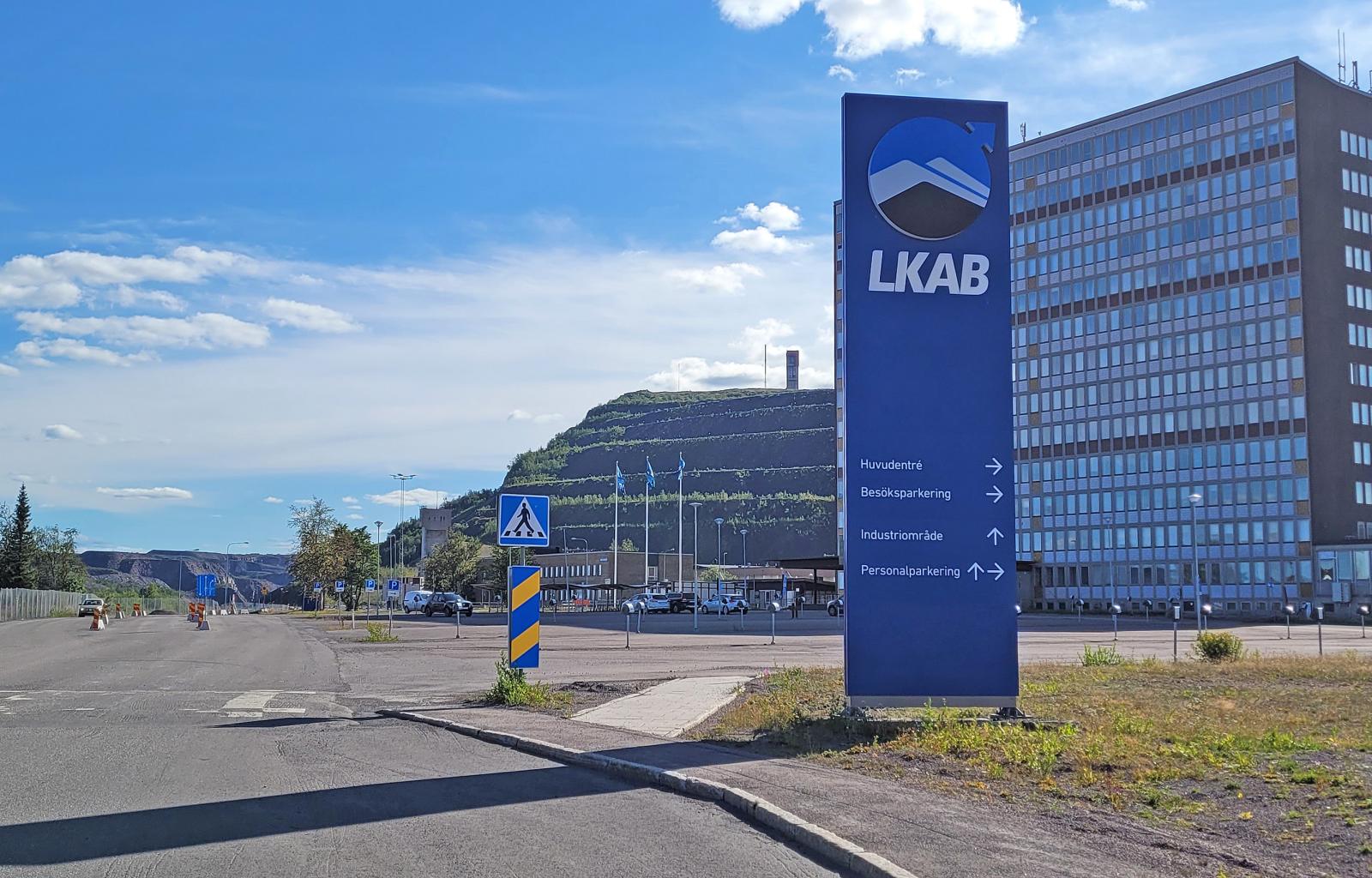
LKAB has initiated construction of a demonstration plant in Lulea, Sweden, to process rare earth elements (REEs) from iron ore mining waste. This effort marks a significant step towards European REE independence.

Demonstration Plant to Validate Extraction Processes

LKAB is investing 800mn kronor ($72.65mn) in the plant, aiming for a 2026 startup at a new Lulea industrial park. The demonstration plant will validate and refine extraction processes for a future full-scale facility. The company plans to produce REEs, phosphorus, and gypsum from its Gallivare iron ore mine by processing apatite concentrate, utilizing current waste streams. Operations will scale up with additional processing over time, targeting full operation in the 2030s. The permit process for LKAB's full operation, including the Gallivare apatite plant, anticipates a decision by late 2025.

Strategic Expansion and European REE Independence

Furthermore, LKAB intends to extract REEs from other mineralizations. Future scale-up decisions hinge on the demonstration plant's results and industrial park environmental permits. LKAB's Per Geijer iron deposit in Kiruna, estimated at 1.7mn t of REEs, stands as one of Europe's largest. Europe currently lacks REE extraction capacity, relying on Chinese imports. REEs are crucial for electric vehicle motors, wind turbines, and various electronic and military applications. LKAB has applied for Strategic Project classification under the EU's Critical Raw Materials Act for its Gallivare iron ore mine, Lulea industrial park, and REE-rich Per Geijer iron ore deposit.

Indonesia Nickel Ore Quotas Risk Tightening Feedstock Without Fixing Oversupply

No comments
Indonesia Nickel Ore Quotas Risk Tightening Feedstock Without Fixing Oversupply
Indonesia Nickel

Indonesia nickel ore quotas are becoming a more powerful market signal in 2026. Jakarta is expected to cut RKAB approvals to around 250mn–260mn t. That looks like a strong intervention on paper. However, Indonesia nickel ore quotas may tighten feedstock without solving Indonesian nickel oversupply in downstream products.

The core imbalance is no longer in ore. The real surplus sits in nickel pig iron, matte, and mixed hydroxide precipitate. Domestic ore prices remain elevated, which suggests ore availability is still tight. Therefore, Indonesia nickel ore quotas may create upstream stress while leaving downstream nickel products oversupplied.

This matters because policy and market structure are moving in opposite directions. Indonesia continues to expand smelting and HPAL capacity aggressively. At the same time, ore quotas are becoming harder to secure in full. As a result, the market may move toward feedstock shortages rather than a true rebalancing of refined nickel supply.

Indonesia Nickel Ore Quotas Could Create an Upstream Bottleneck

Indonesia nickel ore quotas appear lower than expected ore demand for 2026. The approved ceiling now looks below estimated domestic ore requirements. That gap raises the risk of feedstock shortages for smelters. Consequently, nickel ore supply tightness may become the market’s next major problem.

Vale Indonesia shows how this pressure is already emerging. Market participants say its approved RKAB is only a fraction of requested volume. Yet the company is developing multiple HPAL projects that will require large limonite ore volumes. Therefore, limited quota approvals could constrain new downstream capacity before it reaches full utilisation.

The ore issue is also more complex than headline tonnage suggests. RKAB quotas are issued in wet tons, not uniform recoverable nickel units. Moisture content and ore grade can vary significantly. As a result, nominal quota levels may overstate real usable feedstock availability.

Regulatory uncertainty adds another layer of risk. Indonesia’s forestry crackdown has targeted a large area of mining land without valid permits. Nickel operations could be affected, especially smaller miners or forest-zone projects. Meanwhile, quota delays themselves can disrupt ore availability even before formal supply cuts take full effect.

Indonesian Nickel Oversupply Will Persist Unless Smelter Output Is Also Disciplined

Indonesian nickel oversupply is still concentrated in processed products, not in ore. Cutting ore quotas alone does not automatically solve NPI, matte, or MHP oversupply. Smelters can still try to secure imported feedstock from the Philippines or New Caledonia. However, those alternative sources remain limited and unreliable.

That means imported ore is a cost issue, not a structural solution. Greater reliance on foreign ore would lift smelter input costs and compress margins. It would not remove the global glut in downstream nickel products. Therefore, the policy may shift pressure upstream while preserving the same downstream oversupply.

Royalties could deepen that squeeze further. Higher nickel prices may trigger increased royalty rates on ore and processed products. That would raise costs across the chain at a time when refined markets remain weak. As a result, profitability could deteriorate even if LME prices stay temporarily supported.

The government may still adjust course later in the year. Producers can use part of earlier three-year approvals through the end of March, and market participants expect later reviews. That suggests the headline RKAB figure may not be a fixed ceiling. Even so, policy uncertainty is already becoming a stronger driver of nickel prices than actual market healing.

The Metalnomist Commentary

Indonesia is trying to influence prices through ore control, but the real surplus remains downstream. That mismatch could turn a refined nickel glut into an upstream bottleneck without delivering true market balance. Unless ore discipline is matched by smelter discipline, volatility will remain the defining feature of the nickel market.

Anglo Teck Group merger creates new critical minerals champion

No comments
Anglo Teck Group merger creates new critical minerals champion
Anglo Teck

The Anglo Teck Group merger marks a major consolidation in global copper, zinc and iron ore supply. Anglo American will combine its portfolio with Teck Resources, creating a diversified critical minerals producer headquartered in Canada. As a result, the Anglo Teck Group merger positions the new entity among the world’s top copper producers.

Deal terms and production scale

The transaction structure underscores Anglo’s strategic ambition in base metals growth. Anglo American will exchange each Teck share for 1.3301 Anglo shares and pay a pre-merger dividend. Meanwhile, the Anglo Teck Group merger will unite sizeable copper, zinc and iron ore pipelines under one balance sheet. Teck targets up to 525,000 tonnes of copper and 575,000 tonnes of zinc production in 2025. In parallel, Anglo American plans as much as 750,000 tonnes of copper and 61mn tonnes of iron ore.

Portfolio reshaping and decarbonisation tailwinds

The merger also accelerates Anglo’s portfolio shift toward future-facing commodities. Therefore, Anglo Teck will support the divestment of diamonds, coking coal and nickel assets over time. This strategy aligns with investor pressure for clearer exposure to energy transition metals and simpler asset mixes. However, the Anglo Teck Group merger still faces regulatory scrutiny and integration risks across multiple mining jurisdictions. Recent deal volatility, including Peabody’s cancelled coking coal purchase, shows how execution risk can derail portfolio plans.

The Metalnomist Commentary

The Anglo Teck Group merger signals a new phase in mining consolidation focused on copper and iron ore scale. For buyers and governments, a stronger Canada-based critical minerals champion could influence future supply security and contract terms. Market participants should track divestments and project approvals, which will determine how quickly the merged group rebalances its portfolio.

Cleveland-Cliffs Rare Earths Plan Stalls on US Refining Bottleneck

No comments
Cleveland-Cliffs Rare Earths Plan Stalls on US Refining Bottleneck
Cleveland-Cliffs

Cleveland-Cliffs rare earths ambitions have been put on hold as limited US refining capacity weakens the economics of upstream exploration. The integrated steelmaker said it has halted plans to shift part of its mining strategy toward rare earths because domestic processing infrastructure remains too limited.

The decision highlights a central weakness in the US critical minerals strategy. Finding rare earth mineralisation is only the first step. Without refining, separation and downstream conversion capacity, upstream resources cannot easily become commercial supply.

Cleveland-Cliffs rare earths plans had gained attention because the company owns mining assets and tailings basins in traditional US iron ore regions. Geological surveys last year identified signs of rare earth mineralisation at two company-owned sites, one in Michigan’s Upper Peninsula and another in Minnesota.

However, chief executive Lourenco Goncalves said the economics depend on domestic refining capability. He said that infrastructure remains extremely limited in the US, making rare earth development difficult without external processing support.

US Refining Gap Limits Critical Minerals Development

Cleveland-Cliffs is not planning to build rare earth refining capacity on its own. The company said the process is capital-intensive, and the investment case remains weak without a broader domestic refining ecosystem.

This is strategically important because rare earth supply chains are highly segmented. Mining, beneficiation, separation, refining, metal conversion, alloying and magnet manufacturing all require different capabilities.

The US has focused heavily on rare earth resource development, but refining and separation remain among the most difficult parts of the value chain. These stages require chemical processing expertise, environmental controls, long permitting timelines and large capital commitments.

Cleveland-Cliffs rare earths development therefore depends on infrastructure beyond its own mining footprint. The company said it remains positioned to enter the market when viable domestic refining capacity becomes available, whether through government-backed projects or third-party investments.

This approach is cautious but realistic. A steelmaker with mineral resources may identify rare earth potential in ore bodies or tailings, but it cannot easily monetise those materials without a customer-ready processing route.

The decision also shows why tailings-based critical minerals projects are harder than they appear. Tailings may contain valuable elements, but recovery depends on grade, mineralogy, processing cost, environmental permitting and access to refining capacity.

For the US government, the message is clear. Critical mineral independence cannot rely only on resource mapping. It needs industrial processing capacity that gives miners and materials companies a practical route to market.

Rare Earth Opportunity Remains Conditional on Policy and Processing

Cleveland-Cliffs had explored rare earths as part of a broader response to rising US-China trade tensions and Washington’s push for critical material independence. The company’s historic identity as an ore producer made the idea strategically plausible.

Cliffs originally operated as an iron ore producer before becoming a major US steelmaker. It expanded downstream in 2020 by acquiring AK Steel and most of ArcelorMittal’s US operations.

That history gives the company mining expertise, industrial assets and a domestic manufacturing base. But rare earths are not the same as iron ore or steel. They require a much more specialised chemical and metallurgical value chain.

Rare earth elements are key feedstocks for electric vehicle motors, semiconductors, wind power, solar technologies, defence systems and advanced electronics. This makes them strategically valuable, but also politically sensitive.

The US wants to reduce dependence on China, which dominates many rare earth processing and magnet supply chains. But companies still need bankable refining options before upstream projects can move forward.

Cleveland-Cliffs rare earths strategy may therefore return if domestic refining capacity expands. Government-backed projects, third-party processors or integrated separation facilities could change the economics.

Until then, the company appears unwilling to commit capital to a market where upstream potential is disconnected from downstream processing. That reflects discipline, but also exposes a national supply-chain gap.

The broader implication is that critical minerals policy must connect every stage of the chain. Exploration without refining creates stranded potential. Refining without feedstock creates underused capacity. Magnet and electronics supply chains need both.

The Metalnomist Commentary

Cleveland-Cliffs’ decision shows that the US rare earth challenge is not only geological. The real bottleneck is processing infrastructure, and without it, even strategically located resources can remain commercially stranded.

Eramet Weda Bay Nickel Faces Care and Maintenance Risk as RKAB Quota Tightens

No comments
Eramet Weda Bay Nickel Faces Care and Maintenance Risk as RKAB Quota Tightens
Eramet - Nickel

Eramet Weda Bay nickel operations face a potential care and maintenance move in May after Indonesia approved a sharply reduced 2026 nickel ore quota. The French mining group said PT Weda Bay Nickel received an initial RKAB permit covering only 12mn wet metric tonnes of nickel ore production and sales.

The Eramet Weda Bay nickel quota is more than 70% below last year’s authorised level. PT WBN initially received 32mn wmt in 2025, later revised up to 42mn wmt.

Eramet has requested an upward revision to the 2026 permit. The company said the current quota will be exhausted by the middle of next month, making the permit decision the most important near-term issue for its nickel business.

The initial 12mn wmt permit includes 3mn wmt for internal use. This leaves Eramet’s external sales target at only 9mn wmt for 2026, well below the level implied by the mine’s operating capacity.

Indonesia’s RKAB Limits Threaten Ore Supply and NPI Continuity

PT Weda Bay Nickel is preparing to enter care and maintenance if the quota is not increased. Eramet said its nickel pig iron plant will continue operating using ore stocks, but the mining restriction creates clear supply risk.

The permit issue matters because Weda Bay is a key ore supplier inside Indonesia’s nickel ecosystem. Its saprolite ore supports nickel pig iron and stainless steel production, while limonite ore feeds high-pressure acid leach plants producing battery intermediates.

PT WBN delivered strong first-quarter output before the quota risk escalated. Marketable nickel ore production rose by 10% on the year to 10mn wmt.

External ore sales climbed by 54% to 8.3mn wmt. Saprolite sales increased by 27% to 4.8mn wmt, while limonite sales jumped by 118% to 3.6mn wmt.

The limonite increase was driven by stronger demand from HPAL plants at the Indonesia Weda Bay Industrial Park. Internal ore consumption for Eramet’s NPI plant was 1mn wmt during the quarter.

Strong sales partly reflected a weak comparison with early 2025, when IWIP plants were destocking after ending 2024 with high inventories. Still, the result shows that downstream demand remains firm.

PT WBN also continued to benefit from premiums of more than 100% above Indonesia’s benchmark floor price for high-grade saprolite. This reflected tight domestic ore supply and stronger competition for available material.

Nickel Market Rebalancing Depends on Permits, Sulphur and Ore Costs

Eramet’s nickel ferro-alloy production was broadly stable in the first quarter. Output reached 9,000t of nickel, down only 1% from a year earlier.

Adjusted nickel turnover, excluding New Caledonia’s Societe Le Nickel, rose by 43% to €163mn. Eramet’s share of PT WBN turnover, excluding its offtake contract, increased by 59% to €116mn.

The company said first-quarter market conditions were supportive. The average London Metal Exchange nickel price rose by 12% on the year to $17,362/t, driven partly by uncertainty over Indonesian ore supply.

Global primary nickel demand rose by 3% to 900,000t in the first quarter. Stainless steel, batteries and aerospace supported consumption.

Global primary nickel production fell by 3%, although the market remained in a modest surplus. Eramet said the nickel market could gradually rebalance over the rest of the year.

Restricted Indonesian mine permits are one reason. Sulphur supply problems are another, because they are raising costs for HPAL producers that depend on sulphuric acid or sulphur feedstock.

PT WBN’s production costs are expected to rise from 2025 levels. Eramet cited authorised volume limits, mining plan adjustments and higher fuel prices.

Indonesia’s revised mineral benchmark formula could also reshape ore economics. The formula, effective from mid-April, now includes cobalt and other contained metals in ore valuation.

This change could increase costs for HPAL feedstock and alter the economics of limonite supply. It also strengthens the government’s ability to capture more value from contained metals in nickel ore.

For Eramet Weda Bay nickel operations, the quota decision will determine whether strong first-quarter performance can continue. Without a higher RKAB, the mine faces a sudden operating constraint despite firm downstream demand.

The Metalnomist Commentary

Eramet Weda Bay nickel is becoming a test case for Indonesia’s tighter control over ore supply. If the RKAB quota is not revised, the impact will reach beyond one mine and reinforce cost pressure across NPI, HPAL and battery-linked nickel supply chains.

Nickel Deficit Forecast Emerges as Indonesia Tightens Ore Supply

No comments
Nickel Deficit Forecast Emerges as Indonesia Tightens Ore Supply
Nickel manufacturing

Nickel deficit conditions are expected to return in 2026 as Indonesia tightens ore supply controls and stainless steel demand continues to grow. The International Nickel Study Group forecasts global primary nickel production of 3.715mn t against usage of 3.747mn t, implying a deficit of 32,000t.

The nickel deficit would mark a sharp change after three consecutive years of surplus. The market recorded surpluses of 175,000t in 2023, 116,000t in 2024 and 283,000t in 2025.

The nickel deficit forecast remains modest, but it carries strategic significance because it depends heavily on Indonesian policy. Indonesia has been the main driver of global nickel supply growth, and tighter controls on ore mining could slow the expansion that previously pushed the market into surplus.

The Middle East conflict is adding another layer of uncertainty. Higher energy prices, inflation pressure and disrupted sulphur flows could affect nickel production costs, especially for high-pressure acid leach operations in Indonesia.

Indonesia Ore Controls Reshape Nickel Supply Growth

Indonesia’s approved nickel ore mining quota for 2026 has been set significantly lower than in 2025. The quota can still be revised, but the initial reduction has already changed market expectations.

The country’s revised mineral benchmark pricing mechanism also took effect on 15 April. The new HPM formula raises base prices for all nickel ore grades and includes cobalt, iron and chromium in the valuation for the first time.

This matters because Indonesian nickel supply is no longer expanding under the same low-cost conditions that drove rapid output growth. Ore access, ore pricing, royalties and contained metal values are all becoming more tightly managed.

The policy impact is not evenly distributed. Eramet’s PT Weda Bay Nickel mine is preparing to enter care and maintenance in May after receiving an initial ore quota of just 12mn wet metric tonnes. This is far below last year’s final permit of up to 42mn wmt.

In contrast, Nickel Industries received quota approvals of 14.3mn wmt, up from 10.5mn wmt in 2025. This shows that Indonesia’s controls are not simply cutting all supply. They are also reshaping which operators receive ore access.

The quota system could therefore become a major competitive factor. Producers with larger approved volumes may gain stronger operating flexibility, while others face lower utilisation, higher costs or temporary shutdowns.

HPAL producers are especially exposed. These plants require steady limonite ore supply and large volumes of sulphuric acid or sulphur-linked feedstock. Tighter ore availability and higher reagent costs can quickly pressure margins.

Disrupted sulphur flows from the Middle East conflict have raised concern over HPAL feedstock availability. This is important because Indonesian HPAL projects have become key suppliers of mixed hydroxide precipitate for battery material production.

If sulphur costs remain elevated and ore prices rise under the new HPM formula, HPAL production costs could increase materially. That would weaken the low-cost supply advantage that helped Indonesia dominate battery-linked nickel intermediates.

Stainless Steel Supports Demand as Batteries Disappoint

Stainless steel remains the main support for nickel demand. INSG said the stainless steel sector grew in 2025 and is expected to expand further in 2026.

This is important because stainless steel still consumes far more nickel than the battery sector. Demand from stainless steel, alloys and industrial uses continues to anchor the primary nickel market.

Battery demand has grown more slowly than earlier expectations. Lithium iron phosphate chemistries have gained market share, reducing nickel intensity in parts of the electric vehicle market.

Plug-in hybrid electric vehicle demand has also outpaced fully battery-electric vehicle demand in some markets. This has limited the speed at which nickel-rich battery chemistries absorb new supply.

The result is a market caught between two forces. Supply growth is slowing because of Indonesian ore controls and higher input costs. However, battery demand is not rising fast enough to create a large structural shortage.

This makes the 2026 nickel deficit highly sensitive to policy and disruption. If Indonesia raises quotas, supply could recover. If sulphur, energy or ore costs worsen, the deficit could deepen.

The forecast also changes the market narrative. Nickel has spent recent years under pressure from surplus supply and rising inventories. A move into deficit, even a small one, could stabilise sentiment and support prices.

Still, the deficit is not yet a sign of broad scarcity. It is a warning that Indonesia’s supply discipline, not battery demand alone, is now determining the market balance.

For producers, cost control and ore access will become more important. For buyers, the focus will shift toward supplier reliability, feedstock route and exposure to Indonesian policy.

The Metalnomist Commentary

The nickel market is not tightening because batteries suddenly absorbed the surplus. It is tightening because Indonesia is putting discipline into ore supply while HPAL costs rise. That makes the nickel deficit more policy-driven than demand-driven.

China Titanium Ore Prices Fall Amid Weak Dioxide Demand and Rising Supply

No comments
China Titanium Ore Prices Fall Amid Weak Dioxide Demand and Rising Supply
Titanium Ore

Titanium Dioxide Sector Contraction Drives Down Concentrate Prices

China titanium ore prices have hit a four-year low as demand from the titanium dioxide (TiO₂) sector weakens. Since 11 March, prices for 46% titanium concentrate dropped by 13% to 1,800–1,830 yuan/t ($249–253/t), ex-works, excluding VAT. The decline follows reduced feedstock purchasing by TiO₂ producers and rising spot availability of medium-grade ore.

Dioxide Producers Cut Output Amid Global Pressure

Anti-dumping measures targeting Chinese TiO₂ exports have shrunk international demand and pressured margins. As a result, several Chinese dioxide producers began lowering feedstock bids or halting production. March exports fell to 185,034 tonnes, down from 196,106 tonnes a year earlier. Rutile-grade prices also dropped to their lowest level since February, ranging from 14,000–15,300 yuan/t.

Ore Production Increases Despite Downward Price Pressure

Meanwhile, domestic supply surged. Sichuan Anning Steel and Titanium raised output using ultra-fine ore recovery tech. Water beneficiation plants also ramped up operations due to strong iron ore prices, boosting titanium ore co-production. Imports rose to 1.37 million tonnes in Q1 2024, further pressuring prices. Sellers are offering discounts, anticipating continued weakness.

The Metalnomist Commentary

China’s titanium ore market is under dual pressure from weakening TiO₂ demand and rising ore output. Unless export demand recovers or domestic production slows, concentrate prices may remain under strain through mid-2025.