Showing posts sorted by relevance for query joint ventures. Sort by date Show all posts

Stellantis NextStar Battery JV Exit Signals a New Shift in North American Battery Strategy

No comments
Stellantis NextStar Battery JV Exit Signals a New Shift in North American Battery Strategy
NextStar Battery

Stellantis NextStar battery JV exit marks another important shift in North American battery strategy. Stellantis will sell its 49pc stake in NextStar Energy to LG Energy Solution. The joint venture built Canada’s first large-scale lithium-ion battery plant in Windsor, Ontario. As a result, Stellantis NextStar battery JV exit shows that automakers are rethinking how they participate in battery manufacturing.

This move matters because NextStar was a major industrial project. Stellantis and LG Energy Solution invested more than C$5bn in the venture. Yet the ownership structure is now changing even as the plant remains strategically important. Therefore, Stellantis NextStar battery JV exit is not a retreat from batteries. It is a shift in how the company wants to access them.

Stellantis will remain a customer of the facility after the transaction. That means the company still wants battery supply, but no longer wants to own nearly half of the manufacturing platform. Consequently, Stellantis NextStar battery JV exit reflects a broader trend toward supply access without full operating exposure.

EV Battery Joint Ventures Are Moving Into a New Phase

EV battery joint ventures are no longer being treated as fixed long-term ownership models. Automakers are increasingly separating battery access from battery plant ownership. That change is becoming visible across North America. As a result, EV battery joint ventures are entering a more flexible and less traditional phase.

The Stellantis decision fits a wider pattern. Other major automakers have also restructured or exited battery partnerships. General Motors sold its Michigan battery JV stake to LG Energy Solution in 2025. Ford also changed the structure of its BlueOval SK partnership later that year. Therefore, Stellantis NextStar battery JV exit looks less like an isolated deal and more like an industry reset.

This shift likely reflects changing economics and strategy. Battery manufacturing is capital-intensive, operationally complex, and increasingly competitive. Automakers may now prefer to secure output through commercial agreements while leaving plant ownership and operation to battery specialists. Meanwhile, battery makers can broaden their customer base more easily under that structure.

North American Battery Strategy Is Becoming More Specialized

North American battery strategy is now moving toward clearer specialization between automakers and cell producers. After the ownership change, NextStar will serve a broader customer base, including the energy storage system sector. That gives the plant more flexibility than a single-customer automotive model. As a result, the facility may become commercially stronger even as Stellantis reduces direct ownership.

This matters because battery plants are no longer only tied to electric vehicle demand. Energy storage systems are becoming a second major growth market. A battery facility that can sell into both EVs and stationary storage may have better long-term utilization and lower concentration risk. Therefore, North American battery strategy is becoming more diversified at the customer level.

The broader lesson is clear. Automakers still need batteries, but they may not want to carry the same level of manufacturing ownership risk as before. Battery producers, meanwhile, can gain more control and expand into wider end markets. Consequently, Stellantis NextStar battery JV exit may signal a more mature phase in the North American battery buildout.

The Metalnomist Commentary

This deal matters because it shows the battery race is no longer only about building plants. It is now about deciding who should own them, run them, and absorb the risk. Stellantis still wants battery supply, but LGES now looks better positioned to turn NextStar into a broader industrial platform.

Posco and Hancock Prospecting to Construct New Lithium Plant

No comments
Hancock Prospecting

In an ambitious move to secure a more robust lithium supply chain, South Korean steelmaker Posco, in partnership with Australia’s Hancock Prospecting, has announced plans to build a 30,000 metric tonne per year lithium processing plant. The exact location of the plant is still under deliberation, with potential sites being evaluated in various countries, including South Korea.

Strategic Expansion in Lithium Sector

The collaboration between Posco and Hancock is a strategic step to bypass US Foreign Entity of Concern (FEoC) regulations and solidify Posco's standing in the lithium value chain. Posco’s plan is to manage a full spectrum from mining and extraction from salt lakes to producing lithium hydroxide and cathode materials, and eventually recycling them. This comprehensive approach aims to fortify its supply chain amidst growing demand for lithium, primarily driven by the electric vehicle and renewable energy sectors.

Global Partnerships and Investments

Both Posco and Hancock are not new to the lithium industry. Hancock holds a 19.9% stake in Liontown Resources, an Australian lithium developer. Posco has been extending its reach in the lithium market through various international partnerships, including joint ventures with Pilbara Minerals in Australia and an investment in the Sal de Ora brine project in Argentina’s Salar del Hombre Muerto.

These ventures underline both companies' commitment to strengthening their positions within the global lithium market, which is expected to grow significantly due to the increasing emphasis on sustainable and renewable energy resources.

China Sinopec CATL Investment Accelerates EV Battery Exchange Network Expansion

No comments
China Sinopec CATL Investment Accelerates EV Battery Exchange Network Expansion
Sinopec CATL

China Sinopec CATL investment emerged as the state-controlled oil refiner became the largest cornerstone investor in the battery producer's record-breaking Hong Kong IPO. The strategic China Sinopec CATL investment supports the companies' ambitious plan to build 10,000 electric vehicle battery exchange stations nationwide, marking a significant shift for the traditional energy company toward new energy infrastructure as China's EV market continues rapid expansion.

Record IPO Success Validates Strategic Partnership Value

China Sinopec CATL investment positioned the oil refiner as the largest cornerstone investor in CATL's $4.6 billion Hong Kong IPO that became the world's largest listing in 2025. CATL shares surged over 16% in their Hong Kong trading debut on May 20th, closing at HK$306.2 compared to the IPO price of HK$263 per share. The successful market reception demonstrates strong investor confidence in the partnership strategy and China's EV infrastructure development plans.

Meanwhile, the two companies reached an initial agreement in April to build more than 500 EV battery exchange stations nationwide in 2025, with a long-term target of 10,000 stations. This ambitious infrastructure rollout leverages Sinopec's existing network of 30,000 integrated energy charging stations serving 300 million users, including approximately 10,000 EV charging and battery exchange stations already operational across China.

Strategic Project Targets Heavy Vehicle Transportation

However, Sinopec and CATL finalized a specific agreement on May 21st for the Qiji Exchange Station project focused on heavy trucks in Fujian province. The project will serve critical road freight transportation along the coastal route between the Yangtze River Delta and Pearl River Delta using CATL's latest battery exchange system technology. This heavy vehicle focus addresses a key market segment where battery exchange offers significant advantages over traditional charging methods.

Therefore, the heavy truck application demonstrates practical implementation of battery exchange technology for commercial vehicles requiring rapid turnaround times. The coastal corridor route represents one of China's most important freight transportation arteries, making successful deployment here a potential template for nationwide expansion. The project showcases how traditional energy companies can integrate new energy technologies into existing transportation infrastructure.

Traditional Energy Companies Embrace New Energy Transition

Furthermore, Sinopec's investment reflects broader trends among conventional energy companies accelerating investments in new energy markets. State-run energy firm PetroChina launched a "supercharger station" in Shanghai's Yili road area in March, demonstrating industry-wide recognition of EV infrastructure opportunities. These companies leverage existing real estate assets and customer relationships to enter growing new energy segments.

As a result, joint ventures between traditional energy companies and EV technology providers create synergistic opportunities for rapid infrastructure deployment. PetroChina, SAIC, Sinopec, and CATL established the Shanghai JieNeng Zhidui New Energy Technology joint venture in September 2022 to lease EV battery packs and develop battery exchange technology. CATL's construction of a 40 GWh annual capacity factory in Dongying, China's largest oil refining city, further strengthens these traditional energy sector connections.

The Metalnomist Commentary

Sinopec's cornerstone investment in CATL's record-breaking IPO exemplifies how China's traditional energy giants are strategically positioning themselves within the electric vehicle ecosystem, leveraging their existing infrastructure assets to capture new revenue streams in battery exchange services. The partnership's focus on heavy vehicle applications addresses a critical market need where battery exchange technology offers compelling advantages over conventional charging, potentially accelerating commercial EV adoption across China's logistics sectors.

Japan EU battery recycling alliance aims to cut China dependence

No comments
Japan EU battery recycling alliance aims to cut China dependence
Japan, EU battery alliance

Japan EU battery recycling alliance marks a strategic push to reduce reliance on China in battery materials. The new Japan EU battery recycling alliance brings together key industry groups to strengthen recycling, black mass handling and data sharing. As a result, the Japan EU battery recycling alliance targets a more resilient and transparent battery supply chain across both regions.

Japan EU battery recycling alliance links tech strength and market scale

The Japan EU battery recycling alliance is built around three core industry associations. Japan’s Battery Association for Supply Chain, the European Battery Alliance and Brussels based Recharge have signed an initial agreement. Together, they will cooperate on improving recycling processes, materials flows and supply chain governance.

The agreement covers information exchange on issues such as data sharing and regulatory interpretation. It also includes joint studies on black mass classification, a key bottleneck for cross border recycling flows. Black mass refers to shredded cathode material containing nickel, cobalt and lithium from spent batteries. Therefore, clear definitions and standards for black mass are critical for trade, permitting and ESG compliance.

Japanese officials highlight the importance of combining Japan’s technology strength with Europe’s market size. Japan offers advanced recycling technologies and process know how developed over decades of battery manufacturing. Meanwhile, Europe provides a rapidly growing battery market driven by EV mandates and energy storage deployment. This mix gives the Japan EU battery recycling alliance strong industrial foundations.

Reducing strategic exposure to China dominated battery materials

The Japan EU battery recycling alliance clearly responds to geopolitical supply concerns. Officials from Japan’s trade and industry ministry note that the current battery supply chain depends heavily on one country. Although unnamed, the reference clearly points to China’s dominance in processed lithium, nickel, cobalt and anode materials.

By deepening cooperation, Tokyo and Brussels aim to reduce vulnerability to export controls or political friction. Recycling and black mass trade can partially offset primary supply risks from Chinese refineries and processors. In addition, improved data sharing should help track origin, quality and ESG performance of recovered materials. As a result, the Japan EU battery recycling alliance supports compliance with emerging battery passport and due diligence rules.

The initiative also fits within the broader Japan EU competitiveness alliance launched in July. That framework seeks closer coordination on semiconductors, clean energy, critical minerals and industrial standards. Battery recycling now becomes a visible test case for how quickly the partnership can move from statements to practical projects.

The Metalnomist Commentary

This partnership underlines how recycling is moving from a niche activity to a core pillar of battery security strategy. If the Japan EU battery recycling alliance can harmonise black mass standards and data systems, it will lower barriers for serious cross regional recycling investment. Market participants should watch for pilot projects, joint ventures and regulatory tweaks that follow this initial, largely framework level agreement.

Implats PGM Production 2025 Down Despite Sales Growth and Minor Metal Support

No comments
Implats PGM Production 2025 Down Despite Sales Growth and Minor Metal Support
Implats PGM

Implats PGM production 2025 fell 5% year-on-year to 2.60 million ounces in the nine months ending 31 March, according to the group's latest update. The drop reflects planned maintenance at the company’s South African smelters, which impacted output volumes across its platinum group metal operations.

Output Drops Across Group and Joint Ventures

Impala Platinum (Implats) reported a 5% decline in 6E PGM production—platinum, palladium, rhodium, ruthenium, iridium, and gold—over the reporting period. Joint venture production also fell by 2% to 403,000 ounces. The company attributed the overall production decline to essential smelter maintenance in South Africa, which was scheduled to sustain long-term asset reliability.

Despite the output constraints, Implats managed to slightly increase 6E PGM sales volumes by 1% to 2.55 million ounces. CEO Nico Muller noted that the group experienced additional spot demand beyond its contractual obligations, highlighting a degree of resilience in market appetite.

Minor PGMs See Pricing Support, but Margins Stay Tight

Implats emphasized that pricing support for minor PGMs—such as iridium and ruthenium—was a key market feature this quarter. While overall PGM prices have modestly rebounded from earlier lows, the group continues to face compressed margins due to elevated costs and a fragile macroeconomic environment.

The company is closely monitoring pricing trends and cost structures as it navigates supply pressures, inflationary impacts, and global economic volatility. Physical tightness in specific PGM sub-segments is helping to stabilize demand, though not yet enough to drive a significant margin recovery.

The Metalnomist Commentary

The decline in Implats PGM production 2025 underscores the operational challenges tied to infrastructure maintenance and market volatility. However, firm spot demand and minor PGM tightness offer glimmers of support in an otherwise pressured pricing landscape.

Posco Future M Begins Early Production of NCA Cathodes at New South Korea Plant

No comments
Posco Future M

South Korean materials giant Posco Future M, a subsidiary of the Posco conglomerate, has commenced early production at its new nickel-cobalt-aluminum (NCA) cathode plant in Pohang, North Gyeongsang province. The plant, which boasts an annual production capacity of 30,000 tonnes, was originally scheduled to begin operations in 2025 but has accelerated due to “customer requests.”

Posco’s NCA cathode output is crucial as global battery manufacturers seek high-quality cathode materials to meet demand for electric vehicles (EVs). The early start aligns with Posco Future M's 10-year agreement with Samsung SDI to supply high-nickel NCA cathodes, part of a broader push to establish South Korea as a leading player in the EV supply chain.

Expanding Production Capacity Amid EV Market Challenges

Posco Future M is actively expanding its cathode production capabilities with another plant under construction in Gwangyang, South Jeolla province, which is expected to add 52,500 tonnes per year by 2026. This will bring the company's total cathode material production capacity to 248,500 tonnes per year across its two plants by 2026. Despite this expansion, the firm has revised its initial target of 320,000 tonnes by 2025, reflecting the current slowdown in the global EV market.

The slowdown has also impacted Posco’s joint ventures and new plant projects. In September, the company postponed its plans for a nickel sulfate and battery precursor plant with China’s Huayou Cobalt, as well as its high-nickel cathode active material (CAM) facility in Quebec, Canada, a joint effort with General Motors, citing “local conditions.”

Mitsui Invests $5.3 Billion in Rhodes Ridge JV to Secure Long-Term Iron Ore Supply

No comments
Mitsui & Co

Japanese Giant Expands Western Australia Offtake Capacity Toward 80 Million Tons Per Year

Japan’s Mitsui & Co. will invest $5.3 billion to acquire a 40% stake in the Rhodes Ridge Joint Venture (RRJV). The move is part of Mitsui’s strategic plan to expand its iron ore offtake capacity in Western Australia to around 80 million tons per year.

The 40% stake will come from existing partners VOC (25%) and AMB (15%). With this acquisition, Mitsui becomes the second-largest stakeholder, following Rio Tinto, which holds 50%. The deal is expected to close by March 31, 2026, according to the company.

The Rhodes Ridge project is set to produce 40 million tons per year in its early stages. Long-term development could increase that to 100 million tons per year. A final investment decision is still pending, but commercial operations could begin as early as 2030.

Mitsui Strengthens Its Role in Global Iron Ore Supply

Initially, Mitsui’s offtake from Rhodes Ridge will be about 16 million tons annually, focused on Asian markets like Japan. Over time, this volume may reach 40 million tons per year, making the project a major contributor to Mitsui’s iron ore portfolio.

Despite the global shift toward decarbonized steelmaking, including electric arc furnace (EAF) adoption, Mitsui believes iron ore will remain vital. The company cited growing crude steel demand, especially in India and Southeast Asia, as key drivers for sustained iron ore consumption.

Broader Investments Support Long-Term Strategy

Mitsui already holds stakes in major Australian iron ore projects, including the Robe River Mining consortium with Rio Tinto and Nippon Steel. The Robe River operation currently supplies Mitsui with 20 million tons per year.

Additionally, joint ventures with BHP account for another 19.9 million tons annually. When combined with the Rhodes Ridge investment, Mitsui's total long-term offtake in Australia will approach 80 million tons per year.

The Rhodes Ridge project has a complex past. Over a decade ago, Western Australia’s Supreme Court required Gina Rinehart to transfer a 25% stake to the Wright family, linked to Peter Wright, a former partner of Lang Hancock of Hancock Prospecting. Since then, Wright’s family, through VOC, has worked alongside Rio Tinto on project development.

This investment highlights Mitsui’s confidence in the long-term fundamentals of the global iron ore market, despite evolving steel production technologies and environmental regulations.

Stellantis and CATL Partner to Construct a €4.1 Billion Battery Plant in Spain

No comments

CATL

Stellantis, a prominent Franco-Italian-American automotive manufacturer, together with Chinese battery industry leader Contemporary Amperex Technology Co. Ltd (CATL), has announced an ambitious joint venture. The partnership plans to invest €4.1 billion ($4.3 billion) to establish a lithium iron phosphate (LFP) battery production facility in Zaragoza, Spain. Scheduled to commence operations by the end of 2026, the plant is projected to achieve an impressive output capacity of up to 50GWh annually. This capacity could supply electric vehicle (EV) batteries to approximately 1 million vehicles per year, based on an average battery pack size of 50kWh.


Strategic Expansion and Future Goals

This new venture builds on a prior preliminary agreement between Stellantis and CATL, further solidifying their collaboration. Strategically positioned adjacent to Stellantis’ existing automotive plant in Zaragoza—which has historically manufactured over 14 million Opel and Citroen vehicles since 1982—the battery facility represents a significant step toward supporting Stellantis' electric mobility ambitions. CATL, already operating two battery plants in Germany and Hungary and constructing another in Hungary, contributes extensive expertise and capacity to the partnership.


Market Dynamics and Company Prospects

Despite recent challenges, including declining sales in the European Union and the U.S. and intense competition from Chinese EV manufacturers that led to the resignation of CEO Carlos Tavares, Stellantis remains committed to its electrification strategy. The company has set ambitious targets, aiming for 100% EV sales in Europe and 50% in the U.S. by 2030. This is part of Stellantis' broader strategy to adapt to shifting market demands and increase its stake in the global EV market, which includes recent joint ventures with other major players like Samsung SDI, TotalEnergies, Mercedes-Benz, and Leapmotor.

Mercuria Metals Project Financing Push Deepens Critical Minerals Strategy

No comments
Mercuria Metals Project Financing Push Deepens Critical Minerals Strategy
Mercuria Metals

Mercuria metals project financing is set to increase sharply this year as the Swiss energy trader expands its role in copper, cobalt and other critical minerals. Chief executive Marco Dunand said the company will substantially increase pre-financing for mining projects, working more closely with producers and governments.

Mercuria metals project financing has become a major growth pillar since the company created its metals division in 2023. The unit began with copper in Zambia before expanding into cobalt and other strategic materials.

Mercuria metals project financing now supports a business that accounts for nearly 20% of group turnover. The company has already deployed almost $2bn, mainly in copper deals, and sees further growth in its project pipeline.

The strategy reflects a wider shift in commodity trading. Traders are no longer only moving material between buyers and sellers. They are increasingly financing production, securing offtake and shaping strategic mineral flows before material reaches the market.

Copper and Critical Minerals Move Trading Closer to Mining

Mercuria’s metals expansion started with copper because the market faces structural supply pressure. Copper demand is rising from grids, electrification, data centres, renewable energy and industrial policy, while new mine supply remains difficult to develop.

Pre-financing gives Mercuria earlier access to material. By front-loading capital, the company can support producers while securing commercial positions in future supply.

This model is becoming more important as mining projects require larger capital commitments. Producers need liquidity for development, operations and expansion. Traders that can provide capital can gain offtake, marketing rights and long-term supply relationships.

Mercuria is also moving into cobalt and other critical minerals. These markets are smaller than copper but strategically important for batteries, superalloys, semiconductors, defence systems and advanced manufacturing.

The company’s partnership with Gecamines in the Democratic Republic of Congo shows this direction. Mercuria is working with the state miner to market critical minerals such as gallium and germanium from the Kipushi mine.

Gallium and germanium are high-value minor metals with concentrated supply chains and growing strategic importance. Their inclusion shows that Mercuria is targeting not only bulk base metals, but also thinly traded materials where supply security commands a premium.

Government Partnerships Become Strategic Supply Tools

Mercuria is expanding joint ventures with governments, including partnerships in Zambia and the DRC. This matters because critical minerals supply is increasingly shaped by state policy, not only commercial contracting.

Resource-rich governments want more value from minerals. Buyers want secure supply. Traders can sit between them by providing financing, logistics, marketing and access to global customers.

The model also fits a period of rising geopolitical competition. Western governments and manufacturers are looking for alternatives to China-linked supply chains, especially in copper, cobalt, gallium, germanium and other strategic materials.

Mercuria plans to raise at least $200mn in new financing in Asia to support liquidity. The company said sovereign firms, private equity and banks have strong appetite to finance metals projects.

The financing requirement highlights one important trade-off. Metals project financing can create stronger strategic positions, but it is more cash-intensive than traditional trading. It requires balance-sheet capacity, risk management and long-term confidence in mineral demand.

Mercuria said it does not expect regulatory constraints to limit expansion. That confidence suggests the company sees strong institutional demand for capital-backed critical minerals strategies.

For metals markets, the implications are significant. Trading houses with capital can influence which projects advance, which producers receive liquidity and where future metal flows are directed.

The Metalnomist Commentary

Mercuria’s strategy shows that critical minerals trading is becoming a financing business. The winners will be firms that can combine capital, offtake, government relationships and supply-chain control before the market tightens further.

CATL Expands Battery Sales in 2024 Despite Revenue Dip

No comments
CATL

Strong EV and energy storage demand lifts GWh shipments; global capacity poised for TWh milestone in 2025

China’s top battery producer Contemporary Amperex Technology (CATL) recorded a 22% increase in battery sales in 2024, fueled by growing demand in electric vehicle and energy storage markets. The firm shipped 475GWh of lithium-ion batteries, up from 390GWh in 2023.

Growth in both EV and energy storage sectors

CATL’s 2024 shipments included 381GWh of power batteries, rising 19% year-over-year, and 93GWh of energy storage batteries, jumping 35%. These gains came amid a 27% rise in global EV-related battery consumption and a 63% surge in energy storage battery demand, according to company-cited data.

CATL’s total production capacity hit 676GWh last year, with an operational utilization rate of 76.3%. The company is constructing an additional 219GWh of capacity across sites in China, Europe, and Indonesia. Market analysts project CATL’s total capacity will reach 700–1,000GWh in 2025, potentially making it the first company to achieve TWh-scale battery output.

Global footprint and customer base widen

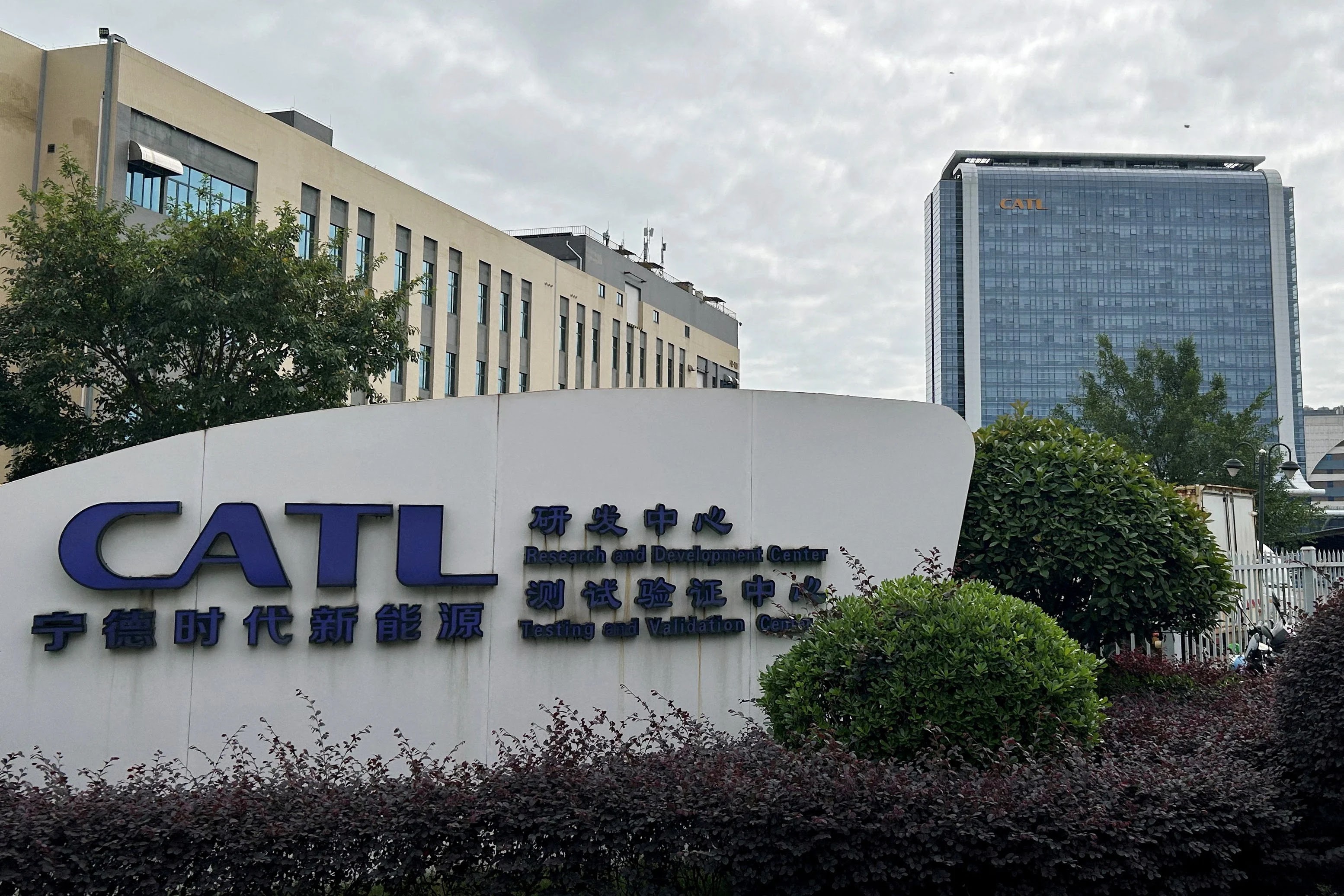
With 13 operating production bases, CATL is also expanding its joint ventures, including partnerships with Stellantis in North America and a vertically integrated project in Indonesia. It leads China’s battery market alongside BYD and CALB, which accounted for 25% and 7% of China’s power battery installations, respectively, compared to CATL’s 45%.

CATL supplies major auto manufacturers including BMW, Volkswagen, Toyota, Hyundai, and Chinese EV startups like NIO and Li Auto. Its energy storage clients include major global and Chinese power firms such as NextEra, Wartsila, State Power Investment Group, and PetroChina.

Despite higher volumes, CATL’s total revenue fell 9.7% to 362 billion yuan ($50 billion) in 2024. However, net profit rose 15% to 50.7 billion yuan, reflecting operational efficiency and high-margin product segments.

Larvotto rejects USAC acquisition offer in strategic antimony move

No comments
Larvotto rejects USAC acquisition offer in strategic antimony move
Larvotto Resources

Larvotto rejects USAC acquisition offer as its board unanimously concludes the proposal undervalues the company’s future potential. The indicative bid from US Antimony (USAC), lodged on 17 October, offered six USAC shares for every 100 Larvotto shares. However, Larvotto rejects USAC acquisition offer terms that do not reflect the embedded value of its Hillgrove antimony-gold project in New South Wales. The Australian producer also signals confidence in its standalone growth pathway as Hillgrove advances toward first production in 2026. As a result, existing shareholders are being encouraged to back management’s independent strategy rather than tender into USAC’s stock-based bid.

Hillgrove antimony-gold project underpins Larvotto valuation

Larvotto rejects USAC acquisition offer primarily because Hillgrove anchors a strong medium-term antimony growth story. The project is expected to start production in the second quarter of 2026, reinforcing Larvotto’s transformation from developer to producer. Hillgrove could deliver about 5,700 t/yr of antimony during its first five years, positioning Larvotto as a significant non-Chinese supplier. Therefore Larvotto rejects USAC acquisition offer terms that, in its view, fail to price in this production profile and commodity exposure. The company sees rising strategic value in antimony, which is used in flame retardants, alloys and defense-related applications. In that context, management appears unwilling to surrender full control ahead of key de-risking milestones.

US Antimony’s strategic ambitions face a setback

Larvotto rejects USAC acquisition offer at a time when US Antimony is trying to secure more upstream supply. USAC already owns around 10pc of Larvotto, or about 51.7mn shares, giving it a meaningful toehold. However, the rejection leaves USAC without a clear path to full ownership of Hillgrove’s future antimony output. The company did not respond to requests for comment, leaving its next steps unclear. It could revisit the proposal with improved terms, maintain its minority stake, or eventually exit if strategic alignment fades. Meanwhile, the failed approach highlights intense competition for antimony assets as Western buyers seek to diversify supply away from traditional producers.

The Metalnomist Commentary

Larvotto’s decision to reject USAC’s stock-based proposal underscores how developers now price in a strategic premium on critical mineral assets. In the antimony space, projects like Hillgrove can rapidly gain importance for supply diversification, making lowball bids increasingly hard to justify. For US Antimony, securing material through offtake stakes or joint ventures may prove more achievable than outright control in a market where geology and geopolitics are converging.

China Critical Metals Group Signals Stronger State Control Over Strategic Supply

No comments
China Critical Metals Group Signals Stronger State Control Over Strategic Supply
China Rare Earths

The China critical metals group marks a new phase in Beijing’s control over strategic materials. Guangxi has established the country’s first province-level state-run critical metals group. The new entity will focus on tin, antimony, and indium in the Nandan pilot zone. As a result, the China critical metals group strengthens state influence over strategic metals supply.

This move matters because critical metals now sit at the center of industrial policy and geopolitics. China already dominates several specialty metal supply chains. It has also used export controls to strengthen its position in global trade disputes. Therefore, the state-run critical metals group is both an industrial and strategic development.

Guangxi Critical Metals Platform Expands Beyond Resource Ownership

The Guangxi critical metals platform is designed to build a full industrial ecosystem. The new company plans to expand through investment, acquisitions, joint ventures, and broader cooperation. That approach suggests it will act as a consolidator, not just an asset holder. Consequently, the China critical metals group could reshape regional industry structure quickly.

The company already gained meaningful market influence through equity control. It became an indirect controlling shareholder of China Tin Nonferrous after a recent transaction. The new group now holds a 56.47pc stake. Therefore, the state-run critical metals group begins with real operating leverage rather than only policy ambition.

State-Run Critical Metals Group Reflects a Broader Strategic Trend

The state-run critical metals group reflects a broader global race for supply security. Western countries are trying to reduce reliance on Chinese critical minerals. Meanwhile, China is tightening coordination around strategic materials inside its own system. As a result, the China critical metals group looks like a direct response to rising international pressure.

This strategy also shows how China is moving from export control toward deeper domestic integration. Controlling mines alone is no longer enough in critical minerals. Governments now want stronger influence over processing, ownership, and industrial coordination. Therefore, Guangxi’s new platform may become a model for similar groups in other provinces.

The market significance is larger than the initial investment figure alone. A province-level state vehicle can move faster on consolidation and policy execution than fragmented private operators. That could strengthen China’s pricing power and supply discipline in several niche metals. Consequently, the China critical metals group may carry influence well beyond Guangxi.

The Metalnomist Commentary

This is not just a provincial restructuring story. It is a sign that China wants tighter institutional control over metals that matter in trade, technology, and national security. If this model expands, global buyers may face a more coordinated Chinese critical minerals system.

China’s NdFeB Output Capacity Set for Strong Growth on Rising Demand

No comments
China’s NdFeB Output Capacity Set for Strong Growth on Rising Demand
China NdFeB

Surge in Humanoid Robot and NEV Markets Fuels Expansion

China’s rare earth producers are ramping up NdFeB magnet output capacity as demand from humanoid robots and new energy vehicles (NEVs) accelerates. Each humanoid robot requires over 40 servo motors, translating to 2–4kg of NdFeB magnets. Global humanoid robot production could rise from under 100,000 units in 2026 to 890,000 by 2030, pushing magnet demand from below 35t to 3,200t.

NEVs are another major driver. China produced 4.43mn NEVs in January–April 2025, up 48pc year-on-year. Global demand for rare earth magnetic materials from NEVs is forecast to surpass 60,000t in 2025, with China’s share expected to exceed 70pc, supported by policy incentives.

Major Investments from Northern Rare Earth and Partners

Robust demand has prompted large-scale investments. Inner Mongolia NRE Magnetic Materials, part of Northern Rare Earth (NRE), is building the country’s largest single NdFeB plant, with 50,000 t/yr alloy capacity and 10,000 t/yr hydrogen crushing capacity. NRE has also launched joint ventures — including Northern Zhaobao Magnet and Advanced Northern Technology — to add more than 8,000 t/yr of NdFeB magnet production.

NRE’s Baotou Huamei facility, which began operations in October 2024, now stands as the world’s largest rare earth feedstock production base, with 106,661 t/yr REO extraction capacity. A second phase will start in late 2025. Additional expansions include recycling capacity upgrades at Baogang Xinli Rare Earth and Baotou Jinmeng Rare Earth, strengthening NRE’s full-cycle rare earth supply chain.

The Metalnomist Commentary

China’s dominance in the NdFeB magnet market is being reinforced through massive capacity expansions and integrated recycling systems. With humanoid robotics and NEVs providing long-term demand momentum, producers like NRE are securing their leadership. However, the global supply chain will need to monitor potential overcapacity risks if technological adoption rates slow.

Stellantis 2025 Forecast Suspension Signals Rising Tariff Uncertainty in Auto Sector

No comments
Stellantis 2025 Forecast Suspension Signals Rising Tariff Uncertainty in Auto Sector
Stellantis

Stellantis Halts Financial Outlook Amid Evolving Tariff Pressures

Stellantis 2025 forecast suspension highlights growing uncertainty in the global auto industry. The company cited frequently changing U.S. tariffs as the key reason for its inability to provide accurate annual guidance. The decision reflects broader challenges automakers face when navigating trade policy volatility and shifting regional production dynamics.

North American Output Hit by Policy Shifts and Factory Shutdowns

U.S. tariff revisions issued by former President Trump include refunds for imported auto parts and adjustments that prevent stacking of metal import duties. Despite 58% of Stellantis’ U.S. sales being from domestically assembled vehicles, Q1 shipments in North America fell by 20% to 325,000 units. The January plant shutdowns and falling light commercial vehicle demand in Europe further reduced overall shipments.

Revenue Decline Tied to Lower North American Sales Volume

Global shipments dropped by 10% to 1.23 million units, including subsidiaries and joint ventures. Net revenue declined 14% to €35.8 billion ($47.8 billion), driven by lower North American volumes—a region with the highest average selling price. Stellantis emphasized that most of its imported vehicles were USMCA-compliant, made in Canada or Mexico, and thus not subject to new tariffs. However, the company warned of continued uncertainty in planning and pricing.

The Metalnomist Commentary

Stellantis’ 2025 forecast suspension reflects growing friction between industrial production planning and unpredictable trade environments. As tariffs reconfigure auto supply chains, metals demand patterns may shift—particularly for steel, aluminum, and tariff-sensitive components.

Pax Silica silicon supply chain initiative reshapes US semiconductor partnerships

No comments
Pax Silica silicon supply chain initiative reshapes US semiconductor partnerships
Pax Silica

The Pax Silica silicon supply chain initiative signals a new US push to secure silicon inputs. The US will partner with Japan, South Korea, Singapore, and other allies. Therefore, the Pax Silica silicon supply chain initiative links minerals, energy, and manufacturing into one strategy.

The initiative targets upstream security across the silicon value chain. It aims to secure critical mineral and energy inputs for silicon processing. Meanwhile, it also promotes downstream joint ventures for chips and AI infrastructure.

Pax Silica targets refining, processing, and infrastructure buildout

The plan prioritizes new mineral refining and processing capacity. It also supports expansion of data centers and fiber optic cables. As a result, the Pax Silica silicon supply chain initiative connects material supply to digital buildout.

Polysilicon sits at the center of this effort. Polysilicon reaches ultra-high purity and feeds silicon wafer production. Therefore, the US polysilicon supply chain matters for AI chips and advanced semiconductors.

US demand for AI chips exposes supply concentration risks

US wafer capacity gaps now collide with surging AI demand. Industry data says a small group of suppliers dominates global wafer output. However, current US-based production cannot meet rising domestic AI needs.

The partnership list also signals strategic alignment beyond manufacturing. It pairs trusted jurisdictions with investment in processing and infrastructure. Meanwhile, it raises the bar for traceability, resilience, and speed across the silicon supply chain.

The Metalnomist Commentary

This initiative will reward projects that lock in low-cost power and reliable refining capacity. However, permitting timelines and technology transfer terms will decide real supply growth. Therefore, buyers will track near-term contracts more than long-term diplomacy.

Impala Platinum's Production Rises, But Profitability Dives

No comments
Impala Platinum's

Market Conditions Lead to Sharp Decline in Financial Performance

South African platinum group metals (PGM) producer Impala Platinum (Implats) experienced a notable increase in production for the financial year ending June 30, 2024. Output at the company’s managed operations rose by 21% year-over-year to 2.92 million ounces, largely driven by the integration of Impala Bakofeng’s production following the acquisition of Royal Bakofeng Platinum in July 2023. Excluding the new acquisition, like-for-like production increased by 2%.

Total Group 6E production, which encompasses joint ventures, climbed by 13% to 3.65 million ounces, though it decreased by 1% on a like-for-like basis. Processing capacity faced challenges due to a scheduled furnace rebuild at Impala Rustenburg, which commenced in December 2023 and was completed in April 2024. Additionally, a new furnace at Zimplats, Implats’ Zimbabwean operations, is expected to be commissioned in the first half of the 2025 financial year, aiding in the release of excess inventory over the 2025-27 period.

Despite these operational advancements, the company’s profitability took a significant hit. The rand revenue per 6E ounce sold fell by 31% to 24,542 rand ($1,389). A 16% increase in 6E sales volumes to 3.4 million ounces was insufficient to counterbalance the low sales prices, leading to a 76% drop in gross profits to R5.4 billion and a basic earnings loss of R17.3 billion. The decline in prices has been attributed to inventory destocking by industrial and automotive end users, metal discounting due to shifting trade flows from west to east, and overall negative sentiment among precious metals investors.

In response to the ongoing challenging market conditions, Implats, in partnership with African Rainbow Minerals, has decided to place the new Merensky Mine and concentrator at Two Rivers on care and maintenance. This project, originally slated to produce 180,000 ounces of 6E concentrate annually, will halt operations once the processing plant is completed and commissioned in the first quarter of 2025.

USAC Expands Antimony Operations in Alaska Amidst Global Supply Chain Shifts

No comments
Antimony

Texas-Based Miner Secures New Claims to Strengthen North American Antimony Supply

Texas-based US Antimony (USAC) has taken a significant step to bolster its operations by securing a new set of antimony mining claims in Alaska. This move, facilitated through a $5.25 million option agreement, is strategically aimed at diminishing the Western supply chains’ reliance on Chinese antimony sources.

USAC's recent agreement allows them to explore 120 new claims across approximately 17,900 acres in Alaska. This development is built on historical data indicating the presence of near-surface antimony with high values, promising substantial yields for the company.

The financial structure of this deal involves staged payments of $3 million and exploration commitments worth $2.25 million over five and a half years. Additional aspects of the agreement include a net smelter royalty and potential for third-party joint ventures, highlighting a comprehensive plan to maximize resource extraction.

Building on a Robust Foundation in Alaska

Prior to this agreement, USAC already held significant interests in Alaska, with 93 claims spanning 14,880 acres acquired in 2024. The company plans to extend its exploration efforts through a dedicated field program aimed at assessing the potential of these new claims.

Further solidifying its North American presence, USAC is also advancing its smelting operations. This includes securing ore for its Mexican smelter, which is slated for a restart, and a collaborative deal with Perpetua Resources to process concentrate from the Stibnite antimony-gold project in Idaho.

Responding to Global Market Dynamics

These expansions come in direct response to China’s tightened export controls on antimony, including a complete ban to the U.S. as of last December. These restrictions have significantly impacted global supplies and resulted in increased antimony prices, making USAC’s expansion a timely strategic move.

LGES Exits Indonesia EV Battery Project Amid Strategic Shift

No comments
LGES Exits Indonesia EV Battery Project Amid Strategic Shift
LGES

LGES exits Indonesia EV project

LGES exits Indonesia EV project, marking a significant shift in its global battery strategy.
South Korea’s LG Energy Solution (LGES) has officially withdrawn from Indonesia’s $8.4 billion Grand Package EV battery initiative.

The project originally included LGES, LG Chem, Posco Future M, Huayou, Antam, and Indonesia Battery Corporation. Plans had outlined a complete value chain: from mining and smelting to precursor, cathode, and battery cell production.

Strategic Refocus on Core Ventures and Energy Storage

LGES exits Indonesia EV project while reaffirming its commitment to the HLI Green Power joint venture with Hyundai Motor. This Indonesian JV plant has a 10 GWh annual battery cell capacity and began mass production in April 2024.

Meanwhile, LGES continues to diversify beyond the EV battery sector. It has secured energy storage system (ESS) battery contracts with Delta Electronics in Taiwan and PGE in Poland.

Indonesia Presence Maintained Through LFP and JV Assets

Despite the LGES exit from the Indonesia EV project, the company retains stakes in key Indonesian operations. Earlier this year, LGES invested in a lithium iron phosphate (LFP) cathode plant with China’s Lopal Tech.

LGES emphasized its intent to continue collaboration with the Indonesian government, particularly via its joint venture HLI Green Power. This signals a strategic recalibration rather than a full-scale withdrawal from the Indonesian battery ecosystem.

The Metalnomist Commentary

LGES’s departure reflects a broader recalibration of battery majors toward diversified revenue streams and scalable ESS markets. The company’s sustained Indonesian footprint suggests long-term positioning, albeit through leaner, more focused partnerships.

Alcoa Finalizes Venture to Support Smelter Restart in Spain

No comments
Alcoa Finalizes Venture to Support Smelter Restart in Spain
Alcoa Spain

Alcoa Invests in Joint Venture to Reopen San Ciprián Smelter

Alcoa has formed a joint venture with Spain’s Ignis Equity Holdings to revive its San Ciprián aluminum smelter. The Pittsburgh-based aluminum giant will invest $81 million for a 75% stake, while Ignis contributes $27 million for the remaining share. The move comes after prolonged shutdowns driven by extreme energy costs that began disrupting production in 2022.

Restart Hinges on Government Support and Renewable Energy

Alcoa may inject up to $108 million more to support operational needs. Any further funding will require mutual approval between Alcoa and Ignis. The venture also ties into a January memorandum with Spain’s national and regional governments to accelerate project approvals and labor coordination. Restarting the facility requires $10 million, with both partners seeking streamlined permits for renewable energy solutions to offset power costs.

Spanish Asset Sales Failed, But Local Cooperation Is Key

Efforts to sell the San Ciprián smelter and associated Spanish operations — including a foundry and alumina refinery — previously failed. However, the new partnership reflects a shift toward local cooperation to ensure long-term operational sustainability.

The Metalnomist Commentary

Alcoa’s renewed investment in Spain signals a strategic shift: instead of exiting, it’s doubling down with localized energy partnerships. As Europe grapples with power price volatility, ventures like this offer a template for industrial resilience through public-private coordination and renewable integration. The aluminum market will be watching closely.

Argentina Targets Top Spot in Global Copper Production

No comments
Argentina Targets Top Spot in Global Copper Production
Argentina Copper

Energy Transition Drives Argentina’s Copper Ambitions

Argentina aims to become a leading copper producer within the next decade, positioning itself as a critical player in the global energy transition. Although the country has not produced copper since 2018, a surge of new investments and policy reforms is transforming its mining landscape. The focus keyphrase, “Argentina copper production,” highlights the government’s strategic goal to leverage its vast mineral reserves.

Strategic Investments and RIGI Program Accelerate Growth

Argentina's mining secretary projects near-term copper output of 900,000 metric tonnes per year from seven advanced-stage projects, with potential to triple production if 15 additional ventures proceed. These seven projects alone could attract over $19 billion in investment. Much of the growth stems from the RIGI incentive program, launched by President Javier Milei's administration to encourage large-scale investments by offering tax breaks and legal certainty. As a result, international companies are showing renewed confidence in Argentina’s mining sector.

Vicuna Joint Venture Exemplifies Argentina’s Mining Revival

The Vicuna joint venture, formed by BHP and Lundin Mining, illustrates the impact of RIGI. It merges two major copper assets—Filo del Sol and Josemaria—which will produce a combined 200,000 tonnes annually. Vicuna’s total investment exceeds $5 billion, and the Filo del Sol discovery is hailed as the largest greenfield copper find in 30 years. Without the RIGI framework, stakeholders confirm this venture would not have materialized. Therefore, Argentina copper production is now seen as a viable and attractive avenue for global mining capital.

The Metalnomist Commentary

Argentina's copper strategy showcases how policy, resource endowment, and global demand can align to reshape a nation’s industrial future. If project timelines and regulatory stability hold, Argentina could challenge Peru and China as a copper heavyweight—making it a linchpin in energy-transition supply chains.