Showing posts sorted by relevance for query Hyundai. Sort by date Show all posts

Hyundai Motor and LGES Jointly Complete EV Battery Plant in Indonesia

No comments
This photo provided Hyundai Motor Group shows an aerial view of HLI Green Power, an EV battery plant built jointly with LG Energy Solution in Indonesia

Hyundai Motor Group announced the completion of its electric vehicle (EV) battery plant in collaboration with LG Energy Solution in Indonesia. This development marks a significant step in establishing a fully-integrated EV production system in the Southeast Asian nation. The Hyundai LG Indonesia Green Power (HLI Green Power) battery plant, located in Karawang New Industry City, will supply battery cells for the mass production of the KONA Electric EV at Hyundai's local manufacturing plant starting this month.

The establishment of this plant enables Hyundai to leverage a local, integrated production system, enhancing its strategic position in the Southeast Asian EV market. Production at HLI Green Power began in the second quarter of this year.

A grand completion ceremony was held, attended by 300 dignitaries, including Indonesian President Joko Widodo and key officials from both nations. Hyundai Motor Group's executive chair Euisun Chung highlighted the collaboration’s success in his speech, emphasizing the joint efforts in shaping the future of the EV ecosystem globally.

HLI Green Power, spanning 320,000 square meters, boasts advanced facilities with an annual output capacity of 10 gigawatt-hours, supporting over 150,000 EVs. The battery cells will be utilized not only in Hyundai’s Indonesian plant but also in various Hyundai and Kia models worldwide. Following the Ioniq 5, the KONA Electric is expected to significantly impact the Indonesian EV market.

Indonesia aims to achieve carbon neutrality by 2060 and plans to produce 600,000 EVs by 2030. Hyundai Motor Group is committed to furthering cooperation with Indonesia in other innovative areas, including hydrogen solutions and future air mobility.

Hyundai Georgia battery plant delay: production unaffected

No comments
Hyundai Georgia battery plant delay: production unaffected
Hyundai Georgia

Hyundai Georgia battery plant delay extends construction by two to three months after a federal worksite raid. However, Hyundai says vehicle output remains unaffected across US plants. The Hyundai Georgia battery plant delay follows ICE and FBI detentions of 475 workers and halted site work. South Korea repatriated more than 300 nationals after the operation.

What changes for US EV supply chains

Hyundai Georgia battery plant delay does not disrupt near-term EV supply, thanks to diversified cell sourcing. Meanwhile, the De Soto site remains strategic for future capacity and logistics. As a result, Hyundai prioritizes contractor audits, workforce vetting, and timeline buffers to reduce ramp risk. The company also reiterates no change to current US vehicle manufacturing plans.

Policy scrutiny now shapes gigafactory execution as much as equipment delivery. Therefore, federal oversight and local training programs will influence schedule certainty. Former President Trump urged visas for experts to train US crews, highlighting a technical skills gap. Automakers will likely expand apprenticeships and partner colleges to accelerate battery workforce readiness.

The Metalnomist Commentary

Short delays rarely move EV output, but they expose weak links in labor compliance and specialty skills. Expect tighter contractor governance and earlier talent pipelines to become standard in US battery projects.

Chile's SQM to supply lithium to Hyundai and Kia

No comments
HYUNDAI MOTOR GROUP

Chilean lithium producer SQM has agreed to supply lithium to Kia and Hyundai Motors to support their electric vehicle production efforts.

According to SQM, its Salar subsidiary will supply a portion of lithium hydroxide to the two South Korean automakers under a long-term agreement. The company did not disclose further details of the contract.

Kia and Hyundai did not immediately respond to requests for comment.

In the first quarter, SQM reported production of 43,500 metric tons of lithium and derivatives, a significant increase from the 32,300 metric tons produced in the same period last year. The company also revised its 2024 sales forecast to 200,000 metric tons, up from a previous estimate of 178,500-187,000 metric tons.

China's Jiangsu Lopal to Boost LFP Battery Supply to South Korea's LG Energy Solution

No comments
Jiangsu Lopal

In a significant development for the electric vehicle (EV) battery market, Jiangsu Lopal, a major Chinese producer of lithium iron phosphate (LFP) batteries, has announced plans to increase its LFP supply to South Korea's LG Energy Solution (LGES). This move is expected to solidify the partnership between the two and cater to the growing demand for cost-effective EV batteries.

Expansion of Supply Agreement

Lopal revised its existing supply agreement with LGES on December 24, aiming to deliver 260,000 tons of LFP material over the period from 2024 to 2028. This represents a substantial 60% increase from the previously agreed 160,000 tons. The expanded agreement underscores both companies' commitment to long-term collaboration amidst the burgeoning EV market.

The LFP material will be supplied by Lopal's subsidiaries, Changzhou Liyuan New Energy Technology (LBM) and LBM New Energy (AP). Notably, the latter sources its LFP from a production facility in Indonesia, highlighting the global scope of Lopal's operations.

Strategic Investments in Production Capacity

LBM has committed approximately $290 million to establish a production plant in Indonesia with a nameplate capacity of 120,000 tons per year. The project is planned in two phases: the first phase, already completed, has a capacity of 30,000 tons per year, and the second phase, scheduled to start production in 2025, will add 90,000 tons per year.

Global Shift Towards LFP Battery Adoption

The shift towards LFP batteries is gaining momentum globally, with major automakers such as Tesla, VW, General Motors, Stellantis, Hyundai, and Renault opting for LFP cells to reduce EV manufacturing costs. Previously favoring ternary batteries, these automakers are now recognizing the economic benefits of LFP technology. Furthermore, Chinese battery material firms are increasingly investing in overseas LFP production, not only to diversify supply but also to meet specific market entry conditions, as evidenced by Zhejiang Youshan New Material Technology's recent initiative in Indonesia.

LGES Exits Indonesia EV Battery Project Amid Strategic Shift

No comments
LGES Exits Indonesia EV Battery Project Amid Strategic Shift
LGES

LGES exits Indonesia EV project

LGES exits Indonesia EV project, marking a significant shift in its global battery strategy.
South Korea’s LG Energy Solution (LGES) has officially withdrawn from Indonesia’s $8.4 billion Grand Package EV battery initiative.

The project originally included LGES, LG Chem, Posco Future M, Huayou, Antam, and Indonesia Battery Corporation. Plans had outlined a complete value chain: from mining and smelting to precursor, cathode, and battery cell production.

Strategic Refocus on Core Ventures and Energy Storage

LGES exits Indonesia EV project while reaffirming its commitment to the HLI Green Power joint venture with Hyundai Motor. This Indonesian JV plant has a 10 GWh annual battery cell capacity and began mass production in April 2024.

Meanwhile, LGES continues to diversify beyond the EV battery sector. It has secured energy storage system (ESS) battery contracts with Delta Electronics in Taiwan and PGE in Poland.

Indonesia Presence Maintained Through LFP and JV Assets

Despite the LGES exit from the Indonesia EV project, the company retains stakes in key Indonesian operations. Earlier this year, LGES invested in a lithium iron phosphate (LFP) cathode plant with China’s Lopal Tech.

LGES emphasized its intent to continue collaboration with the Indonesian government, particularly via its joint venture HLI Green Power. This signals a strategic recalibration rather than a full-scale withdrawal from the Indonesian battery ecosystem.

The Metalnomist Commentary

LGES’s departure reflects a broader recalibration of battery majors toward diversified revenue streams and scalable ESS markets. The company’s sustained Indonesian footprint suggests long-term positioning, albeit through leaner, more focused partnerships.

CATL Expands Battery Sales in 2024 Despite Revenue Dip

No comments
CATL

Strong EV and energy storage demand lifts GWh shipments; global capacity poised for TWh milestone in 2025

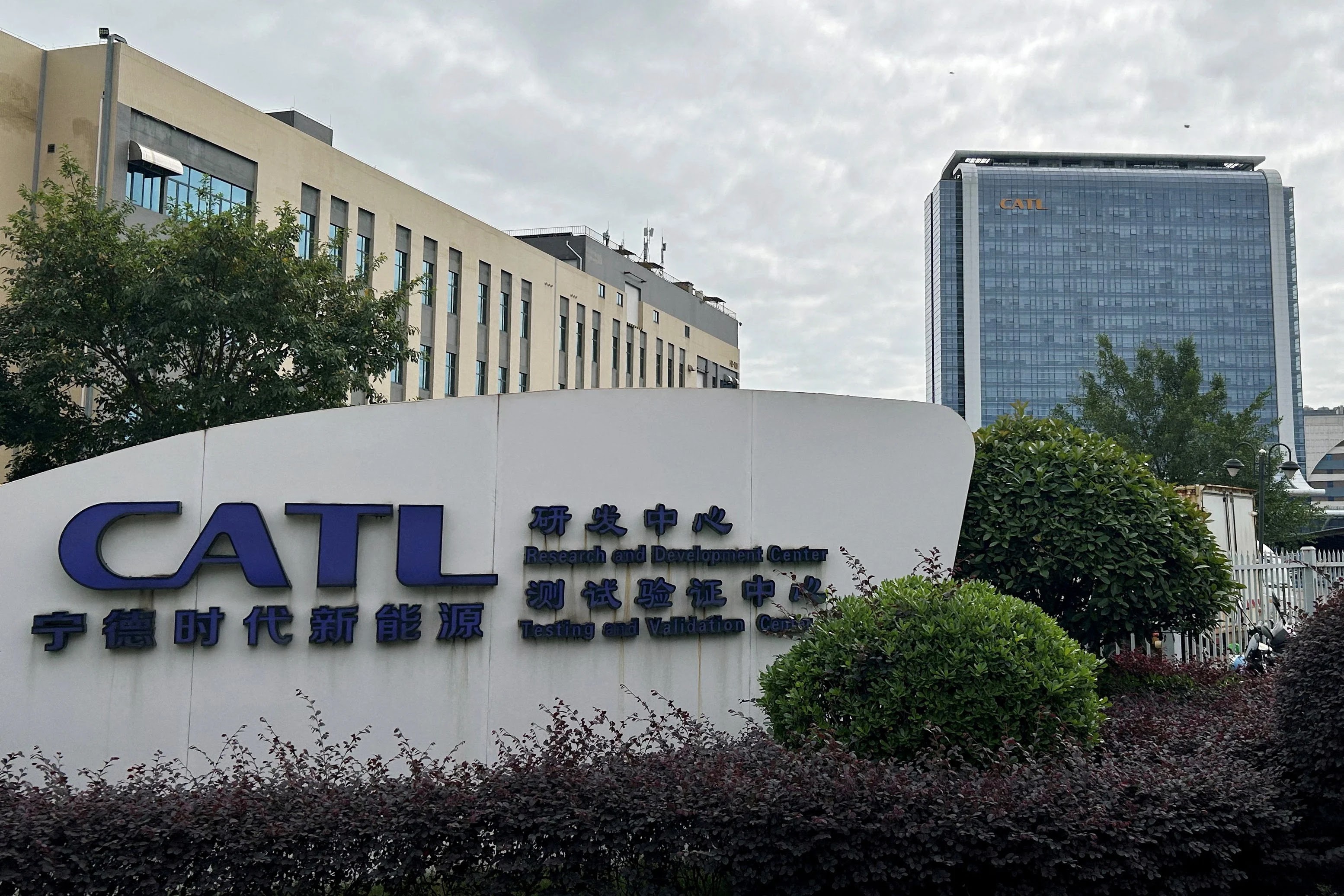
China’s top battery producer Contemporary Amperex Technology (CATL) recorded a 22% increase in battery sales in 2024, fueled by growing demand in electric vehicle and energy storage markets. The firm shipped 475GWh of lithium-ion batteries, up from 390GWh in 2023.

Growth in both EV and energy storage sectors

CATL’s 2024 shipments included 381GWh of power batteries, rising 19% year-over-year, and 93GWh of energy storage batteries, jumping 35%. These gains came amid a 27% rise in global EV-related battery consumption and a 63% surge in energy storage battery demand, according to company-cited data.

CATL’s total production capacity hit 676GWh last year, with an operational utilization rate of 76.3%. The company is constructing an additional 219GWh of capacity across sites in China, Europe, and Indonesia. Market analysts project CATL’s total capacity will reach 700–1,000GWh in 2025, potentially making it the first company to achieve TWh-scale battery output.

Global footprint and customer base widen

With 13 operating production bases, CATL is also expanding its joint ventures, including partnerships with Stellantis in North America and a vertically integrated project in Indonesia. It leads China’s battery market alongside BYD and CALB, which accounted for 25% and 7% of China’s power battery installations, respectively, compared to CATL’s 45%.

CATL supplies major auto manufacturers including BMW, Volkswagen, Toyota, Hyundai, and Chinese EV startups like NIO and Li Auto. Its energy storage clients include major global and Chinese power firms such as NextEra, Wartsila, State Power Investment Group, and PetroChina.

Despite higher volumes, CATL’s total revenue fell 9.7% to 362 billion yuan ($50 billion) in 2024. However, net profit rose 15% to 50.7 billion yuan, reflecting operational efficiency and high-margin product segments.

BMW to Invest R1.1 Billion in Brazil, Aiming to Launch New Models and Digital Innovations

No comments


BMW has announced a substantial investment of R1.1 billion (approximately $200 million) to enhance its manufacturing and technology capabilities in Brazil. This funding, set to roll out from 2025 to 2028, reflects BMW’s commitment to strengthening its foothold in the South American automotive market by producing new vehicle models and advancing digital technologies.

As part of the investment, BMW plans to manufacture a new, unnamed model at its Araquari plant in southern Brazil and will also begin production of its BMW X5 PHEV (plug-in hybrid electric vehicle) at the facility. This expansion underscores BMW’s broader strategic goal of supporting sustainable and digital transitions within its production processes.

A Growing Trend of Investment in Brazil's Auto Sector

BMW’s move follows significant investment announcements from other major automakers in Brazil this year, including General Motors, Volkswagen, and Hyundai. These investments signal a renewed focus on the South American market as automakers look to tap into rising demand while preparing for a shift toward electric and hybrid vehicle offerings.

With the automotive industry increasingly gravitating towards greener technology and digital innovation, BMW’s investment in Brazil aligns with its global ambitions to lead in both areas. This strategic injection is expected to boost Brazil’s automotive sector, creating new jobs and positioning the country as a central player in BMW’s production and innovation network.

Intensifying Battery Competition in Asia Amid Evolving Market Dynamics

No comments
EV Battery

The Race for Dominance in the Lithium Iron Phosphate Battery Market

The competition among major battery producers, particularly between China and South Korea, is set to intensify in 2025. South Korean giants like LG Energy Solution (LGES), Samsung SDI, and SK On are aggressively pursuing mass production of lithium iron phosphate (LFP) batteries, a domain where Chinese manufacturers have traditionally excelled. These South Korean firms are targeting a mass production rollout by the latter half of 2025, aimed primarily at the electric vehicle (EV) market.

Strategic Market Expansion

South Korean battery manufacturers are not just competing on the product level; they are also strategically targeting markets in the US and Europe, regions where their Chinese competitors have been less successful. This move is particularly strategic given the recent failure of Northvolt in Europe, which previously held a significant share of the European battery production capacity. The potential rollback of the US Inflation Reduction Act (IRA) tax credits, however, poses a financial threat to these South Korean firms, particularly with the upcoming changes anticipated under the administration of US president-elect Donald Trump.

Challenges and Opportunities in Other Regions

Australia, on the other hand, is focusing on niche areas such as "stationary storage" battery production, despite facing significant challenges in its mining sectors, especially with nickel and lithium. The downturn in these industries has led to major setbacks, such as the closure of the Bald Hill site by Mineral Resources, prompting government intervention.

In Southeast Asia, countries like Indonesia and the Philippines are making notable advances. Indonesia, in collaboration with LGES and Hyundai Motor, has already commenced operations at a new battery production facility, while the Philippines has launched its first LFP battery plant, which began operations in October with the support of Australian investment firm StB Capital Partners.

Toyota Backs Ionna's EV Charging Expansion

No comments

Toyota has taken a significant step into the electric vehicle (EV) landscape with an investment in Ionna, a burgeoning EV charging infrastructure company. This alliance grants Toyota's customers access to an ambitious network of high-powered charging stations planned across the United States. Ionna, which counts BMW, GM, Honda, Hyundai, Kia, Mercedes-Benz, and Stellantis among its backers, aims to roll out 30,000 charge ports by 2030.

The forthcoming stations will support both US charging standards and combined charging systems, ensuring broad compatibility with all battery-electric vehicles. This strategic move enhances the convenience and accessibility of EV charging for Toyota and Lexus drivers, marking a crucial advancement in the automaker's commitment to sustainable transportation.

Although the financial specifics of Toyota’s investment remain undisclosed, the partnership underscores a broader industry shift towards robust EV infrastructure. By joining forces with Ionna, Toyota reinforces its role in accelerating the adoption of electric vehicles, aligning with global trends towards reducing carbon emissions and fostering a greener automotive future. This collaboration is poised to reshape the EV charging landscape, promoting a more extensive and reliable network that supports the growing demand for sustainable mobility solutions.

Arafura Nolans Rare Earths Project Reaches FID as NdPr Offtake Clears Threshold

No comments
Arafura Nolans Rare Earths Project Reaches FID as NdPr Offtake Clears Threshold
Arafura

Arafura Nolans rare earths project has reached final investment decision, giving Australia a major new source of neodymium-praseodymium oxide for permanent magnet supply chains. Construction is scheduled to begin in September and production is expected to start in early to mid-2029.

Arafura Nolans rare earths project will produce 4,440 t/yr of NdPr oxide, a critical light rare earth used in permanent magnets for electric vehicles, wind turbines, robotics, defence systems and high-technology manufacturing.

Arafura Nolans rare earths project will also produce 470 t/yr of mixed medium-heavy rare earth oxide and 144,000 t/yr of fertilizer-grade phosphoric acid. This gives the project a broader industrial profile beyond magnet materials alone.

The final investment decision was enabled by offtake support that lifted contracted NdPr volumes above Arafura’s 80% target. The project now has 3,570 t/yr of NdPr committed, equal to 80.4% of nameplate capacity.

NdPr Offtake Converts Nolans Into a Bankable Magnet Supply Asset

Export Finance Australia provided a non-binding letter of support for 500 t/yr of NdPr under Australia’s Critical Minerals Strategic Reserve. That commitment helped push Nolans over the targeted offtake threshold.

The EFA support followed a A$200mn investment from Australia’s National Reconstruction Fund and a 500 t/yr NdPr offtake agreement with Traxys North America.

Arafura also has offtake agreements with Hyundai, Siemens and Traxys Europe. These customers give Nolans a diversified demand base across automotive, industrial and trading channels.

This structure matters because rare earth projects need committed buyers before construction risk becomes acceptable. Mining, processing and customer qualification all require long timelines and large capital commitments.

NdPr oxide is the key commercial product. It feeds rare earth permanent magnets, which remain essential for high-efficiency motors and generators.

Arafura will sell the remaining 870 t/yr of NdPr on the spot market. That gives the company some exposure to future price upside while maintaining enough contracted volume to support project financing and development.

Australia Strengthens Non-China Rare Earth Supply

Nolans has a planned mine life of 38 years and is projected to meet around 4% of global NdPr demand. That makes it strategically important for buyers seeking supply outside China-dominated rare earth chains.

The project’s value lies not only in mining. It adds processed NdPr oxide supply, which is closer to the material form needed by magnet makers and downstream industrial users.

This is critical because the rare earth bottleneck is often in processing, separation and qualification rather than ore alone. A project that can deliver NdPr oxide into contracted channels has more strategic value than an undeveloped resource.

Australia’s role is also growing. Government support through the Critical Minerals Strategic Reserve and National Reconstruction Fund shows that Canberra is willing to use public finance to support strategic materials projects.

For automakers and industrial manufacturers, Nolans offers a long-term alternative source of magnet feedstock. That matters as companies try to reduce exposure to Chinese export controls and supply-chain concentration.

The project will still face execution risk. Construction, commissioning, product qualification and cost control will determine whether Nolans can deliver on schedule and at commercial scale.

But reaching FID is a major milestone. It moves the project from policy ambition and offtake negotiation into physical development.

The Metalnomist Commentary

Arafura’s FID shows that rare earth diversification is moving from announcements into construction-backed supply. Nolans matters because it combines government support, long-term offtake and NdPr oxide output in one non-China supply platform.

Stellantis to Launch Solid-State Battery EVs by 2026

No comments
Stellantis

Stellantis, a leading global automaker, plans to integrate solid-state batteries into its Dodge-branded electric vehicles (EVs) by 2026. This initiative is part of a collaboration with US-based battery start-up Factorial, in which Stellantis invested $75 million in 2021.

Breakthrough in Battery Technology

Factorial’s solid-state battery technology offers a significant leap in energy density, delivering up to 390Wh/kg. This surpasses current benchmarks for:
  • Nickel and cobalt-based (NCM) batteries: Up to 300Wh/kg.
  • Lithium-iron phosphate (LFP) batteries: Around 160Wh/kg.
This technology is expected to provide a driving range exceeding 600 miles for the Dodge Charger Daytona EV, positioning it as a game-changer in the EV market.

Industry Implications

Factorial has attracted investments from other prominent automakers, including Mercedes-Benz and Hyundai, underscoring the industry’s focus on advancing battery efficiency and performance.

Siyu Huang, founder and CEO of Factorial, stated:
"We believe solid-state technology can be crucial in enabling the next generation of EVs with improved performance and reduced costs."

Stellantis’ Expanding EV Portfolio

Stellantis, which owns 14 automotive brands including Fiat, Jeep, Alfa Romeo, and Vauxhall, aims to solidify its position in the rapidly growing EV market by leveraging advanced battery technologies.

With solid-state batteries offering enhanced safety, higher energy density, and reduced charging times, this move aligns with Stellantis’ long-term sustainability goals and its commitment to achieving net-zero carbon emissions by 2038.