Showing posts sorted by relevance for query Greenland. Sort by date Show all posts

Greenland critical minerals remain trapped behind cost and politics

No comments
Greenland critical minerals remain trapped behind cost and politics
Greenland

Greenland critical minerals remain largely untapped despite renewed geopolitical attention and massive resource potential. Greenland critical minerals, including rare earths, molybdenum and other strategic metals, face geological, financial and political hurdles. As a result, Greenland critical minerals will not quickly become a major new supply hub without heavy state-backed investment.

Geopolitics raise the profile of Greenland critical minerals

Trump’s push to acquire Greenland has thrust the island’s strategic value back into the spotlight. The US administration frames the issue primarily as national security, but officials also acknowledge the importance of Greenland critical minerals. However, Europe has pushed back strongly, with Denmark and other European leaders defending Greenland’s sovereignty and warning about US pressure tactics.

Tensions have escalated as Washington links the acquisition debate to tariffs on countries that oppose the move. Meanwhile, US, Danish and Greenlandic officials have failed to reach common ground in recent talks. This stand-off adds political uncertainty that further complicates long-term planning around Greenland critical minerals. Investors now must factor in both resource risk and geopolitical risk.

Resource scale contrasts with extraction and infrastructure hurdles

Greenland holds some of the world’s largest undeveloped rare earth and critical mineral resources. Geological surveys estimate tens of millions of tonnes of rare earths and significant potential in molybdenum, graphite, hafnium, niobium, tantalum, titanium and platinum group metals. However, Greenland critical minerals remain unproduced at scale because projects face harsh weather, complex geology and almost nonexistent infrastructure.

Operating in Greenland requires long logistics chains, specialised equipment and high-cost power solutions. Therefore, unit costs can exceed those of competing projects in more accessible regions. The government’s ban on uranium mining since 2021 also constrains project design where uranium is associated with rare earths. Without substantial public financing, many deposits remain technically attractive but commercially marginal.

Projects depend on government-backed funding and secure offtake

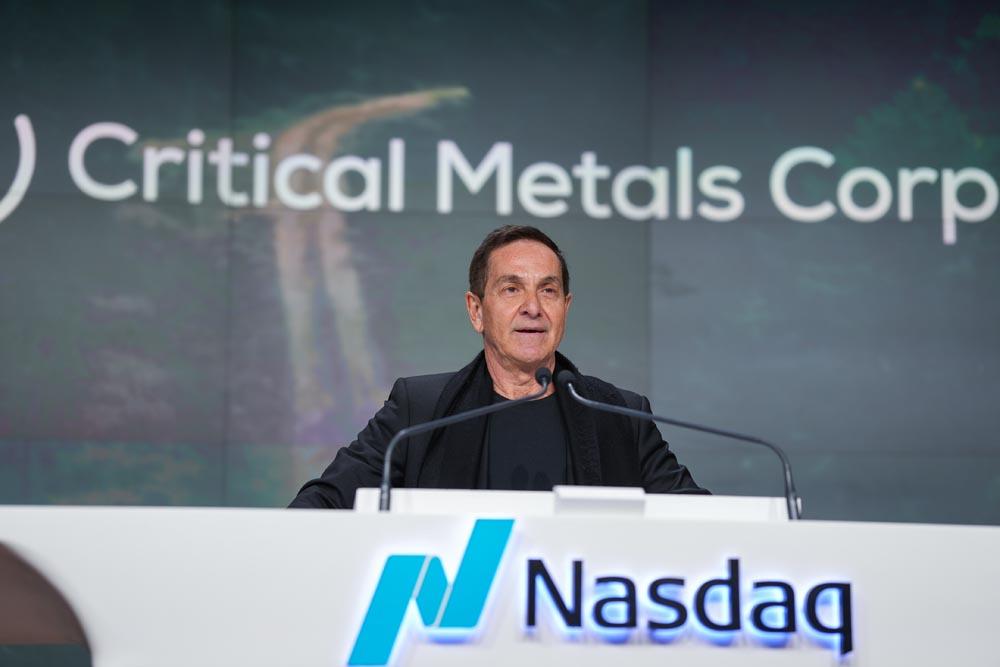
Early-stage projects illustrate both the promise and constraints of Greenland critical minerals. US-based Critical Metals’ Tanbreez project claims a huge share of global heavy rare earth potential and has filled its entire planned concentrate output with offtake contracts. However, the project still has not reached commercial production and relies on a tentative $120mn letter of interest from the US Export-Import Bank.

Similarly, Greenland Resources’ Malmberg molybdenum project has a long-term exploitation permit and supply agreements with European steel and metallurgical firms. As a result, European institutions now view the project as a strategic source for defense-related molybdenum demand. Even so, Malmberg also depends on significant EU-linked funding support to bridge the gap between geological potential and economic reality.

The Metalnomist Commentary

Greenland critical minerals sit at the intersection of security politics, industrial policy and project finance. For the US and EU, supporting these projects is less about cheap tonnage and more about diversified, allied supply for sensitive value chains. For investors and operators, success in Greenland will hinge on blending geology with patient capital, sovereign support and realistic timelines rather than expecting a quick rare earths windfall.

Greenland Molybdenum Supply Deal with Cogne Targets European Steel Markets

No comments
Greenland Molybdenum Supply Deal with Cogne Targets European Steel Markets
Greenland

Greenland molybdenum supply deal negotiations advanced as Greenland Resources signed a non-binding memorandum of understanding with Italian specialty steel manufacturer Cogne Acciai Speciali. The potential Greenland molybdenum supply agreement covers ferro-molybdenum and molybdenum oxide sourced from the company's $820 million Malmbjerg project, positioning Greenland Resources to address European Union molybdenum supply security while building strategic partnerships across specialty steel manufacturing.

Malmbjerg Project Resources Support Long-Term Supply Commitments

Greenland molybdenum supply capabilities stem from substantial mineral reserves at the Malmbjerg project containing 245 million metric tonnes of molybdenum disulphide. The reserves maintain an average grade of 0.176% and are expected to yield 571 million pounds (259,000 tonnes) of contained molybdenum metal. These resource volumes position Malmbjerg to supply approximately 25% of European Union molybdenum demand.

Meanwhile, the project's strategic importance reflects the EU's position as the world's second-largest molybdenum consumer without domestic mining operations. This supply gap creates significant opportunities for Greenland Resources to establish long-term customer relationships with European manufacturers. The company also plans to market magnesium as a by-product, diversifying revenue streams while maximizing resource utilization efficiency.

Strategic Processing Partnership Enables Market Entry

However, the molybdenum supply chain requires sophisticated processing capabilities through Greenland Resources' tolling agreement with Molymet Belgium. The Belgian molybdenum converter will process concentrates from Malmbjerg into ferro-molybdenum and molybdenum oxide products suitable for specialty steel applications. This partnership arrangement provides access to established European processing infrastructure without requiring substantial capital investments.

Therefore, the Cogne agreement follows Greenland Resources' successful long-term contract with stainless steel producer Outokumpu for 8 million pounds annually of molybdenum oxide. The Outokumpu deal represents half of that company's annual molybdenum requirements, demonstrating market validation for Malmbjerg's production capacity. Multiple customer agreements reduce concentration risk while establishing predictable revenue foundations.

Government Approval Remains Critical for Project Development

Furthermore, Greenland Resources continues pursuing final exploitation license approval from the Greenland government following receipt of draft license revisions in April. Government approval represents the final regulatory hurdle before commencing mining activities at Malmbjerg. The licensing process reflects Greenland's careful approach to balancing resource development with environmental protection and community interests.

As a result, successful government approval would unlock substantial European molybdenum supply chain benefits while establishing Greenland as a strategic critical minerals producer. The project's scale and customer commitments demonstrate commercial viability that supports both Greenlandic economic development and European industrial supply security. Strategic partnerships with established processors and customers create integrated value chains from mining through end-use applications.

The Metalnomist Commentary

Greenland Resources' molybdenum supply agreements exemplify how emerging mining jurisdictions can address critical European industrial supply gaps through strategic partnerships and processing arrangements. The Malmbjerg project's potential to supply 25% of EU molybdenum demand represents a significant geopolitical shift toward Arctic resource development, particularly important as European manufacturers seek supply chain diversification away from traditional sources amid increasing trade tensions.

Magnesium Added to Greenland Resources License for Malmberg Project

No comments
Magnesium Added to Greenland Resources License for Malmberg Project
Greenland Resources

Greenland Resources has confirmed that magnesium will be included in its draft exploration license for the Malmberg project in east-central Greenland. The updated scope expands the project’s strategic value beyond molybdenum, as the magnesium Greenland Resources license now aligns with critical mineral priorities in both the US and EU, where domestic magnesium production is absent.

The Greenland government verified magnesium’s presence in the Malmberg deposit, prompting regulators to recommend formal inclusion. The magnesium will be recovered as a byproduct of molybdenum extraction and may also be recovered from saline tailings water, according to Greenland Resources. This multi-source extraction strategy enhances the site’s economic and critical materials relevance.

Dual Critical Mineral Strategy Enhances Malmberg Project Value

The expanded magnesium Greenland Resources license adds new momentum to the Malmberg project, which is already positioned as a high-grade molybdenum source. In February 2025, Greenland Resources signed a 10-year, $1.6 billion offtake deal with Outokumpu, a Finland-based stainless steel producer, for molybdenum oxide. The addition of magnesium strengthens the project’s appeal to industrial buyers facing supply shortfalls.

Magnesium is widely used in lightweight alloys, defense applications, and battery systems, making it a key focus for strategic sourcing. The company’s plan to extract magnesium from both ore and tailings brine also reflects a growing industry trend toward zero-waste and water-integrated metallurgy.

US and EU Magnesium Dependence Highlights Strategic Importance

Neither the United States nor the European Union currently hosts domestic magnesium production, despite listing the metal as a critical raw material. The magnesium Greenland Resources license positions Greenland as a potential supplier to Western markets seeking non-Chinese sources of magnesium.

As supply chain resilience becomes central to industrial policy, Greenland’s geostrategic location and mineral endowment could play a more prominent role in EU and US critical mineral strategies. With permitting underway and magnesium officially recognized, Greenland Resources gains leverage in future financing, offtake, and export agreements.

The Metalnomist Commentary

Adding magnesium to the Greenland Resources license broadens the Malmberg project’s relevance in critical mineral geopolitics. In a supply environment dominated by China, even byproduct recovery from molybdenum mining becomes a strategic lever for Western industrial resilience.

Greenland Resources SSAB Ferro-Molybdenum Deal Strengthens European Alloy Supply

No comments
Greenland Resources SSAB Ferro-Molybdenum Deal Strengthens European Alloy Supply
Greenland Resources

Greenland Resources SSAB ferro-molybdenum deal has added another strategic offtake agreement to the Malmbjerg molybdenum project in eastern Greenland. The Canadian mine developer signed an eight-year binding agreement with Swedish steel producer SSAB for future ferro-molybdenum supply.

The agreement includes price floors and ceilings, giving both companies a clearer commercial framework for long-term supply. However, the companies have not disclosed the final offtake quantities.

Greenland Resources SSAB ferro-molybdenum deal is significant because molybdenum is essential for high-strength steels, corrosion-resistant alloys, automotive steels, and defense-grade materials. SSAB’s role gives the agreement direct relevance to European advanced steel manufacturing.

Malmbjerg Project Builds Commercial Momentum

The ferro-molybdenum will be produced from molybdenum ore from Greenland Resources’ Malmbjerg project. The material will later be refined in Belgium, supported by Greenland Resources’ tolling agreement with Molymet.

The Malmbjerg project received a 30-year exploitation permit in June 2025, but commercial production has not yet started. This makes binding offtake agreements important for project financing, customer validation, and future market confidence.

The EU said in December that it would help fund the project. Canada’s natural resources department also conditionally approved a C$7mn grant in March, adding public-sector support to the project’s growing commercial base.

SSAB Agreement Supports Europe’s High-Strength Steel Supply Chain

SSAB has 8.8mn t/yr of steel capacity across Sweden, Finland, and the US. The company produces high-strength steels for industries including defense and automotive, where ferro-molybdenum improves strength, toughness, and high-temperature performance.

Greenland Resources has also signed other molybdenum offtake agreements with Hempel, Cogne, Outokumpu, GMH Group, Rogesa, and now SSAB. This expanding customer base shows that European industrial buyers are actively looking for more secure molybdenum supply.

The Greenland Resources SSAB ferro-molybdenum deal also fits Europe’s broader raw material security strategy. If Malmbjerg advances into production, it could connect Greenlandic ore, Belgian refining, and European steel alloy demand in a more resilient regional supply chain.

The Metalnomist Commentary

The SSAB agreement gives Malmbjerg stronger credibility because it links the project directly to high-strength steel demand. Europe’s molybdenum strategy now depends on turning offtake momentum into real mine, refining, and alloy supply capacity.

Greenland resources face extraction hurdles despite renewed US interest

No comments
Greenland resources face extraction hurdles despite renewed US interest
Greenland resources

Greenland resources face extraction hurdles even as Washington again spotlights the territory. Costs, climate, and logistics still block most commercial mining. As a result, Greenland resources face extraction hurdles for rare earths and other critical minerals.

Greenland resources face extraction hurdles as geopolitics heats up around security and supply chains. US leaders frame Greenland as strategically vital for Nato coverage. Meanwhile, European governments push back to defend Danish and Greenlandic sovereignty.

Greenland resources face extraction hurdles because geology and geography punish project economics. Harsh weather shortens operating windows and raises safety costs. Limited ports, roads, and power grids also inflate capital needs.

High costs and thin infrastructure limit near-term viability

Greenland mining requires heavy upfront spending before any revenue starts. Developers must build power, transport, and processing systems in remote terrain. Therefore, many deposits stay stranded without public financing or guaranteed offtake.

Rare earth projects also face complex metallurgy and strict permitting. Producers must separate mixed rare earths into saleable oxides. However, few buyers fund this chain without long-term certainty.

Tanbreez and Malmberg show where momentum concentrates

Tanbreez remains a headline rare earth project with expanding offtake coverage. Offtake deals can reduce demand risk and support bankability. Still, developers must prove consistent concentrate quality and scalable operations.

Malmberg targets molybdenum and magnesium with long-life permitting in place. Supply agreements can anchor revenue expectations for stainless and specialty steel users. Meanwhile, European interest signals strategic demand for defense-grade inputs.


The Metalnomist Commentary

Greenland will not become a fast fix for Western critical minerals shortages. Governments may need to underwrite infrastructure, not just mines. The winners will pair financing with disciplined execution and realistic timelines.

Greenland Resources Grant Supports Malmbjerg Molybdenum Processing Study

No comments
Greenland Resources Grant Supports Malmbjerg Molybdenum Processing Study
Greenland Resources

Greenland Resources grant approval from Natural Resources Canada could advance technical work on the Malmbjerg molybdenum project in east Greenland. The Canadian federal department has conditionally approved C$7mn for the company to evaluate processing options and byproduct recovery potential.

The Greenland Resources grant will support feasibility work for primary molybdenum processing. It will also assess whether magnesium and rare earths can be recovered as byproducts, potentially improving the project’s value and strategic relevance.

The Malmbjerg project already holds a 30-year exploitation permit for molybdenum and magnesium. However, the project has not yet entered commercial production, making technical validation and financing support important steps before development can move forward.

Malmbjerg Could Add Strategic Molybdenum Supply

Malmbjerg is positioned as a primary molybdenum project, which gives it importance beyond normal base metals development. Molybdenum is used in stainless steel, specialty steel, high-performance alloys, energy infrastructure, and industrial equipment that require strength, corrosion resistance, and high-temperature performance.

The Greenland Resources grant therefore supports a project linked directly to advanced manufacturing and steel supply chains. In a market where many molybdenum units come as byproducts from copper operations, primary molybdenum projects can offer a more direct supply source.

Greenland Resources has already signed long-term supply agreements with European industrial customers. These include Outokumpu, Hempel Metallurgical, Cogne Acciai Speciali, and Georgsmarienhütte Holding, showing downstream interest from stainless steel, specialty steel, and metal supply companies.

Byproduct Recovery Could Strengthen Project Economics

The study of magnesium and rare earths byproduct recovery could increase the strategic value of Malmbjerg. If technically and economically viable, these materials could broaden the project’s role within critical minerals supply chains.

Magnesium is important for lightweight alloys, aluminium alloying, steel desulphurisation, and industrial applications. Rare earths are central to permanent magnets, advanced electronics, defence systems, and energy transition technologies.

The Greenland Resources grant also reflects Canada’s interest in supporting critical mineral development beyond its domestic borders when projects can strengthen allied supply chains. Greenland’s location and resource base make it increasingly relevant to North American and European raw materials security.

The Metalnomist Commentary

Malmbjerg’s importance lies in its potential to link Arctic resource development with European alloy and steel demand. The next test is whether processing studies can turn molybdenum, magnesium, and rare earth potential into a bankable supply-chain project.

Greenland Resources to supply Mo to GMH Group under long-term MOU

No comments
Greenland Resources to supply Mo to GMH Group under long-term MOU
Greenland Resources

Greenland Resources to supply Mo to GMH Group as Europe tightens its strategy on critical alloying inputs. Greenland Resources to supply Mo to GMH Group through a long-term memorandum of understanding. Therefore, the deal adds another European steel anchor to Malmbjerg’s offtake portfolio.

Greenland Resources to supply Mo to GMH Group in multiple product forms. The company plans to deliver ferro-molybdenum, molybdenum oxide, and briquettes. Meanwhile, a refinery in Belgium will process material produced from Malmbjerg ore, supporting European value-added conversion.

Greenland Resources to supply Mo to GMH Group from its Malmbjerg project in eastern Greenland. Malmbjerg holds a 30-year exploitation permit granted in June 2025. As a result, the project can frame multi-decade supply discussions even before full commercial ramp-up.

Why GMH’s molybdenum sourcing matters for specialty steel

GMH Group operates in steel markets where molybdenum directly upgrades performance. Molybdenum improves high-temperature strength and corrosion resistance in critical grades. Therefore, stable Mo supply can protect margins in engineering steel, energy, and industrial tooling demand cycles.

European steelmakers also face growing procurement risk for alloying elements. Logistics, permitting delays, and geopolitical friction can disrupt minor metal flows. However, long-term Mo agreements can shorten sourcing lead times and stabilise quality specifications.

Malmbjerg builds a European offtake network around Mo products

The GMH MOU follows earlier offtake agreements Greenland Resources signed with European industrial buyers. Those deals include Hempel, Cogne, and Outokumpu. Meanwhile, adding another German buyer increases the project’s commercial credibility with financiers and export credit agencies.

Product flexibility also signals a practical approach to customer needs. Some buyers prefer oxide for downstream conversion, while others prefer ferro-alloy units. Therefore, offering multiple forms can widen the reachable customer base and reduce single-product exposure.

The Metalnomist Commentary

This MOU strengthens Malmbjerg’s positioning as a Europe-oriented molybdenum supply option. However, project execution and refining readiness will decide whether the contracts translate into real volumes. The winners will be those who lock in specifications early and qualify supply chains fast.

Kvanefjeld Rare Earth Project Faces Licence Renewal Rejection in Greenland

No comments
Kvanefjeld Rare Earth Project Faces Licence Renewal Rejection in Greenland
Kvanefjeld Rare Earth Project

Kvanefjeld rare earth project development faces another major setback after Energy Transition Minerals said Greenland’s government may reject the renewal of its exploration licence. The Australian explorer said the draft decision indicates that further exploration may no longer serve a purpose under the current legal framework.

The Kvanefjeld rare earth project contains significant neodymium and praseodymium resources. ETM has reported a mineral resource estimate of 1.14mn t of contained rare earth oxides, making the project one of the more visible rare earth deposits in the North Atlantic region.

The possible rejection matters because neodymium and praseodymium are key inputs for permanent magnets used in electric vehicles, wind turbines, robotics, defense systems, and advanced industrial equipment. However, the project remains constrained by Greenland’s uranium restrictions.

Uranium Content Remains the Central Legal Barrier

Greenland’s draft decision relies on Parliament Act No. 20 of December 2021, commonly referred to as the 2021 Uranium Act. The law restricts mining projects if the average uranium content in the total resource exceeds 100 parts per million.

ETM said the Kvanefjeld ore body has uranium content of 360ppm. This places the project well above the threshold and creates a legal barrier to any future exploitation licence under Greenland’s current framework.

The government’s position is that exploration activity may no longer be useful if the project cannot proceed to mining. That makes the exploration licence renewal more than an administrative issue; it directly tests whether Kvanefjeld rare earth project development can remain alive under existing law.

Legal Dispute Adds Risk to Greenland’s Rare Earth Strategy

ETM is already pursuing legal action against the Greenland and Danish governments for alleged breach of contract. The company is seeking $7.5bn in damages and $4bn in pre-award interest for losses connected to the project’s development since 2007.

The dispute highlights a wider tension in critical minerals policy. Greenland holds rare earth potential, but environmental, political, and radioactive by-product concerns can restrict project development even when the mineral resource is strategically valuable.

ETM said it is engaging with Greenlandic authorities and will respond to the draft decision. For the market, the key issue is whether Kvanefjeld remains a stranded rare earth resource or whether any legal, political, or regulatory path can reopen future development.

The Metalnomist Commentary

The Kvanefjeld rare earth project shows that critical mineral security is not only about resource size. Uranium content, local legislation, and political acceptance can decide whether even a globally significant rare earth deposit becomes supply or remains locked underground.

Greenland Resources Molybdenum Supply Deal Strengthens Europe’s Steel Alloy Chain

No comments
Greenland Resources Molybdenum Supply Deal Strengthens Europe’s Steel Alloy Chain
Greenland Resources

Greenland Resources molybdenum supply plans gained further commercial support after the Canadian mine developer signed an MOU with Rogesa for long-term molybdenum products. Rogesa is a subsidiary of German steelmakers Dillinger and Saarstahl, making the agreement directly relevant to Europe’s steel alloy supply chain.

The MOU covers potential supply of ferro-molybdenum, molybdenum oxide and briquettes from Greenland Resources’ Malmbjerg project in eastern Greenland. The molybdenum ore would later be refined in Belgium before entering European industrial markets.

Greenland Resources molybdenum supply remains subject to project development and future commercial arrangements, as the agreement does not yet disclose final volumes. However, the deal adds another offtake signal for a project that Europe increasingly views through the lens of raw material security.

Malmbjerg Project Adds Strategic Value to European Alloy Supply

The Malmbjerg molybdenum project has gained strategic relevance because molybdenum is essential for high-performance steels, stainless steels, tool steels and specialty alloys. It improves strength, corrosion resistance and high-temperature performance in demanding industrial applications.

The project received a 30-year exploitation permit in June 2025, but commercial production has not yet started. This makes offtake interest important because long-term buyers can support financing, project confidence and future market positioning.

The EU’s support for the project also highlights its strategic value. Canada’s natural resources department has conditionally approved a C$7mn grant, while Europe has signalled willingness to help fund the project as part of its broader critical raw materials strategy.

Rogesa Agreement Builds on Wider Offtake Momentum

The Rogesa MOU adds to a growing list of Greenland Resources molybdenum supply agreements. The company has already signed offtake MOUs with Hempel, Cogne, Outokumpu and GMH Group.

This pattern shows that European industrial buyers are looking for more secure molybdenum supply outside traditional channels. For steelmakers, reliable access to molybdenum matters because alloy availability can influence product quality, cost control and production planning.

The planned refining route through Belgium also strengthens the European value-chain angle. If Malmbjerg advances, the project could connect Greenlandic ore, European refining and regional steel alloy demand into a more resilient supply model.

The Metalnomist Commentary

The Rogesa MOU shows that molybdenum is becoming part of Europe’s wider raw material security agenda. Greenland Resources still needs to move Malmbjerg into production, but its growing offtake base gives the project stronger strategic credibility.

EU stalls US trade deal as Greenland tariff row escalates

No comments
EU stalls US trade deal as Greenland tariff row escalates
Greenland

EU stalls US trade deal as a direct response to President Trump's Greenland-linked tariff threats. EU leaders will meet on 22 January to coordinate a unified response and reassess transatlantic economic engagement. Meanwhile, the European Parliament is preparing to freeze implementing laws for the EU-US trade deal agreed last summer. As a result, EU stalls US trade deal at precisely the moment businesses across North America and Europe seek stability.

Greenland tariffs derail EU-US trade deal momentum

EU leaders are weighing a tough response after Trump threatened to annex Greenland and impose a new 10pc tariff. The measures would hit imports from France, Germany and five other European countries from 1 February, rising to 25pc in June. The threatened tariffs specifically target countries involved in a military mission in Denmark’s Greenland territory, widening the geopolitical rift.

The stalled EU-US trade deal had locked in a 15pc US baseline tariff and 0pc tariffs on selected EU-bound US exports. However, lawmakers now argue that EU stalls US trade deal implementation until Washington withdraws its Greenland-linked tariff threats. As a result, European politicians are signalling that no agreement offering 0pc tariffs can move forward under open coercive pressure.

European Parliament trade chair Bernd Lange urged using all available tools, including the anti-coercion instrument (ACI). Meanwhile, EPP group leader Manfred Weber said that approval of the pact is “not possible at this stage”. Their stance confirms that EU stalls US trade deal not just tactically, but as part of a wider strategic rethink.

Anti-coercion instrument raises stakes for supply chains

The EU’s anti-coercion instrument would allow Brussels to curb US access to goods, services and public procurement markets. Therefore, any escalation could hit key transatlantic value chains, including autos, machinery, chemicals and high-end manufactured goods. For metals, this would feed into steel, aluminium, copper and specialty alloy demand linked to these sectors.

The ACI also covers foreign direct investment and financial markets, increasing uncertainty for cross-border industrial projects. As a result, companies with integrated EU-US manufacturing footprints face higher risk premia and more complex trade planning. This comes as tariffs already feature prominently in US economic policy, further complicating capital allocation decisions.

The Greenland dispute will also follow leaders to Davos, where Trump and senior EU figures will share a stage. Any harsh rhetoric could harden positions and accelerate planning for retaliatory steps on both sides. Investors and industrial players will watch closely for signals on how far the EU is willing to push the ACI lever.

The Metalnomist Commentary

The current standoff shows how quickly geopolitics can override the economic logic of a hard-won trade deal. For metals and manufacturing supply chains, the real risk is not a single tariff move, but a sustained cycle of coercive measures and retaliation. Firms that diversify sourcing, build tariff resilience into contracts and hedge regulatory risk will be better positioned if this dispute drags on.

Critical Metals May Secure $120mn for Greenland REE Project

No comments
Critical Metals May Secure $120mn for Greenland REE Project
US Critical Metals

Financing Support for Greenland Rare Earth Development

Critical Metals has received a letter of interest from the US Export-Import Bank for up to $120mn in financing for its Tanbreez rare earth elements (REE) project in Greenland. The potential funding would cover feasibility studies, pre-production activities, and early mining operations. Repayment terms under consideration span 15 years, according to the company’s announcement.

The Tanbreez project requires an estimated $290mn in capital expenditure to reach initial commercial production, with capacity projected at 85,000 tonnes per year of rare earth material. Critical Metals plans to finalize a definitive feasibility study by the end of 2025, which will provide greater clarity on production volumes and timelines.

Strategic Expansion and Ownership Growth

Critical Metals aims to expand its stake in Tanbreez and diversify its portfolio with additional investments. In 2025, the company will invest $10mn in exploration to secure an option for an additional 50.5pc ownership, which would raise its total stake to 92.5pc. The project benefits from year-round access to North Atlantic shipping lanes through deep-water fjords in southern Greenland, a logistical advantage that supports export efficiency.

Beyond Greenland, Critical Metals also owns the Wolfsberg Lithium Project in Austria, which is scheduled to begin production between 2026 and 2027. This dual focus on rare earths and lithium highlights the firm’s role in supplying critical minerals for both energy transition and advanced manufacturing industries.

The Metalnomist Commentary

Critical Metals’ Greenland REE project underscores the strategic importance of diversifying global supply chains away from China’s dominance in rare earths. With U.S. financing support under consideration, the Tanbreez project could emerge as a cornerstone for Western REE supply security. If successfully developed, the combination of Greenland’s rare earths and Austria’s lithium positions Critical Metals as a significant player in the global critical minerals landscape.

Greenland Rare Earth Project Dispute Deepens Around Kvanefjeld

No comments
Greenland Rare Earth Project Dispute Deepens Around Kvanefjeld
Kvanefjeld

The Greenland rare earth project dispute has entered a more serious phase after ETM moved to end its long partnership with Shenghe. ETM said the original basis for co-operation has effectively lapsed. Shenghe rejected that position and threatened legal action. As a result, the Greenland rare earth project dispute now carries strategic importance beyond shareholder rights.

The Kvanefjeld rare earth project remains one of the most important undeveloped rare earth assets outside China. Industry estimates have long treated it as a globally significant deposit. The project could support long-term production of NdPr, dysprosium, and terbium. Therefore, this dispute matters for future western rare earth supply diversification.

However, Kvanefjeld is still not a producing asset. Development has stalled since Greenland passed its uranium prohibition law in 2021. The deposit contains uranium alongside rare earths. Consequently, the Greenland rare earth project dispute is unfolding around an asset with strategic scale but unresolved permitting risk.

Shenghe ETM Dispute Reflects a Wider Strategic Break

The Shenghe ETM dispute is no longer just a corporate disagreement. It reflects a deeper split over ownership influence, project direction, and future market alignment. ETM said Shenghe’s technical role has ended as Kvanefjeld moved into a government hearing stage. Meanwhile, Shenghe said it does not recognize ETM’s unilateral move.

The breakdown also follows ETM’s broader strategic shift. The company has moved toward lithium and other critical minerals beyond rare earths. That change weakens the industrial rationale that originally tied ETM and Shenghe together. As a result, the Shenghe ETM dispute now looks like both a legal and strategic separation.

The shareholder structure adds further tension. Shenghe first acquired a 12.5pc stake in ETM in 2016 through its subsidiary. That stake has since diluted to around 6.5pc after later share issuances. Therefore, the current fight is also about whether historic partnership rights still carry practical power.

Kvanefjeld Rare Earth Project Sits Inside a Bigger Geopolitical Reset

The Kvanefjeld rare earth project now sits inside a rapidly changing geopolitical environment. Western countries are accelerating efforts to reduce critical mineral dependence on China. That shift has made Chinese-linked positions in strategic projects more politically sensitive. Consequently, the Greenland rare earth project dispute fits a wider realignment in rare earth supply chains.

This pattern is no longer isolated. Other western rare earth developers have also stepped back from agreements with Shenghe. At the same time, Beijing’s export restrictions have tightened supply outside China and raised security concerns. Therefore, commercial disputes like this now carry more geopolitical weight than before.

The timing is especially notable because the United States is discussing a new critical minerals bloc and price floor framework with allies. China has opposed such moves and warned against exclusionary trade rules. As a result, the future of the Kvanefjeld rare earth project may depend as much on geopolitics as on geology.

The Metalnomist Commentary

This dispute matters because Kvanefjeld is not an ordinary rare earth asset. It sits at the intersection of strategic minerals, Greenland politics, and the West’s effort to reduce reliance on China. If the partnership truly breaks, the next question will be whether ETM can reposition Kvanefjeld within a new western-aligned supply chain.

Greenland Resources Malmberg project financing advances Mo-Mg development

No comments
Greenland Resources Malmberg project financing advances Mo-Mg development
Greenland Projects

Greenland Resources Malmberg project financing totals C$11.5mn to accelerate engineering and magnesium metallurgical studies. Greenland Resources Malmberg project financing also supports offtake talks and working capital. The raise follows a 30-year exploitation permit for molybdenum and magnesium, extendable to 50 years. Greenland Resources Malmberg project financing aims to convert permits and partnerships into near-term project readiness.

Funding details and use of proceeds

The company placed 6.7mn shares on 5 August, raising C$10mn. It then sold 1mn shares on 11 August for C$1.5mn. The fresh capital funds engineering, magnesium test work, offtake negotiations, and operations. As a result, technical de-risking should progress in parallel with market outreach.

Permits, offtakes, and market fit

The Malmberg project holds a long-life exploitation permit covering molybdenum and magnesium. Earlier, regulators added magnesium to the draft license in April. Greenland Resources has offtake agreements with Outokumpu and Cogne Acciai Speciali. Therefore, stainless and specialty steel demand can anchor initial volumes.

Molybdenum strengthens steel, cast iron, and superalloys. Meanwhile, magnesium alloys with aluminum and supports die casting. The combined product slate targets diversified end markets. Consequently, the project aligns with European supply security goals and lightweighting trends.

Execution now turns on disciplined studies and commercial validation. Expanded metallurgical data should inform flowsheet selection and product specs. In turn, buyers can refine contract terms and delivery windows. Offtake traction will guide financing structure and construction sequencing.

The Metalnomist Commentary

This raise is modest but well-timed. With permits, named offtakers, and focused studies, Malmberg can move up the readiness curve. Watch for metallurgy results and binding offtakes as the next catalysts.

Critical Metals Tanbreez Acquisition Consolidates Greenland Rare Earth Control

No comments
Critical Metals Tanbreez Acquisition Consolidates Greenland Rare Earth Control
Critical Metals

Critical Metals Tanbreez acquisition will give the US critical minerals developer full ownership of one of Greenland’s most closely watched rare earth projects. The company has agreed to acquire Australian mining firm European Lithium in an all-stock deal valued at $835mn.

The Critical Metals Tanbreez acquisition is designed to consolidate ownership of the Tanbreez rare earth project, where European Lithium currently holds a 7.5% stake. Completion of the transaction would give Critical Metals 100% ownership.

The Critical Metals Tanbreez acquisition strengthens the company’s position in the race to build rare earth supply chains outside China. Greenland is becoming strategically important because western governments and manufacturers want new sources of rare earth concentrate tied to secure processing and offtake routes.

European Lithium shareholders would receive 0.035 Critical Metals shares for each European Lithium share under the letter of intent. The proposed transaction is expected to close in the second half of 2026.

Tanbreez Ownership Supports Mine-to-Market Strategy

Full ownership of Tanbreez would give Critical Metals greater control over project development, financing, offtake and downstream strategy. This matters because rare earth projects often struggle when ownership, processing and customer structures are fragmented.

Critical Metals plans to invest $30mn to fast-track development of Tanbreez. That investment signals an effort to move the project beyond resource positioning and toward a more commercial supply-chain role.

Tanbreez could become an important source of rare earth concentrate for non-China buyers. However, concentrate alone is not enough to secure the rare earth value chain. Material must still be separated, refined, converted into metals or alloys, and qualified by downstream users.

The company’s offtake agreements provide early commercial direction. Critical Metals has an agreement with Ucore Rare Earths for as much as 10,000 t/yr of rare earth concentrate and another with REalloy for 15% of Tanbreez’s annual output.

These agreements help anchor future sales channels. They also show that buyers are willing to secure upstream access before full project development is complete.

Saudi Processing Plan Adds Downstream Dimension

Critical Metals also plans to form a joint venture in Saudi Arabia to build a rare earth processing facility. This is strategically important because processing capacity remains the key bottleneck in ex-China rare earth supply chains.

A Greenland-to-Saudi processing route would add a new geopolitical configuration to the rare earth market. It would connect western-controlled resources with Middle Eastern industrial investment and processing ambitions.

Saudi Arabia has been seeking a larger role in critical minerals, downstream processing and industrial diversification. A rare earth processing venture would fit that strategy while giving Critical Metals another route to move beyond concentrate sales.

For global rare earth buyers, the key issue will be reliability. They need traceable feedstock, qualified processing, stable offtake and predictable geopolitical access.

The transaction also reflects a wider industry trend. Rare earth companies are consolidating ownership and building downstream partnerships because customers no longer want isolated mining assets. They want integrated supply chains that can deliver usable material.

Critical Metals’ strategy is therefore not only about acquiring European Lithium. It is about controlling Tanbreez, securing offtake, adding processing optionality and positioning the project as part of an ex-China rare earth supply network.

The Metalnomist Commentary

The Critical Metals Tanbreez acquisition shows that rare earth strategy is shifting from exploration ownership to full supply-chain control. The real test will be whether Greenland feedstock, Saudi processing and offtake agreements can become a bankable alternative to China-dominated rare earth flows.

US GreenMet, Tanbreez Partner on Greenland Rare Earths

No comments
US GreenMet, Tanbreez Partner on Greenland Rare Earths
Critical Metals Corp

Strategic Collaboration Targets Heavy Rare Earth Elements Supply

US GreenMet and Critical Metals Corp have formed a partnership to develop the Tanbreez Project in southern Greenland. This project aims to strengthen the US and allied nations' access to heavy rare earth elements (REEs) critical for defense and high-tech industries.

The Tanbreez Project holds nearly 45 million tonnes of indicated and inferred rare earth materials. This represents about 1% of the mineralized host rock, offering long-term development potential. The site features deep-water fjord access and existing infrastructure, with a mining license granted through 2050.

A Geopolitically Strategic Asset for US Supply Chains

Critical Metals Corp acquired Tanbreez Mining Greenland for $211 million in June, securing control amid concerns about Chinese investment. The deal ensures that this rare earth resource remains aligned with Western supply chain interests.

Once operational, the project will support the US defense sector and advanced technology manufacturing. This aligns with broader national efforts to reduce dependence on Chinese rare earth supplies. GreenMet’s involvement signals a coordinated US push to secure critical minerals from politically stable regions.

Expansion into Broader Critical Mineral Markets

Critical Metals is also progressing a lithium spodumene project in Austria, targeting the European battery industry. This dual focus reflects increasing demand for rare earths and lithium, as energy transition policies accelerate.

Meanwhile, Greenland’s regulatory environment and proximity to Europe and North America offer logistical advantages. The Tanbreez site’s location and scale position it as a cornerstone of Western rare earth strategies moving forward.

The Metalnomist Commentary

The Tanbreez Project exemplifies how strategic mineral development is now a pillar of geopolitical competition. With the US racing to onshore or ally-source REEs, Greenland’s rare earth wealth could prove to be a decisive lever in decoupling from Chinese critical mineral dominance.

Greenland Resources to supply molybdenum to Hempel

No comments
Greenland Resources to supply molybdenum to Hempel
Greenland Resources

Greenland Resources to supply molybdenum to Hempel through a new long-term MoU that expands European steel supply security. Greenland Resources to supply molybdenum to Hempel covers molybdenite concentrate and secondary products for downstream customers. As a result, Greenland Resources to supply molybdenum to Hempel aligns the Malmberg project’s 30-year permit with concrete market channels.

Offtake structure and conversion pathway

The MoU routes molybdenite concentrate to Molymet Belgium under an existing tolling agreement, converting it into ferromolybdenum and molybdenum oxide for Hempel’s German steel clients; volumes were not disclosed, so ramp timing will track Malmberg financing and qualification milestones. 

Strategic positioning in Europe’s stainless and alloy chain

The Malmberg permit underpins diversified European molybdenum supply, complementing earlier offtakes with Cogne and Outokumpu and de-risking customer trials by offering both ferro-moly and oxide forms for high-spec alloys.

The Metalnomist Commentary 

This deal pairs a permitted Arctic resource with proven EU conversion capacity, improving resilience in Europe’s alloy chain. Watch for disclosed tonnages, financing progress, and qualification timelines to gauge how quickly Malmberg turns into reliable units for steelmakers.

Outokumpu Secures 10-Year Molybdenum Oxide Supply Deal from Greenland’s Malmbjerg Mine

No comments
Outokumpu

$1.6 Billion Offtake Agreement to Support EU Stainless Steel Production and Advance Arctic Mining Project

Outokumpu Moves to Secure Strategic Molybdenum Supply from Greenland

Outokumpu has signed a $1.6 billion, 10-year offtake deal to source molybdenum oxide (MoOx) from Greenland Resources' Malmbjerg project. The agreement ensures Finland-based Outokumpu receives 8 million pounds of MoOx annually, covering half of its global requirements. This volume represents 25% of the Malmbjerg mine’s projected output over the same period.

The long-term supply will directly support Outokumpu’s European stainless steel operations. Molybdenum enhances corrosion resistance in stainless alloys, making it essential for infrastructure, energy, and chemical industries.

Financing and Permitting: Malmbjerg Project Enters Key Development Phase

As part of the deal, Outokumpu will assist Greenland Resources in securing funding to move the $820 million mine into construction. While exact financing needs remain undisclosed, Export Development Canada issued a letter of interest for up to $275 million in February.

Greenland Resources still needs to obtain its final exploitation license before starting extraction. It received a draft permit earlier this year, and aims to unlock the mine’s full 20-year lifespan. The project contains 245 million tonnes of molybdenum disulfide ore at an average grade of 0.176%, expected to yield 571 million pounds of contained molybdenum.

Molybdenum Market Volatility Adds Urgency to Strategic Agreements

European prices for molybdenum oxide have dropped 14% since peaking in June 2024, with recent levels assessed at $20.65–$20.85/lb, according to SUPERMETALPRICE. This price volatility makes secure long-term sourcing vital for downstream users like Outokumpu.

The Malmbjerg project is one of the most advanced Arctic mining developments, and this deal underscores the EU’s growing interest in diversifying critical raw material supplies away from dominant producers like China and Chile.

Ucore–Critical Metals REE Offtake Deal Signals North American Processing Push

No comments
Ucore–Critical Metals REE Offtake Deal Signals North American Processing Push
Ucore

Ucore–Critical Metals REE offtake deal secures Greenland feedstock for Ucore’s US processing plans. The Ucore–Critical Metals REE offtake deal covers 10,000t/yr of rare earth concentrate. The Ucore–Critical Metals REE offtake deal runs for ten years and targets US magnet supply chains.

Long-term feedstock from Greenland to Louisiana

Ucore will receive 10,000t/yr of REE concentrate from Tanbreez. That equals about 10% of Tanbreez’s initial output. The non-binding LOI sets a ten-year term. Ucore plans conversion at its Strategic Metals Complex in Alexandria, Louisiana. The complex will produce separated rare earth oxides from mixed carbonates. Initial volumes will run through Ucore’s commercial demo facility in Kingston, Ontario. This staged ramp reduces technical and logistics risk.

Financing, permitting, and industrial context

The Louisiana plant broke ground in May with federal and state backing. US DoD funding totals $18.4mn. Additional state support underpins site development. The agreement diversifies feedstock away from China-centric processing. Therefore, the deal aligns with US critical minerals policy. It also advances a North American heavy and light rare earth pathway. Timing still depends on Tanbreez’s execution and shipping cadence.

Ucore positions the complex as a mid-stream anchor. Meanwhile, OEMs seek reliable NdPr, Dy, and Tb oxide supply. Consistent feed should strengthen offtake terms downstream. As a result, magnet makers may gain qualification optionality in North America.

The Metalnomist Commentary

This LOI is strategically important, even if non-binding today. Watch for binding conversion, shipping schedules, and oxide qualification milestones. Execution at Tanbreez and Alexandria will determine real market impact.

EU RESourceEU action plan accelerates EU critical raw materials supply security

No comments
EU RESourceEU action plan accelerates EU critical raw materials supply security
EU, Critical Raw Materials

The EU RESourceEU action plan aims to harden Europe’s critical minerals resilience. European Commission will mobilise close to €3bn within the next 12 months. Therefore, the EU RESourceEU action plan turns the 2024 framework into faster financing.

Funding targets fast-deliverable molybdenum and lithium projects

The plan prioritises projects that can cut strategic dependencies quickly. The European Investment Bank and member states will support two flagship developments. Meanwhile, officials frame these as near-term supply wins.

The first backed project is Greenland Resources’ Malmbjerg molybdenum project in Greenland. The plan links molybdenum supply to defence-sector demand and security priorities. The second supported project is Vulcan Energy Resources lithium extraction project in Germany. As a result, the EU RESourceEU action plan tightens the link between finance and battery raw materials.

Scrap export controls and joint purchasing reshape circular supply

The EU RESourceEU action plan strengthens circular supply through targeted scrap controls. The plan restricts exports of scrap and waste from permanent magnets. It also introduces targeted measures for aluminium scrap to expand EU recycling capacity. However, the plan leaves the door open to copper scrap measures if needed.

The plan also creates a new governance layer for long-term execution. A European Critical Raw Materials Centre will launch from early next year to oversee supply chains. It will provide market intelligence, enable joint purchasing, support stockpiling, and catalyse investment. Therefore, the EU RESourceEU action plan shifts from ad-hoc response to structured procurement power.

The Metalnomist Commentary

The EU RESourceEU action plan signals a decisive pivot from policy intent to industrial action. Meanwhile, scrap controls will matter as much as new mining in tight markets. Therefore, Europe’s next advantage will come from coordinated purchasing and faster permitting discipline.

UNEP warns IPCC projections may underestimate global warming

No comments
UNEP warns IPCC projections may underestimate global warming
UNEP

UNEP says IPCC climate projections may underestimate human-induced global warming. The UNEP global warming report links this risk to recent record temperatures. Therefore, policymakers may face steeper warming than IPCC climate projections imply.

UNEP points to high observed warming and a faster warming rate. It says warming from doubled CO2 may exceed current central estimates. As a result, climate impacts could arrive earlier and hit harder.

UNEP also warns climate tipping points may breach sooner than expected. It defines tipping points as thresholds with abrupt or irreversible shifts. Therefore, risk planning must treat tipping points as near-term scenarios.

Tipping points raise stakes for Arctic ice, Greenland, and forests

UNEP says cryosphere tipping points could unfold within decades to centuries. It links Arctic sea ice loss to jet stream changes and more extreme events. Meanwhile, Greenland ice sheet melt could drive over 10 metres of sea level rise.

UNEP flags biosphere tipping points that can move faster. It highlights forest dieback that can raise emissions and amplify warming. Therefore, feedback loops may narrow the window for effective mitigation.

UNEP says several tipping points may be exceeded within coming decades. It adds this can happen even with urgent global action. However, early action can still reduce worst-case outcomes.

System transformation ties directly to energy, industry, and critical minerals

UNEP says 2023 human-driven greenhouse gas emissions hit 53bn t/CO2e. It says energy, industry, transport, and buildings produced about 79% of that total. As a result, heavy industry decarbonisation remains a primary lever.

UNEP calls for renewables growth, electrification, and energy efficiency. It also stresses critical minerals sustainability as a core transition requirement. Therefore, supply chains must scale with stronger environmental and social controls.

UNEP estimates $6tn–$7tn in annual investment to reach net zero by 2050. It also cites $700bn per year to address biodiversity loss. Meanwhile, it says the long-term cost of inaction is higher.

The Metalnomist Commentary

This UNEP warning raises the discount rate on climate risk for metals and manufacturing. Therefore, buyers will push harder for low-carbon materials and traceable critical minerals. However, supply tightness could worsen if permitting and recycling lag demand.