Showing posts sorted by relevance for query SQM lithium. Sort by date Show all posts

Codelco SQM Lithium Deal Approved by Chile’s Antitrust Authority, Paving Way for JV Control

No comments
Codelco SQM Lithium Deal Approved by Chile’s Antitrust Authority, Paving Way for JV Control
Codelco-SQM

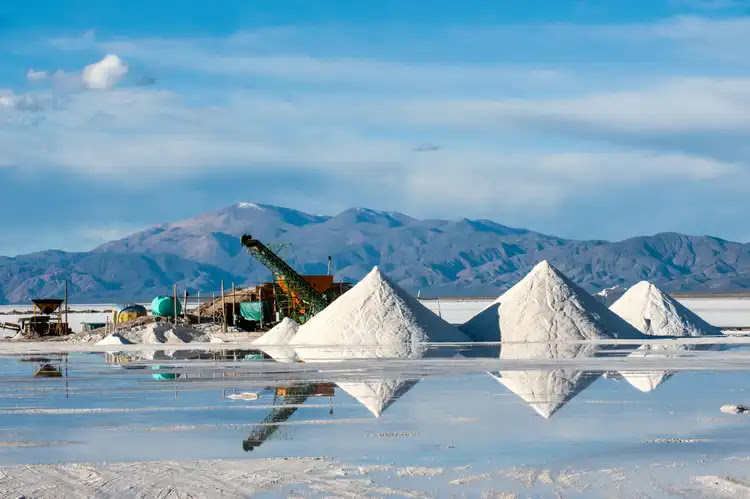
Chile's antitrust regulator FNE has approved the Codelco SQM lithium deal, a pivotal step toward consolidating state influence over one of the world’s most valuable lithium assets. The Codelco SQM lithium deal gives state-owned copper giant Codelco a path to majority control of the Atacama salt flat operations, currently run by lithium producer SQM.

Global Approvals Advance, Final Hurdles Remain in Chile

The deal has already received green lights from regulators in Brazil, South Korea, Japan, Saudi Arabia, and the European Union. Only China’s approval remains pending. However, for full execution, the transaction must also be cleared by Chile’s nuclear energy commission (CCHEN) and the national development agency Corfo, which is conducting community consultations with indigenous stakeholders in the region.

Codelco aims to finalize the joint venture in the second half of 2025. Under the agreement, Codelco will acquire a 51% controlling interest in the Atacama lithium operations beginning in 2031, when SQM’s current mining lease expires.

Atacama: The World’s Richest Lithium Reserve

Chile holds the world’s largest known lithium reserves, according to the U.S. Geological Survey (USGS). Most of these resources lie in the Atacama salt flat, a globally strategic asset for electric vehicle (EV) battery supply chains. The Codelco SQM lithium deal signals Chile’s long-term strategy to exert greater control over critical minerals while maintaining foreign investment through partnerships.

As the global lithium market becomes increasingly geopolitically sensitive, Chile’s model offers a blend of state participation and private sector efficiency—providing stability while advancing national resource policy.

The Metalnomist Commentary

The Codelco SQM lithium deal marks a defining moment in Chile’s shift toward strategic resource nationalism. With the Atacama salt flat under partial state control, Chile positions itself as a central player in the global clean energy transition, balancing national interests with commercial partnerships.

Lithium Market Growth Could Reach 25pc in 2026 as Battery Storage Demand Surges

No comments
Lithium Market Growth Could Reach 25pc in 2026 as Battery Storage Demand Surges
SQM BESS

Lithium market growth could reach 25pc in 2026 as stronger battery energy storage demand combines with steady electric vehicle consumption, according to Chilean producer SQM. The outlook suggests that the lithium market is entering a new demand phase led not only by EVs, but also by large-scale stationary storage.

SQM raised its 2026 production guidance to 260,000t of lithium carbonate equivalent, up from 230,000t in 2025. The company also expects sales to rise by 10pc this year, supported by strong Asia-Pacific demand and full-capacity operations at its Atacama assets.

Lithium market growth is also improving short-term pricing expectations. SQM expects first-quarter sales to rise by more than 15pc from the same period in 2025, which would set a record for January-March sales. The company also expects prices to be substantially higher than the $10/kg level recorded in the fourth quarter.

Battery Storage Demand Changes the Lithium Growth Model

Battery energy storage is becoming a stronger driver of lithium demand. This matters because Bess demand can grow independently of passenger EV cycles, especially as grids add more renewable power and require storage for stability.

SQM’s outlook shows that lithium producers are increasingly watching storage demand alongside EV sales. EV consumption remains steady, but storage growth can absorb additional lithium carbonate equivalent volumes and tighten the market faster than expected.

The company has already secured contracts covering 80pc of its 2026 LCE volumes. That leaves 20pc, or around 52,000t, available for spot market sales. This structure gives SQM exposure to higher prices if demand remains strong, while also protecting much of its volume through contract coverage.

SQM Output Expansion Strengthens Chile’s Lithium Position

SQM produced 233,000t of lithium carbonate equivalent in 2025, up 14pc from the previous year. A record fourth quarter drove the result, with NovaAndino Litio producing 66,000t LCE, up 52pc from the same period in 2024.

NovaAndino Litio is the new name of SQM’s Chilean lithium subsidiary following its merger with Codelco. The rebrand signals the growing importance of Chile’s state-linked lithium strategy and the central role of the Atacama operations in global supply.

SQM’s Australian operations also continued to progress. Its attributable production from the Mt. Holland extraction site reached 156,400t of lithium concentrate in 2025, while the Kwinana hydroxide refinery produced 1,600t LCE during its ramp-up phase. These assets give SQM a broader lithium platform across both brine and hard-rock supply chains.

The Metalnomist Commentary

SQM’s forecast shows that lithium demand is becoming more diversified and less dependent on EVs alone. If battery storage continues to outperform expectations, producers with flexible sales exposure and reliable capacity could regain pricing power faster than the market expected.

Chilean Panel Recommends Scrapping Codelco-SQM Lithium Deal

No comments
Chilean Panel Recommends Scrapping Codelco-SQM Lithium Deal
Codelco-SQM

Codelco-SQM lithium deal under fire amid political and transparency concerns

Chile’s lithium sector faces political turbulence as a congressional commission urges rejection of the Codelco-SQM lithium deal.

The panel, led by Congressman Cristian Tapia, found inconsistencies and transparency issues in the agreement. The proposed joint venture between state-owned Codelco and private miner SQM would take effect after 2030 but lacks clear implementation timelines. Tapia emphasized conflicting projections among key stakeholders.

Codelco’s Maximo Pacheco estimated a five-year delay without the SQM deal, while Eduardo Bitrán cited three years and Economy Minister Nicolás Grau claimed just 18 months. This disparity, according to Tapia, reveals an absence of strategic alignment.

Questions of credibility and indigenous consultation cloud the project

The commission also questioned SQM’s corporate integrity. Tapia referenced past corruption allegations and over $1 billion in unpaid mining taxes. The panel criticized the lack of financial transparency, particularly regarding payments to consulting firm Morgan Stanley, and opposed SQM receiving 50% of future profits under current terms.

Out of 13 commission members, 10 voted against the deal. Concerns were also raised about insufficient consultation with local indigenous communities in San Pedro de Atacama. The agreement must still pass reviews by CCHEN and Corfo before being finalized.

The Metalnomist Commentary

Chile’s ambitions to become a global lithium leader are at odds with political distrust and corporate skepticism. If the Codelco-SQM lithium deal collapses, it may delay national production but could lead to more equitable and transparent industry frameworks. The path to lithium sovereignty requires public trust as much as technical execution.

SQM Defends Lithium Partnership with Codelco Amid Criticism

No comments
SQM

SQM, one of the world’s largest lithium producers, has defended its proposed joint venture with Chile’s state-run copper mining company Codelco, stating that the deal will benefit all stakeholders involved. SQM’s general manager, Ricardo Ramos, addressed the Chilean Senate’s mining and energy committee, emphasizing that the partnership would promote economic and operational continuity for the Atacama lithium operations well beyond 2030.

Ensuring Operational Continuity and Avoiding Disruptions

The public-private joint venture, aimed at running SQM’s lithium operations in the Atacama salt flat, is expected to prevent potential disruptions that might occur if a new private entity were to take over SQM’s operations when its current contract expires in 2030. Ramos argued that allowing Codelco, a government-backed company, to partner with SQM would ensure that both the country and its communities benefit from stable and increased lithium production.

Critics of the deal have expressed concern that a public tender process could have secured more favorable terms for Chile, but SQM and Codelco maintain that the JV agreement, set to finalize in 2025, is the most effective way forward. Under the deal, Codelco will have rights to 33,500 metric tonnes per year of lithium carbonate equivalent (LCE) and will take control of the operation by 2031, with SQM retaining a minority stake.

SQM is also seeking regulatory approval to expand its production capacity to an additional 300,000 tonnes of LCE between 2025 and 2030, supplementing its current output, which represents 20% of global demand. However, the deal faces a legal challenge from Tianqi Lithium, a shareholder in SQM, over the transaction’s approval process.

Chile’s strategy with this joint venture aligns with its broader goal of increasing lithium production while establishing a stronger state presence in the industry.

SQM Forecasts 15% Lithium Sales Growth in 2025 Despite Price Pressures

No comments
SQM

Chilean producer eyes stable pricing and rising demand, targeting 238,000 tonnes in lithium carbonate equivalent sales.

SQM, one of the world’s leading lithium producers, expects a 15% increase in lithium sales volumes in 2025, reaching 238,000 metric tonnes of lithium carbonate equivalent (LCE). The company projects global lithium demand will grow by 17%, slightly lower than in 2024 but still driven by the electric vehicle (EV) and energy storage sectors.

In its Q4 2024 earnings call, Gerardo Illanes, SQM’s vice president of services and finance, highlighted continued demand strength. “We estimate the lithium market grew by 25% in 2024, led by EV adoption in China and growing global energy storage system (ESS) needs,” he said.

SQM Expands Spodumene Sales as Prices Stabilize

SQM also initiated its first spodumene concentrate sales through its International Lithium Division in 2024. However, global oversupply—particularly from Australia, Africa, and Argentina—led to a 41% year-over-year decline in lithium salt prices, reaching $9.20/kg LCE in Q4.

“Prices fell steadily throughout 2024,” Illanes noted, “but that trend softened in Q4, and we now expect prices to remain relatively stable in 2025.” He added that prices may increase in 2026, depending on the demand-supply balance.

Net Loss Reflects Market Correction, Long-Term Outlook Positive

Despite strong sales volume growth, SQM reported a net loss of $404 million for 2024, a sharp reversal from its $2.01 billion profit in 2023. The drop reflects weakened pricing, although SQM maintains an optimistic outlook amid robust global demand forecasts.

With lithium markets stabilizing and demand from EV and ESS segments remaining strong, SQM’s expansion and pricing strategy aim to position the company for a long-term rebound in profitability.

Chile Approves 300,000t Increase in Lithium Output for SQM

No comments
Chile Approves 300,000t Increase in Lithium Output for SQM
Chile SQM

SQM Gains Regulatory Green Light Under Conditional Partnership with Codelco

Chile has authorized a significant lithium production increase for SQM, marking a major step in South America's evolving critical mineral strategy. The Chilean nuclear energy commission (CCHEN) approved an additional 300,000 metric tonnes of lithium production through 2030. This brings SQM’s updated extraction quota to approximately 1.65 million tonnes, or 275,000 tonnes per year, a 22% increase over prior levels.

Output Growth Tied to Efficiency, Not Resource Expansion

To fulfill the Chile lithium production increase, SQM must rely on extraction efficiency and advanced brine processing. CCHEN made clear that the miner cannot extract more brine or use more water than permitted under the 2018 agreement. The company’s ability to implement new processing technologies will be key to meeting its quota without environmental overreach.

Conditional Agreement Hinges on State-Backed Partnership

The increased quota is conditional on finalizing a partnership with Chile’s state-owned Codelco by the end of 2030. Should SQM fail to secure the deal, CCHEN will revoke the 300,000-tonne increase, effectively reducing its lithium rights. Under Chilean law, lithium is classified as a nuclear mineral, requiring miners to partner with state entities. While SQM’s current concession expires in 2030, Albemarle’s U.S.-based operation may continue until 2043 — after which it must also enter a public-private CEOL framework to maintain access.

The Metalnomist Commentary

Chile’s decision to allow a controlled lithium production increase reflects its strategy to balance output growth with national oversight. For SQM, securing the Codelco partnership is not just beneficial—it’s essential for long-term survival in Chile’s lithium sector.

Namibia Approves SQM’s $40M Lithium Investment in Lithium Ridge Project

No comments
Sociedad Química y Minera(SQM)

Chile’s SQM Joins Andrada to Accelerate Namibia’s Critical Mineral Development

Namibia’s Competition Commission (NaCC) has officially approved the strategic partnership between Chile’s SQM (Sociedad Química y Minera de Chile) and Namibia-based Andrada Mining, granting the final green light for the development of the Lithium Ridge project. This regulatory clearance paves the way for SQM to acquire up to a 50% stake in the project by fully funding up to $40 million in exploration activities and the completion of a definitive feasibility study (DFS).

Lithium Ridge Positioned as Key Regional Critical Minerals Asset

Located in Namibia’s Erongo region, Lithium Ridge contains pegmatites rich in lithium, tin, and tantalum, all of which are essential for electric vehicles (EVs), battery energy storage systems (BESS), and advanced electronics. With surging global demand for these materials, the project is positioned to become a strategic asset in Africa’s growing critical minerals economy.

The collaboration gives SQM access to high-grade mineral assets outside its traditional Latin American base, while Andrada gains global expertise and the financial backing necessary to scale development. Together, the companies aim to unlock the full value of Lithium Ridge and establish Namibia as a stable and significant supplier in the battery supply chain.

Namibia’s Role Grows in the Global Energy Transition

This deal comes as governments and industries increasingly look to diversify raw material sourcing amid geopolitical uncertainty. SQM’s planned investment and operational involvement reflect both confidence in Namibia’s regulatory framework and recognition of the country’s vast untapped mineral potential.

For Andrada Mining, the partnership is also a validation of its long-term strategy to lead in Namibian critical raw materials development. As SQM and Andrada move forward, the Lithium Ridge project is expected to deliver regional economic benefits while supplying global markets with responsibly sourced lithium and associated metals.

Codelco Lithium Ascotan Move Expands Chile’s Strategic Control Over New Brine Assets

No comments
Codelco Lithium Ascotan Move Expands Chile’s Strategic Control Over New Brine Assets
Codelco Lithium

Codelco lithium Ascotan plans mark another important step in Chile’s effort to keep stronger state influence over future lithium supply. Codelco and Quiborax formed a joint venture called Minera Ascotan and applied for a special lithium operating contract. That contract is required for lithium extraction in Chile. As a result, Codelco lithium Ascotan plans now sit at the center of Chile lithium strategy.

This move matters because Ascotan is not a minor asset. The salt flat is described as the third largest lithium reserve in Chile. That gives the project long-term strategic value inside one of the world’s most important lithium jurisdictions. Therefore, Codelco lithium Ascotan plans strengthen the state miner’s growing role in Chile’s next lithium phase.

The structure of the deal also reveals the political logic. Chile’s current framework requires public-private partnerships so the state can retain control while private capital supports development. That model has been in place since 2023 under the CEOL-based lithium strategy. Consequently, Chile lithium public-private partnership is now the main route for new project access.

Ascotan Salt Flat Adds to Codelco’s Expanding Lithium Portfolio

Ascotan salt flat adds another major asset to Codelco’s widening lithium position. The state miner is already set to become the majority owner in SQM’s Atacama operations from 2031. It is also advancing its partnership with Rio Tinto at Maricunga. As a result, Codelco lithium Ascotan plans are part of a broader portfolio build, not a standalone move.

That portfolio strategy matters because Chile wants more than royalty exposure from lithium. It wants stronger long-term participation in ownership, production, and strategic decision-making. Codelco is clearly becoming the state’s main operating vehicle for that ambition. Therefore, Ascotan salt flat could become another pillar in Chile’s effort to shape its own lithium future more directly.

The Quiborax partnership appears tactical as well as commercial. The article suggests Codelco likely chose a non-mining partner to secure the CEOL process more quickly. That reflects rising urgency ahead of a political transition. Meanwhile, it shows how project structure can be shaped by policy timing as much as geology.

Chile Lithium Strategy Faces a Political Test as New Leadership Nears

Chile lithium strategy now faces a more uncertain political backdrop. The article notes that incoming president Jose Antonio Kast has shown willingness to change the country’s lithium mining policy. He is scheduled to take office on 11 March. As a result, Codelco lithium Ascotan plans may also be an effort to lock in strategic progress before policy direction potentially changes.

The future ownership structure also remains important. Quiborax currently holds 66pc of the joint venture, but both initial partners are expected to make room for a new majority owner once the CEOL is granted. That new partner would be responsible for developing the project. Therefore, Chile lithium public-private partnership will remain central even if Codelco keeps strategic influence.

This makes the Ascotan move significant for the wider market. It shows Chile is still pushing forward with a state-guided lithium model, even as political uncertainty grows. If Codelco continues adding assets at this pace, Boric’s vision of making it Chile’s leading lithium producer could become more credible than many expected.

The Metalnomist Commentary

This move matters because it shows Chile is still trying to build lithium control through structure, not just ownership slogans. Codelco is becoming the state’s main instrument for that strategy. If Ascotan advances, Chile may prove that public-private lithium development can still move forward even in a changing political environment.

Chile lithium contract with Enami anchors new national strategy

No comments
Chile lithium contract with Enami anchors new national strategy
Chile lithium mining

Chile lithium contract with Enami marks a major step in the country’s new lithium strategy. The agreement grants Enami rights over the Altoandinos salt flat, Chile’s largest undeveloped lithium deposit. It also establishes the first special lithium operation contract, known locally as a Ceol, under Boric’s strategy.

Altoandinos salt flat and Chile’s lithium strategy

The Chile lithium contract with Enami runs until 2060 and targets production starting around 2032–2034. Enami and partner Rio Tinto plan to develop the Aguilar, Grande and La Isla salt flats. The state miner reports 15mn tonnes of lithium carbonate equivalent, significantly above Chile’s published resource base. As a result, Altoandinos could become a flagship asset within Chile’s broader national lithium strategy.

Chile lithium contract with Enami operates within a strict strategic resource and nuclear oversight framework. Laws from the 1970s and 1980s classify lithium as strategic and limit purely private concessions. Therefore, Ceols must pass review by the nuclear energy commission and other state institutions before development. This framework aims to capture more value for Chile while controlling environmental and social risks in the Atacama.

Global EV supply chains and Chile’s lithium leadership

Chile remains the world’s second largest lithium producer, anchored by SQM and Albemarle in the Atacama salt flat. However, the Chile lithium contract with Enami shows how future growth will rely more on state led partnerships. The Altoandinos project can diversify production beyond the core Atacama operations and support long term export revenues. Meanwhile, global battery and EV manufacturers will view this contract as an important new source of high grade brine.

Competition for secure lithium supply will intensify as more countries classify the metal as strategic. Therefore, Chile lithium contract with Enami sends a strong signal to investors about policy direction and project pipeline. International partners must understand the state’s central role, longer development timelines and heightened community expectations. As a result, any Altoandinos timetable slippage could reshape global supply expectations for EV batteries and energy storage.

The Metalnomist Commentary

Chile’s new contracting model blends resource nationalism with pragmatic partnerships across the lithium value chain. Investors that align with this approach and accept higher state involvement may gain durable exposure to premium brine assets. Yet they must also plan for stricter governance, evolving royalty regimes and closer scrutiny from global downstream customers.

Codelco Copper Performance Faces Review Under Chile’s Kast Administration

No comments
Codelco Copper Performance Faces Review Under Chile’s Kast Administration
Codelco

Codelco copper performance will come under tougher scrutiny as Chile’s new administration prepares to review the state-controlled miner’s finances, management and operational execution. Economy and mining minister Daniel Mas said the government will take a “very critical look” at Codelco to ensure it remains a major national company.

Codelco copper performance matters because the company remains one of the world’s largest copper producers, with direct output of 1.3mn t in 2025 and 1.4mn t including its share in non-operated mines. Any operational weakness at Codelco has direct implications for Chile’s copper supply, fiscal revenue and global refined copper expectations.

Codelco copper performance has also become a political issue because the company faces rising debt, safety concerns and cost overruns at major mine-life extension projects. The shareholder review scheduled for 20 April will focus on areas requiring concrete measures to improve performance.

Debt, Cost Overruns and Mine Projects Drive Government Scrutiny

The Kast administration’s review will examine Codelco’s financial position, management quality, safety record and project execution. Mas pointed to cost overruns tied to the renovation of Codelco’s corporate offices in Santiago and major investments at Rajo Inca and Chuquicamata underground.

These projects are strategically important because they support mine-life extensions at core Chilean copper assets. However, overruns can pressure capital discipline at a time when copper producers already face higher costs, lower ore grades and more complex underground development.

Mas also highlighted Codelco’s debt burden. The company took on $8.7bn in debt to help finance around $7bn in contributions to the state between 2022 and 2025, creating tension between its role as a national revenue source and its need to reinvest in production stability.

Lithium Strategy Review Adds Another Layer to Codelco’s Role

The government also plans to review Chile’s national lithium strategy inherited from the previous administration. However, Mas said the Codelco-SQM lithium venture will have security to operate if all legal stages have been completed.

Chile’s comptroller general approved the joint venture in December 2025, which was regarded as the final condition for the deal. The transaction gives Codelco 50% plus one share in Nova Lithium, the joint venture with SQM.

Mas argued that Codelco’s 2025 profit of $2.4bn was not a pure copper result, because only $388mn came from copper sales. The rest came mainly from the fair value of the SQM-linked lithium acquisition, adding to debate over how Codelco’s performance should be measured.

The Metalnomist Commentary

Chile’s review of Codelco shows that national copper champions face rising pressure to prove operational discipline, not only resource ownership. The bigger issue is whether Codelco can fund copper renewal, manage lithium expansion and still deliver fiscal value to the state.


China's Lithium Prices Fall to 4-Year Low Amid Oversupply and Trade Tensions

No comments
China's Lithium Prices Fall to 4-Year Low Amid Oversupply and Trade Tensions
China's Lithium

Oversupply and weaker export demand push lithium carbonate prices to multi-year lows in China

Chinese Lithium Carbonate Prices Plunge on Oversupply

Chinese lithium carbonate prices have dropped to a four-year low due to rising supply and weaker global demand. Prices started declining after CATL resumed its Jianxiawo lithium lepidolite concentrate operation in early February 2025. This facility contributes 6% of China’s total LCE capacity, but the mine itself remains offline as CATL sources ore locally.

At the same time, China’s lithium carbonate imports surged by 48% year-on-year to 32,450 tonnes in January–February 2025. Chile accounted for 62% of these imports, followed by Argentina at 34% and South Korea at 3.2%. Chilean producers like SQM and US-based Albemarle are ramping up output, further intensifying supply pressure.

Demand Weakens Under Policy Shifts and Tariffs

Demand for lithium has softened after China revoked energy storage installation mandates for new energy projects in February 2025. This particularly affected lithium-iron-phosphate batteries, which rely heavily on lithium carbonate. Additionally, US import tariffs on Chinese lithium-ion batteries will hit 48.4% by January 2026, impacting export potential.

Despite a 59% year-on-year surge in lithium-ion battery exports in early 2025, much of it was front-loaded. Exporters rushed to ship products before anticipated US tariff hikes, with 26% of shipments headed to the US. However, market participants believe Chinese battery exports may decline sharply in the coming months.

Market Outlook and Price Forecast

As global supply continues to rise and demand remains subdued, prices are expected to dip further. Some analysts predict prices may hover around Yn70,000/tonne ex-works, unless a major inventory restock occurs. Producers are closely monitoring both tariff developments and restocking trends among downstream battery manufacturers.

The Metalnomist Commentary

China’s lithium market is entering a new phase where global trade dynamics now rival domestic supply in pricing power. With inventory levels rising and policy uncertainty in key export markets, stakeholders must recalibrate demand forecasts and sourcing strategies.

Andrada Boosts Tantalum Production, Expands Lithium Operations

No comments
Andrada

Namibia-based Andrada Mining has made significant strides in its tantalum and lithium production efforts. On 26 September, the company reported an increase in tantalum output and the commencement of petalite concentrate sales, which are part of its broader strategy to expand lithium production. At the Uis mine in west-central Namibia, Andrada has installed a tantalum circuit and ramped up production, shipping 15 tons of tantalum concentrate with a grade of 10.8% tantalum pentoxide (Ta2O5) to AfriMet, a commodity trading firm. This is an improvement from the 9 tons produced in the previous quarter, under a one-year offtake agreement set to expire on 1 January 2025.

Expanding Lithium Opportunities

Alongside tantalum production, Andrada has been advancing its lithium operations by producing high-purity petalite concentrate as part of an off-site pilot program. This concentrate will undergo further testing to explore its potential for conversion into lithium carbonate and lithium hydroxide. Andrada has already made a one-off sale of 5 tons of petalite concentrate, grading over 4% Li₂O, to a ceramic producer.

In a major strategic move, Andrada has partnered with Chilean lithium giant SQM to develop the Lithium Ridge asset in Namibia. The partnership allows SQM to fund exploration and a feasibility study for the project, while Andrada retains operational control during this period.

Andrada also reported stable tin production during the three months ending in August, producing 239 tons of tin.

Chile's SQM to supply lithium to Hyundai and Kia

No comments
HYUNDAI MOTOR GROUP

Chilean lithium producer SQM has agreed to supply lithium to Kia and Hyundai Motors to support their electric vehicle production efforts.

According to SQM, its Salar subsidiary will supply a portion of lithium hydroxide to the two South Korean automakers under a long-term agreement. The company did not disclose further details of the contract.

Kia and Hyundai did not immediately respond to requests for comment.

In the first quarter, SQM reported production of 43,500 metric tons of lithium and derivatives, a significant increase from the 32,300 metric tons produced in the same period last year. The company also revised its 2024 sales forecast to 200,000 metric tons, up from a previous estimate of 178,500-187,000 metric tons.

Chile’s Value-Added Lithium Strategy Faces Setbacks Despite New Tender

No comments
Chile’s Value-Added Lithium Strategy Faces Setbacks Despite New Tender
Albemarle

Preferential pricing fails to attract long-term downstream lithium investments

Chile's value-added lithium strategy continues to struggle, as the country launches a new tender targeting downstream lithium manufacturing. Despite offering preferential prices through U.S.-based Albemarle’s supply, past efforts to anchor lithium battery production in Chile have faltered due to investor withdrawal and bureaucratic hurdles.

Chinese companies exit amid weak market and contract uncertainty

On 30 April, Chile’s economic development agency Corfo issued a call for proposals to manufacture lithium-based products locally. The offer involves 9,599 tonnes/year of lithium carbonate equivalent (LCE) from Albemarle’s operations in the Atacama region, with volumes set to rise annually until the lease ends in 2043. However, Chinese firms BYD and Yongqing Technology—winners of a 2022 tender—recently exited the program, citing weak global lithium prices and the short remaining duration of SQM’s contract, which ends in 2030.


Bureaucracy and pricing formula disputes hinder industrialization

Government delays in allocating fiscal land for facilities and unresolved pricing methodology disputes have consistently derailed investment plans. Chile also failed to advance a 2018 initiative when three selected companies abandoned their projects due to disagreements over the preferential pricing mechanism. These repeated breakdowns raise concerns about the long-term viability of Chile's value-added lithium strategy.

The Metalnomist Commentary

Chile’s ambitions to move up the lithium value chain face structural and market barriers. Without streamlining regulatory procedures and securing long-term offtake confidence, the strategy risks remaining stuck at the raw material stage—even as global EV demand grows.

Chile Leads Global Lithium and Copper Exports in 2024

No comments
Chile Leads Global Lithium and Copper Exports in 2024
Chile Copper Mining

Copper exports strengthen Chile’s global leadership

Chile maintained its position as the world’s leading copper exporter in 2024, driving both value and volume. The Chile lithium and copper exports reached over $50bn, accounting for 15pc of global copper trade, according to Subrei. The country produced 5.3mn t of copper, or 23pc of global output, with state-owned Codelco contributing 1.44mn t. Chile dominated shipments of copper concentrates and cathodes, with the EU sourcing 39pc of its cathode imports from Chile and India receiving a third of its concentrates from Chilean producers.

Lithium exports secure global dominance

Although second to Australia in lithium production, Chile led the world in lithium carbonate equivalent (LCE) exports. The Chile lithium and copper exports accounted for 78pc of global LCE trade, worth $2.6bn. Chile produced 285,000t of LCE in 2024, with SQM maintaining exclusive production and sales of lithium hydroxide domestically. Major markets for Chile’s LCE included China, the US, the EU and Japan, while lithium hydroxide exports were focused on Brazil and the US.

Chile also led in molybdenum, securing the top spot in exports of molybdenum oxides and hydroxides with a 40pc share, and roasted oxides with 33pc of global trade. It ranked fourth globally in ferro-molybdenum exports, reinforcing its role as a critical supplier of strategic minerals.

The Metalnomist Commentary

Chile’s dual dominance in lithium and copper exports highlights its pivotal role in global supply chains for energy transition metals. However, this dependence on a narrow set of commodities exposes the country to price volatility and geopolitical risk. Strategic investment in downstream processing and value-added production could strengthen Chile’s industrial resilience.

Chile Lithium Exports Remain Flat in 1Q Despite Asian Rebound

No comments
Chile Lithium Mining
Chile Lithium

European Slowdown Offsets March Recovery

Chile’s lithium exports stayed flat in the first quarter of 2025, totaling 67,200 metric tonnes of lithium salts. This matched the previous quarter, though it was 11.2% higher than the same period in 2024.

The stagnation stemmed from weak February volumes caused by soft demand in Europe and oversupply in China. LCE exports in February plunged 25% below the six-month average to 16,700t amid China’s ample inventories.

However, March brought a rebound as Asian buying resumed. Chile exported 23,000t in March alone, up 37% from February levels.

Global Trade Dynamics Reshape Demand Landscape

Belgium, once a key buyer, cut its imports by 67% year-on-year. This followed Umicore’s decision to halve cathode output in 2025 due to a 30% drop in battery material sales.

Meanwhile, China reclaimed its role as the dominant importer, accounting for 72% of Chilean lithium exports. South Korea also boosted its intake by 21%, importing 11,400t in the quarter — partly filling the gap left by Europe.

With US tariffs on Chinese battery packs nearing 200%, South Korea and Japan may gain favor in the US supply chain. This shift could raise their demand for Chilean lithium in coming months.

Uncertainty Clouds Outlook Despite Rising Production Targets

Chile aims to produce 305,000t of LCE in 2025, up 16% from last year, according to Cochilco. Yet, current export volumes suggest a 36,000t shortfall unless demand surges later this year.

The evolving global trade policy — especially under the Trump administration — may further disrupt Chile’s lithium trade. Producers face the challenge of aligning rising production with increasingly fragmented global demand.

The Metalnomist Commentary

The flat start to 2025 shows how vulnerable Chile’s lithium sector is to global policy shifts and EV market volatility. While Asia provides a buffer, Europe’s retreat and US tariffs create strategic uncertainty. Producers like SQM and Albemarle must now navigate not just markets — but geopolitics.

Andrada Tantalum Concentrate Output Doubles in 2024/25

No comments
Andrada Tantalum Concentrate Output Doubles in 2024/25
Andrada Tantalum

Andrada Mining's tantalum concentrate production rose by 100% year-on-year, marking a major boost in Namibia’s critical mineral output.

Tantalum Production Surges on Reprocessing Gains

Namibia-based Andrada Mining doubled its tantalum concentrate output to 50.6 tonnes in its fiscal year ending 2024/25. Contained tantalum reached 5.4 tonnes, with recovery improving to 4.5% through the reprocessing of previously produced concentrate. The sharp increase signals Andrada’s maturing capacity in extracting strategic metals from its Uis mine operations.

Meanwhile, Andrada’s 12-month supply deal with AfriMet ended, and the company is now evaluating new long-term offtake agreements.

Lithium and Tin Projects Expand Global Reach

Andrada’s tin concentrate production increased modestly by 2.2% year-on-year, totaling 1,507 tonnes. In parallel, its pilot lithium facility produced 128 tonnes of petalite, expanding its footprint in battery-grade minerals. In February, the company shipped its first lithium bulk sample to Japan, marking progress in global qualification efforts.

Also in February, Andrada received clearance from the Namibian Competition Commission for a strategic lithium partnership with SQM. This deal enables joint development of the Ridge Asset, which contains lithium-rich pegmatites also bearing tin and tantalum.

The Metalnomist Commentary

Andrada’s evolution from a tin miner to a multi-mineral critical metals producer reflects Namibia’s rising role in global mineral diversification. Its push into lithium and tantalum, backed by partners like SQM, positions it well in the global clean energy supply chain.

Codelco Secures $666mn Copper Financing Deal with JBIC

No comments
Codelco Secures $666mn Copper Financing Deal with JBIC
Chilean Codelco

Codelco has signed a $666mn copper financing agreement to strengthen supply ties between Chile and Japan.

JBIC Loan Reinforces Chile-Japan Copper Partnership

Chilean copper major Codelco secured a $466mn loan from the Japan Bank for International Cooperation (JBIC). An additional $200mn was co-financed by an undisclosed commercial bank, bringing the deal total to $666mn.

This move follows Codelco’s announcement of 2024 copper production reaching 1.44mn metric tonnes, reclaiming its spot as the world’s top copper producer. The funding aims to guarantee a stable supply of Chilean copper concentrate to Japan, according to Codelco.

JBIC Governor Hayashi Nobumitsu emphasized the strategic importance of the deal. He noted it could pave the way for future investment in critical minerals such as lithium.

Broader Mineral Ties Strengthen in Lithium Triangle

In 2023, Codelco formed a joint venture with SQM to produce 300,000 t/yr of lithium carbonate equivalent (LCE) by 2030. This lithium expansion reinforces Japan's interest in the Lithium Triangle, which includes Argentina, Bolivia, and Chile.

Japan’s Toyota Tsusho Group already holds a 25% stake in the Salar de Olaroz lithium mine in Argentina, showing a growing trend of resource-linked partnerships in South America.

These developments signal Japan’s intention to secure long-term access to copper and battery metals, essential for its industrial and clean energy ambitions.

The Metalnomist Commentary

Codelco's financing agreement with JBIC signals more than a capital injection. It reflects a broader geopolitical alignment between Chile’s mineral sector and Japan’s energy security strategy. As global demand for both copper and lithium intensifies, strategic funding deals like this will shape the future of critical mineral trade.

Covalent Kwinana lithium hydroxide output begins as refinery enters production phase

No comments
Covalent Kwinana lithium hydroxide output begins as refinery enters production phase
Covalent Lithium

Commissioning shifts to production at Australia’s third hydroxide refinery

Covalent Kwinana lithium hydroxide output has started, marking a key commissioning milestone. The 50,000 t/yr refinery has moved into production. The company is preparing commercial samples for customer qualification. The plant can support about one million EV batteries yearly. That estimate assumes average 50kWh battery packs. Covalent Kwinana lithium hydroxide output adds new supply in Western Australia.

Vertical integration supports ramp, but expansion remains uncertain

Covalent Kwinana lithium hydroxide output draws feed from Mount Holland. The mine and concentrator supply the Kwinana refinery. Covalent is a Wesfarmers and SQM joint venture. The site follows IGO-Tianqi Kwinana and Albemarle-Mineral Resources Kemerton. Both plants started in May 2022 during softer prices. Analysts questioned local processing expertise earlier this year. Wesfarmers said it was cautiously optimistic in February. Losses persist, including a A$24mn deficit last August. Expansion plans to 100,000 t/yr remain on hold. The concentrate expansion of 760,000 t/yr is also pending guidance. Therefore, capital discipline shapes near-term strategy.

Market dynamics will influence the ramp profile. Qualification timelines can delay commercial volumes. However, vertical integration should improve cost control and logistics. Reliability and product consistency will determine contract traction. Meanwhile, Australian hydroxide capacity is consolidating. Kwinana’s ecosystem now hosts three operating refineries. Covalent Kwinana lithium hydroxide output strengthens regional battery material clusters.

The Metalnomist Commentary

Covalent’s start-up is strategically important for non-China hydroxide supply. Yet ramp execution and qualification remain the critical hurdles. Watch unit costs, recovery rates, and offtake depth through 2026.