Showing posts sorted by relevance for query US-Chile. Sort by date Show all posts

US Chile Critical Minerals Talks Signal New Supply Chain Reset

No comments
US Chile Critical Minerals Talks Signal New Supply Chain Reset
US Chile Critical Minerals

US Chile critical minerals cooperation is moving onto a formal diplomatic track after the two countries signed a joint declaration to begin discussions on critical minerals and rare earths. The agreement was signed in Santiago during a meeting between Chilean president José Antonio Kast and US deputy secretary of state Christopher Landau.

US Chile critical minerals talks will focus on mechanisms to strengthen supply chains for strategic raw materials. Chile’s foreign affairs ministry said technical teams will examine projects of interest, scrap management for critical minerals and rare earths, and public-private financing mechanisms.

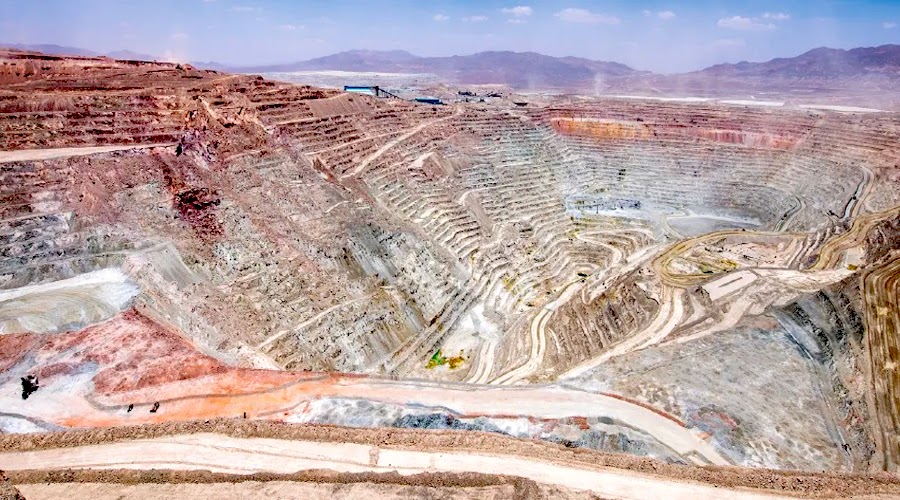
US Chile critical minerals cooperation carries direct industrial importance because Chile is one of the world’s most important resource economies. The country is the largest global copper producer and the third-largest lithium producer, while its large lithium reserves remain underdeveloped because of long-standing legal restrictions.

Chile’s Copper and Lithium Base Gives the Talks Strategic Weight

Chile’s mineral position gives the US a clear reason to rebuild cooperation. Copper is central to power grids, electrification, data centers, renewable energy, industrial equipment, and defense systems. Lithium remains essential for batteries, energy storage, and electric vehicles.

The new talks also include rare earths and scrap management. That broader scope suggests the discussions are not limited to mining projects. They may also cover recycling, secondary raw materials, processing routes, and financing structures that can support a more resilient supply chain.

Chile’s untapped lithium potential is especially important. The country has the world’s largest lithium reserves, but development has been constrained by legacy laws and policy limits. If cooperation creates more investable project structures, Chile could become a more active pillar in allied battery material supply.

US Policy Shift Reopens a Critical Minerals Channel With Chile

The declaration also marks a reset in US-Chile relations after a tense period under former president Gabriel Boric. Washington had moved ahead with critical minerals partnerships with other allies earlier this year, but Chile was not included in the initial initiative.

That omission made Chile’s absence notable. Any serious Western critical minerals strategy is difficult to build without Chile because of its copper and lithium position. The new declaration therefore signals a practical return to resource diplomacy.

For Chile, the discussions could open access to financing, technology, and downstream partnerships. For the US, they offer a pathway to reduce exposure to concentrated supply chains and secure materials needed for industrial competitiveness, energy security, and defense resilience.

The Metalnomist Commentary

The US cannot build a credible critical minerals strategy without Chile. The key question is whether this declaration becomes a real project-financing framework or remains another diplomatic signal without industrial execution.

US-Chile critical minerals talks kick off with new joint declaration

No comments
US-Chile critical minerals talks kick off with new joint declaration
US-Chile

US-Chile critical minerals talks started in Santiago on President Jose Antonio Kast’s first day in office. US-Chile critical minerals talks aim to build stronger supply chains for critical minerals and rare earths. The two governments signed a joint declaration to launch technical work quickly.

The declaration sets a practical agenda for project selection and financing tools. Technical teams will identify “projects of interest” across critical minerals and rare earths. They will also examine scrap management and recycling pathways for strategic materials.

US-Chile critical minerals talks also reflect a reset after recent diplomatic friction. Relations cooled under former president Gabriel Boric, and visa revocations sharpened tensions. However, the new talks signal a shared focus on security and commercial stability.

What the discussions target for supply chains, scrap, and financing

The agenda prioritizes mechanisms that de-risk investment and shorten development timelines. Officials will explore public-private financing structures suited to large industrial projects. Therefore, policy design will matter as much as geology.

Scrap and end-of-life material flows also move into the center of the framework. Better tracking and processing can unlock domestic feedstock for rare earths. Meanwhile, scrap rules can reduce exposure to export controls and price shocks.

Why copper and lithium shape the strategic logic

Chile’s copper scale makes it essential to grid expansion and data center buildouts. Copper remains the most direct metal input to electrification infrastructure. As a result, supply chain cooperation can translate into real industrial resilience.

Lithium adds a second pillar to the relationship, even before new laws unlock full reserves. Chile already sits near the top of global lithium production. However, legacy restrictions have limited how fast untapped resources can convert into output.

The Metalnomist Commentary

This framework looks designed to turn diplomacy into bankable projects. However, execution will hinge on permitting speed and credible recycling economics. The winners will secure long-term offtake and transparent investment terms.

Aclara HREE separation plant anchors US heavy rare earth strategy

No comments
Aclara HREE separation plant anchors US heavy rare earth strategy
Aclara

Aclara HREE separation plant plans to reshape the US heavy rare earths supply chain by targeting dysprosium and terbium for EVs. The Aclara HREE separation plant in Louisiana will draw feed from ionic clay deposits in Brazil and Chile. As a result, the Aclara HREE separation plant positions the US to cut reliance on Chinese-controlled heavy rare earths.

Louisiana HREE hub to cover most US dysprosium and terbium demand

Aclara will invest $277mn in a Louisiana heavy rare earths separation facility focused on dysprosium, terbium and NdPr oxides. The company targets completion in 2027 and aims to supply more than 75pc of US dysprosium and terbium demand for EVs by 2028. This volume would materially shift US sourcing patterns for critical magnet materials.

The project benefits from approximately $46.4mn in state tax incentives and grants, underlining Louisiana’s push to attract strategic materials investments. Meanwhile, Aclara plans to integrate the separation plant with a future metals and alloys facility on the same site. This integrated footprint could support a mine-to-magnet pathway once downstream alloying and magnet projects materialise.

Ionic clay deposits in Brazil and Chile underpin feedstock security

Aclara will supply the Louisiana plant with feed from two ionic clay deposits located in Brazil and Chile. These deposits are expected to be operational in 2028, slightly lagging the HREE plant start-up. The company targets annual production of about 200t of dysprosium, 30t of terbium and 1,400t of separated neodymium-praseodymium oxide.

In Brazil, Aclara has already started de-risking its flowsheet through pilot operations. The Carina Project pilot plant in Goiania began running in April and produced its first rare earths concentrate in June. The firm also expects up to $5mn in support from the US International Development Finance Corporation, signalling strong strategic interest from Washington. Together, the Louisiana plant and South American deposits outline a multi-node HREE supply chain geared to long-term EV and magnet demand.

US HREE separation plant sits at the heart of magnet supply realignment

Aclara’s US HREE separation plant joins a growing list of projects aimed at diversifying global heavy rare earths supply. However, few projects are configured to supply such a large share of the domestic dysprosium and terbium market. If timelines hold, Louisiana could become a cornerstone hub feeding US and allied magnet manufacturers before the end of the decade.

At the same time, building metals and alloys capacity on-site raises the prospect of deeper value capture within US borders. Therefore, the project’s success will be judged not only on tonnage but also on how effectively it links to magnet makers and OEMs. For automakers and defense contractors, locking in offtake from a US-based HREE separation plant may become a strategic priority.

The Metalnomist Commentary

Aclara’s HREE separation investment in Louisiana illustrates how quickly the heavy rare earth landscape is evolving under geopolitical pressure. The combination of ionic clay feed from Brazil and Chile with US separation capacity provides a diversified platform that investors and OEMs will watch closely. If execution matches ambition, this project could become a reference model for trans-regional critical mineral partnerships anchored in US downstream processing.

Chile Leads Global Lithium and Copper Exports in 2024

No comments
Chile Leads Global Lithium and Copper Exports in 2024
Chile Copper Mining

Copper exports strengthen Chile’s global leadership

Chile maintained its position as the world’s leading copper exporter in 2024, driving both value and volume. The Chile lithium and copper exports reached over $50bn, accounting for 15pc of global copper trade, according to Subrei. The country produced 5.3mn t of copper, or 23pc of global output, with state-owned Codelco contributing 1.44mn t. Chile dominated shipments of copper concentrates and cathodes, with the EU sourcing 39pc of its cathode imports from Chile and India receiving a third of its concentrates from Chilean producers.

Lithium exports secure global dominance

Although second to Australia in lithium production, Chile led the world in lithium carbonate equivalent (LCE) exports. The Chile lithium and copper exports accounted for 78pc of global LCE trade, worth $2.6bn. Chile produced 285,000t of LCE in 2024, with SQM maintaining exclusive production and sales of lithium hydroxide domestically. Major markets for Chile’s LCE included China, the US, the EU and Japan, while lithium hydroxide exports were focused on Brazil and the US.

Chile also led in molybdenum, securing the top spot in exports of molybdenum oxides and hydroxides with a 40pc share, and roasted oxides with 33pc of global trade. It ranked fourth globally in ferro-molybdenum exports, reinforcing its role as a critical supplier of strategic minerals.

The Metalnomist Commentary

Chile’s dual dominance in lithium and copper exports highlights its pivotal role in global supply chains for energy transition metals. However, this dependence on a narrow set of commodities exposes the country to price volatility and geopolitical risk. Strategic investment in downstream processing and value-added production could strengthen Chile’s industrial resilience.

US-China critical minerals trade masks big strategic risks

No comments
US-China critical minerals trade masks big strategic risks
US-China Critical minerals

The US-China critical minerals trade looks small in dollar terms but carries outsized strategic risks for key industries. The US-China critical minerals trade was worth just $2bn in 2024, only 3pc of US critical mineral imports. However, the US-China critical minerals trade underpins defence, high-tech manufacturing and energy systems that generate trillions in economic value.

Small trade volumes, large exposure to China

Macquarie research shows US critical mineral imports totalled $65bn in 2024 under the new 60-mineral list. Bulk materials like aluminium, copper and PGMs dominate the import bill and come mainly from partners such as Canada and Chile. By contrast, China supplied only $2bn, far below Canada’s $21bn or Chile’s $6.6bn.

However, China’s leverage rests in concentration, not value. It controls about 70pc of global rare earth mining and 90pc of processing. As a result, even small tonnages of Chinese exports can be mission-critical for US defence and advanced manufacturing. Any targeted export controls could therefore disrupt high-value supply chains well beyond the trade numbers.

Export controls could hit US GDP and strategic sectors

Macquarie estimates Chinese export controls on select minerals could each cut US GDP by more than $1bn in a year. Samarium restrictions show the highest impact, at an estimated $4.5bn loss, because of its critical role in defence. Meanwhile, curbs on lutetium could shave $2.1bn from GDP, mainly affecting refineries and semiconductor producers.

Controls on terbium, dysprosium and gallium would similarly reverberate across magnets, EV motors, wind turbines and high-frequency electronics. Therefore the economic risk from the US-China critical minerals trade lies in concentrated choke points, not headline trade flows. That reality is now shaping US industrial policy, stockpiling strategies and onshoring of processing capacity.

The Metalnomist Commentary

This analysis reinforces why Washington treats rare earths and related metals as strategic assets, not simple commodities. Even modest Chinese export controls could ripple through defence, semiconductor and energy transition value chains. Expect continued moves by the US and allies to diversify sourcing, build domestic refining and expand recycling to reduce this asymmetric exposure.

Chile Lithium Exports Remain Flat in 1Q Despite Asian Rebound

No comments
Chile Lithium Mining
Chile Lithium

European Slowdown Offsets March Recovery

Chile’s lithium exports stayed flat in the first quarter of 2025, totaling 67,200 metric tonnes of lithium salts. This matched the previous quarter, though it was 11.2% higher than the same period in 2024.

The stagnation stemmed from weak February volumes caused by soft demand in Europe and oversupply in China. LCE exports in February plunged 25% below the six-month average to 16,700t amid China’s ample inventories.

However, March brought a rebound as Asian buying resumed. Chile exported 23,000t in March alone, up 37% from February levels.

Global Trade Dynamics Reshape Demand Landscape

Belgium, once a key buyer, cut its imports by 67% year-on-year. This followed Umicore’s decision to halve cathode output in 2025 due to a 30% drop in battery material sales.

Meanwhile, China reclaimed its role as the dominant importer, accounting for 72% of Chilean lithium exports. South Korea also boosted its intake by 21%, importing 11,400t in the quarter — partly filling the gap left by Europe.

With US tariffs on Chinese battery packs nearing 200%, South Korea and Japan may gain favor in the US supply chain. This shift could raise their demand for Chilean lithium in coming months.

Uncertainty Clouds Outlook Despite Rising Production Targets

Chile aims to produce 305,000t of LCE in 2025, up 16% from last year, according to Cochilco. Yet, current export volumes suggest a 36,000t shortfall unless demand surges later this year.

The evolving global trade policy — especially under the Trump administration — may further disrupt Chile’s lithium trade. Producers face the challenge of aligning rising production with increasingly fragmented global demand.

The Metalnomist Commentary

The flat start to 2025 shows how vulnerable Chile’s lithium sector is to global policy shifts and EV market volatility. While Asia provides a buffer, Europe’s retreat and US tariffs create strategic uncertainty. Producers like SQM and Albemarle must now navigate not just markets — but geopolitics.

US Tariffs May Spur Argentina Lithium Salts Production

No comments
US Tariffs May Spur Argentina Lithium Salts Production
US Tariffs

Tariff Exemptions Favor Lithium Raw Materials, Not Finished Batteries

The US has exempted lithium carbonate and lithium hydroxide from its newly announced tariffs, creating a possible boon for Argentina's lithium sector. While raw lithium salts escape extra duties, finished battery imports face steep tariffs: 64.9% for China, 24% for Japan, and 25% for South Korea.

This disparity aligns with US efforts to localize battery manufacturing, a movement accelerated by the Inflation Reduction Act under President Biden. With at least 10 new battery factories coming online in the US this year, the demand for lithium raw materials is surging.

Argentina’s Brine Lithium May Fill the US Supply Gap

The US faces a bottleneck in domestic lithium production and processing. Currently, Albemarle’s Silver Peak mine is the only active operation, producing just 5,000t/yr of technical-grade lithium carbonate, which lacks the purity needed for EV batteries.

As a result, the US will increasingly depend on lithium imports, especially battery-grade salts. Argentina, with its low-cost brine operations, may become a preferred supplier if its projects can consistently meet battery-grade specifications.

Brine operations, while slower to ramp up than hard-rock mining, are cheaper to operate and typically more cost-competitive over time. Argentina also offers a low 3% royalty tax, compared to Chile's 40% ceiling, enhancing its competitiveness.

Global Lithium Supply Chains May Shift Toward South America

Countries like Australia and Brazil, which mine spodumene, rely heavily on China for conversion, placing them in a higher tariff category. These spodumene-dependent nations now face at least 20% US tariffs due to their reliance on Chinese refining infrastructure.

Meanwhile, Argentina’s direct-to-battery-grade production strategy may give it an edge.
“All of Argentina’s lithium projects go to battery grade,” said Daniel Gonzalez, Argentina’s vice-minister of energy and mining.

If Argentina proves its capability at scale, the country could secure a dominant role in North America's clean energy transition, especially as the US reorients trade relationships in critical minerals.

The Metalnomist Commentary

With tariffs redrawing global battery supply lines, Argentina’s brine-based lithium sector is now a strategic wildcard. If proven at scale, it could shift market share away from spodumene producers tied to China—and bring Latin America deeper into the heart of US industrial planning.

Chile Projects $83.2 Billion in Mining Investments Through 2033

No comments
Chile mining

Chile is poised to solidify its position as a global mining powerhouse with projected investments of $83.2 billion spanning 2024-2033.

Massive Investments in Mining Projects

The Chilean Copper Commission (Cochilco) unveiled its latest study highlighting a significant increase in mining investments for the coming decade. The forecast includes 51 mining projects, up from 49 in the previous study for 2023-2032, which projected $65.7 billion in investments. This growth signals Chile's commitment to bolstering its mining sector and enhancing its global competitiveness.

Key players in Chile's mining expansion include major domestic entities like El Abra, Antofagasta, and state-run copper miner Codelco, which collectively account for 64.5% of the total investment. International stakeholders are also playing a vital role:

  • Canadian companies such as Teck, Capstone Copper, Los Andes Copper, and Kinross will represent approximately 10% of investments.
  • Japanese corporations, including Sumitomo Metals and Mitsubishi Corp, will contribute 5.7%.
  • Australian firms, spearheaded by BHP Billiton, will make up 5.2%.

Copper Production and Diversification

The influx of capital is projected to increase Chile’s copper production capacity by 2.23 million metric tonnes annually, adding to the 5 million tonnes produced in 2023, according to the US Geological Survey (USGS). This aligns with Chile’s status as the world’s largest copper producer.

Additionally, $4.7 billion of the investments will be allocated to 15 projects focusing on "metals other than copper," including lithium and gold. Chile already ranks as the world's second-largest producer of lithium, a critical material for batteries and renewable energy storage.

Driving Forces Behind the Investment Surge

This investment boom highlights Chile’s strategic approach to capitalizing on the global demand for essential minerals. Increased copper production will cater to infrastructure and green energy projects worldwide, while lithium investments target the surging electric vehicle and renewable energy sectors.

Cochilco’s report emphasizes the country’s appeal to global mining giants and underscores Chile’s robust regulatory framework and resource-rich landscape as key factors driving foreign investment.

Codelco SQM Lithium Deal Approved by Chile’s Antitrust Authority, Paving Way for JV Control

No comments
Codelco SQM Lithium Deal Approved by Chile’s Antitrust Authority, Paving Way for JV Control
Codelco-SQM

Chile's antitrust regulator FNE has approved the Codelco SQM lithium deal, a pivotal step toward consolidating state influence over one of the world’s most valuable lithium assets. The Codelco SQM lithium deal gives state-owned copper giant Codelco a path to majority control of the Atacama salt flat operations, currently run by lithium producer SQM.

Global Approvals Advance, Final Hurdles Remain in Chile

The deal has already received green lights from regulators in Brazil, South Korea, Japan, Saudi Arabia, and the European Union. Only China’s approval remains pending. However, for full execution, the transaction must also be cleared by Chile’s nuclear energy commission (CCHEN) and the national development agency Corfo, which is conducting community consultations with indigenous stakeholders in the region.

Codelco aims to finalize the joint venture in the second half of 2025. Under the agreement, Codelco will acquire a 51% controlling interest in the Atacama lithium operations beginning in 2031, when SQM’s current mining lease expires.

Atacama: The World’s Richest Lithium Reserve

Chile holds the world’s largest known lithium reserves, according to the U.S. Geological Survey (USGS). Most of these resources lie in the Atacama salt flat, a globally strategic asset for electric vehicle (EV) battery supply chains. The Codelco SQM lithium deal signals Chile’s long-term strategy to exert greater control over critical minerals while maintaining foreign investment through partnerships.

As the global lithium market becomes increasingly geopolitically sensitive, Chile’s model offers a blend of state participation and private sector efficiency—providing stability while advancing national resource policy.

The Metalnomist Commentary

The Codelco SQM lithium deal marks a defining moment in Chile’s shift toward strategic resource nationalism. With the Atacama salt flat under partial state control, Chile positions itself as a central player in the global clean energy transition, balancing national interests with commercial partnerships.

Chilean Lithium to Gain from US IRA Benefits

No comments

Chilean lithium products are set to benefit from tax exemptions in the United States, thanks to a new inter-governmental agreement. This development has sparked optimism for increased investment in South America's metal and energy transition supply chains.

Lithium products will be included in the provisions of the US Inflation Reduction Act (IRA), according to Chile's economy ministry. This inclusion will enable Chile to export primary lithium materials to the US, along with cathode materials and higher-value lithium by-products.

The US IRA, enacted in 2022, provides tax breaks and other incentives aimed at boosting battery and energy transition supply chains across North America.

Chile, home to the world's largest lithium reserves, is the second-largest producer of lithium, following Australia. In 2023, Chile's lithium production reached 225,000 tons of lithium carbonate equivalent.

US Tariffs Could Boost Argentina’s Lithium Salts Production

No comments
Argentina Lithium

New Tariff Policies May Propel Argentina to the Forefront of Battery Materials Supply

US President Donald Trump’s new tariff measures, announced this week, could significantly impact the global lithium market. While many energy and mineral products, including lithium carbonate and lithium hydroxide, are exempt from new tariffs, the shift towards more localized battery production in the US could create new opportunities for Argentina's lithium sector. Argentina, with its lower-cost brine assets, could become a key player in the production of battery-grade lithium salts.

Shift in Global Battery Manufacturing and Tariffs Impact

Trump's recent tariff policy introduced significant duties on completed batteries from China, Japan, and South Korea. These duties are likely to accelerate the trend of localizing battery production in the US. Under the Inflation Reduction Act of former President Joe Biden’s administration, the US has already seen a shift toward local manufacturing, with major battery manufacturers like Panasonic, Samsung SDI, Ford, and Toyota planning to open around 10 new battery factories this year.

However, with a lack of domestic mining and processing capacity in the US, the country will increasingly rely on imports for raw materials to meet the demand for battery production. The US currently has only one operating lithium mine, Albemarle's Silver Peak mine in Nevada. Despite producing lithium carbonate and hydroxide, this mine cannot meet the higher purity standards required for battery-grade products needed in electric vehicles (EVs).

Argentina’s Competitive Edge in Lithium Salts Production

Argentina stands out due to its potential to produce high-quality, cost-competitive lithium salts. Brine operations in Argentina are expected to be more efficient and less costly than other South American and spodumene-producing countries. Although brine facilities require higher initial capital costs, their ongoing operational costs are lower than spodumene-based assets, making them an attractive option for global supply chains.

Argentina’s competitive advantage is further strengthened by its 3% royalty tax on lithium mining, compared to the 40% ceiling in Chile, which has a more developed lithium industry. Despite facing a 10% import tariff by the US, Argentina is well-positioned to expand its lithium production to meet the growing demand from battery factories in the US. According to Argentina’s Vice Minister of Energy and Mining, Daniel Gonzalez, "All of Argentina's lithium projects go to battery grade," signaling the country's commitment to producing high-purity lithium products.

While countries like Australia, Brazil, and some African nations rely on China for lithium processing, Argentina's direct production of battery-grade lithium offers it a strategic advantage in the global market.

Brazil Critical Minerals Deals With US Highlight Rare Earths and Lithium Strategy

No comments
Brazil Critical Minerals Deals With US Highlight Rare Earths and Lithium Strategy
Brazil Critical Minerals Deals

Brazil critical minerals deals with the US are gaining momentum as Goias and Minas Gerais move to deepen cooperation on rare earths, lithium, and other strategic minerals. The two neighboring states hold some of Brazil’s most important mineral reserves and are trying to position themselves inside the global critical minerals supply chain.

Goias has signed a preliminary agreement with the US to support cooperation around rare earth reserve development. Minas Gerais is also preparing a similar agreement focused on lithium and other critical minerals.

Brazil critical minerals deals at the state level are not legally binding and do not grant exploration rights. However, they can support research, technical training, environmental licensing coordination, and tax incentives for foreign companies.

Goias and Minas Gerais Push Beyond Raw Mineral Exports

Goias is seeking to use US cooperation to improve mineral mapping, technical capability, and project development. The state wants to move beyond raw mineral exports and build stronger capacity around higher-value mineral development.

This ambition matters because Brazil has major resource potential but remains cautious about becoming only a supplier of unprocessed critical minerals. Rare earths, lithium, and other strategic materials carry far greater industrial value when linked to processing, refining, separation, and downstream manufacturing.

Minas Gerais adds another strategic layer because it holds Brazil’s largest lithium reserves. Together, Goias and Minas Gerais could become important partners for the US as Washington looks to diversify supply chains away from China-dominated critical mineral processing.

State-Level Diplomacy Pressures Brazil’s Federal Strategy

Brazil critical minerals deals with individual states also carry political weight. Goias and Minas Gerais are led by governors more aligned with the Trump administration than Brazil’s federal government, creating a possible pressure point in national trade negotiations.

President Luiz Inácio Lula da Silva has resisted any agreement that does not include commitments to develop processing and refining capacity inside Brazil. That position reflects a wider industrial policy concern: Brazil wants mineral value creation, not only mineral extraction.

The US has already signed critical minerals agreements with several Latin American countries, including lithium producers Chile, Bolivia, and Argentina, as well as copper-rich Ecuador and Peru. Brazil remains a tougher negotiator because it has the resource base, market size, and political incentive to demand more domestic value addition.

The Metalnomist Commentary

Brazil critical minerals deals show that resource diplomacy is moving from national capitals to state governments. The central question is whether Brazil can turn US interest into processing, refining, and industrial capacity rather than another raw-material export cycle.

Chile’s Value-Added Lithium Strategy Faces Setbacks Despite New Tender

No comments
Chile’s Value-Added Lithium Strategy Faces Setbacks Despite New Tender
Albemarle

Preferential pricing fails to attract long-term downstream lithium investments

Chile's value-added lithium strategy continues to struggle, as the country launches a new tender targeting downstream lithium manufacturing. Despite offering preferential prices through U.S.-based Albemarle’s supply, past efforts to anchor lithium battery production in Chile have faltered due to investor withdrawal and bureaucratic hurdles.

Chinese companies exit amid weak market and contract uncertainty

On 30 April, Chile’s economic development agency Corfo issued a call for proposals to manufacture lithium-based products locally. The offer involves 9,599 tonnes/year of lithium carbonate equivalent (LCE) from Albemarle’s operations in the Atacama region, with volumes set to rise annually until the lease ends in 2043. However, Chinese firms BYD and Yongqing Technology—winners of a 2022 tender—recently exited the program, citing weak global lithium prices and the short remaining duration of SQM’s contract, which ends in 2030.


Bureaucracy and pricing formula disputes hinder industrialization

Government delays in allocating fiscal land for facilities and unresolved pricing methodology disputes have consistently derailed investment plans. Chile also failed to advance a 2018 initiative when three selected companies abandoned their projects due to disagreements over the preferential pricing mechanism. These repeated breakdowns raise concerns about the long-term viability of Chile's value-added lithium strategy.

The Metalnomist Commentary

Chile’s ambitions to move up the lithium value chain face structural and market barriers. Without streamlining regulatory procedures and securing long-term offtake confidence, the strategy risks remaining stuck at the raw material stage—even as global EV demand grows.

Chile Approves 300,000t Increase in Lithium Output for SQM

No comments
Chile Approves 300,000t Increase in Lithium Output for SQM
Chile SQM

SQM Gains Regulatory Green Light Under Conditional Partnership with Codelco

Chile has authorized a significant lithium production increase for SQM, marking a major step in South America's evolving critical mineral strategy. The Chilean nuclear energy commission (CCHEN) approved an additional 300,000 metric tonnes of lithium production through 2030. This brings SQM’s updated extraction quota to approximately 1.65 million tonnes, or 275,000 tonnes per year, a 22% increase over prior levels.

Output Growth Tied to Efficiency, Not Resource Expansion

To fulfill the Chile lithium production increase, SQM must rely on extraction efficiency and advanced brine processing. CCHEN made clear that the miner cannot extract more brine or use more water than permitted under the 2018 agreement. The company’s ability to implement new processing technologies will be key to meeting its quota without environmental overreach.

Conditional Agreement Hinges on State-Backed Partnership

The increased quota is conditional on finalizing a partnership with Chile’s state-owned Codelco by the end of 2030. Should SQM fail to secure the deal, CCHEN will revoke the 300,000-tonne increase, effectively reducing its lithium rights. Under Chilean law, lithium is classified as a nuclear mineral, requiring miners to partner with state entities. While SQM’s current concession expires in 2030, Albemarle’s U.S.-based operation may continue until 2043 — after which it must also enter a public-private CEOL framework to maintain access.

The Metalnomist Commentary

Chile’s decision to allow a controlled lithium production increase reflects its strategy to balance output growth with national oversight. For SQM, securing the Codelco partnership is not just beneficial—it’s essential for long-term survival in Chile’s lithium sector.

Talon acquires Lundin’s US Ni, Cu subsidiary in a strategic Eagle Mine deal

No comments
Talon acquires Lundin’s US Ni, Cu subsidiary in a strategic Eagle Mine deal
Lundin Mining

Talon acquires Lundin’s US Ni, Cu subsidiary in a transaction that reshapes US nickel supply. The deal transfers full ownership of the Eagle Mine and the nearby Humboldt Mill in Michigan. Talon acquires Lundin’s US Ni, Cu subsidiary as producers and policymakers push domestic critical minerals. Therefore, the Eagle asset becomes a key lever for US nickel and copper security.

The Eagle Mine has delivered meaningful metal since 2013. The operation has produced more than 194,000 tonnes of nickel and 185,000 tonnes of copper. Meanwhile, the Humboldt Mill supports regional processing and concentrates logistics. As a result, Talon gains immediate producing exposure without greenfield build risk.

Deal structure gives Lundin a large Talon stake

The consideration relies on equity rather than cash. Lundin will receive 275.2 million Talon shares valued at about $83.7 million. After closing, Lundin will hold nearly 20% of Talon. Therefore, Lundin keeps upside exposure while shifting its operating focus.

Timing also matters for market perception. The companies expect the transaction to close in early January. However, integration and operating continuity will decide whether investors reward the structure. As a result, Talon must prove it can run the asset smoothly.

Talon targets mine life extension and stable mill output

Talon plans to explore options to extend the mine’s life. The company also expects to maintain production capacity at the Humboldt Mill. Meanwhile, life extension can require drilling, permitting, and capital discipline. Therefore, Talon’s near-term priority is operational stability.

The acquisition also reflects Lundin’s portfolio direction. Lundin is shifting attention toward larger copper positions in Brazil and Chile. However, nickel remains strategically important across batteries and defense supply chains. As a result, Eagle’s ownership shift may trigger more US-focused consolidation.

The Metalnomist Commentary

This deal looks like a practical route to domestic nickel exposure with operating history. However, the real value will come from resource conversion and a credible life-extension plan. The owners who secure long-lived feed will control the next US nickel narrative.

Aclara heavy rare earths funding advances Carina project in Brazil

No comments
Aclara heavy rare earths funding advances Carina project in Brazil
Aclara Resources

Aclara heavy rare earths funding will accelerate the Carina project in Brazil. Aclara heavy rare earths funding comes from the US DFC, totaling up to $5mn. Aclara heavy rare earths funding targets the feasibility study now underway.

What the DFC funding enables

The new capital supports a feasibility study launched in July 2025. The study is due by the end of the first quarter of 2026. The DFC is a US government development finance agency. The instrument can convert into equity under set conditions. Conversion triggers include a single $50mn+ round or $75mn across rounds within 12 months. The path anticipates construction finance for Carina.

Why this matters for US-aligned supply chains

Aclara runs a vertically integrated rare earth model across Brazil and Chile. The company plans a US separation facility for mixed carbonates into oxides. It also partners with Chile’s CAP to produce rare earth metals and alloys. The package supports heavy rare earths outside China and diversifies supply. The study will define scale, flowsheet, costs, and ESG performance.

The initiative strengthens strategic cooperation between North and South America. It aligns with efforts to localize midstream and metal production. It also positions Aclara to pursue offtakes with magnet supply chains.

The Metalnomist Commentary

DFC participation de-risks early studies and signals policy support for heavy rare earths. Watch the equity conversion triggers and downstream US separation timing. Execution will hinge on permitting, capex discipline, and securing long-lead equipment.

Chile to Boost Global Copper Production Share by 2034

No comments
Chile Copper

Strategic Mining Investments Propel Growth

Chile is poised to increase its stake in the global copper market significantly, with the Chilean copper commission, Cochilco, projecting that the country will enhance its share from 24% in 2023 to 27% by 2034. This growth is anticipated to come from new mining projects and expansions in the sector.

Rising Production and Investment Trends

According to Cochilco's recent forecast, Chile will see a steady increase in copper production, achieving a peak of 6.07 million tonnes by 2027. The forecasted growth represents a 5.6% increase annually over the next decade, culminating in a production of 5.54 million tonnes by 2034, up from 5.25 million tonnes in 2024. This expansion is supported by Chile’s extensive mining investment portfolio, which includes significant initiatives like the proposed $7.5 billion expansion of the El Abra mine, a collaborative effort between the U.S. firm Freeport-McMoran and Chile's state copper company, Codelco.

Shift in Production Dynamics

Cochilco’s report also highlights a shift towards the production of copper concentrates, which are expected to constitute 88% of Chile’s total copper output by 2034, up from 80% in 2024. This change is due to a decline in copper cathode output, driven by the depletion of oxide deposits. Additionally, global copper production is projected to reach a peak of over 25 million tonnes in 2026, before a gradual decline to around 20 million tonnes by 2034.

Albemarle DLE Project Targets Higher Lithium Recovery in Chile’s Atacama

No comments
Albemarle DLE Project Targets Higher Lithium Recovery in Chile’s Atacama
Albemarle

Albemarle DLE project plans in Chile could reshape lithium production at the Atacama salt flats by increasing recovery while reducing net brine extraction. The US-based lithium producer has submitted an environmental assessment for a $3.1 billion direct lithium extraction project at its Chilean operations.

The project is designed to add DLE capacity alongside Albemarle’s existing evaporation pond system. The company said the technology could recover nearly twice as much lithium while extracting up to 300 fewer liters per second of brine compared with traditional evaporation methods.

Albemarle DLE project development matters because Chile remains one of the world’s most important lithium supply regions. Any improvement in recovery, water management, and environmental performance could influence future lithium investment across brine-based operations.

Direct Lithium Extraction Could Change Atacama Production Economics

Direct lithium extraction uses chemical processing rather than long evaporation cycles. This can reduce production time from 12-18 months to just days, improving project flexibility and potentially accelerating lithium output.

Albemarle plans to install six DLE processing trains across three modules. These trains will complement the company’s evaporation ponds rather than immediately replace the existing system.

The process will produce lithium-depleted brine, which Albemarle plans to reinject into the salt flats’ reservoirs. Each DLE module would allow reinjection of 100 liters per second of brine, potentially reducing the company’s net extraction rate from 442 liters per second to 142 liters per second once the system reaches full capacity.

Infrastructure Investment Shows Scale of Lithium Transition

The Albemarle DLE project is not only a processing upgrade. The $3.1 billion plan also includes supporting infrastructure such as a power transmission line, a new electric substation, expansion of an existing substation, and adaptations to storage sites and pond systems.

Construction is expected to begin in the second half of 2028. The full buildout may take up to nine years, with modules commissioned and ramped up as they are completed.

The long timeline shows that DLE remains a complex industrial transition, not a simple plug-in technology. However, if successful, Albemarle’s project could strengthen Chile’s lithium competitiveness while responding to environmental pressure over brine extraction in the Atacama.

The Metalnomist Commentary

Albemarle’s DLE plan shows that the next phase of lithium competition will focus on recovery efficiency and environmental performance, not only reserve size. Chile’s challenge will be proving that higher output and lower brine impact can move together at commercial scale.

Aclara REE Separation Pilot Plant Advances US Heavy Rare Earth Supply Chain

No comments
Aclara REE Separation Pilot Plant Advances US Heavy Rare Earth Supply Chain
Aclara REE

Aclara REE separation pilot plant commissioning in Virginia marks an important step toward building a non-China rare earth processing route for heavy and light rare earth oxides. Chilean rare earths producer Aclara Resources has opened the pilot facility in Blacksburg as part of its strategy to create a vertically integrated rare earth supply chain.

The plant will process mixed rare earth carbonates sourced from Aclara’s ionic clay deposits in Brazil and Chile. This gives the company a route to connect South American rare earth resources with US-based separation technology and future downstream supply.

The Aclara REE separation pilot plant is designed to produce separated dysprosium, terbium, and neodymium-praseodymium. First light rare earth oxide output is scheduled for May 2026, while heavy rare earth oxide output is expected in August 2026.

Virginia Pilot Plant Targets Critical Magnet Materials

The Virginia facility matters because rare earth separation remains one of the most difficult and strategically sensitive parts of the supply chain. Mining or producing mixed carbonate is only the first step; the real value is created when individual rare earth oxides are separated to commercial specification.

Dysprosium and terbium are especially important because they are used to improve high-performance permanent magnets. These magnets support electric vehicles, wind turbines, robotics, defense systems, and advanced industrial equipment.

Neodymium-praseodymium is also central to magnet production. By targeting both light and heavy rare earth oxides, Aclara is positioning the pilot plant as a technical bridge between upstream ionic clay resources and downstream magnet material demand.

Louisiana Facility Could Scale Aclara’s US Processing Strategy

The Aclara REE separation pilot plant will support engineering, ramp-up, and process optimization for the company’s planned commercial separation facility in Louisiana. That project requires capital investment of $277 million and is scheduled to begin operations by mid-2028.

The collaboration with Virginia Tech and Argonne National Laboratory strengthens the technical base behind the project. It also aligns Aclara with US efforts to build domestic rare earth processing capacity for materials that remain heavily exposed to China-controlled supply chains.

For the market, the key question is whether Aclara can move from pilot output to reliable commercial-scale separation. If successful, the Louisiana facility could become a meaningful new processing node for dysprosium, terbium, and neodymium-praseodymium outside Asia.

The Metalnomist Commentary

Aclara’s Virginia pilot plant shows that rare earth supply security depends on separation technology, not only resource ownership. The company’s model also highlights a practical route for linking Latin American deposits with US processing capacity and strategic magnet demand.

Brazil Critical Minerals Processing Stance Hardens as Lula Challenges Raw Export Model

No comments
Brazil Critical Minerals Processing Stance Hardens as Lula Challenges Raw Export Model
Lula, Critical Minerals

Brazil critical minerals processing has become a tougher condition in the country’s negotiations with foreign partners. President Luiz Inácio Lula da Silva has made local processing, refining, and upstream investment central requirements for companies seeking access to Brazil’s critical minerals projects.

The harder position followed a critical minerals and rare earths forum hosted by Amcham, where the state of Goias signed a preliminary cooperation agreement with the US on rare earth development. The federal government did not attend the forum, but the political signal was strong enough to trigger a sharper response from Lula.

Brazil critical minerals processing is now positioned as a sovereignty issue, not only a mining policy issue. Lula argued that Brazil and other resource-rich countries should no longer export raw minerals while higher-value processing and industrial gains are captured elsewhere.

Lula Pushes End-to-End Critical Minerals Value Chain

Lula’s position reflects a clear demand for an end-to-end critical minerals value chain inside Brazil. He said Brazil should earn more from its resources by adding processing capacity, rather than remaining only a raw mineral exporter.

The Goias agreement with the US allows cooperation on state-tax exemptions, financing, and technical knowledge. However, it does not grant exploration or research rights, which remain under federal authority.

This distinction matters. State governments can support investment conditions, but Brazil’s federal government still controls the strategic framework for mineral access. That gives Lula strong leverage over any broader US-Brazil critical minerals agreement.

US Negotiations Face Brazil’s Processing Conditions

The US has been seeking a critical minerals agreement with Brazil for months, but Brazil has proven to be one of the toughest negotiators in South America. Chile, Bolivia, Argentina, Ecuador, and Peru have already signed bilateral critical minerals agreements with the US.

Brazil is taking a different position because its resource base is unusually strong. The country has the world’s largest niobium reserves and production, the second-largest rare earths and graphite reserves, the third-largest nickel reserves, and the sixth-largest lithium reserves.

Brazil critical minerals processing is therefore becoming the key obstacle and the key opportunity. If foreign partners want access to Brazil’s rare earths, lithium, nickel, graphite, and niobium, Lula wants them to support domestic refining, processing, and industrial development.

The Metalnomist Commentary

Brazil is trying to avoid becoming another raw-material supplier in the global critical minerals race. Lula’s stance may slow foreign agreements, but it could also force better terms for domestic processing, refining, and industrial value creation.