Showing posts sorted by relevance for query Tanzanian. Sort by date Show all posts

Shenghe Resources Acquires 100% Stake in Peak Rare Earth for Overseas Expansion

No comments
Shenghe Resources Acquires 100% Stake in Peak Rare Earth for Overseas Expansion
Peak Rare Earth

Shenghe Resources completed a strategic Shenghe Peak Rare Earth acquisition worth A$158 million ($729.86 million) to secure complete ownership of the Australian mining company and its Tanzanian assets. The Chinese rare earth producer's subsidiary Ganzhou Chenguang executed the purchase to accelerate overseas rare earth resource development beyond China's domestic market. This Shenghe Peak Rare Earth acquisition builds upon Shenghe's existing 19.9% shareholding established in early 2022 and strengthens China's global rare earth supply chain control.

Ngualla Project Anchors Tanzania Rare Earth Strategy

The Ngualla project represents the centerpiece of the Shenghe Peak Rare Earth acquisition, featuring 4.61 million tonnes of rare earth oxide (REO) resources and 887,000 tonnes of REO reserves. Peak Rare Earth holds an 84% stake in the Tanzanian project, with the government retaining the remaining ownership share. Meanwhile, the project maintains an impressive average grade of 4.8% and praseodymium-neodymium oxide content of 21.26%.

Construction completion and operational startup are scheduled for early 2026, with initial production targeting 18,000 tonnes REO of rare earth concentrate annually. This output will yield approximately 4,000 tonnes of praseodymium-neodymium oxide, critical materials for permanent magnet manufacturing. Therefore, the Ngualla project will significantly boost Shenghe's production capacity for high-value magnetic rare earth elements.

Heavy Mineral Sands Portfolio Expands Through Strategic Acquisitions

Shenghe diversified its Tanzanian operations through the Fungoni project, which commenced heavy mineral sands production in late 2024. The first production line achieved operational status, with additional lines expected online before September to reach 100,000 tonnes per year total capacity. As a result, Shenghe secured both rare earth and heavy mineral sands resources within Tanzania's mineral-rich regions.

The company acquired complete ownership of Strandline Resources UK Limited (SRUL) in May 2024, gaining control of the Fungoni project's operating subsidiary Tanzanian Nyati Mineral Sands. Furthermore, Shenghe purchased a 65% stake in Jiacheng Mining (Shanghai) and 100% of African Resources Company, adding 27 million tonnes of heavy mineral sands resources. However, these acquisitions require integration with existing operations to maximize synergies across the portfolio.

Shenghe's financial performance reflected these strategic investments, with revenues reaching 2.99 billion yuan ($415 million) in the first quarter, representing 3.66% year-over-year growth. Net profit surged to 168.22 million yuan from a previous year loss of 215.57 million yuan. Consequently, rising rare earth prices, tighter spot supplies, and increased sales volumes drove this remarkable financial turnaround for the expanding company.

The Metalnomist Commentary

Shenghe's aggressive overseas acquisition strategy demonstrates China's determination to secure critical rare earth supply chains beyond domestic borders, particularly in Africa's mineral-rich regions. The Peak Rare Earth acquisition provides strategic access to high-grade praseodymium-neodymium resources essential for permanent magnet production, while the Tanzanian portfolio diversification reduces supply concentration risks through geographic and commodity expansion.

Shenghe Resources Reports Increased Rare Earths Output and Sales for First Half of 2024

No comments

Rising demand from various sectors drives revenue growth despite net loss

Chinese rare earths producer Shenghe Resources has reported a significant rise in output and sales of rare earth oxides and metals for the first half of 2024. The company achieved a 36% year-on-year revenue increase, reaching 5.43 billion yuan ($764.86 million). However, Shenghe posted a net loss of 68.51 million yuan, a sharp contrast to the net profit of 83.97 million yuan recorded in the same period last year. This loss was attributed to declining sales prices and gross profit margins, driven by a steep drop in rare earth and zirconium-titanium product prices and rising costs of raw materials.

Expansion and Investments

Shenghe Resources is actively expanding its global footprint by accelerating overseas resource acquisitions and enhancing its supply chains. In late July, the company announced plans to acquire a 50% additional stake in the Tanzanian rare earth mining company Ngualla Group UK Limited, a wholly owned subsidiary of Peak Rare Earth. Additionally, Shenghe acquired an 18.2% stake in Vital Metal, an Australian rare earths exploration firm with projects in Canada and Tanzania. Shenghe’s Vietnamese subsidiary, Vietnam Rare Earth, is also partnering with Blackstone Minerals to develop a fully-integrated rare earths value chain in Vietnam.

The company has made substantial investments to secure its resource base and feedstock supply, including a A$43 million investment to acquire Strandline Resources UK from its parent firm. Shenghe also operates several production facilities across China and Vietnam, with ongoing projects such as a 2,000-ton-per-year rare earth metal facility and a 3,300-ton-per-year rare earth oxide project expected to start production in the coming months.


Shenghe Resources Acquires Significant Interest in Ngualla Rare Earth Project

No comments

Chinese rare earth producer Shenghe Resources is set to acquire an additional 50% interest in the Tanzanian rare earth mining company Ngualla Group UK Limited (NGUK), aiming to further develop the Ngualla project in Tanzania. This acquisition, valued at A$96 million (approximately $63.38 million), will enhance Shenghe's cooperation with Australian mining company Peak Rare Earth (PRE), which currently owns NGUK and holds an 84% stake in the Ngualla project.

This strategic move will significantly increase Shenghe's equity in the Ngualla project, accelerating its development and anticipated start-up. Upon the project's commencement of commercial production, Shenghe will be entitled to 55% of net profits or losses after taxes within the first five years, due to its technical expertise and financial contributions.

Shenghe had previously acquired a 19.9% stake in PRE in early 2022, becoming its largest shareholder. In August 2023, Shenghe and PRE signed a binding offtake agreement, securing Shenghe's access to 100% of the rare earth concentrate or at least 50% of intermediate and final rare earth products from Ngualla.

Construction of the Ngualla project began at the end of May, with completion expected by early 2026. The project is designed to produce 37,200 tons per year of rare earth oxide equivalent from 800,000 tons of processed rare earth ores annually. The Ngualla site boasts rare earth resources of 4.61 million tons of rare earth oxide (REO) and reserves of 887,000 tons of REO, with an average grade of 4.8% and a praseodymium-neodymium oxide content of 21.26%.

Shenghe has been actively expanding its global resource base to enhance its supply chains and profitability. The company recently acquired an 18.2% stake in Australian rare earth exploration firm Vital Metal, which operates the Nechalacho bastnaesite mine in Canada and the Wigu Hill deposit in Tanzania. Additionally, Shenghe's holding company, Vietnam Rare Earth, has reached a preliminary agreement with Australian developer Blackstone Minerals to establish a fully-integrated rare earth value chain in Vietnam.

Shenghe Resources Expands Rare Earth Capacity with Jiahua Acquisitions

No comments
Shenghe Resources

Chinese rare earth giant Shenghe Resources has announced its acquisition of significant stakes in rare earth separation plants Jiangyin Jiahua and Zibo Jiahua, aiming to boost its production capacity and strengthen market competitiveness. The move underscores Shenghe's strategic commitment to enhancing its global footprint and securing supply chains amid fluctuating market conditions.

Strategic Acquisitions in Rare Earth Separation

Through its wholly-owned subsidiary, Ganzhou Chenguang Rare Earth New Materials, Shenghe Resources will acquire an 86% stake in Jiangyin Jiahua for 182.71 million yuan ($25.61 million) and 95% of Zibo Jiahua for 29.38 million yuan from Canadian-based Neo Performance Materials. Shenghe will gain full ownership of Zibo Jiahua by purchasing the remaining 5% stake from Zibo Shijia Industrial and Trading.

  • Jiangyin Jiahua, based in Jiangsu, has an annual separation capacity of 3,800 tonnes of high-purity rare earth oxide (REO).
  • Zibo Jiahua, located in Shandong, can process 5,500 tonnes per year of bastnaesite rare earth ores.

Zibo Jiahua has also invested 500 million yuan to construct an 8,000 t/yr plant for high-performance rare earth catalytic materials, vital for reducing emissions from internal combustion engines. Upon completion, this facility is expected to dominate 30-35% of the global market for catalytic materials.

A Focus on Global Expansion

Shenghe Resources continues to expand its international presence:

  1. Ngualla Project: Shenghe increased its stake in the Tanzanian rare earth mining company Ngualla Group UK Limited, co-owned by Peak Rare Earths (PRR), to develop the Ngualla project.
  2. Vital Metals: Shenghe acquired an 18.2% stake in the Australian rare earth exploration firm Vital Metals, which holds assets like the Nechalacho mine in Canada and the Wigu Hill deposit in Tanzania.
  3. Vietnam Rare Earth Partnership: Shenghe's subsidiary reached an agreement with Blackstone Minerals to establish a fully-integrated rare earth value chain in Vietnam.

Market Challenges and Financial Outlook

Despite aggressive expansion, Shenghe expects a net loss of 48-72 million yuan for the first half of 2024, citing reduced sales prices and falling gross profit margins. This contrasts sharply with the company’s 83.97 million yuan net profit in the same period last year. The drop is attributed to the slump in rare earth and zirconium-titanium prices and increased raw material costs.

Shenghe remains optimistic, highlighting firm downstream demand and increased output of rare earth oxides, salts, and metals in 2023. These expansions position Shenghe as a key player in securing a resilient and diversified rare earth supply chain.

China’s Shenghe Resources Acquires Jiahua Plants to Boost Rare Earth Production Capacity

No comments

In a strategic move to enhance its market presence, Shenghe Resources, a leading Chinese rare earth producer, announced its acquisition of significant stakes in Jiangyin Jiahua and Zibo Jiahua, two major rare earth separation plants. The acquisition, made through Shenghe’s wholly-owned subsidiary, Ganzhou Chenguang Rare Earth New Materials, is expected to bolster Shenghe's production capacity of rare earth oxides (REO) and improve its competitiveness in the global market.

Ganzhou Chenguang will purchase an 86 percent stake in Jiangyin Jiahua for 182.71 million yuan ($25.61 million) and a 95 percent stake in Zibo Jiahua for 29.38 million yuan ($4.11 million) from Toronto-based Neo Performance Materials. Following the transaction, Ganzhou Chenguang will fully own Zibo Jiahua after acquiring the remaining 5 percent stake from Zibo Shijia Industrial and Trading.

These acquisitions will significantly increase Shenghe Resources’ rare earth separation output. Jiangyin Jiahua, based in Jiangsu, specializes in the production of high-purity rare earth oxide and co-sediment products, with a current separation capacity of 3,800 tons per year of REO. Meanwhile, Zibo Jiahua, located in Shandong, boasts an output capacity of 5,500 tons per year for bastnaesite rare earth ores. Zibo Jiahua recently halted its light rare earth separation operations to optimize capital return, reduce earnings volatility, and mitigate concentration risk within China.

Furthermore, Zibo Jiahua has invested 500 million yuan to construct an 8,000 tons per year plant for producing high-performance rare earth catalytic materials used in exhaust catalysts to reduce emissions from internal combustion engines. If this plant reaches full operational capacity, Zibo Jiahua will become the largest producer of catalytic materials in China and globally, commanding 30-35 percent of the world market.

Shenghe Resources has also been actively pursuing global expansion to secure resources and enhance its supply chain resilience. The company recently announced plans to acquire an additional 50 percent interest in the Tanzanian rare earth mining company Ngualla Group UK Limited, in partnership with Australian firm Peak Rare Earths. Shenghe has also expanded its influence in Australia, acquiring an 18.2 percent stake in Vital Metal, an Australian rare earth exploration firm, and has reached a preliminary agreement with Blackstone Minerals to build an integrated rare earth value chain in Vietnam.

Despite these expansions, Shenghe Resources has forecasted a net loss of 48-72 million yuan in the first half of 2024, attributing the downturn to declining prices of rare earth and zirconium-titanium products, alongside increased costs of raw materials such as imported ore concentrates.

BHP exits Kabanga nickel project as Lifezone assumes full control

No comments
BHP exits Kabanga nickel project as Lifezone assumes full control
BHP

BHP exits Kabanga nickel project, selling its 17% stake to Lifezone Metals for up to $83mn. The transfer gives Lifezone 100% of Kabanga Nickel Ltd and full offtake rights. The move reflects BHP’s broader nickel retrenchment during a prolonged market slump.

Deal terms and strategic reset

Lifezone now owns KNL, which holds 84% of Tembo Nickel in Tanzania. The Tanzanian government retains a 16% stake in Tembo Nickel. Lifezone targets a 2026 final investment decision on the $2.49bn complex. The design pairs a mine with a hydrometallurgical refinery for battery-grade material. Nameplate output targets 50,000 t/yr of nickel in concentrate after ramp-up.

Project outlook and market headwinds

Nickel prices remain under pressure from Indonesian surpluses and softer demand. LME cash prices have fallen over 40% since early 2023. Economics across new projects have therefore tightened materially. BHP earlier placed Nickel West on care and maintenance. It plans a decision on that asset’s future by early 2027. Against this backdrop, BHP exits Kabanga nickel project to sharpen portfolio focus.

Lifezone frames Kabanga as a premier undeveloped sulphide deposit. Hydromet refining could deliver cleaner, higher-quality battery feed. The project aims to support EV supply chains with secure, traceable nickel. However, six years to full ramp leaves execution risk. Financing, power, and permitting will be decisive for timelines.

The Metalnomist Commentary

This handover trades super-major capital for specialist focus. If Lifezone proves its hydromet route at scale, Kabanga could reset African nickel. Yet market discipline and offtake financing must align before shovels truly matter.

Posco Invests $40 Million in Black Rock's Tanzanian Graphite Project

No comments

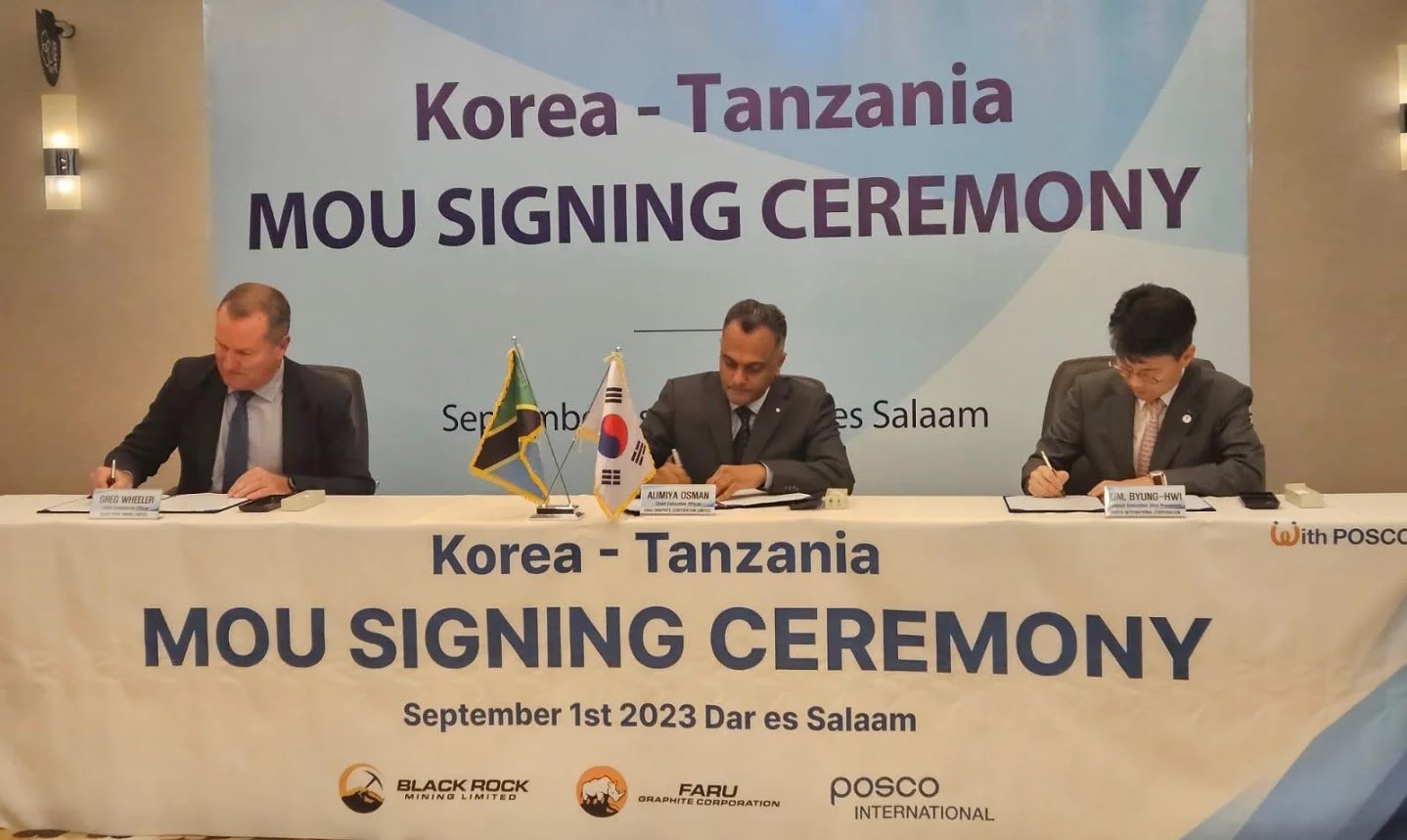
South Korea's Posco International has inked a $40 million investment agreement with Australia’s Black Rock Mining, aiming to double its graphite supply from Tanzania's Mahenge project to 60,000 tonnes per year.

As part of the deal, Posco now holds a 19.9% stake in Black Rock Mining. The investment ensures Posco early access to graphite, a crucial material for its integrated battery supply chain. The Mahenge project is set to begin construction this year, with full-scale production slated for 2026.

Last year, Posco funded the first phase of the mine’s development, securing 30,000 tonnes per year for 25 years. The new Phase 2 contract will supply an additional 30,000 tonnes annually over the same period, bringing the total to 60,000 tonnes per year.

The company plans to use non-Chinese graphite for cathode materials, aligning with the U.S. Inflation Reduction Act and the EU’s Critical Raw Materials Act, which mandate compliant raw material sourcing for electric vehicle (EV) batteries.

As China continues to curb graphite exports, Posco is leveraging reduced EV battery demand to invest in raw material assets with long-term growth potential, such as lithium and graphite.

Additionally, Posco expects to expand its graphite operations globally by securing a sales agreement with Black Rock for industrial graphite used in steel, cement, and automotive components. This could also bolster South Korea’s mineral resource security.

Shenghe Resources Commences Heavy Mineral Sands Production in Tanzania

No comments
Shenghe

Shenghe Resources, a Chinese rare earths producer, has announced the commencement of heavy mineral sands production at line 1 of the Fungoni project in Tanzania.  The Fungoni project is owned by Nyati Mineral Sands, a subsidiary of Strandline Resources UK (SRUL), whose parent company is the Australian minerals producer Strandline Resources. In May 2024, Ganzhou Chenguang, a subsidiary of Shenghe Resources, entered into an agreement to acquire 100% of SRUL from Strandline Resources.

Expansion Plans and Resource Base

Additional production lines at the Fungoni project are expected to come online before September 2025, reaching a total production capacity of 100,000 tonnes per year of heavy mineral sands.  Shenghe stated that this project will expand its heavy mineral sand resources and secure its feedstock supplies. Ganzhou Chenguang has paid a total of A$43 million ($26.77 million) to Strandline Resources, with A$27.18 million for the stake acquisition and the remainder for loan repayment. 

SRUL holds an 84% stake in Nyati Mineral Sands, which operates the Fungoni, Tajiri, Sudi, and Bagamoyo heavy mineral sand mines in Tanzania. Nyati holds mining rights for Fungoni and Tajiri, while Sudi and Bagamoyo are still under exploration. The Tanzanian government owns the remaining 16% of Nyati. The Fungoni project boasts an ore resource of 22 million tonnes with an average heavy mineral sand grade of 2.8%, while the Tajiri project has an ore resource of 268 million tonnes with an average grade of 3.3%. Shenghe did not disclose details on construction schedules or launch dates for Nyati's other projects.

Shenghe's Global Expansion and Financial Performance

Shenghe has been actively pursuing overseas resource expansion to develop global supply chains and improve profitability.  The company recently acquired an 18.2% stake in Australian rare earths exploration firm Vital Metals, which owns two rare earth resource projects: the Nechalacho bastnaesite mine in Canada and the Wigu Hill deposit in Tanzania. Shenghe's Q3 2024 revenue was 2.8 billion yuan ($381 million), down 38% year-on-year, while net profit rose 118% to 161 million yuan.  

From January to September 2024, revenue reached 8.24 billion yuan, a 37% decrease year-on-year, and net profit fell 41% to 92.87 million yuan. Shenghe attributed these declines to lower rare earth prices caused by ample spot supplies and weaker-than-expected consumer demand. Average praseodymium-neodymium metal prices fell 28% to 477 yuan/kg ex-works during this period. Despite the price pressures, Shenghe reported increased output and sales of rare earth oxides and metals in the first nine months of 2024, driven by stronger demand from the NEV, wind turbine, energy-saving appliance, and consumer electronics sectors.