Showing posts sorted by relevance for query Argentina copper mine. Sort by date Show all posts

Argentina copper mine investment accelerates under Rigi incentive framework

No comments
Argentina copper mine investment accelerates under Rigi incentive framework
Argentina copper mine

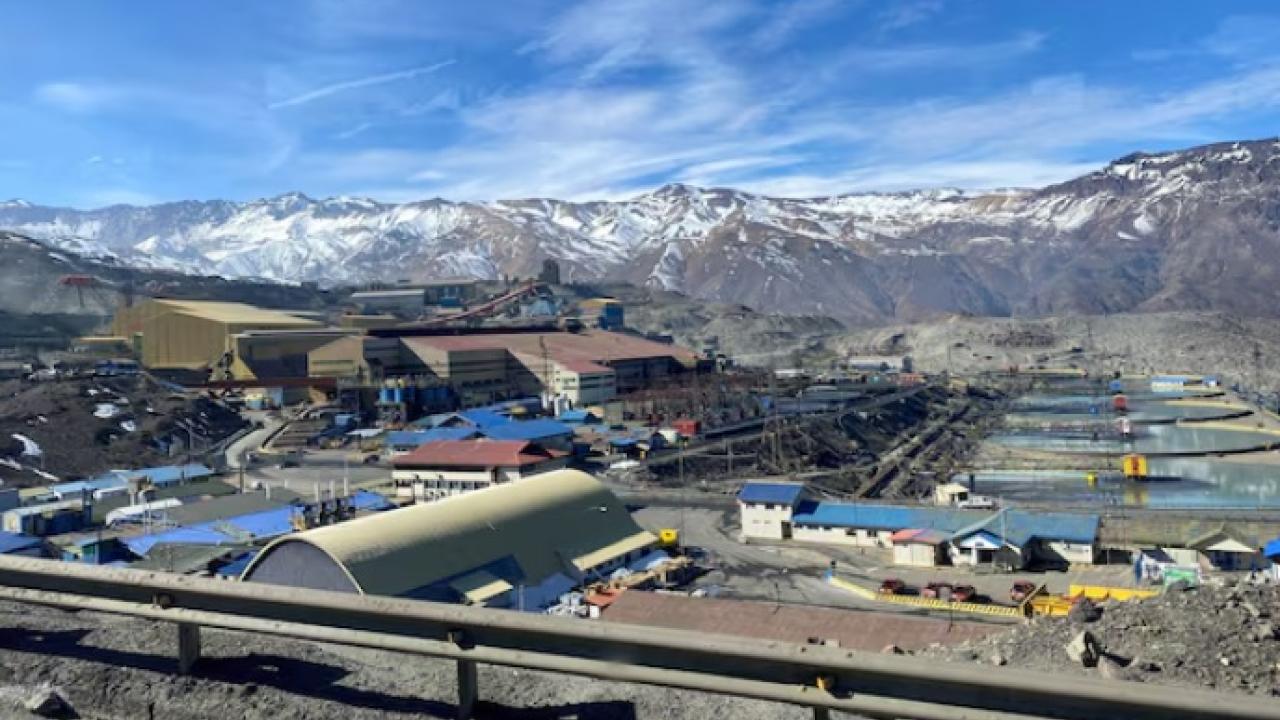
Argentina copper mine investment is entering a new phase under the Rigi incentive framework. The approval of McEwen Copper’s $2.7bn Los Azules project signals that Argentina copper mine investment is now central to the Milei government’s economic strategy. As a result, Argentina copper mine investment is being positioned as a key pillar for both fiscal reform and long-term export growth.

Rigi turns Los Azules into a flagship Argentina copper mine investment

The Los Azules project is the first copper mine approved under Argentina’s large-scale investment regime, Rigi. The scheme offers a 25pc tax rate instead of 35pc, 30 years of legal stability and exemption from import duties on capital goods. These incentives are designed to de-risk Argentina copper mine investment amid currency volatility and political uncertainty. Construction at Los Azules could begin as early as 2026, subject to permitting approvals. The mine is expected to produce about 175,000 t/yr of copper, placing it among the country’s most significant future producers. This scale matters for Argentina’s balance of payments, because copper exports can provide stable hard-currency revenues.

Copper anchors Argentina’s wider energy and mining investment push

The Los Azules approval is part of a broader Rigi pipeline that already totals $15.7bn in committed projects. The portfolio spans two solar plants, two lithium mines, an oil pipeline, an LNG facility and a steel mill. Together, these projects illustrate how copper, lithium and energy infrastructure are being bundled into a single strategic investment narrative. The government is targeting at least $50bn in energy investment and another $50bn in mining by 2027. That timeline aligns with president Javier Milei’s current term and his wider macroeconomic adjustment agenda. At the same time, Argentina is courting external financial support, including a potential $20bn currency swap backed by the US government. Stable capital inflows are critical to sustain Rigi and reassure foreign mining investors.

The Metalnomist Commentary

Los Azules shows how targeted tax stability and customs relief can unlock large-scale copper capex even in a risky macro environment. The challenge will be execution: permitting, infrastructure delivery and social licence will determine whether this project hits its 2026–27 window. For the global copper market, Argentina’s success or delay at Los Azules will shape future supply expectations in the second half of the decade.

Glencore Argentina Copper Output: 1mn t Target Sets New Andean Ambition

No comments
Glencore Argentina Copper Output: 1mn t Target Sets New Andean Ambition
Glencore Argentina mine

Glencore Argentina copper output is set to scale as the miner targets 1mn t over 10–15 years. Glencore Argentina copper output will lean on El Pachón and Agua Rica under Argentina’s RIGI incentives. Therefore, Glencore Argentina copper output could reposition the country as a serious copper supplier. Argentina has lacked copper since Alumbrera’s 2018 closure. However, pro-investment reforms now catalyze large-scale project pipelines.

RIGI-backed pipeline anchors capital, jobs, and timelines

Glencore applied to RIGI for El Pachón and Agua Rica this week. The framework cuts tax and customs risk for 30 years. The company plans combined capacity of 500,000 t/yr when fully operational. El Pachón Phase 1 requires about $9.5bn. Agua Rica requires about $4.0bn. The build-out will create over 10,000 construction jobs. Operations will sustain about 2,500 direct roles. As a result, local content, logistics, and power needs will rise.

Strategic implications for global copper supply and Argentina

Argentina could supply 2mn t within a decade as more projects advance. This would complement Chile and Peru in the Andean copper corridor. Meanwhile, Glencore’s plan diversifies supply during mine-grade decline elsewhere. New output would help smelters amid variable concentrate availability. OEMs will watch for ESG, water balance, and community agreements. Midstream investments in ports and transmission will be decisive. Therefore, bankable schedules and fiscal stability remain critical execution risks.

The Metalnomist Commentary

Glencore’s target is credible if permitting, power, and capex discipline hold. Watch early works, EPC awards, and offtake signals through 2026. Argentina’s RIGI lowers risk, but delivery hinges on infrastructure and social license.

Los Azules copper project moves toward 2027 construction start

No comments
Los Azules copper project moves toward 2027 construction start
Los Azules copper project

The Los Azules copper project has cleared a major hurdle with a positive feasibility study and a 2027 build target. The Los Azules copper project now has a clear pathway from study stage to construction and first cathode output in 2030. The project will produce around 204,800 t/yr of copper cathode in its first five years, before stabilising at 148,200 t/yr. The mine will use heap leach and solvent extraction-electrowinning to deliver LME grade A-equivalent copper without conventional smelting.

RIGI incentives transform Los Azules copper project economics

Argentina’s large investment regime, RIGI, is central to the Los Azules copper project business case. RIGI locks in 30 years of incentives, covering income and dividend tax relief and export tax exemptions. The regime also exempts the project from entering or liquidating export proceeds in the FX market after four years. As a result, the Los Azules copper project gains rare long-term fiscal stability in a high-risk macro environment. These incentives improve after-tax cash flows and strengthen returns through the 21-year mine life.

Financing strategy and ESG profile of Los Azules copper project

McEwen faces an initial capex bill of $3.17bn to build Los Azules. To support this, the company has indicative proposals from tier-1 equipment suppliers and European export credit agencies for about $1.1bn. These proposals could anchor a broader financing package that blends ECA debt, commercial loans and potential equity. Meanwhile, McEwen has agreed to align the Los Azules copper project with IFC environmental, social and governance standards. That alignment could see IFC join as a lead lender and equity partner, boosting credibility with global financiers. The heap leach and SX-EW flowsheet also positions the project to market relatively low-carbon cathode directly into international value chains.

The Metalnomist Commentary

Los Azules highlights how large copper projects increasingly depend on structured fiscal regimes and blended financing to move forward. If McEwen secures funding on IFC-aligned terms, Los Azules could become a flagship template for future Argentine copper investments under RIGI. The project’s success or delay will send a strong signal on Argentina’s ability to convert policy incentives into real mine construction.

Argentina Salta Lithium Boom Positions Province as Global Energy Transition Hub

No comments
Argentina Salta Lithium Boom Positions Province as Global Energy Transition Hub
Argentina Salta Lithium

Argentina Salta lithium boom accelerates as the northern province emerges as the cornerstone of the country's expanding mining industry following government approval of Rio Tinto's Rincon project under the RIGI incentive program. The Argentina Salta lithium boom reflects strategic positioning within global energy transition supply chains, with provincial mining secretary Romina Sassarini declaring Salta will become "a reference point for lithium in the country and worldwide" as multiple international producers establish operations in the resource-rich region.

RIGI Program Attracts International Lithium Investment

Argentina Salta lithium boom benefits from the national government's RIGI economic and legal incentive program that provides fiscal and legal stability for major mining investments. Rio Tinto's newly approved Rincon mine represents the fourth lithium project in Salta, requiring $2.7 billion investment to produce 60,000 tonnes annually by decade's end. China's Ganfeng, France's Eramine, and South Korea's Posco already operate lithium production facilities while applying for RIGI incentives for expanded production stages.

Meanwhile, Argentina's lithium output surged from 75,000 tonnes in 2024 to projected 131,000 tonnes in 2025 according to mining trade organization CAEM. This rapid production growth positions Argentina as a critical supplier for global battery markets while establishing Salta as the primary production hub. The province's strategic importance extends beyond lithium to include copper and gold reserves, including First Quantum Minerals' $3.5 billion Taca Taca copper-gold-molybdenum project awaiting final permits.

Infrastructure Development Addresses Production Bottlenecks

However, massive infrastructure investments are required to support expanding mining operations and projected production growth. Mining projects operating and planned in Salta require additional 575MW of electricity generation capacity, prompting provincial development of comprehensive electricity plans emphasizing solar power deployment. The renewable energy focus aligns with sustainable mining practices while addressing power supply constraints.

Therefore, transportation infrastructure development becomes equally critical as the province pursues multilateral bank financing for the 2,400-kilometer bi-oceanic highway connecting Brazil to Chile through Argentina and Paraguay. This continental corridor will enable efficient lithium and mineral exports to Pacific and Atlantic markets while reducing logistics costs. Sassarini emphasized that coordinated efforts between provincial, company, and national government stakeholders will resolve logistic bottlenecks limiting industry growth.


Argentina Salta

Strategic Positioning Supports Global Supply Chain Integration

Furthermore, Salta's emergence as a world-class lithium exporter addresses growing global demand for battery materials essential to electric vehicle production and energy storage systems. The province's integrated approach combining multiple international producers, infrastructure development, and regulatory stability creates competitive advantages for sustained industry growth. Mining sector transformation generates substantial economic impact through employment, tax revenue, and supply chain development.

As a result, the RIGI program eliminates financial bottlenecks while creating frameworks for long-term industry development across multiple mineral commodities. Salta's strategic positioning within the Lithium Triangle region enhances Argentina's competitiveness against Chilean and Bolivian producers while serving diverse global markets. The coordinated development approach demonstrates how provincial governments can catalyze mining industry growth through targeted policy support and infrastructure investment.

The Metalnomist Commentary

Argentina's Salta province exemplifies how strategic resource endowments combined with supportive policy frameworks can rapidly transform regional economies into global supply chain hubs, particularly important as lithium demand accelerates through energy transition requirements. The province's comprehensive approach addressing both production capacity and infrastructure bottlenecks demonstrates sophisticated understanding of mining industry development requirements, positioning Salta advantageously within the competitive global lithium market as established and emerging producers seek reliable supply sources.

Codelco Secures $666mn Copper Financing Deal with JBIC

No comments
Codelco Secures $666mn Copper Financing Deal with JBIC
Chilean Codelco

Codelco has signed a $666mn copper financing agreement to strengthen supply ties between Chile and Japan.

JBIC Loan Reinforces Chile-Japan Copper Partnership

Chilean copper major Codelco secured a $466mn loan from the Japan Bank for International Cooperation (JBIC). An additional $200mn was co-financed by an undisclosed commercial bank, bringing the deal total to $666mn.

This move follows Codelco’s announcement of 2024 copper production reaching 1.44mn metric tonnes, reclaiming its spot as the world’s top copper producer. The funding aims to guarantee a stable supply of Chilean copper concentrate to Japan, according to Codelco.

JBIC Governor Hayashi Nobumitsu emphasized the strategic importance of the deal. He noted it could pave the way for future investment in critical minerals such as lithium.

Broader Mineral Ties Strengthen in Lithium Triangle

In 2023, Codelco formed a joint venture with SQM to produce 300,000 t/yr of lithium carbonate equivalent (LCE) by 2030. This lithium expansion reinforces Japan's interest in the Lithium Triangle, which includes Argentina, Bolivia, and Chile.

Japan’s Toyota Tsusho Group already holds a 25% stake in the Salar de Olaroz lithium mine in Argentina, showing a growing trend of resource-linked partnerships in South America.

These developments signal Japan’s intention to secure long-term access to copper and battery metals, essential for its industrial and clean energy ambitions.

The Metalnomist Commentary

Codelco's financing agreement with JBIC signals more than a capital injection. It reflects a broader geopolitical alignment between Chile’s mineral sector and Japan’s energy security strategy. As global demand for both copper and lithium intensifies, strategic funding deals like this will shape the future of critical mineral trade.

Japan Eyes Investments in Argentinian Lithium as Demand for Battery Metals Grows

No comments
Japan Eyes Investments in Argentinian Lithium as Demand for Battery Metals Grows
Argentina lithium

Salta Province Attracts Japanese Interest Through RIGI and Strategic Bilateral Proposals

Japan eyes investments in Argentinian lithium to secure long-term access to key battery metals amid global electrification efforts. Japanese government officials recently met with authorities from Argentina’s Salta province to assess the region’s lithium reserves and explore opportunities for partnership. The talks focused on Salta’s lithium potential and included inquiries into major mining projects across multiple commodities—signaling broader strategic interest in Argentina’s resource sector.

While lithium was the main focus, Japanese officials also discussed First Quantum’s Taca Taca copper project, the Lindero gold mine operated by the UK’s Mansfield, and silver exploration by Abrasilver and Anglogold. Japan’s delegation reportedly requested support for a bilateral investment grant, which, alongside Argentina’s Régimen de Incentivo para Grandes Inversiones (RIGI), could fast-track Japanese capital into the province’s mining sector.

Argentina’s Investment Incentives Align with Japan’s Supply Chain Strategy

The RIGI framework offers approved projects reduced tax burdens, lower royalties, simplified customs procedures, and accounting flexibility. These benefits are designed to attract large-scale foreign investment into Argentina’s high-potential mining regions. As Japan eyes investments in Argentinian lithium, RIGI could serve as a key enabler for Japanese companies seeking stable, long-term access to battery-grade lithium and related critical minerals.

The visit underscores Japan’s strategy to diversify supply chains away from China, especially for electric vehicle and energy storage technologies. By tapping into Argentina’s lithium triangle, Japan can enhance its resource security while supporting Latin America’s role in the global clean energy transition.

The Metalnomist Commentary

Japan’s proactive engagement in Argentina’s Salta province reflects a targeted push to secure non-Chinese lithium supply. As battery metal demand accelerates, bilateral frameworks like RIGI and diplomatic investment channels will shape the next wave of global critical minerals partnerships.