Showing posts sorted by date for query ilmenite. Sort by relevance Show all posts

Largo Vanadium Pentoxide Output Doubles as Brazil Ore Grades Improve

No comments
Largo Vanadium Pentoxide Output Doubles as Brazil Ore Grades Improve
Largo

Largo vanadium pentoxide output more than doubled in the first quarter as higher-grade ore and steadier processing lifted production at the Maracás Menchen Mine in Brazil. The Canadian metals producer produced 2,616t of V2O5 during the quarter, up 101.7% from a year earlier.

The result placed Largo vanadium pentoxide output at the upper end of the company’s first-quarter expectations. It also showed a clear operational recovery from stronger ore availability and more consistent processing performance.

Largo vanadium pentoxide output is important because vanadium demand is gaining support from steelmaking, aerospace alloys, chemical catalysts and vanadium redox flow batteries. Higher Brazilian production adds supply at a time when energy storage demand is becoming a larger part of the vanadium market.

Higher Ore Volumes and Grades Lift Vanadium Production

Largo mined 852,046t of ore in the first quarter, up 90.8% from a year earlier. The effective ore grade rose to 0.48% V2O5 from 0.41% in 2025.

The higher ore grade improved plant feed quality and supported stronger recovery through the processing circuit. More consistent ore processing also helped the company convert higher mined volumes into finished vanadium pentoxide.

Sales volumes rose by nearly 4% on the year to 2,141t. Largo cited stronger vanadium demand and reduced US tariffs on Brazilian exports as key drivers behind the increase.

The company expects stronger sales in the second quarter. This reflects a lag in sales realisation and higher pricing achieved in the second half of the first quarter after the US tariff reduction.

For the vanadium market, the result points to improving supply from one of the main non-Chinese producers. That matters as buyers look for diversified sources of vanadium outside China’s large steel-linked production base.

Ilmenite and By-Products Add Resource Optionality

Largo also increased ilmenite production from January to April. Output reached about 11,500t, up 32.7% from a year earlier, while sales volumes were close to the same level.

Ilmenite provides Largo with another revenue stream linked to titanium feedstock markets. Titanium dioxide, welding consumables and titanium metal supply chains all depend on stable mineral feedstock availability.

The company also filed a request on 10 April to authorise production and sales of copper, platinum group metals, nickel and cobalt as by-products of its vanadium operations.

This step could improve resource recovery and strengthen project economics if the by-products can be recovered commercially. It would also align Largo with a wider industry trend toward extracting more value from complex ore bodies.

By-product recovery is increasingly important in critical minerals supply chains. Producers are looking to capture cobalt, nickel, PGMs and other metals where they already exist in operating systems, reducing waste and improving supply efficiency.

The Metalnomist Commentary

Largo’s first-quarter performance shows how quickly vanadium supply can improve when ore grade and plant consistency recover together. The by-product strategy could become equally important if it turns Maracás Menchen into a broader critical minerals platform.

Kenmare Moma Titanium Minerals Mine Cuts Workforce as Mineral Sands Market Weakens

No comments
Kenmare Moma Titanium Minerals Mine Cuts Workforce as Mineral Sands Market Weakens
Kenmare Resources

Kenmare Moma Titanium Minerals Mine is facing a sharper restructuring phase as Kenmare Resources moves to cut 15% of the workforce at its Moma complex in Mozambique. The decision reflects weaker mineral sands market conditions, lower projected revenues, and pressure from operational setbacks during 2025.

The company also suspended its 2025 final dividend and booked a $301.1 million impairment charge. Kenmare linked the impairment to an uncertain pricing outlook and updated assumptions around the renewal terms of Moma’s mining licence with Mozambique’s government.

Kenmare Moma Titanium Minerals Mine produces heavy mineral concentrates including ilmenite, zircon, and rutile. These materials supply titanium dioxide pigment, ceramics, welding, and titanium feedstock markets, making Moma an important asset in the global mineral sands chain.

WCP A Commissioning Issues Hit Production and Cash Flow

Kenmare’s 2025 results were heavily affected by the Wet Concentrator Plant A upgrade at Moma. The project drove capital spending higher, while commissioning problems reduced production volumes and limited sales.

The group’s net debt rose six-fold to $159 million at the end of 2025. The increase reflected major investment in the WCP A upgrade at a time when weaker output and lower shipments reduced cash generation.

Earnings before interest, taxes, depreciation, and amortisation fell 63% on the year to $58 million. The decline shows how quickly operational disruption can affect earnings when market conditions are already weak.

Market oversupply also weighed on ilmenite and zircon prices despite steady underlying demand. This left Kenmare exposed to both lower sales volumes and weaker pricing across key mineral sands products.

Licence Renewal and 2026 Recovery Shape Moma Outlook

The renewal of the Moma Implementation Agreement remains a major strategic issue. The agreement, which covers Kenmare’s mineral processing and export activities with Mozambique’s government, expired in 2024.

Kenmare applied to restart the agreement in 2022, and negotiations are still ongoing. The company said talks in mid-February made constructive progress, but final terms remain important for long-term valuation and investor confidence.

There are signs of operational recovery in early 2026. By the end of the first quarter, WCP A was regularly operating at its nameplate ore feed processing capacity of 3,500 t/hr, although some production issues continued.

Shipments are tracking in line with the run-rate needed to meet 2026 guidance. Kenmare has also drawn down finished stockpiles to manage capital, suggesting the company is prioritising liquidity while it stabilises production at Kenmare Moma Titanium Minerals Mine.

The Metalnomist Commentary

Kenmare’s workforce cut shows that mineral sands producers are under pressure from both price weakness and project execution risk. Moma’s recovery will depend on stable WCP A performance, stronger titanium feedstock pricing, and a clearer licence framework in Mozambique.

RBM Mineral Sands Expansion Extends Rio Tinto’s Zircon and Ilmenite Supply

No comments
RBM Mineral Sands Expansion Extends Rio Tinto’s Zircon and Ilmenite Supply
Rio Tinto Blue Horizon

RBM mineral sands expansion approval gives Rio Tinto a longer supply runway for zircon and ilmenite from its Richards Bay Minerals operation in South Africa. The $473mn Zulti South project is designed to extend mined supply as ore grades and availability decline at the existing Zulti North lease area.

Rio Tinto owns 74pc of Richards Bay Minerals, while Blue Horizon holds 24pc. RBM currently operates four mines in the Zulti North lease area, alongside a mineral separation plant and smelting facility. Construction at Zulti South is expected to begin in the first quarter of 2026 and take around 30 months.

RBM mineral sands expansion is expected to support production from the fourth quarter of 2028. The project aims to extend RBM’s operations to 2050, giving the business a longer-term role in global mineral sands supply.

Zulti South Restarts After Earlier Security and Community Delays

The Zulti South project was originally approved in April 2019, but Rio Tinto later suspended development because of security and community issues. The new approval shows that the company is prepared to move forward after a long delay.

This history matters because mineral sands projects depend not only on geology and capital, but also on stable operating conditions. Community relations, security, permitting, logistics, and site reliability can determine whether high-quality deposits become dependable supply sources.

RBM mineral sands expansion also reflects the need to replace declining ore supply at Zulti North. As mature ore bodies deplete, producers must invest in new mining areas to maintain feedstock availability for separation, smelting, and downstream customers.

Zircon and Ilmenite Supply Supports Industrial and Titanium Markets

Zircon and ilmenite are important industrial minerals with strategic downstream uses. Zircon serves ceramics, refractories, foundry applications, and specialty industrial products. Ilmenite and rutile are key feedstocks for titanium dioxide production, which is widely used in pigments, paints, coatings, plastics, and paper.

Titanium dioxide feedstock also connects the mineral sands market to titanium metal supply chains. While pigment remains the dominant demand driver, titanium-bearing minerals ultimately support industries tied to aerospace, chemicals, energy, and advanced manufacturing.

Rio Tinto’s approval therefore strengthens a long-term feedstock position in a market where mine life, jurisdictional stability, and processing integration matter. The expansion gives RBM a clearer path to remain a major supplier of mineral sands into the middle of the century.

The Metalnomist Commentary

Rio Tinto’s Zulti South approval shows that mineral sands supply security depends on long-cycle mine replacement, not short-term price movements. The strategic value lies in extending zircon and ilmenite availability before mature deposits tighten the feedstock pipeline.

Sheffield Zircon Prices Seen Stable Through First Half of 2026

No comments
Sheffield Zircon Prices Seen Stable Through First Half of 2026
Sheffield Resources

Sheffield zircon prices are expected to stay broadly stable through the first half of 2026. The company said prices began stabilising toward the end of 2025 after falling during the December quarter. Management believes the market has likely found a bottom at current levels. As a result, Sheffield zircon prices now reflect a market searching for balance rather than a rapid rebound.

This matters because zircon pricing cycles tend to move more slowly than many other commodity markets. Sheffield said customers increasingly view current levels as unsustainable. However, the company does not expect a sharp recovery in the near term. Therefore, zircon market stabilisation may last longer than some buyers and sellers first expected.

Chinese buying patterns also support this cautious view. Pre-lunar new year restocking was weaker this year than last year. That suggests demand has not yet turned decisively stronger. Meanwhile, recent African concentrate flows into China likely reflect earlier trade decisions rather than fresh bullish sentiment.

Zircon Market Stabilisation Is Supporting a More Predictable Sales Outlook

Zircon market stabilisation is helping Sheffield plan near-term production and sales with greater confidence. Kimberley Mineral Sands expects to produce 40,000-50,000t of zircon concentrate in the March quarter. It also expects to sell 35,000-45,000t at prices similar to the previous quarter. Consequently, Sheffield Resources zircon outlook now points to price stability rather than volume-led price pressure.

Recent quarterly performance showed mixed operating conditions. KMS produced 40,100t of zircon concentrate in the second quarter, down from the previous period. However, sales rose to 53,117t because of a carry-over shipment. That means shipment timing, not just mine performance, continues to shape reported market activity.

Operational disruptions also played a role. Equipment issues and seasonal weather affected output and logistics during the quarter. Tropical cyclone Hayley delayed shipments through the Port of Broome, pushing some zircon and ilmenite loadings into January. Therefore, temporary logistics disruption added noise to an otherwise stabilising zircon market.

Ilmenite Volumes and Yansteel Offtake Add Broader Mineral Sands Support

Ilmenite volumes remain important to the wider economics of the project. KMS expects to produce 170,000-190,000t of ilmenite concentrate in the March quarter and sell 190,000-210,000t. Those shipments are supported by a life-of-mine take-or-pay offtake agreement with Yansteel. As a result, the broader mineral sands business has a firmer sales base than zircon alone.

This matters because heavy mineral concentrate flows are often shaped more by titanium minerals than zircon. Sheffield noted that African concentrate imports into China are likely constrained more by the titanium market than the zircon market. That distinction is important for interpreting trade data. Meanwhile, Yansteel’s integrated titanium dioxide and slag processing capacity gives Sheffield a stable downstream channel.

The longer-term operating target also remains constructive. Sheffield expects KMS to reach 55,000t of quarterly zircon production and 220,000t of quarterly ilmenite production by the September quarter of fiscal 2027. Therefore, the company is still building toward higher output even as zircon prices remain flat in the near term.

The Metalnomist Commentary

This update suggests the zircon market may be entering a holding pattern rather than a recovery phase. That is not exciting, but it can still be constructive for producers if prices have truly found a floor. For Sheffield, stable pricing and improving output may matter more in 2026 than any short-lived market rally.

European Lithium Velta Acquisition Expands Titanium Exposure in Critical Minerals

No comments
European Lithium Velta Acquisition Expands Titanium Exposure in Critical Minerals
Velta Holding

The European Lithium Velta acquisition marks a strategic shift beyond lithium into titanium. European Lithium agreed to fully acquire US-based Velta Holding through an all-scrip deal. The transaction will diversify its critical minerals portfolio and support titanium production plans. As a result, the European Lithium Velta acquisition broadens the company’s long-term industrial relevance.

The deal also preserves operational continuity at Velta. Chief executive Andriy Brodskyi and the existing management team will remain in place. Production processes and export contracts will also stay unchanged. Therefore, the European Lithium Velta acquisition appears designed to add capacity without disrupting current business.

The transaction value remains flexible, but the strategic logic is already clear. The implied value stands at about A$48.5mn-A$50.1mn based on recent share prices. European Lithium will transfer 173mn fully paid ordinary shares to Velta shareholders. Consequently, the deal gives European Lithium direct exposure to operating titanium assets and technical know-how.

Ukraine Titanium Assets Add Processing Depth and Strategic Optionality

Ukraine titanium assets are central to the appeal of this transaction. Funding will be directed toward stabilising operations at Velta’s Byrzulivske mining and processing complex. That support is important because asset reliability matters as much as resource ownership. Meanwhile, the company gains access to a working titanium platform rather than an early-stage concept.

Velta also brings a more advanced technology angle. The company has plans tied to a US titanium manufacturing site that would process ilmenite into titanium powder. That project would use Velta’s patented process and Ukrainian feedstock. Therefore, the European Lithium Velta acquisition adds both upstream resource exposure and downstream processing potential.

This matters for the wider critical minerals market. Titanium is increasingly relevant to aerospace, defence, additive manufacturing, and industrial applications. A company that combines lithium exposure with titanium capability can position itself more broadly in strategic materials. As a result, European Lithium may gain a more diversified investment narrative.

Titanium Production Plans Still Depend on Security and Execution

Titanium production plans now depend on more than corporate ambition. Any larger expansion in capacity or investment will remain tied to the security environment in Ukraine. That creates a clear execution risk for the acquired assets. However, it also means the upside could be meaningful if conditions stabilise.

The US angle adds another layer of strategic value. Velta previously received a letter of interest for $60mn from the Export-Import Bank of the United States. That support relates to development of a US titanium manufacturing site. Consequently, the European Lithium Velta acquisition could eventually support a more international titanium supply chain.

For European Lithium, this is a portfolio-shaping move rather than a simple asset purchase. The company is using Velta’s assets and technical capabilities to expand its reach in critical minerals. Meanwhile, it is doing so through a structure that avoids immediate cash strain. Therefore, the deal could prove important if management converts strategic optionality into operating progress.

The Metalnomist Commentary

This acquisition is notable because it links lithium strategy with titanium industrial capability. European Lithium is no longer presenting itself as a single-metal story. If execution holds and security risks ease, the company could emerge with a more credible role in the broader critical minerals chain.

Kenmare cuts ilmenite guidance as WCP A upgrade issues persist

No comments
Kenmare cuts ilmenite guidance as WCP A upgrade issues persist
Kenmare Resources

Kenmare cuts ilmenite guidance again for 2025 as commissioning issues continue at its WCP A upgrade. The Mozambique-focused mineral sands producer lowered full-year output guidance to a minimum of 830,000 tonnes. Therefore, Kenmare cuts ilmenite guidance well below its original 930,000–1.05mn tonne outlook.

Kenmare cuts ilmenite guidance after higher ore throughput exposed slimes management constraints. Slimes are ultra-fine particles that reduce feed rates and weaken recoveries. Meanwhile, the company is prioritising process stability over short-term volume.

Slimes management becomes the main operational bottleneck

Kenmare identified slimes control as the key constraint during ramp-up at WCP A. Higher throughput increased the impact of ultra-fines on circuit performance. As a result, Kenmare is focusing on corrective work rather than pushing additional tonnes.

WCP A should reach its 3,500 t/hr nameplate capacity in the first quarter of 2026. However, the company already flagged that tailings and related upgrades could delay full performance into 2026. This timeline keeps operational risk elevated for near-term ilmenite supply.

What the revised guidance means for titanium feedstock supply chains

Ilmenite is a key titanium feedstock for pigment and titanium metal value chains. A lower output profile tightens availability for buyers who rely on predictable mineral sands shipments. Meanwhile, Kenmare also cut finished product shipment guidance to about 980,000 tonnes.

Two shipments will likely load in early 2026 rather than in 2025. Therefore, some buyers may see delivery timing shift across the year boundary. The project cost remains unchanged at $341mn, which signals Kenmare is absorbing the issue operationally, not financially.

The Metalnomist Commentary

This downgrade looks like a classic ramp-up penalty after a major plant upgrade. However, slimes control often needs iterative tuning at higher loads. Buyers should watch Q1 2026 closely for proof of sustained nameplate performance.

Thunderbird zircon mine financial support boosts liquidity as zircon demand weakens

No comments
Thunderbird zircon mine financial support boosts liquidity as zircon demand weakens
Thunderbird, Zr Mine

Thunderbird zircon mine financial support is flowing as mineral sands markets stay soft. Sheffield Resources and Yansteel will inject A$6.5mn into their Kimberley Mineral Sands joint venture to fund working capital at the Thunderbird mine. Meanwhile, the venture faces near-term loan repayments due by 31 December to Northern Australia Infrastructure Facility (NAIF) and global creditor Orion Resource Partners.

Debt pressure drives talks on deferrals and restructuring

Debt maturity pressure is driving the Thunderbird zircon mine financial support package. The venture is discussing payment deferrals or credit restructures with its lenders. However, the partners cannot guarantee a successful outcome. Sheffield Resources also has not committed further working capital beyond this injection.

The funding stack remains large relative to current market conditions. NAIF provided an A$160mn facility and Orion Resource Partners provided a $110mn facility in 2022. Therefore, lenders hold strong security through asset backing and owner guarantees. The Orion package also includes a 1.6% royalty tied to sales volumes.

Output ramp plans clash with weak zircon pricing signals

Operational momentum continues at the Thunderbird site despite softer demand. Kimberley Mineral Sands mined 10.4mn tonnes of ore and produced 740,666 tonnes of heavy mineral concentrate in the July 2024 to June 2025 period. Meanwhile, the project aims to ramp to 220,000–240,000 t/yr of zircon concentrate and 900,000–950,000 t/yr of ilmenite concentrate by July-September 2027.

Commercial support is also tightening around inventory risk. Yansteel agreed to buy all unsold zircon concentrate at a fixed price, which stabilizes cash flow. It also holds a 100% ilmenite offtake agreement, which secures a key revenue stream. However, broader signals still point to a zircon downturn. Large producers across the United States, Australia, and South Africa reportedly cut export prices to China in late October.

Competitive stress is spreading to peers as well. Iluka Resources will pause its Cataby mine operation for one year from 1 December. Therefore, the market is signaling a deliberate supply response to protect margins.

The Metalnomist Commentary

This funding round highlights how quickly zircon price weakness turns into balance-sheet risk. Meanwhile, fixed-price offtake can protect cash flow but can also cap upside. Producers that align debt terms with demand cycles will control the next expansion wave.

Australia’s Thunderbird zircon mine financial support targets debt deadlines amid weak demand

No comments
Australia’s Thunderbird zircon mine financial support targets debt deadlines amid weak demand
Thunderbird Zr mine

Australia’s Thunderbird zircon mine financial support is arriving to protect working capital and debt compliance. Sheffield Resources and Yansteel will invest A$6.5 million into their Kimberley Mineral Sands venture. The funding supports operations at the Thunderbird mine as zircon demand weakens. Therefore, Australia’s Thunderbird zircon mine financial support is tightly linked to lender obligations.

The venture must make repayments by 31 December to two lenders. The lenders include Northern Australia Infrastructure Facility and creditor Orion Resource Partners. Meanwhile, the partners are negotiating deferrals or credit restructures. However, the company says success is not guaranteed.

Loan packages and royalties raise pressure as zircon demand softens

The venture secured major loan facilities in 2022. NAIF opened an A$160 million facility, while Orion opened a $110 million facility. Both loans are secured against Thunderbird assets and guaranteed by the owners. As a result, any covenant stress can spill back to shareholders.

Orion’s financing includes a 1.6% royalty on sales tied to up to 8.2 million tonnes per year of ore. Meanwhile, revenue pressure rises when zircon prices weaken. Therefore, Australia’s Thunderbird zircon mine financial support aims to keep liquidity stable through a demand slump.

Ramp plans remain, but the market is forcing price and output discipline

Thunderbird’s operating metrics show scale and ramp ambition. KMS mined 10.4 million tonnes of ore and produced 740,666 tonnes of heavy mineral concentrate in FY2024–FY2025. The venture began processing in late 2023 and shipped first zircon in January 2024. It plans to ramp to 220,000–240,000 tonnes per year of zircon concentrate and 900,000–950,000 tonnes per year of ilmenite concentrate by July–September 2027.

Yansteel is also tightening offtake support for the project. It agreed to buy all unsold zircon concentrate at a fixed price. It also holds a 100% ilmenite concentrate offtake agreement. As a result, commercial backing offsets some spot market weakness.

Zircon producers are cutting export prices to China because demand is soft. Meanwhile, Iluka Resources will pause its Cataby mine for one year from 1 December. Iluka’s zircon concentrate sales fell 45% year on year in July–September. Therefore, the downturn is regional and structural, not project-specific.

The Metalnomist Commentary

Mineral sands projects can ramp volumes, but they cannot ramp demand. Meanwhile, debt timing forces hard choices when zircon prices fall. Therefore, Thunderbird’s next milestone is financial flexibility, not nameplate capacity.

Kenmare lowers ilmenite, rutile guidance for 2025 as Moma WCP A upgrades limit throughput

No comments
Kenmare lowers ilmenite, rutile guidance for 2025 as Moma WCP A upgrades limit throughput
Kenmare Resources

Kenmare lowers ilmenite, rutile guidance for 2025 because upgrade delays are constraining output. Kenmare Resources cited delays at Wet Concentrator Plant A at its Moma mining complex in Mozambique. Kenmare lowers ilmenite, rutile guidance for 2025 as on-plant tailings work restricts plant throughput. Therefore, the company revised near-term volume expectations.

Kenmare cut ilmenite guidance to 870,000–905,000 tonnes from 930,000–1.05 million tonnes. It also cut rutile guidance to 8,500–9,500 tonnes from 9,000–10,000 tonnes. Meanwhile, Kenmare kept zircon and concentrates guidance unchanged. As a result, the revision centers on WCP A reliability and capacity recovery.

WCP A tailings upgrade limits throughput below nameplate capacity

WCP A’s tailings management upgrade is limiting overall throughput. The company said it needs further work to reach nameplate 3,500 tonnes per hour. However, the remaining works could extend into next year. Therefore, operational risk could persist through the next planning cycle.

The upgrade program already hit quarterly output. Ilmenite production fell 19% year on year in July–September. Rutile production fell 16% year on year in the same quarter. As a result, Kenmare lowers ilmenite, rutile guidance for 2025 to reflect the constrained run-rate.

Product stocks protect 2025 shipment targets despite lower production

Strong inventories will keep shipment plans intact. Kenmare said finished product stock rose 5% to 317,000 tonnes in July–September. Therefore, the company expects to ship 1 million tonnes of finished products this year.

This inventory cushion improves customer supply continuity. However, stocks cannot offset prolonged underperformance indefinitely. Meanwhile, pigment and titanium feedstock buyers watch supply reliability closely. As a result, restoration of stable WCP A throughput will remain the key KPI.

The Metalnomist Commentary

Mineral sands projects win on uptime as much as ore quality. Meanwhile, tailings upgrades often create hidden bottlenecks that cap throughput. Therefore, Kenmare’s near-term credibility will depend on clear milestones to restore 3,500 t/hr performance.

Beneath the Growth: Ferro-Titanium(Fe-Ti) Market Enters Cooling Phase in 2025

No comments
Beneath the Growth: Ferro-Titanium(Fe-Ti) Market Enters Cooling Phase in 2025
Ferro-Titanium

Once a core beneficiary of aerospace and specialty steel demand, ferro-titanium now faces dual pressure from weakening demand and excess supply.

At the Foundation of Steel, Cracks Begin to Show

As of September 2025, leading market analysts still forecast a 4–5% annual growth rate for the ferro-titanium market, citing robust demand in aerospace, high-performance steels, and defense-grade alloys. But on the ground, reality paints a more sobering picture.

The global steel industry is struggling. A perfect storm of China’s low-cost exports, persistent weakness in downstream sectors, and U.S. tariff uncertainties has significantly dented confidence. Particularly hard hit are the automotive, shipbuilding, and plant engineering sectors, leading to a sharp decline in ferro-titanium consumption.

The result: a continued slide in spot prices, leaving suppliers grappling with margin pressure and inventory overhang.

Dual Shock: Demand Contraction Meets Supply Glut

Ferro-titanium is a specialty ferroalloy additive used in steelmaking to remove oxygen and nitrogen impurities, refine grain structure, and enhance both strength and corrosion resistance. It is indispensable in the production of titanium alloys for aerospace, stainless steels, and corrosion-resistant superalloys.

However, softening demand is now converging with a surge in cheap ilmenite and rutile feedstock imports, the ramp-up of new smelting capacity, and rising inventories, triggering a classic oversupply scenario. Some traders have resorted to panic selling, driving spot prices below long-term contract levels.

Not All Ferroalloys Are Created Equal

This downturn is not symptomatic of the entire ferroalloy market. While ferro-molybdenum (FeMo) prices are also under pressure due to steel sector weakness, the ferro-vanadium (FeV) market remains relatively buoyant—buoyed by growing demand for high-strength steel and new applications in energy storage technologies (e.g., vanadium redox flow batteries).

This divergence underscores a key truth:
Ferroalloy markets live or die by the uniqueness of their end-use demand.

Products that rely solely on steel cycles are inherently more volatile. In contrast, those with diverse, high-value downstream applications offer resilience—and in some cases, opportunity.

Long-Term Vision Intact, But Short-Term Survival Comes First

Industry experts agree:
"A meaningful rebound in ferro-titanium prices is unlikely until inventories normalize and downstream sectors recover."

Yet the long-term fundamentals remain intact. Demand from aerospace, defense-related high-performance steels, urban air mobility (UAM), and electric vehicles continues to build. Today’s correction may in fact be a strategic inflection point.

For producers with technological capabilities and diversified market access, this downturn could be a launchpad for future leadership. Moreover, as environmental regulations tighten, ferro-titanium producers with recycling-based production systems may gain a structural edge. In the long run, quality will matter more than quantity.

After all, ferro-titanium is essential for manufacturing materials that must not fail—only the strongest will do.

The Metalnomist Commentary

“This is not chaos. It is purification. Only the technologically armed will dominate the next cycle.”

The ferro-titanium market is undergoing a painful but necessary correction. But there is method in the madness. Suppliers rooted in high-value end markets, with a reputation for premium quality and the ability to serve global niches, will emerge as the next leaders.

This is a time for endurance. And in metals, quality is always the final destination.

Enduring Reliance Amid Sanctions: Europe’s Russian Titanium Dilemma

No comments
Enduring Reliance Amid Sanctions: Europe’s Russian Titanium Dilemma
VSMPO Titanium

Introduction: A Supply Chain Unbroken in Wartime

Despite sweeping economic sanctions imposed by the West following Russia’s invasion of Ukraine in February 2022, one supply chain has proved remarkably resilient: Russian titanium sponge. Europe’s quandary over this advanced material—indispensable to aerospace, defense, and medical-device manufacturing—has only deepened.

Russia’s Command of Titanium

Russia ranks among the world’s largest titanium producers. VSMPO-AVISMA, the country’s flagship producer, accounts for 90% of Russia’s titanium output and exports to some 50 countries. The company is estimated to control up to 30% of the global titanium market and nearly half of aerospace-grade supply.

Russia’s dominance rests on abundant raw-material reserves and comparatively low energy costs. Because titanium smelting is energy-intensive, commercial viability depends on cheap power and gas—conditions Russia has historically met.


Airbus A380

Trade that Continues Despite Sanctions

On 7 March 2022, Boeing announced it would halt purchases of Russian titanium used in aircraft manufacturing. Rolls-Royce and Boeing subsequently suspended procurement from VSMPO-AVISMA indefinitely.

Europe, however, charted a different course. Airbus urged the European Union to keep Russian titanium outside future sanctions packages. As Airbus chief executive Guillaume Faury argued, titanium represents a small share of Russia’s total exports, so sanctions would inflict little pain on Moscow while dealing a heavy blow to Europe’s aerospace industry.

Today, Airbus still sources roughly half of its titanium from VSMPO-AVISMA. Boeing, by contrast, once relied on Russia for about one-third of its titanium but has since stopped buying Russian material.

The Limits—and Exceptions—of EU Sanctions

Notably, while the EU has restricted imports of Russian steel and coal, titanium has not been sanctioned. The metal remains a strategic material used in fuselages, turbine blades, satellites, and other critical systems.

Dependence on Russian metals endures in other segments as well. From March to June 2022, combined EU-US imports of Russian aluminum and nickel rose to $1.98 billion—more than 70% above the prior-year period.

Washington and Brussels have generally refrained from designating industrial metals as sanction targets. Europe continues to import large volumes of Russian natural gas, and Russia supplies about 40% of global palladium—vital for semiconductors—implicating everything from automobiles to smartphones.


CBAM

CBAM: A New Variable

The EU’s Carbon Border Adjustment Mechanism (CBAM), introduced in October 2023, adds another layer of complexity. CBAM initially covers cement, electricity, fertilizers, iron and steel, aluminum, hydrogen, and certain downstream products in steel and aluminum. After a transition phase through 2025, full implementation begins in 2026, imposing carbon costs on imports equivalent to those borne by EU producers.

While fertilizers, cement, hydrogen, and non-exported electricity may see limited near-term impact, aluminum stands out as a key target sector. Most exports to the EU beyond steel and aluminum are not yet covered, though the European Commission has signaled possible expansion to high-leakage categories such as organic chemicals and plastics.

Russia is structurally disadvantaged under CBAM. Steel production in Russia, Ukraine, and Türkiye tends to be more carbon-intensive, implying higher embedded-carbon costs at the border.

Ambiguities in Sanctions and Industry’s Dilemma

The United States placed VSMPO-AVISMA on its “military end-user” list, restricting access to advanced technologies, but stopped short of a direct ban on titanium sales—an acknowledgment of global industry’s reliance on the material.

Indeed, during the early stages of the war, VSMPO-AVISMA avoided sweeping US and European sanctions. Although Washington temporarily listed the company in December 2020, the measure was later rescinded.

Recent moves, however, suggest a tightening environment. In April 2024, a joint US-UK action prompted the CME and LME to prohibit trade in newly produced Russian aluminum, copper, and nickel dated after 13 April—an effort widely read as constraining Russia’s influence in metals markets.


Ukraine Titanium Mine

Ukraine: A Viable Alternative?

Against this backdrop, Ukraine has emerged as a potential alternative. Until 2020, the country supplied 90% of Russia’s ilmenite—the feedstock for titanium sponge. With that supply chain severed by war, Ukrainian resources could help challenge Russia’s dominance.

US companies have begun talks with Kyiv on a joint venture anchored by the Zaporizhzhia Titanium-Magnesium Plant (ZTMP). Such partnerships could forge a new titanium hub in Eastern Europe, strengthening Ukraine’s economic footing for decades.
The risks are significant. Ongoing conflict and occupation threaten both Donbas deposits and the ZTMP facilities, which remain exposed to shelling and sabotage.

Aviation’s Growth—and Its Dilemma

The aerospace-titanium market was valued at roughly $100 million in 2022 and is projected to grow at a CAGR exceeding 5% from 2023 to 2032—reflecting the rebound in air travel and a pipeline of commercial aircraft programs.

Despite supply-chain turbulence from war, energy constraints, and labor shortages, passenger traffic continues to recover, lifting titanium demand. In October 2022, Airbus announced plans to deliver more than one aircraft per week to India, persisting with expansion despite engine-supply challenges and domestic carrier capacity constraints—developments that further complicate titanium sourcing.

The Reality of Diversification

Boeing reportedly began diversifying away from Russian titanium after the 2014 annexation of Crimea. Airbus, by contrast, remains heavily reliant on Russian supply.
Globally, China produced around 100,000 t of titanium in 2013—twice the combined output of Russia and Japan at the time—making it the world’s largest producer. Japan ranked third, with Osaka Titanium Technologies standing as the world’s second-largest producer of titanium sponge.

The Metalnomist Commentary: An Unfinished Dilemma

Europe’s struggle over Russian titanium sponge epitomizes the knotty realities of modern supply chains. Between economic sanctions and security imperatives, between industrial competitiveness and moral principle, Europe has yet to find a definitive answer.

With CBAM’s full force arriving in 2026, higher carbon-cost pass-throughs on Russian metals seem likely, intensifying pressure to rewire supply. Yet, as Airbus’s position illustrates, displacing Russian titanium in the short term remains daunting.

The gap between industrial necessity and political sanction endures—witness VSMPO-AVISMA’s August 2025 statement that it stands ready to resume cooperation with Boeing. For now, Europe must navigate this dilemma with prudence: balancing sanction principles, industrial realities, and emergent environmental rules—while accelerating the use of recycled titanium wherever feasible.

Velta Secures $2M Loan from Traxys to Restart Titanium Production

No comments
Velta Secures $2M Loan from Traxys to Restart Titanium Production
Velta Titanium Mining

Financing Enables Modernisation of Ukraine’s Birzulivske Ilmenite Deposit

Velta secures $2M loan from Traxys to carry out capital repairs and restart production at its Birzulivske titanium deposit in Ukraine. The Luxembourg-based trading company provided pre-export financing to help modernise Velta’s operations, which had paused from 2022 to 2024 due to the redirection of funds to wartime support efforts. The financing will enhance production efficiency and stability at the Kirovohrad-based site.

Velta’s CEO Andriy Brodsky confirmed that the company will use the funding to establish its own energy system. This will lower power costs and improve reliability for future operations. The Birzulivske deposit contains 3 million tonnes of ilmenite, making it a strategic source of titanium feedstock. Meanwhile, Velta is preparing to develop its second site, the Likarivske deposit, which contains an additional 2.6 million tonnes and is now in final design stages.

Traxys has a longstanding relationship with Velta. In 2020, the companies signed a five-year, $100 million titanium supply agreement that was fully executed. Traxys supplies titanium raw materials to titanium dioxide producers in North America. Therefore, the fact that Velta secures $2M loan from Traxys signals continued confidence in Ukrainian titanium’s role in global critical mineral supply chains.

The Metalnomist Commentary

This renewed funding reflects investor confidence in Ukraine’s long-term titanium capacity. Velta’s dual-deposit strategy, coupled with energy independence, may help position it as a resilient titanium supplier despite ongoing geopolitical risks.

Largo V2O5 Production Outlook Cut as Brazil Ore Grades Weaken

No comments
Largo V2O5 Production Outlook Cut as Brazil Ore Grades Weaken
Largo

Largo has revised its V2O5 production outlook for 2025, citing lower ore grades and equipment issues at its Maracás Menchen mine. The Largo V2O5 production outlook now ranges between 8,500–10,500 tonnes, down from the previous forecast of 9,500–11,500 tonnes issued in February.

Lower Grades and Mining Constraints Impact Q1 Output

Largo’s first-quarter vanadium pentoxide (V2O5) production dropped by 25% year-on-year to 1,297 tonnes. The sharp decline stems from a 12-percentage point fall in ore grade to 41%, alongside reduced equipment availability. Total ore mined fell by 26% to 446,614 tonnes, while vanadium concentrate output slid by 29% to 53,245 tonnes.

Despite these setbacks, recovery rates improved to 77.8% from 70.5%, suggesting operational efficiency gains within the plant. However, the company also adjusted its sales volume guidance for 2025 to 6,500–8,500 tonnes, down from the earlier 7,500–9,500 tonnes.

Ilmenite Segment Shows Mixed Signals

Largo maintained its ilmenite production guidance at 25,000–35,000 tonnes, with sales volume expectations of 20,000–30,000 tonnes for the year. However, first-quarter ilmenite production dropped 36% to 6,162 tonnes. In contrast, unit sales surged to 8,647 tonnes—an impressive jump from just 513 tonnes in the same period last year, indicating a backlog clearance or improved market demand.

The company remains focused on accessing higher-grade vanadium ore later this year, which may support a recovery in production levels in the second half of 2025.

The Metalnomist Commentary

Largo’s reduced V2O5 production outlook reflects the ongoing operational volatility in specialty metals mining. While short-term constraints weigh on vanadium output, improved recovery and ilmenite sales offer some upside. Investors will closely watch Largo’s second-half mining performance in Brazil.

Kenmare Resources Rejects £5.30 Takeover Offer from Oryx and Ex-CEO Carvill

No comments
Kenmare Resources

Titanium producer opens due diligence access for improved bid but says current offer undervalues business.

Kenmare Resources, a Dublin-based titanium mining company, has rejected a takeover bid from Oryx Global Partners and former CEO Michael Carvill. The non-binding proposal offered £5.30 per share in cash for all issued and to-be-issued shares.

Kenmare, listed on the London Stock Exchange and Euronext Dublin, called the bid insufficient. The board unanimously rejected the proposal, stating it undervalues the company’s business and future prospects.

Due Diligence Granted for Potential Improved Offer

Although the offer was declined, Kenmare granted Oryx and Carvill limited due diligence access. This move keeps the door open for a revised offer, though Kenmare emphasized that no firm proposal is guaranteed.

Under Irish takeover regulations, the bidders must announce a definitive offer or withdrawal by 17:00 GMT on 17 April 2025. Carvill, who led Kenmare for 38 years, stepped down in August 2024.

Kenmare’s Strategic Focus Remains on Mozambique Titanium Operations

Kenmare owns and operates the Moma titanium minerals mine in Mozambique, a major global source of ilmenite, rutile, and zircon. With strong long-term market fundamentals for titanium feedstocks, Kenmare’s board sees substantial intrinsic value in its standalone strategy.

The rejected bid highlights the increasing strategic interest in critical mineral producers, especially those with long-life assets in geopolitically stable jurisdictions.

Energy Fuels Reports 2024 Loss on Acquisition Costs, But Advances in Rare Earths Signal Long-Term Strategy

No comments
Energy Fuels

U.S. Miner Eyes NdPr Qualification, Expands Heavy Mineral Sands Sales After Australian Acquisitions

Energy Fuels Posts $48 Million Loss in 2024 Amid Strategic Expansion into Rare Earth and Mineral Sands Markets

Energy Fuels, a U.S.-based critical minerals producer, swung to a $48 million net loss in 2024, compared with a $99.76 million profit in 2023. The loss stemmed primarily from one-time acquisition and integration expenses tied to the purchase of Base Resources and its Donald Project in Australia. These expenses totaled $10.34 million and included increased operating costs from inherited personnel and reclamation liabilities.

Despite the financial dip, the acquisitions have significantly expanded Energy Fuels' footprint in heavy mineral sands and rare earth elements (REE), positioning the company for long-term strategic growth.

Heavy Mineral Sands Sales Strengthen While Rare Earth Separation Advances in Utah

In 2024, the company sold 17,529 tonnes of rutile, 48,302 tonnes of ilmenite, and 2,477 tonnes of zircon, generating $39.87 million in revenue from its mineral sands segment. The assets acquired include Kenya’s Kwale project, Madagascar’s Toliara project, and the Donald Project in Victoria, a joint venture with Astron Resources containing zircon, ilmenite, and untapped REEs.

Meanwhile, at its White Mesa Mill in Utah, Energy Fuels completed Phase 1 commissioning of its rare earth separation circuit, producing 38,000 kg of NdPr and 9,000 kg of high-purity heavy RE carbonates (including samarium and others). The company has sent NdPr samples to magnet manufacturers, seeking qualification for permanent magnet use, a key precursor to securing long-term offtake agreements.

Pathway to 60,000 t/yr Throughput and Expanded REE Output

The company is now updating its pre-feasibility study (PFS) for White Mesa to increase monazite feed capacity to 60,000 tonnes per year. The proposed upgrade targets annual output of 6,000 tonnes of NdPr, 150–225 tonnes of dysprosium, and 50–75 tonnes of terbium. The newly commissioned Phase 1 circuit accounts for about 17% of the full capacity, equivalent to 10,000 t/yr of monazite feed.

With rising geopolitical pressure to localize critical minerals supply chains, Energy Fuels continues to diversify away from uranium and strengthen its vertical integration in rare earths and heavy minerals.

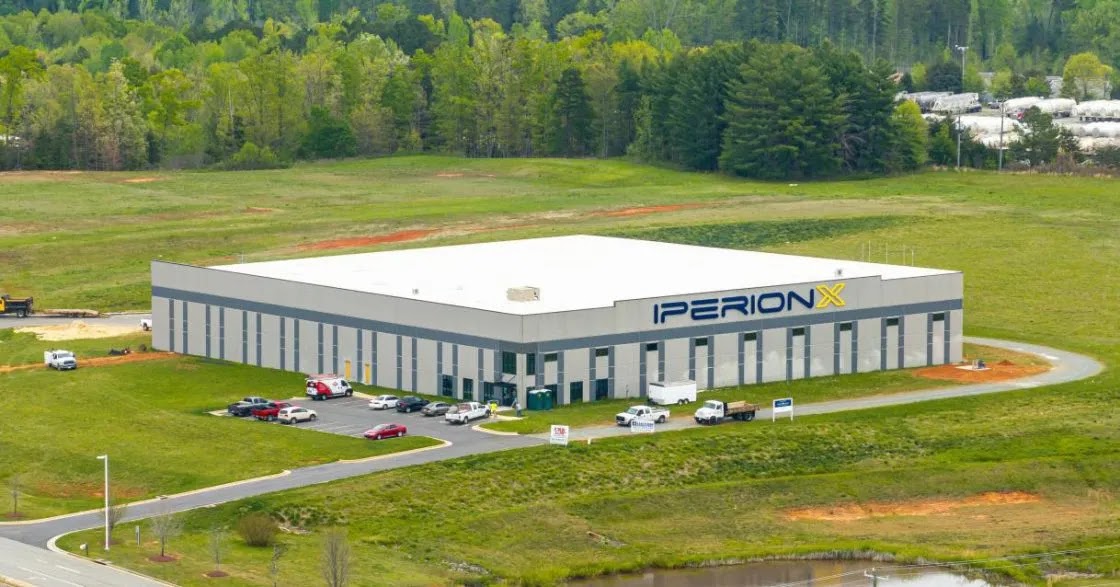
IperionX Secures $47M DoD Funding to Advance U.S. Titanium and Rare Earth Supply Chain

No comments
IperionX

Titan Project and Virginia Facility to Strengthen Critical Mineral Independence

IperionX has been awarded up to $47 million by the U.S. Department of Defense (DoD) to advance its Titan titanium and rare earth project in Tennessee and to boost production capacity at its Virginia manufacturing campus. This investment forms part of a larger $71 million public-private partnership aimed at reinforcing domestic critical mineral supply chains.

The funding will support a two-phase plan over the next two years. In Phase 1, the DoD will contribute $5 million toward a feasibility study to bring the Titan mineral sands project—located near Camden, Tennessee—to shovel-ready status. IperionX will add $1 million to this effort, which is expected to be completed within 12 months.

Titan Project to Deliver Multi-Metal Feedstocks for 25 Years

The Titan project, covering 11,000 acres, is fully permitted and expected to operate for 25 years. Once in production, it will yield a wide array of strategic minerals, including:

  • 4,600 t/yr of rare earth element (REE) concentrate
  • 16,700 t/yr of rutile
  • 95,500 t/yr of ilmenite
  • 22,400 t/yr of premium zircon
  • 16,100 t/yr of zircon concentrate

IperionX has signed non-binding offtake agreements with Chemours and Mario Pilato BLAT for approximately half of its titanium and zircon output. These firms serve the chemical, ceramics, glass, and refractory sectors, providing early validation of the project’s commercial viability.

Vertical Integration to Include REE Processing and Production Expansion

The remaining $42 million of the DoD funding will go toward expanding production and supporting vertical integration at IperionX’s Virginia facility. The company also plans to process REE concentrate from Titan at Energy Fuels' White Mesa mill in Utah, one of the only licensed facilities in the U.S. capable of refining both light and heavy rare earth oxides.

This strategic funding package highlights growing U.S. efforts to reduce reliance on foreign sources, especially China, for titanium, rare earths, and zirconium—all essential to defense, aerospace, and clean energy industries.

Largo Increases V2O5 Production Outlook for 2025 Despite Early Challenges

No comments
Largo

Vanadium producer anticipates higher production in 2025 but warns of early-year disruptions.

Largo, a leading vanadium producer, has raised its production outlook for vanadium pentoxide (V2O5) in 2025. The company forecasts producing between 9,500 and 11,500 metric tonnes (t) of V2O5, with production heavily weighted toward the second half of the year. However, Largo has warned that its early-year output will face disruptions due to heavy rainfall and a delayed ramp-up after scheduled maintenance during the latest quarter.

Challenges in Early 2025 Production

Largo’s production plans for the first half of 2025 are expected to face several challenges. The company has highlighted that lower ore grades and mine sequencing adjustments will place additional pressure on production. As a result, early-year output may fall below expectations. Despite these short-term setbacks, the company remains confident in achieving a higher overall output for the year.

2024 Performance and 2025 Sales Forecast

In 2024, Largo produced 9,264t of V2O5 at its Maracás Menchen mine in Brazil, slightly under its annual guidance and down 4.3% from 2023 levels. Despite the production dip, full-year sales volumes of 9,600t were within expectations, although they fell by 7.7% compared to the previous year. For 2025, the company projects that sales will fall within the range of 7,500-9,500t, largely due to the early disruptions.

Fourth-Quarter Performance and Ilmenite Production

The fourth quarter of 2024 saw a 36% drop in vanadium pentoxide output, falling to 1,775t due to planned maintenance work, including kiln and refractory maintenance. However, sales in the same period saw a 16% increase, reaching 3,033t, with a portion of these sales coming from purchased units and material acquired through an inventory supply agreement.

Ore grades also dropped in the fourth quarter, from 0.82% in the prior year to 0.49%. Recovery rates also saw a decline, falling from 79.4% to 77.9%. Alongside its V2O5 operations, Largo has adjusted its ilmenite production forecast for 2025, targeting between 25,000 and 35,000t, down from 44,863t in 2024. The company expects to sell between 20,000 and 30,000t of ilmenite, compared to 42,916t sold last year.

Conclusion

Despite a challenging start to 2025, Largo remains optimistic about its long-term production targets. The company is positioning itself to ramp up production in the second half of the year, aiming for a stronger finish. With vanadium ore grades and recovery rates under pressure, Largo will need to address early setbacks to meet its 2025 sales and production goals.

PTC and Odisha Plan Titanium Sponge Facility

No comments
PTC Industries

PTC Industries and the Odisha government have signed an MoU to establish an aerospace-grade titanium sponge facility. This project aims to boost India's domestic titanium production.

Strategic Investment to Enhance Titanium Supply

While details on capacity, investment, and timeline are undisclosed, the facility will position PTC as an integrated titanium producer. The Odisha government is providing industrial ecosystem support and infrastructure incentives. This announcement follows PTC's commissioning of a VAR furnace in Lucknow and a supply agreement with AMIC Toho Titanium Metal (ATTM). India, with the third-largest ilmenite reserves, currently lags in titanium sponge production. The country relies on imports to support its growing aerospace sector.

Addressing India's Titanium Production Gap

Currently, India's titanium sponge production is limited to Kerala Minerals & Metals' 500 t/yr facility. This new facility aims to address this gap. For context, the ATTM joint venture in Saudi Arabia, with a 15,600 t/yr capacity, required approximately five years from announcement to commercial production and a $420 million investment.

Kenmare Resources Achieves Production Milestones in 2024

No comments
Kenmare Resources

Strategic Production Gains in Ilmenite and Other Heavy Minerals

Consistent Production Growth Despite Market Fluctuations

Kenmare Resources, operating primarily in Mozambique, reported a 2% increase in ilmenite production in 2024, surpassing the midpoint of its forecasted production range. The company's production of heavy mineral concentrates (HMC) remained stable, with significant activity in the latter half of the year boosting overall output.

Record Outputs in Secondary Minerals and Future Outlook

The final quarter of 2024 saw Kenmare achieving notable increases in the production of ilmenite, zircon, and rutile, with ilmenite production alone jumping 14% year-on-year. These gains reflect heightened processing capacities and improved recovery rates, positioning Kenmare well within the upper spectrum of its annual guidance.

Impact of Global Market Dynamics on Production and Pricing

Amidst a backdrop of rising global demand for titanium feedstocks, Kenmare has navigated shifting market dynamics, including the redirection of Chinese pigment production and the impact of international duties. These factors, combined with strategic increases in HMC exports, have influenced pricing and production strategies moving forward.

Kenmare's Moma Titanium Mine Operates Amid Mozambique Unrest

No comments
Kenmare Resources

Despite escalating civil unrest in Mozambique, Kenmare Resources Moma titanium minerals mine continues its operations without material incidents, as confirmed by the Dublin-based company today. The unrest follows a contentious election result upheld by the country’s highest court this week.

Stability Amidst Political Turbulence

Located in the Nampula province along the northeastern coast of Mozambique, the Moma mine has not only managed to avoid any significant disruptions but has also surpassed its production targets for 2024. The mine, operational since 2009, is a critical source of titanium feedstocks such as ilmenite, with an international customer base spanning 15 countries.

Kenmare has responded to the national tension by implementing enhanced security measures to protect its workforce, contractors, and the surrounding communities. The company's proactive approach aims to maintain safe and continuous operations amidst the political instability, which intensified following the Constitutional Council’s decision on December 23 to validate the October election results. The election, which reaffirmed the long-standing governance of the Frelimo party, has been mired in allegations of fraud and subsequent protests, resulting in several fatalities over the past three months.

Economic and Social Contributions

The ongoing operations at Moma highlight not only Kenmare's resilience but also its commitment to the economic stability and safety of its local stakeholders. The company continues to monitor the situation closely, adjusting its security protocols as necessary to navigate the challenges posed by the national unrest.