Showing posts sorted by date for query Toyota Tsusho. Sort by relevance Show all posts

Toyota Tsusho PPESNA Stake Strengthens North American Battery Supply Chain

No comments
Toyota Tsusho PPESNA Stake Strengthens North American Battery Supply Chain
Toyota Tsusho

Toyota Tsusho PPESNA stake acquisition gives the Japanese trading firm a stronger role in building Toyota Group’s North American battery supply chain. The company acquired a 20% stake in Prime Planet Energy and Solutions’ North American subsidiary, PPESNA.

The Toyota Tsusho PPESNA stake is designed to support stable battery production across procurement, materials, components, production equipment and recycling. The move shows how Japanese industrial groups are deepening control over regional battery supply chains as North American electrification investment expands.

PPESNA was established in September 2025 to improve service and response capabilities for PPES customers and Toyota Group’s battery business in North America. Toyota Tsusho’s investment gives the subsidiary a broader commercial and supply-chain platform.

Toyota Tsusho Targets Battery Procurement and Recycling Integration

Toyota Tsusho said the investment will help develop a supply chain covering equipment procurement, battery materials, components and recycling. This is important because battery production increasingly depends on coordinated sourcing across cathode materials, anode materials, separators, electrolytes, cells, modules and recycling routes.

The company already has exposure to Toyota Battery Manufacturing North Carolina, which can produce 30GWh/yr of batteries at full capacity. That gives Toyota Tsusho a direct link to one of Toyota Group’s key North American battery manufacturing assets.

The Toyota Tsusho PPESNA stake also complements the company’s recycling strategy. Toyota Tsusho has established a joint venture with LG Energy Solution to recycle batteries in North Carolina, giving it another position in the circular battery materials chain.

North America Becomes a Strategic Battery Manufacturing Base

North America is becoming a core region for Japanese battery supply-chain investment. Automakers and trading houses are trying to localise procurement, reduce logistics risk and prepare for tighter regional content requirements.

Toyota Tsusho’s role is especially important because trading companies often connect raw materials, equipment suppliers, manufacturers and recyclers. In battery supply chains, that coordination can reduce bottlenecks and improve long-term production stability.

For Toyota Group, the PPESNA investment supports a more integrated North American platform. It links battery production, upstream procurement and recycling at a time when battery costs, material security and regional manufacturing incentives remain central to electric vehicle competitiveness.

The Metalnomist Commentary

Toyota Tsusho’s PPESNA investment shows that battery competitiveness is moving beyond cell production alone. The real advantage will come from controlling the full supply chain, from equipment and materials procurement to recycling and closed-loop recovery.

Jogmec Toyota Tsusho Rare Earth Stake Strengthens Japan’s Heavy Rare Earth Strategy

No comments
Jogmec Toyota Tsusho Rare Earth Stake Strengthens Japan’s Heavy Rare Earth Strategy
Toyota Tsusho

Jogmec Toyota Tsusho rare earth stake plans mark another step in Japan’s effort to secure heavy rare earth supply outside China. Japan’s state-owned energy agency Jogmec has selected Toyota Tsusho as the winning bidder to take over part of its 40pc option interest in the Lofdal heavy rare earth project in northwestern Namibia.

The Lofdal project contains heavy rare earth elements including dysprosium and terbium. These materials are critical for high-performance permanent magnets used in electric vehicle motors, wind turbines, robotics, defense systems, and advanced electronics.

The Jogmec Toyota Tsusho rare earth stake transfer could help move the project closer to commercialization. It also shows how Japan is using state-backed investment, trading house networks, and overseas resource partnerships to reduce exposure to China-dominated rare earth supply chains.

Lofdal Project Offers Japan a Potential Non-China Heavy Rare Earth Source

The Lofdal heavy rare earth project has strategic importance because dysprosium and terbium are among the most supply-sensitive rare earth elements. Both are used to improve magnet performance under high-temperature and high-stress operating conditions.

Canada’s Namibia Critical Metals and Jogmec have jointly explored the project since 2020. Jogmec acquired its 40pc option interest in 2023, and the partners released a pre-feasibility study in January 2026.

The project is now moving through a definitive feasibility study ahead of a final investment decision. Toyota Tsusho’s participation could support development momentum, particularly if future offtake structures are aligned with Japan’s industrial demand.

Toyota Tsusho Role Connects Mining Risk With Industrial Supply Chains

Toyota Tsusho’s role matters because Japanese trading houses often bridge upstream mining projects and downstream manufacturers. The company’s involvement could help connect Namibian heavy rare earth supply with Japan’s automotive, magnet, electronics, and clean energy industries.

Japan’s rare earth supply chain faces a structural challenge. Heavy rare earth production and separation remain highly concentrated in China, while demand is rising from EVs, wind power, and advanced manufacturing.

The Jogmec Toyota Tsusho rare earth stake therefore reflects a broader resource security strategy. Japan is not only seeking mineral access, but also trying to build more resilient supply routes for magnet materials that underpin electrification and industrial competitiveness.

The Metalnomist Commentary

Japan’s move into the Lofdal project shows that heavy rare earth security depends on early-stage project positioning, not only finished oxide purchasing. If Lofdal advances, Namibia could become an important part of Japan’s non-China magnet materials strategy.

Radius Recycling appoints new chief executive amid Toyota Tsusho integration

No comments
Radius Recycling appoints new chief executive amid Toyota Tsusho integration
Radius Recycling

Radius Recycling appoints new chief executive to steer the post-acquisition integration and growth agenda. The move formalizes a leadership transition as Toyota Tsusho assumes ownership. Consequently, Radius Recycling appoints new chief executive to align global scrap flows, mill operations, and exports. In this context, Radius Recycling appoints new chief executive to pursue operational gains across North America.

Leadership transition and near-term priorities

Marc Hathhorn became chief executive on 1 September after 10 months as COO. He joined the company from Peabody Energy in November 2024. Therefore, he brings large-scale industrial and logistics experience to metals recycling. His mandate emphasizes integration, network efficiency, and disciplined capital deployment. Meanwhile, Toyota Tsusho’s platform can expand commercial reach and supply optionality.

Lundgren’s legacy and the strategic backdrop

Outgoing CEO Tamara Lundgren became executive chairman through 30 November. She supports stakeholder continuity during the ownership transition. Under her tenure, the firm rebranded from Schnitzer Steel in 2023. The company now operates seven US bulk export facilities and an Oregon steel mill. It also runs a broad network of ferrous and nonferrous scrap yards. The Toyota Tsusho deal closed on 10 July for $1.34bn. Filings show Lundgren sold $38.4mn of stock as part of the transaction.

The Metalnomist Commentary

Leadership continuity is critical when integrating into a global trading house. If Hathhorn executes on logistics and procurement synergies, margins could improve despite volatile shred spreads and export freight.

ReElement and Pensana Secure Rare Earth Partnership

No comments
ReElement and Pensana Secure Rare Earth Partnership
ReElement Technologies

Strategic REE Offtake Agreement

US-based ReElement Technologies and UK mine developer Pensana have signed an offtake agreement for rare earth element (REE) supply. The deal covers up to 20,000 t/yr of mixed rare earth carbonate (MREC) from Pensana’s Longonjo mine in Angola, over five years. The agreement will integrate ReElement’s refining platform to produce ultra-pure separated rare earth oxides for advanced applications.

Longonjo Mine Development and Global Reach

Pensana has invested over $70mn in the Longonjo project, which contains 139,457t of neodymium-praseodymium oxide. The mine will be developed in two phases, each targeting 20,000 t/yr of MREC output. With this offtake agreement, Pensana has secured buyers for its entire planned production, including prior commitments to Toyota Tsusho. Both companies will leverage the Lobito Corridor in Angola to reduce logistics costs and enhance global market access.

The Metalnomist Commentary

This agreement highlights how Western firms are securing critical rare earth supply chains outside China. By linking Longonjo’s resources with ReElement’s refining capabilities, the partnership strengthens diversification efforts in rare earth processing. The use of Angola’s Lobito Corridor also underscores the importance of logistics infrastructure in securing reliable global exports.

Codelco Secures $666mn Copper Financing Deal with JBIC

No comments
Codelco Secures $666mn Copper Financing Deal with JBIC
Chilean Codelco

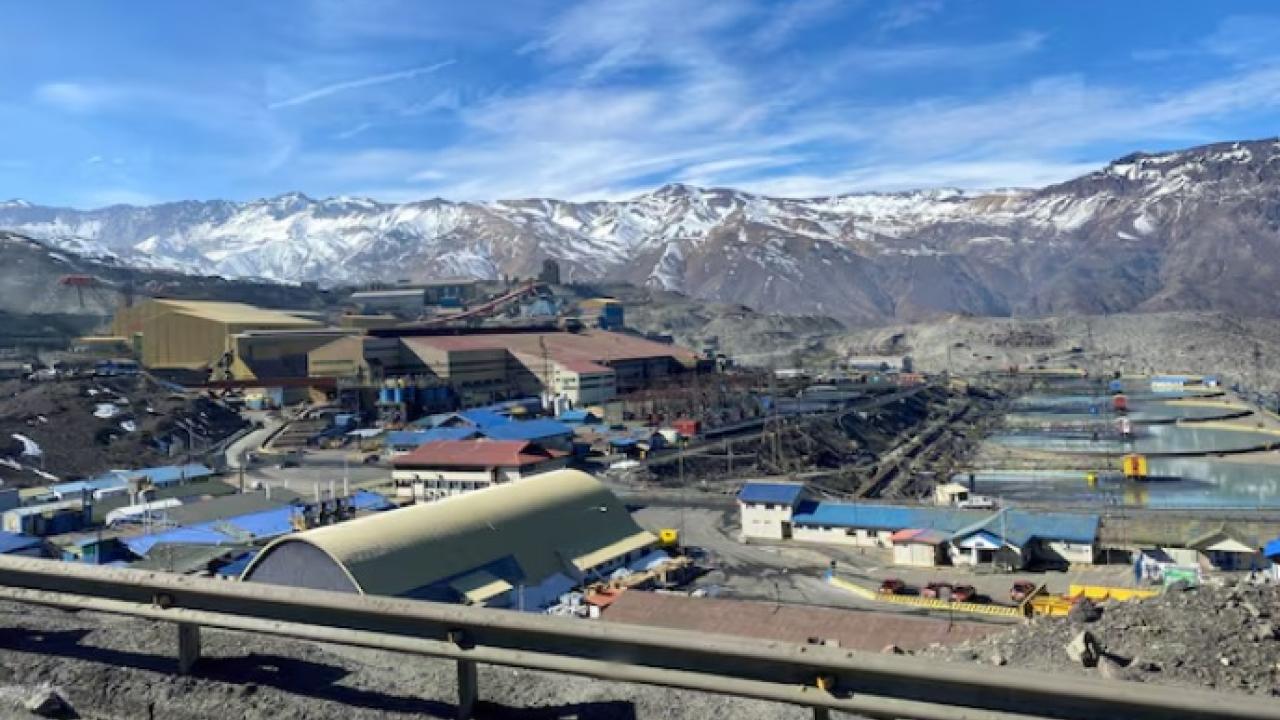
Codelco has signed a $666mn copper financing agreement to strengthen supply ties between Chile and Japan.

JBIC Loan Reinforces Chile-Japan Copper Partnership

Chilean copper major Codelco secured a $466mn loan from the Japan Bank for International Cooperation (JBIC). An additional $200mn was co-financed by an undisclosed commercial bank, bringing the deal total to $666mn.

This move follows Codelco’s announcement of 2024 copper production reaching 1.44mn metric tonnes, reclaiming its spot as the world’s top copper producer. The funding aims to guarantee a stable supply of Chilean copper concentrate to Japan, according to Codelco.

JBIC Governor Hayashi Nobumitsu emphasized the strategic importance of the deal. He noted it could pave the way for future investment in critical minerals such as lithium.

Broader Mineral Ties Strengthen in Lithium Triangle

In 2023, Codelco formed a joint venture with SQM to produce 300,000 t/yr of lithium carbonate equivalent (LCE) by 2030. This lithium expansion reinforces Japan's interest in the Lithium Triangle, which includes Argentina, Bolivia, and Chile.

Japan’s Toyota Tsusho Group already holds a 25% stake in the Salar de Olaroz lithium mine in Argentina, showing a growing trend of resource-linked partnerships in South America.

These developments signal Japan’s intention to secure long-term access to copper and battery metals, essential for its industrial and clean energy ambitions.

The Metalnomist Commentary

Codelco's financing agreement with JBIC signals more than a capital injection. It reflects a broader geopolitical alignment between Chile’s mineral sector and Japan’s energy security strategy. As global demand for both copper and lithium intensifies, strategic funding deals like this will shape the future of critical mineral trade.