Showing posts sorted by relevance for query sodium-ion batteries. Sort by date Show all posts

Global Lithium-Ion Battery Shipments Surge in 2024, Driven by EV and Energy Storage Demand

No comments
Lithium-Ion Battery

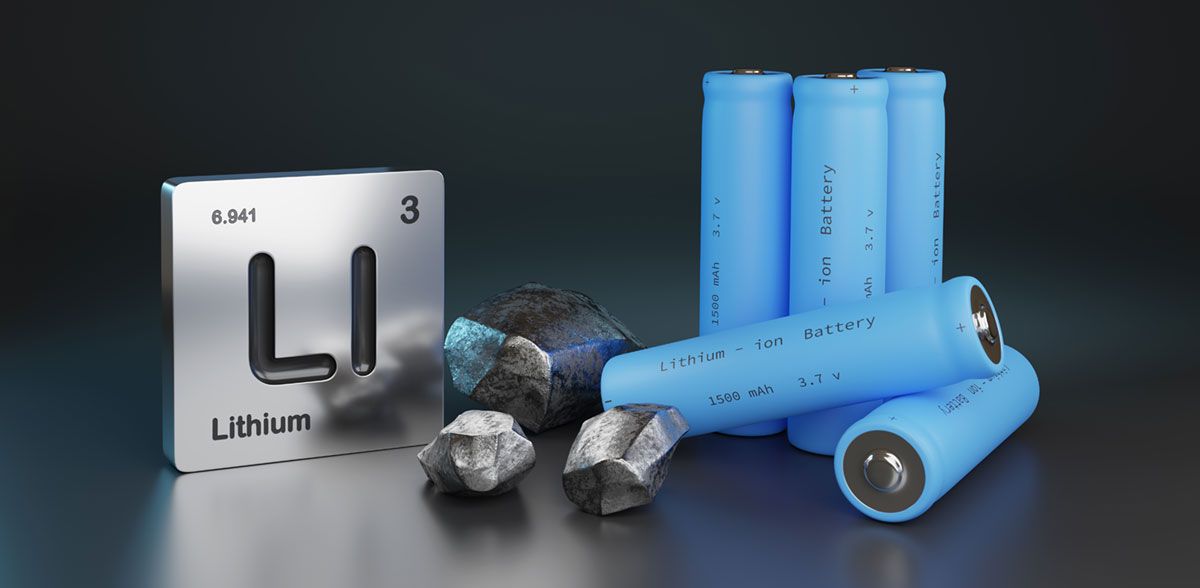
Global shipments of lithium-ion batteries experienced a significant surge in 2024, fueled by robust growth in both the electric vehicle (EV) and energy storage sectors, according to data from Chinese research institution EV Tank.  This surge is projected to continue its upward trajectory through 2030, marking a promising period for the lithium and battery metals markets.

EV Battery Market Driven by China, Despite Global Economic Headwinds

In 2024, global EV power battery shipments reached an impressive 1,051GWh, representing a 22% year-on-year increase.  This growth was primarily propelled by the continued strength of China's EV market.  Government incentives, such as old vehicle trade-in subsidies, provided a significant boost, offsetting a slowdown observed in European and US markets due to weakened economic conditions and rising inflation.  This highlights the critical role of government policy in supporting the EV sector.

Energy Storage Battery Shipments See Explosive Growth

The energy storage battery segment also witnessed remarkable expansion, with global shipments soaring by 65% to 370GWh.  This surge can be attributed to several factors, including China's government-led initiatives promoting energy storage systems for wind and solar power generation, declining manufacturing costs, and strong demand in the US, partly driven by the investment tax credit.  Furthermore, growing GWh-level orders from emerging markets like the UK, Saudi Arabia, and Australia contributed to the overall growth.

China Dominates Lithium-Ion Battery Production

Overall, global lithium-ion battery shipments increased by 29% year-on-year to 1,545GWh in 2024.  China played a dominant role, accounting for 79% of the total, with shipments reaching 1,215GWh, a substantial 37% increase.  The sustained demand growth within China, coupled with the country's substantial investments in overseas production capacity, has solidified its position as a leading force in the global lithium-ion battery market.

Sodium-Ion Battery Adoption Slower Than Expected

While lithium-ion batteries continue to dominate, the adoption of sodium-ion batteries has been slower than initially anticipated.  EV Tank estimates China's sodium-ion battery shipments to have more than doubled to 2GWh in 2024 from 0.7GWh in 2023. However, this figure falls short of earlier projections of 3GWh per year. The primary reason for this slower uptake is the higher manufacturing costs associated with sodium-ion batteries compared to ternary and lithium iron phosphate (LFP) lithium-ion batteries, as well as lead-acid batteries.  Currently, the average manufacturing cost for lithium-ion batteries stands at 0.50 yuan/Wh as of June 2024, significantly lower than the 0.60 yuan/Wh for sodium-ion batteries, according to EV Tank.  This cost differential presents a significant challenge for the widespread adoption of sodium-ion technology.

Future Outlook: Continued Growth Projected

EV Tank forecasts continued growth in global lithium-ion battery shipments, projecting a rise to 1,899GWh in 2025 and an even more significant jump to 5,127GWh by 2030.  This optimistic outlook underscores the increasing demand for batteries across various applications, driven by the ongoing transition to electric mobility and the growing importance of energy storage solutions. The declining lithium carbonate feedstock prices, caused by supply expansions, have helped reduce manufacturing costs for lithium-ion batteries, further supporting market growth.

Ronbay Secures Major Sodium-Ion Battery Cathode Order, Strengthening Market Presence

No comments
Ningbo Ronbay

Expanding Sodium-Ion Battery Cathode Production

Ningbo Ronbay, a leading Chinese battery cathode active material (CAM) manufacturer, has secured a 3,000-tonne order for sodium-ion battery cathode material from an undisclosed client. The company announced the deal on January 20, reinforcing its position as a key player in China’s sodium-ion battery market.

Ronbay has been heavily investing in sodium-ion cathode materials, committing 3 billion yuan ($413 million) in September 2023 to construct a 50,000-tonne-per-year production complex, which is set to launch by 2026. This investment aligns with the growing global demand for sodium-ion batteries, expected to reach 23GWh in 2025.

China’s Sodium-Ion Battery Industry Gains Momentum

China’s leading battery manufacturers, including CATL, BYD, and Hithium, have accelerated their sodium-ion battery production. BYD, for example, started construction on a 30 GWh per year sodium-ion battery plant in Xuzhou, Jiangsu province, in early 2024. These expansions indicate increasing market confidence in sodium-ion battery technology, particularly for two-wheeled and three-wheeled vehicles, energy storage, and power applications.

The Chinese government has also actively promoted sodium-ion battery development as part of its 2021-2025 energy strategy, emphasizing the battery’s cost advantages, resource abundance, and environmental benefits compared to lithium-ion batteries. However, despite strong governmental backing, sodium-ion battery shipments in 2024 fell short of earlier expectations due to higher manufacturing costs compared to lithium-ion and lead-acid batteries, according to Chinese research institution EV Tank.

Ronbay’s Role in the Growing Sodium-Ion Market

With this latest order, Ronbay strengthens its leadership in sodium-ion cathode production, ensuring steady market growth despite industry challenges. The company’s large-scale investment and expanding production capacity position it to capitalize on rising sodium-ion battery adoption while supporting China's push for alternative battery technologies.

As demand for low-cost and sustainable energy storage solutions rises, sodium-ion batteries could play a crucial role in diversifying the global battery supply chain, particularly as a viable alternative to lithium-ion technology.

Germany Pushes Forward with Sodium-Ion Battery Development to Compete with China

No comments
Northvolt

Germany is spearheading the development of sodium-ion battery technology, positioning itself as a major player in the future of energy storage solutions. A consortium of 15 working groups, led by battery supplier Varta, has begun scaling up industrial sodium-ion battery technology as part of the Entise project. This project, which received €7.5 million ($8.31 million) from Germany's education and research ministry in May, marks Europe's latest effort to challenge China's dominance in battery manufacturing.

Germany's Strategic Move in Battery Technology

The Entise project is part of a broader European Union strategy to promote sodium-ion technology as a competitive alternative to lithium-ion batteries. The EU has invested heavily in this field, with initiatives such as the €925 million BATT4EU project launched in 2021 to accelerate battery research. Sodium-ion batteries, though still a niche technology, are gaining traction due to their cost-effectiveness and the use of more abundant materials like iron.

Meanwhile, companies like Sweden's Northvolt and Altris, along with U.S.-based Fluor, are pursuing sodium-ion battery development without public funding. However, weak demand for electric vehicles (EVs) and falling battery material prices have dampened revenues for battery makers, slowing down investment in next-generation battery technologies like sodium-ion.

Germany is projected to account for 21% of Europe's lithium-ion battery production capacity by 2030, outpacing other nations such as Hungary and France. This growth underscores the country’s role as a key player in the European battery supply chain. Despite these advancements, China remains the global leader, with 52% of lithium-ion production capacity projected by 2030.

Sodium-Ion's Niche Role in Global Battery Demand

Sodium-ion batteries are expected to play a limited role, accounting for less than 1% of global battery demand by 2030. However, their versatility means they could be used in a variety of applications, including grid-scale storage, transportation, consumer electronics, and even aerospace. Though they are bulkier than lithium-ion batteries, sodium-ion alternatives are cheaper to produce, using hard carbon from wood or biowaste for the anode and Prussian white (iron-based) for the cathode. This makes them a promising candidate for lower-cost energy storage solutions in the future.

Ronbay sodium-ion battery cathode project breaks ground in Hubei

No comments
Ronbay sodium-ion battery cathode project breaks ground in Hubei
Ronbay

Ronbay sodium-ion battery cathode project construction has started in Hubei today. The 6,000 t per year line represents a 1.2bn yuan investment. However, the company has not disclosed a commissioning date.

Ronbay sodium-ion battery cathode project expands a diversified CAM portfolio. The firm already produces NCM, LMFP, and sodium-ion CAM. Meanwhile, high-nickel NCM remains the company’s core product.

Capacity roadmap and demand outlook

Output reached 137,351 t in 2024, up 34% year on year. Ronbay plans 130,000–150,000 t of CAM in 2025. In 2023, it committed 3bn yuan for 50,000 t per year by 2026.

The company booked a 3,000 t sodium-ion cathode order this year. Global sodium-ion demand may reach 23 GWh in 2025. As a result, two- and three-wheelers and storage will drive early volumes.

Commercial implications for sodium-ion batteries

Sodium-ion batteries promise cost and safety advantages versus LMFP. Resource abundance lowers raw-material risk and improves scalability. Therefore, the Ronbay sodium-ion battery cathode project targets mass-market applications.

Hubei offers logistics access and supplier depth for scale-up. However, customer qualification and procurement cycles may slow adoption. Consequently, initial shipments should concentrate on mobility and stationary storage.

The Metalnomist Commentary

The Ronbay sodium-ion battery cathode project signals prudent hedging beyond lithium-based chemistries. Execution will hinge on qualification wins, cost curves, and timely ramp at both 6,000 t and 50,000 t assets.

CATL LFP feedstock supply strategy accelerates amid global EV demand

No comments
CATL LFP feedstock supply strategy accelerates amid global EV demand
CATL

The CATL LFP feedstock supply strategy is accelerating as the battery giant locks in long-term cathode materials. By prepaying key partner Shenghua, the CATL LFP feedstock supply strategy aims to stabilise costs and secure volumes. As EV demand rises, the CATL LFP feedstock supply strategy underpins CATL’s dominance in LFP batteries and its next growth phase.

Prepayments deepen CATL LFP feedstock supply chain integration

CATL has agreed significant prepayments to secure LFP from Jiangxi Shenghua, part-owned by Fulin Precision. It will pay 500mn yuan by September and a further Yn1bn in November to support Shenghua’s capacity expansion. However, supply volumes and pricing remain undisclosed, reflecting competitive sensitivity.

The CATL LFP feedstock supply strategy comes on top of earlier support for Shenghua’s new plants. CATL is backing a 160,000 t/yr LFP facility in Yichun and a 200,000 t/yr LFP plant in Sichuan. As a result, Shenghua’s LFP output already jumped from 42,159t in 2023 to 128,240t in 2024, with sales closely tracking that growth.

Meanwhile, CATL signed a Yn6bn deal with major LFP producer Jiangsu Lopal in mid-September. That contract secures 157,500t of LFP for CATL’s overseas factories from 2025 to 2031. Together, these moves show how the CATL LFP feedstock supply strategy combines prepayments, project finance and multi-year offtake to lock in LFP at scale.

CATL LFP feedstock supply supports EV battery expansion and sodium-ion push

CATL is coupling its LFP security with downstream partnerships and technology upgrades. The firm signed a cooperation agreement with EV maker Li-Auto on safety and ultra-fast charging. Li-Auto has already produced more than 1mn vehicles using CATL battery technology, cementing a deep platform relationship.

Battery installations underline the strength of CATL’s position. The company installed 190.9GWh of power batteries in January-June, up 38pc year on year. Therefore, the CATL LFP feedstock supply strategy is not just about risk management. It is also about sustaining leadership as competitors chase similar EV opportunities.

At the same time, CATL is preparing its next technology step with the Naxin sodium-ion battery. Mass shipments are targeted for 2027, with an energy density of 175Wh/kg. The company says this performance can cover over 40pc of domestic passenger vehicle demand. Sodium-ion will not replace LFP, but combined with a robust CATL LFP feedstock supply base, it gives CATL a wider toolkit across price and performance segments.

The Metalnomist Commentary

CATL is turning LFP procurement into a strategic weapon, using prepayments and capex support to secure future capacity. Its parallel push into sodium-ion suggests a portfolio approach to cathode chemistry rather than a single-bet strategy. For rivals and automakers alike, CATL’s LFP deals with Shenghua and Lopal are a clear signal that upstream security is now central to battery competitiveness.

Huayou Cobalt Reports Surge in Nickel and Cobalt Shipments Amidst Expanding Global Demand

No comments

In a strong showing for the first half of 2024, Huayou Cobalt, one of China's leading producers of battery materials and metals, reported significant increases in shipments of cobalt, nickel, and lithium-ion battery precursors. The company disclosed that its cobalt shipments rose by 13% year-on-year, reaching 23,000 tons from January to June. Nickel shipments saw an even more substantial rise, increasing by over 40% to 76,000 tons during the same period. These figures also account for materials used internally.

Shipments of lithium-ion battery precursors, which include ternary precursors and cobalt tetroxide, grew by 11% to 67,000 tons. However, shipments of cathode active material (CAM) slightly declined to 53,000 tons. Additionally, Huayou shipped over 100 tons of sodium-ion battery precursors in the first half of the year.

The company attributed the strong demand for its products to robust downstream segments. Industry data cited by Huayou revealed a 15% year-on-year increase in global power battery installations, totaling 346 GWh for the first half of the year. Despite this, China's production of ternary CAM slightly dipped by 1% to 300,000 tons, as lithium iron phosphate batteries dominated the market due to lower manufacturing costs. However, the adoption of high-nickel ternary batteries is anticipated to gain momentum, likely driving further demand for nickel-based materials.

The consumer electronics sector also showed signs of recovery during the same period. Global shipments of smartphones and personal computers rose by 11% and 5.5%, respectively, reaching 585 million and 120 million units.

Huayou's international projects continue to show progress. The Huafei project in Indonesia, with an annual capacity of 120,000 tons of nickel metal equivalent, reached its design capacity by the end of Q1. The Huayue project, also in Indonesia, and the Huake nickel matte project maintained stable production. Huayou is advancing key nickel projects in partnership with Ford and Vale in Indonesia. Additionally, the company’s 50,000 tons/year lithium salts plant in Guangxi province, China, has reached full capacity, supported by feedstock from the Arcadia mine in Zimbabwe.

Huayou is also expanding its global footprint with the construction of a 50,000 tons/year ternary precursor project in Indonesia and a 25,000 tons/year ternary CAM project in Hungary.

China industrial energy storage surges as metallurgical plants seek reliable power

No comments
China industrial energy storage surges as metallurgical plants seek reliable power
Metallurgical plants

China industrial energy storage is rapidly expanding as metallurgical and chemical plants pair rooftop solar with behind-the-meter batteries. China industrial energy storage is growing on the back of record solar additions and rising concerns over power curtailments. As a result, China industrial energy storage is emerging as a key pillar of corporate decarbonisation and energy security strategies.

Metallurgical users lead China industrial energy storage build-out

China’s installed solar capacity reached 1,130GW by the end of September, up 46pc year on year. Meanwhile, user-side energy storage additions hit 0.24GW and 0.49GWh that month, still modest but growing quickly. Industrial and commercial customers accounted for more than 95pc of these user-side systems, underlining where the strongest business case now lies.

Projects from metallurgy, chemical and textile companies made up 73pc of new user-side capacity. This confirms that carbon reduction and power reliability are now core drivers of China industrial energy storage. Heavy users are installing co-located solar PV and batteries to cut emissions, stabilise operations and hedge against grid disruptions. For metals producers, such systems can protect continuous furnaces and electro-intensive processes from costly outages.

LFP batteries dominated the new capacity, accounting for 99.96pc of installations. However, a 90kW, 180kWh sodium-ion system also came online for an industrial user, signalling gradual diversification. Behind-the-meter solar-plus-storage projects allow factories to maximise on-site solar output and store surplus for peak hours. They also reduce exposure to curtailment and potential policy shifts in grid pricing.

Regional hotspots and scaling trajectory for China industrial energy storage

User-side energy storage growth is highly regional. Fifteen provinces commissioned new projects in September, with eastern hubs leading activity. Eastern China represented 71pc of new capacity and 43pc of project numbers, reflecting dense industrial clusters and stronger grid constraints. Jiangsu contributed nearly half of national new capacity, while Zhejiang led on project count with more than 20pc.

Zhejiang, Guangdong and Jiangsu together recorded more than 740 new user-side projects. Project numbers declined by 9pc year on year, yet total capacity jumped 68pc. This shift shows a clear move toward larger, higher-capacity China industrial energy storage systems. Bigger battery blocks better match the load profiles of smelters, rolling mills and chemical complexes.

Overall, China commissioned 3.08GW and 9.08GWh of new energy storage in September, including utility-scale systems. That represented annual growth of 166pc and 200pc, respectively. For the third quarter, new capacity reached 9.16GW and 25.52GWh, up 10pc and 24pc year on year. Installations between January and September already equalled 74pc of the 2025 full-year total, suggesting this year will exceed last year’s deployment. This trajectory ensures China industrial energy storage will remain a central pillar of the country’s broader storage boom.

The Metalnomist Commentary

China’s metals and chemicals producers are quietly driving a structural shift toward on-site solar-plus-storage. For industrials facing both decarbonisation pressure and fragile grid reliability, user-side batteries offer a rare win-win. The next test will be whether policy and market design can keep pace with the speed of industrial adoption.