Showing posts sorted by relevance for query Daqo New Energy. Sort by date Show all posts

China’s Polysilicon Output Declines as Producers Seek Market Balance

No comments
Daqo New Energy

China's polysilicon production experienced significant cuts in recent months, as leading producers adjusted output to counter oversupply and stabilize the market. According to Daqo New Energy, a leading polysilicon manufacturer, output fell 15% month-on-month in July and 6% in August, marking the lowest production levels of the year. Total production dropped below 130,000 tons in August, easing market pressure and temporarily stabilizing prices.

Market Pressures Prompt Production Adjustments

The oversupply had driven polysilicon prices to a low of 35-40 yuan/kg, below cash costs for Tier 1 producers. However, by September, prices rebounded slightly to 38-43 yuan/kg as downstream buyers took advantage of the lower prices. The sector remains under strain, with four consecutive months of cash losses pushing producers to revise strategies.

In response, Daqo implemented a series of measures:
  • Facility Maintenance and Utilization Adjustments: Daqo reduced capacity utilization to 50% in Q3 and produced 43,592 tons, down from 64,961 tons in Q2.
  • Production Guidance Downgrade: Full-year guidance was revised to 200,000-210,000 tons, down from an earlier forecast of 280,000-300,000 tons.
CEO Xu Xiang highlighted the ongoing need for further production cuts and stronger downstream demand to sustain price recovery.

Solar Demand and Government Stimulus Provide Hope

While the polysilicon market struggles, the broader solar photovoltaic (PV) sector shows robust demand. New solar PV installations in China reached 160.88 GW in the first nine months of the year, a 25% increase compared to 2023. The fourth quarter traditionally sees the highest number of installations, bolstered by government stimulus packages encouraging state-owned enterprises to invest in renewable energy projects.

The China Photovoltaic Industry Association (CPIA) has set a reference price of 0.68 yuan/W for PV modules, aiming to stabilize bidding processes and provide pricing clarity.

Outlook: Consolidation and Recovery

Despite signs of stabilization, Xu noted that the market may have reached a cyclical bottom but has not yet shown a clear turning point. Poor profitability and cash burn are likely to drive higher-cost producers out of the market, paving the way for long-term capacity optimization and recovery.

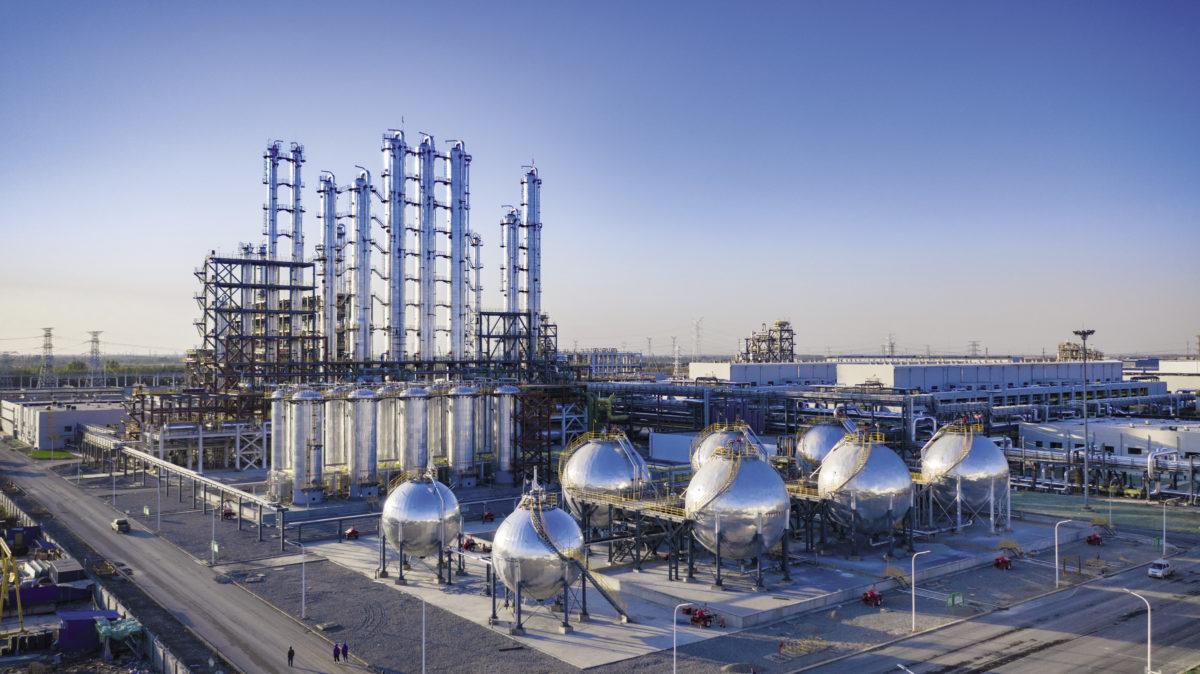
Daqo to Cut Polysilicon Output in 2025 Amid Market Oversupply

No comments
Daqo

Production Declines as Inventory Remains High and Utilization Drops

Daqo New Energy, a leading Chinese polysilicon producer, will significantly reduce its 2025 output due to prolonged market oversupply.
The company expects to produce 110,000–140,000 tons, down from 205,068 tons in 2024 and 197,831 tons in 2023.

In Q1 2025 alone, Daqo projects production of just 25,000–28,000 tons, sharply lower than 62,278 tons in Q1 2024.
This move comes as China's polysilicon output slows, with national production dropping below 100,000 tons per month.

Domestic inventory levels remain high at approximately 250,000 tons, even as wafer demand reaches around 45GW.
Daqo sold more than it produced in Q4 2024, delivering 42,191 tons against output of 34,236 tons to reduce inventory.

Market May See Short-Term Price Uptick in Q2

Despite the supply glut, Daqo forecasts a brief price rebound in the second quarter of 2025.
Tightened production, seasonal hydroelectric power costs, and upcoming regulations may drive prices higher.

Hydroelectricity costs are expected to stay high through May, limiting output to 90,000–100,000 t/month.
New policy measures from China’s National Development and Reform Commission and National Energy Administration may prompt short-term buying before mid-year.

However, the second half of 2025 may bring renewed price pressure as front-loaded demand subsides.

Utilization May Stay Low Despite Installed Capacity

Although China has about 2 million tons/year of installed polysilicon capacity, actual demand may hit only 1.4–1.6 million tons.
Thus, industry utilization could remain at 40–50% over the medium to long term, Daqo warned.

Polysilicon prices fell from $11.48/kg in 2023 to an average of $5.66/kg in 2024.
Daqo's Q4 selling price was $4.62/kg, down from $7.97/kg a year earlier.

Looking ahead, prices may stabilize at 37–40 yuan/kg ($5.08–5.49) for p-type polysilicon and 40–45 yuan/kg for n-type polysilicon.

Daqo to Slash Q3 Polysilicon Production Amid Market Price Drop

No comments

Chinese polysilicon producer Daqo New Energy plans to reduce its production in the third quarter of 2024 due to a continuing decline in polysilicon prices. This strategic decision aims to curb an oversupply in the market as the company adjusts its production targets and carries out necessary maintenance.

Lower Production Forecast and Falling Prices

Daqo projects a third-quarter production range of 43,000 to 46,000 tons, a significant reduction from the 64,961 tons produced in the second quarter and the 57,664 tons produced in the same period in 2023. The company also revised its full-year production estimate down to 210,000–220,000 tons, from an earlier forecast of 280,000–300,000 tons.

The drastic fall in polysilicon prices—below 40 yuan per kilogram (kg) by the end of May, from over 60 yuan/kg in early April—was a major factor in the company's decision. Daqo reported that industry-wide inventories increased, contributing to excess supply. By the end of June, total industry inventories had grown to over a month’s worth of production, up from 18–20 days in early April.

Industry-Wide Impact and Response

The industry as a whole saw a reduction in production, with China's polysilicon output dropping by 16% to 162,000 tons in June from 192,000 tons in April. Despite these cuts, supply still exceeded demand, with solar silicon wafer customers reducing their production rates to around 50 gigawatts (GW) in June.

Daqo's CEO, Xiang Xu, emphasized that while production cuts in July helped mitigate oversupply, a rebound in downstream demand will be critical to driving down inventory levels and stabilizing prices. China's solar panel installations reached 102.48 GW in the first half of 2024, reflecting a 30.7% year-over-year growth, offering some hope for recovery.

Future Consolidation and Production Improvements

Daqo expects industry consolidation as higher-cost producers struggle to remain competitive. "Many solar firms are facing significant cash flow challenges, delaying loan repayments and deliveries," Xu said. The China Photovoltaic Industry Association (CPIA) has called for coordinated efforts between governments, financial institutions, and companies to accelerate industry consolidation.

On the production front, Daqo has begun initial operations at its new 100,000-ton Phase 5B polysilicon plant in Inner Mongolia, which accounted for 12% of the company’s total output in the second quarter. Daqo’s combined production from its two facilities reached 64,961 tons, surpassing expectations.

Furthermore, the company has made strides in producing higher-quality N-type polysilicon, with 73% of its output in the second quarter meeting this standard. The Phase 5B facility achieved 70% N-type production and is on track to reach 100% by the end of 2025. The company also reduced production costs to $6.19/kg in the second quarter, a 3% decrease from the previous quarter.