Showing posts sorted by relevance for query Carpenter aerospace. Sort by date Show all posts

Carpenter aerospace demand set to rise as 737 MAX cap increases

No comments
Carpenter aerospace demand set to rise as 737 MAX cap increases
Carpenter Technology

Carpenter aerospace demand is poised to rise after the FAA lifted Boeing’s 737 MAX production cap. The higher build rate strengthens Carpenter aerospace demand across key jet engine and structural alloy grades. As a result, Carpenter aerospace demand should underpin a multi-year earnings and investment cycle for the specialty alloy producer.

737 MAX ramp unlocks stronger Carpenter aerospace demand

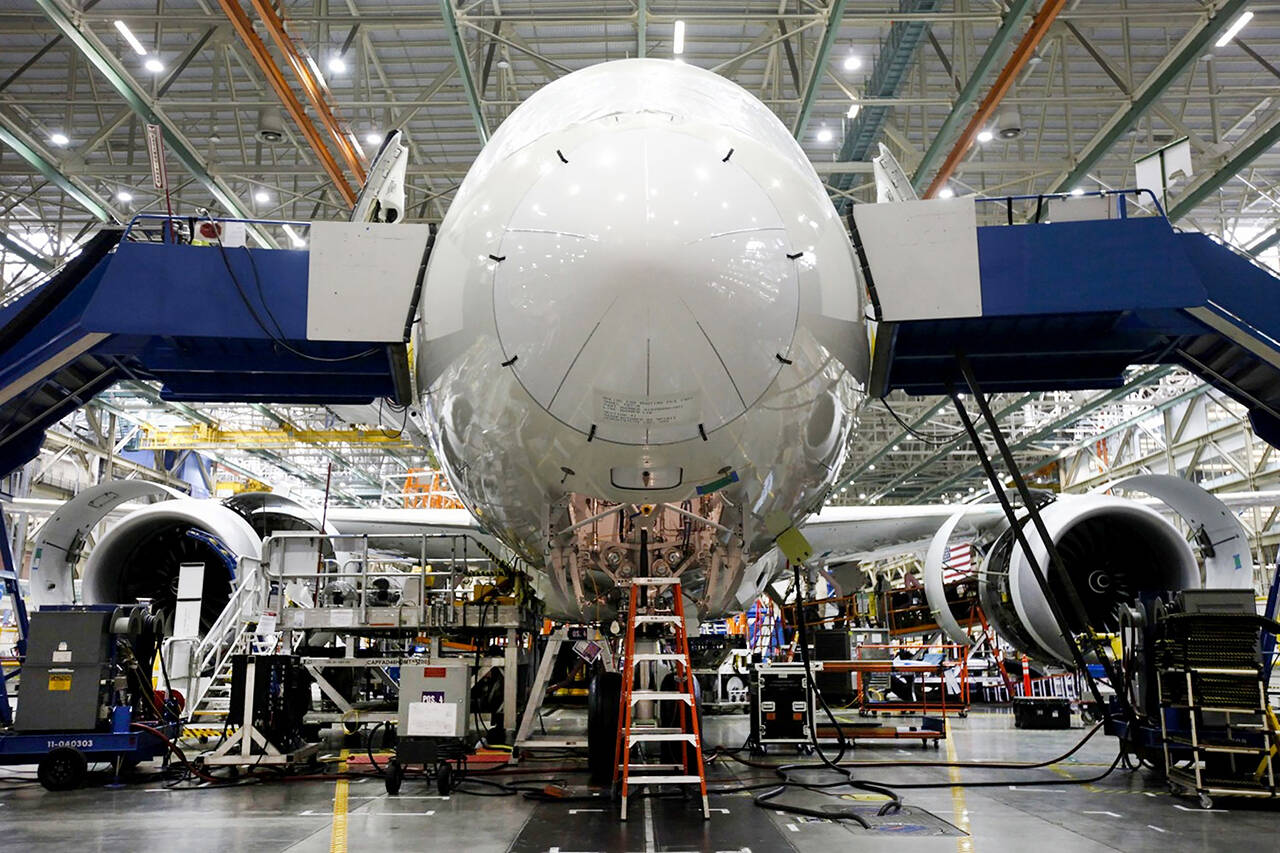
The FAA’s decision to raise the 737 MAX cap from 38 to 42 aircraft per month is a clear upside signal. Carpenter’s chief executive Tony Thene said the change is “a very significant positive” as customers move quickly to increase orders. Higher narrowbody build rates translate directly into more demand for nickel and titanium-rich alloys used in engines and critical structures.

Aerospace and defense already dominate the company’s revenue mix and will amplify Carpenter aerospace demand further. In the fiscal first quarter, aerospace and defense sales rose 11pc to $388.3mn and accounted for 64pc of total revenue. Bookings in the segment jumped 23pc quarter on quarter, supported by five large long-term agreements that lock in alloy volumes over several years.

Beyond aerospace, energy, industrial and consumer markets also contributed to growth, even as medical and transportation softened. Energy sales rose 8pc year on year to $42.5mn and industrial and consumer revenue increased 4pc to $75mn. These diversified end markets help stabilize earnings while Carpenter aerospace demand remains the main engine for margin expansion.

Melt capacity expansion supports multi-year aerospace growth

Carpenter plans to expand both primary and secondary melt capacity through brownfield projects. The company expects these investments to complete in 2027 and says work remains on budget and on schedule. Additional melting capacity will help relieve bottlenecks in high-value specialty alloys required by jet engine and defense customers.

Specialty alloys shipments fell 11pc year on year to 44.8mn lbs, highlighting current capacity tightness and product mix optimization. However, overall profit still surged 44pc to $122.5mn, showing the pricing power of aerospace-grade alloys. As new melt capacity comes online, Carpenter aerospace demand can convert more directly into volume growth rather than just price and mix gains.

Management continues to emphasize a “strong, multi-year outlook” for aerospace, defense, medical and power generation markets. The 737 MAX ramp, together with broader fleet renewal and engine upgrade programs, should keep Carpenter aerospace demand elevated well beyond this year. The company is positioning its footprint to support higher OEM build rates and long-term aftermarket needs.

The Metalnomist Commentary

Carpenter aerospace demand illustrates how incremental changes in OEM build caps can cascade through the alloy supply chain. The 737 MAX increase looks small in monthly units, but it drives multi-year demand for complex nickel and titanium-based products. For metals suppliers, the combination of locked-in contracts, melt expansion and tight aerospace specifications points to sustained pricing power, even if some industrial segments lag.

Carpenter Technologies Sees Strong Fiscal Performance and Continued Aerospace Demand Amid Market Uncertainty

No comments
Carpenter Technologies

Carpenter Technologies Exceeds Profit Expectations

Carpenter Technologies, a leading specialty alloy producer based in Pennsylvania, has reported strong fiscal performance, with annual earnings expected to reach the high end of the company's previous guidance. This positive outlook is attributed to improved productivity, optimization of product mix, and strong demand in its first fiscal quarter, which ended on September 30.

The company now projects its operating profits for the fiscal year ending June 2025 to trend close to the maximum of its guidance range of $460 million to $500 million, following a notable increase in quarterly shipments.

Q1 Shipment Growth and Strong Demand in Aerospace

In the first quarter, Carpenter shipped 51.57 million pounds of products, a slight increase from 50.23 million pounds during the same period last year. Shipments from its Specialty Alloys Operations (SAO) rose by just under 1%, reaching 50.1 million pounds. However, its Performance Engineered Products (PEP) segment experienced a robust 15% increase, with shipments reaching 2.6 million pounds, driven by high demand for titanium solutions.

The company’s overall backlog has also increased to $2 billion, reflecting the ongoing uncertainties in the aerospace market. Despite this, Carpenter Technologies remains optimistic about the long-term macroeconomic demand for aerospace materials, particularly titanium, which continues to fuel growth in the aerospace and defense sectors.

Positive Sales Growth in Aerospace and Defense

Carpenter's Specialty Alloys Operations (SAO) segment reported a 22% increase in sales to $645 million compared to the same period last year. Sales in the aerospace and defense sectors specifically saw a 34% boost, rising to $350 million from $261 million in 2023. The aerospace and defense sectors now represent nearly 49% of Carpenter's total sales, up from 40% a year ago.

In addition to aerospace and defense, the medical and energy markets also contributed to the company’s growth. While sales in the transportation, industrial, consumer, and distribution sectors declined, gains in medical and energy-related markets helped offset these losses.

Carpenter Technologies Reports Strong Quarterly Profits

Carpenter Technologies posted quarterly profits of $84.8 million, up significantly from $43.9 million in the same quarter of the previous year. This was achieved on revenues of $718 million, a notable increase from $652 million in Q1 of 2023.

With continued strong demand in aerospace, defense, and energy sectors, along with effective management of its product mix and production schedule, Carpenter Technologies remains well-positioned for strong performance in the upcoming quarters.

Carpenter Technology aerospace growth set to accelerate through FY2026

No comments
Carpenter Technology aerospace growth set to accelerate through FY2026
Carpenter Technology

Aerospace-led mix lifts earnings and margins

Carpenter Technology aerospace growth will drive a stronger FY2026. The company guides earnings to $660mn–$700mn, up 26–33pc. Management cites robust demand from aerospace and defense, medical, and power generation. However, it notes softer trends in industrial and consumer markets. Carpenter Technology aerospace growth already reshaped revenue mix toward higher-value alloys.

Order trends and product mix underpin outlook

Carpenter Technology aerospace growth reflects a 20pc rise in FY2025 A&D sales to $1.4bn. Quarterly A&D sales also rose 2pc to $383.8mn. The A&D market now contributes over 60pc of company revenue. Meanwhile, pounds sold in SAO declined 11pc to 186.3mn lbs. Lower volumes still supported higher margins through favorable mix and pricing discipline.

Cash generation strengthens despite volume headwinds

Profitability improved sharply on premium content. Full-year profit reached a record $376mn, nearly double last year. Energy sector sales also increased year over year. However, SAO quarterly pounds dropped 18pc to 46.9mn lbs. The company offsets volume pressure with price, mix, and operational efficiency. Therefore, management remains confident in FY2026 guidance.

The Metalnomist Commentary

Carpenter’s pivot toward high-spec aerospace and defense alloys continues to pay off. Mix, not tons, drives this cycle as airframe and engine content rises. Watch lead times, melt capacity, and forging bottlenecks, which could further support pricing into FY2026.

Carpenter 737 MAX demand set to jump after FAA cap increase

No comments
Carpenter 737 MAX demand set to jump after FAA cap increase
Carpenter Technology

Carpenter 737 MAX demand will rise as Boeing’s cap moves to 42 per month. Carpenter 737 MAX demand benefits from stronger aerospace bookings. Therefore, Carpenter 737 MAX demand should lift revenues and melt utilization.

Order momentum builds across aerospace and defense

Carpenter reports accelerating orders after the FAA’s decision. Bookings in aerospace and defense rose 23% quarter over quarter. The segment delivered $388.3mn, up 11% year over year. It represented 64% of total revenue in the quarter. Meanwhile, management signed five large long-term agreements. Profit reached $122.5mn, up 44% from last year. However, specialty alloys shipments fell 11% to 44.8mn lbs. Even so, brownfield melt expansions remain on budget for 2027.

The Metalnomist Commentary

Boeing’s 737 MAX cadence supports Carpenter’s long-cycle visibility. Yet mix shifts and medical softness could temper margin upside. Watch melt ramp timing, forgings bottlenecks, and contract pricing through 2027.

Carpenter Prioritizes Profit, Reduces Alloy Sales

No comments
Carpenter Technology

Carpenter Technology sold fewer alloys in its fiscal second quarter, focusing on higher-profit aerospace markets. This strategic shift led to nearly doubled profits despite reduced sales volumes.

Profit-Driven Sales Strategy Impacts Volumes

Alloy sales across all segments reached 46.2mn lb, down from 49.1mn lb year-on-year. The specialty alloys segment saw a 5.4mn lb decline, totaling 44.7mn lb. However, profits nearly doubled to $84.1mn. This reflects the company's focus on high-margin aerospace and medical products over lower-margin transportation and industrial products. CEO Tony Thene emphasized, "I am not trying to maximize tons. I'm trying to maximize profit." Aerospace sales rose to $334mn from $247mn, while other end-market sales declined.

Future Profit Growth and Capacity Utilization

Furthermore, Carpenter forecasts profits of $126mn-134mn for the fiscal third quarter, a 77pc year-on-year increase. This growth is expected from the performance engineered products segment, including Dynamet titanium, additives, Latrobe, and Mexican distribution. Carpenter plans to maintain 100pc capacity utilization, citing Boeing and Airbus build rate expectations. The company anticipates increased volumes over the next two years, driven by sustained aerospace demand.

Carpenter Technology's 4Q Alloy Profits More Than Double

No comments

Carpenter Technology, a Pennsylvania-based alloy producer, has reported a substantial increase in profits for the fourth fiscal quarter, driven by robust sales in aerospace, defense, and medical-end use markets. The company's profits surged to $93.6 million, more than doubling from $38.4 million in the same period last year. Sales rose to $798.7 million from $758.1 million a year earlier.

Aerospace and defense sales soared by 28% to $376.3 million, excluding surcharge revenues, while medical-end use market sales jumped 38% to $91.7 million. However, industrial and consumer sales declined by 15.4% to $82.8 million, and transportation sales dropped 32.2% to $26.6 million.

Carpenter sold 57.2 million pounds of specialty alloys, a decrease of 7.3% from 61.5 million pounds a year earlier. Despite this, specialty alloy sales rose by 16.2% to $715.8 million. Performance engineered product volumes were down by 15.3% to 2.9 million pounds, but segment sales increased by 8.2% to $111.2 million.

For the fiscal year 2024, Carpenter posted $2.8 billion in sales and $186.5 million in profits, compared to $2.6 billion in sales and $56.4 million in profits in 2023. The aerospace, defense, and medical-end markets were the company's top performers.

Looking ahead, Carpenter expects strong results in the first quarter of 2025 due to increased productivity, product mix improvements, and pricing actions.


Boeing Raises 2025 Titanium Demand Forecast Amid Aircraft Production and Certification Challenges

No comments
Boeing Ti

Aerospace giant Boeing has announced an anticipated increase in titanium purchases for 2025, signaling stronger demand despite ongoing labor strikes and challenges with its 737 Max and 787 Dreamliner programs. The Virginia-based company aims to secure higher titanium supply levels to support a planned production ramp-up for these aircraft, even as output on the 737 Max has been temporarily halted due to a labor stoppage in the Pacific Northwest.

Jeff Carpenter, Boeing's senior director of contracts, sourcing, and category management, addressed delegates at the International Titanium Association (ITA) conference in Austin, noting that Boeing has "signaled increased buys to all the mills" for 2025, though exact figures were not disclosed. Boeing’s increased demand reflects its goal of sustaining production rates while mitigating potential supply chain disruptions, including parts shortages and federally mandated output caps.

Titanium Requirements: Rising Demand in Aerospace

Boeing has long relied on titanium for its aircraft structures due to its lightweight yet durable properties, essential for both the narrow-body 737 Max and the wide-body 787 Dreamliner. While the 737 Max uses less titanium—under 10% by weight—the larger 787 comprises approximately 15% titanium, making it a major driver of Boeing’s titanium needs. As the company sets its sights on producing 50 737s per month by 2025-26 and 10 787s per month by 2026, demand for the metal is expected to climb.

In preparation for these ambitious production targets, Boeing has been addressing supply chain bottlenecks, including expanding its supplier base and considering new sourcing strategies. Efforts to localize operations may streamline the titanium supply chain and reduce dependency on overseas forgers, cutting lead times and enhancing production efficiency. Part of this localization includes increased purchases of intermediate titanium forms like slab, which can help Boeing better meet its titanium requirements for future builds.

Heightened Scrutiny on Certification and Quality Control

Alongside its production goals, Boeing is also calling for more rigorous industry standards in titanium certification following recent findings of fraudulent documentation in some titanium parts. This year, aviation regulators in the U.S. and Europe launched an investigation into titanium parts previously verified with improper documentation. Although Boeing stressed that the quality of the titanium itself is not in question, the company is strengthening oversight to avoid risks associated with sourcing strategies outside its established network.

Carpenter urged suppliers at the ITA conference to prioritize diligence in material sourcing and conform to tighter certification standards. Boeing plans to increase inspections and bolster certification training for its distributors, aiming to ensure high-quality material tracking and maintain safety standards.

TITANIUM USA 2025: Global Titanium Hub Convenes in Boston

No comments
TITANIUM USA 2025: Global Titanium Hub Convenes in Boston
TITANIUM USA 2025

TITANIUM USA 2025 brought the titanium industry to Boston for three days of high-level exchange. Hosted by the International Titanium Association, TITANIUM USA 2025 gathered producers, processors, distributors, and end-users. Attendees used TITANIUM USA 2025 to network, share technology, and advance titanium supply chains.

Program showcases technology and networking

The conference delivered general sessions, workshops, and receptions across two days. Exhibitors and delegates held hundreds of business meetings on site. As a result, companies aligned on projects spanning aerospace, defense, and medical applications.

ITA anchors global collaboration and education

The ITA has connected buyers and technical experts since 1984. It promotes research, metallurgy, design, and engineering across the titanium value chain. Therefore, the association continues to build skills from shop floor to C-suite through publications and seminars.

Leading titanium companies underscored market depth in Boston. Timet, ATI, Carpenter Technology, and Perryman participated alongside technology firms. Meanwhile, STS Metals and IperionX highlighted innovations for high-performance components.

Titanium’s properties drive persistent cross-sector demand. High strength-to-weight ratios and corrosion resistance suit extreme environments. Consequently, titanium remains strategic for aircraft engines, implants, and industrial systems.

The Metalnomist Commentary

Boston’s gathering reinforced titanium’s role in mission-critical supply chains. Expect tighter partnerships between producers and OEMs as qualification needs rise. Education and process innovation will remain decisive differentiators in 2026 planning cycles.