Showing posts sorted by relevance for query Latin American lithium. Sort by date Show all posts

Rio Tinto Chosen as Codelco Lithium Partner in Chile's Maricunga

No comments
Rio Tinto Chosen as Codelco Lithium Partner in Chile's Maricunga
Codelco

Chilean state miner Codelco has selected Rio Tinto as its strategic partner to develop lithium in the high-grade Salar de Maricunga basin. The newly announced joint venture marks a significant milestone for Chile’s lithium roadmap, positioning the Rio Tinto Codelco lithium partnership as a key force in one of the world’s richest brine regions. The agreement grants Rio Tinto a 49.99% stake, with Codelco holding 50.01% and leading the development.

$350 Million Investment Sets Stage for DLE Breakthrough

Under the terms of the deal, Codelco will contribute mining rights and fund feasibility studies, while Rio Tinto will initially invest $350 million in further resource analysis. If the project advances, the Australian miner has committed another $500 million to construct a direct lithium extraction (DLE) plant by the decade’s end. An additional $50 million will be invested if lithium is commercially shipped before 31 December 2030. The Rio Tinto Codelco lithium partnership aims to commercialize Maricunga as Chile’s second lithium-producing salt flat after Salar de Atacama, where Codelco also now holds licenses.

Chile Reinforces Public-Private Lithium Model

This partnership aligns with Chile’s national lithium strategy, which mandates Special Lithium Operating Contracts (CEOLs) under public-private frameworks. Since 2023, all lithium reserves are state-owned, and any development requires government participation and profit-sharing. The Rio Tinto-Codelco project represents one of three concessions awarded recently, following community approval from nearby indigenous groups. The Rio Tinto Codelco lithium partnership also signals growing trust in DLE technology and a potential shift in how Latin American lithium assets are developed.

The Metalnomist Commentary

The Rio Tinto-Codelco lithium alliance reflects a global trend: pairing major miners with national resource holders in strategic battery material projects. With political backing, high-grade resources, and DLE innovation, Maricunga could become South America's next lithium flagship.

ABM and XTC Lithium Join Forces on Argentina’s Carachi Lithium Project

No comments
ABM and XTC Lithium Join Forces on Argentina’s Carachi Lithium Project
ABM

New partnership signals US-Australia collaboration to unlock critical lithium resources in South America

ABM Secures Option to Acquire 50% Stake in Carachi Lithium Project

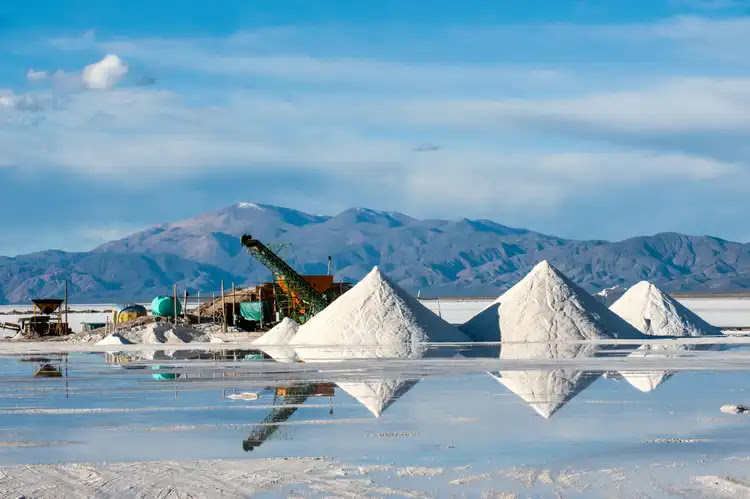
American Battery Materials (ABM) and XTC Lithium have signed a non-binding agreement on Argentina’s Carachi Lithium Project. The partnership gives ABM the option to acquire up to a 50% interest in the project. ABM can form a joint venture once it secures a 10% stake.

The Carachi project is located in Argentina’s Catamarca Province, a region known for rich lithium brine deposits. The deal marks an early-stage collaboration between the US and Australian developers in a key critical materials hotspot. As lithium demand surges, access to Argentine salars becomes increasingly strategic for global battery supply chains.

XTC Expands Footprint Through Caroline Lithium Acquisition

XTC Lithium controls 21.9 km² of lithium assets through its acquisition of Caroline Lithium. This property includes the Carachi project, which now becomes a joint development opportunity. ABM’s entrance reflects growing investor interest in securing long-term lithium supply from Latin America.

Meanwhile, the non-binding nature of the agreement leaves flexibility for both firms to define next steps. This may include detailed exploration plans, resource estimation, and permitting processes in coming quarters. Industry watchers view such early partnerships as necessary to scale projects quickly in competitive jurisdictions.

Strategic Lithium Alliances Gain Momentum

As a result of tightening global lithium supply, cross-border alliances are gaining momentum. US firms are especially active in Argentina, seeking to diversify supply chains away from Asia. With lithium designated a critical mineral by the US government, projects like Carachi are closely watched.

The ABM-XTC deal represents another step in realigning the lithium industry for the energy transition. With careful execution, the Carachi project could become a vital node in the Western Hemisphere’s lithium map.

The Metalnomist Commentary

Strategic cooperation between American and Australian lithium players in Argentina points to growing urgency for regional lithium independence. If realized, Carachi could play a small but meaningful role in easing pressure on global battery supply chains.

Namibia Approves SQM’s $40M Lithium Investment in Lithium Ridge Project

No comments
Sociedad Química y Minera(SQM)

Chile’s SQM Joins Andrada to Accelerate Namibia’s Critical Mineral Development

Namibia’s Competition Commission (NaCC) has officially approved the strategic partnership between Chile’s SQM (Sociedad Química y Minera de Chile) and Namibia-based Andrada Mining, granting the final green light for the development of the Lithium Ridge project. This regulatory clearance paves the way for SQM to acquire up to a 50% stake in the project by fully funding up to $40 million in exploration activities and the completion of a definitive feasibility study (DFS).

Lithium Ridge Positioned as Key Regional Critical Minerals Asset

Located in Namibia’s Erongo region, Lithium Ridge contains pegmatites rich in lithium, tin, and tantalum, all of which are essential for electric vehicles (EVs), battery energy storage systems (BESS), and advanced electronics. With surging global demand for these materials, the project is positioned to become a strategic asset in Africa’s growing critical minerals economy.

The collaboration gives SQM access to high-grade mineral assets outside its traditional Latin American base, while Andrada gains global expertise and the financial backing necessary to scale development. Together, the companies aim to unlock the full value of Lithium Ridge and establish Namibia as a stable and significant supplier in the battery supply chain.

Namibia’s Role Grows in the Global Energy Transition

This deal comes as governments and industries increasingly look to diversify raw material sourcing amid geopolitical uncertainty. SQM’s planned investment and operational involvement reflect both confidence in Namibia’s regulatory framework and recognition of the country’s vast untapped mineral potential.

For Andrada Mining, the partnership is also a validation of its long-term strategy to lead in Namibian critical raw materials development. As SQM and Andrada move forward, the Lithium Ridge project is expected to deliver regional economic benefits while supplying global markets with responsibly sourced lithium and associated metals.

Brazil Critical Minerals Deals With US Highlight Rare Earths and Lithium Strategy

No comments
Brazil Critical Minerals Deals With US Highlight Rare Earths and Lithium Strategy
Brazil Critical Minerals Deals

Brazil critical minerals deals with the US are gaining momentum as Goias and Minas Gerais move to deepen cooperation on rare earths, lithium, and other strategic minerals. The two neighboring states hold some of Brazil’s most important mineral reserves and are trying to position themselves inside the global critical minerals supply chain.

Goias has signed a preliminary agreement with the US to support cooperation around rare earth reserve development. Minas Gerais is also preparing a similar agreement focused on lithium and other critical minerals.

Brazil critical minerals deals at the state level are not legally binding and do not grant exploration rights. However, they can support research, technical training, environmental licensing coordination, and tax incentives for foreign companies.

Goias and Minas Gerais Push Beyond Raw Mineral Exports

Goias is seeking to use US cooperation to improve mineral mapping, technical capability, and project development. The state wants to move beyond raw mineral exports and build stronger capacity around higher-value mineral development.

This ambition matters because Brazil has major resource potential but remains cautious about becoming only a supplier of unprocessed critical minerals. Rare earths, lithium, and other strategic materials carry far greater industrial value when linked to processing, refining, separation, and downstream manufacturing.

Minas Gerais adds another strategic layer because it holds Brazil’s largest lithium reserves. Together, Goias and Minas Gerais could become important partners for the US as Washington looks to diversify supply chains away from China-dominated critical mineral processing.

State-Level Diplomacy Pressures Brazil’s Federal Strategy

Brazil critical minerals deals with individual states also carry political weight. Goias and Minas Gerais are led by governors more aligned with the Trump administration than Brazil’s federal government, creating a possible pressure point in national trade negotiations.

President Luiz Inácio Lula da Silva has resisted any agreement that does not include commitments to develop processing and refining capacity inside Brazil. That position reflects a wider industrial policy concern: Brazil wants mineral value creation, not only mineral extraction.

The US has already signed critical minerals agreements with several Latin American countries, including lithium producers Chile, Bolivia, and Argentina, as well as copper-rich Ecuador and Peru. Brazil remains a tougher negotiator because it has the resource base, market size, and political incentive to demand more domestic value addition.

The Metalnomist Commentary

Brazil critical minerals deals show that resource diplomacy is moving from national capitals to state governments. The central question is whether Brazil can turn US interest into processing, refining, and industrial capacity rather than another raw-material export cycle.

Canadian Solar Battery Storage Guidance Jumps 21% on Data Center Demand

No comments
Canadian Solar Battery Storage Guidance Jumps 21% on Data Center Demand
Canadian Solar

Canadian Solar battery storage shipments guidance for 2025 surged 21% as the renewable energy company capitalizes on growing demand from data centers and cryptocurrency mining operations. The company now expects utility-scale battery energy storage system (BESS) deliveries to reach 7-9 GWh in 2025, reflecting strong market fundamentals despite challenging industry conditions.

Data Centers Drive Battery Storage Market Growth

Canadian Solar battery storage business benefits from accelerating digitalization trends requiring reliable backup power solutions. Data centers and cryptocurrency mining facilities increasingly demand large-scale energy storage to ensure operational continuity and manage power costs. The company's revised guidance includes approximately 1 GWh designated for its own renewable energy projects.

Meanwhile, Canadian Solar secured a significant contract with Chilean utility Colbún in April. The deal involves supplying a 228MW/912MWh lithium iron phosphate BESS in Chile's Atacama Region. This project demonstrates the company's ability to compete for major utility-scale installations in key Latin American markets.

Industry Headwinds Impact Financial Performance

However, Canadian Solar faces mounting challenges affecting profitability across its operations. Geopolitical uncertainty reduces business visibility while oversupply and fierce competition pressure margins throughout the renewable energy sector. These factors contributed to deteriorating financial results in the first quarter.

Therefore, the company reported a $76.6 million net loss in Q1 2025, contrasting sharply with $36.2 million net income in the prior year period. Seasonally lower BESS sales and trade-related duties further compressed margins during the quarter.

Q2 Recovery Expected Despite Market Pressures

Canadian Solar battery storage shipments totaled 0.8 GWh in Q1 but management expects significant improvement ahead. The company projects 2.4-2.6 GWh in BESS deliveries during the second quarter, indicating strong sequential growth momentum.
As a result, Canadian Solar positions itself to benefit from structural demand growth in energy storage markets. The company's focus on utility-scale projects and strategic partnerships with major utilities supports its optimistic 2025 outlook despite near-term profitability challenges.

The Metalnomist Commentary

Canadian Solar's upgraded BESS guidance reflects the energy storage sector's rapid evolution driven by digital infrastructure expansion and grid modernization needs. While the company navigates challenging market conditions including oversupply and trade tensions, its strategic positioning in high-growth segments like data center storage creates compelling long-term value propositions for investors and industry stakeholders.