Showing posts sorted by relevance for query Kaiser. Sort by date Show all posts

Kaiser Aluminum Shipments Forecast Rises on Aerospace and Packaging Demand

No comments
Kaiser Aluminum Shipments Forecast Rises on Aerospace and Packaging Demand
Kaiser Aluminum

Kaiser Aluminum shipments forecast has been raised for 2026 as stronger aerospace, packaging and general engineering demand supports the US semi-fabricated aluminum producer. The company lifted its full-year outlook after first-quarter sales volumes rose by 6.8% year on year to 294mn lb.

Kaiser Aluminum shipments forecast improvement reflects a stronger order environment across several higher-value end markets. Aerospace and packaging deliveries led the increase, while improved manufacturing efficiency also supported the company’s outlook.

Kaiser Aluminum shipments forecast also points to a broader recovery in selected US aluminum demand channels. Commercial aircraft production targets, defence spending, packaging product mix and reshoring-related activity are all supporting shipment expectations.

The company’s quarterly profit nearly tripled to $63mn, while revenue rose by 42% to $1.1bn. The result shows how stronger volumes, better margins and end-market positioning can improve performance for downstream aluminum manufacturers.

Aerospace and Packaging Drive Higher Shipment Guidance

Kaiser now expects aerospace sales volumes to rise by 15-20% this year from 2025 levels. The company had previously expected growth of 10-15%.

The stronger aerospace outlook reflects higher production targets from commercial aircraft manufacturers and the end of some industry destocking. Kaiser reported solid aerospace bookings and shipments in the first quarter.

First-quarter aerospace shipments rose by 9.2% year on year to nearly 62mn lb. The increase shows that demand for aerospace aluminum products is strengthening as aircraft production plans recover.

However, original equipment manufacturers have been slower to reduce some aluminum plate inventories compared with other semi-finished products. This suggests aerospace demand is improving, but inventory normalisation remains uneven across product categories.

Reduced aluminum imports also supported Kaiser’s aerospace outlook. The company pointed to market share gains as US buyers increasingly seek domestic or more secure supply sources.

Defence demand provided another lift. Kaiser said demand for some defence-related products had quadrupled compared with earlier expectations of smaller gains.

Packaging is also improving. Kaiser now expects 2026 packaging shipments to rise by 10-15% from 2025, compared with its previous forecast of 5-10% growth.

First-quarter packaging deliveries rose by nearly 13% to almost 147mn lb. The company is benefiting from its strategic shift toward higher-margin coated products, including lid stock for beverage cans.

The ramp-up of Kaiser’s fourth coating line at its Warrick rolling mill in Newburgh, Indiana, remains important to this strategy. The new line advanced in the quarter, although the company cited persistent challenges involving on-time deliveries and broader performance concerns from certain converters.

Kaiser plans to operate the new coating line at 80% capacity utilisation before moving to full rates. This measured approach reflects the company’s focus on meeting customer commitments after delivery delays in recent years.

General Engineering Improves While Automotive Remains Cautious

Kaiser also raised expectations for general engineering shipments. The company now expects full-year volumes to rise by 5-10% over 2025, compared with earlier guidance of 3-5%.

The improvement reflects customer restocking after inventory drawdowns. Order activity has increased, particularly for plate products used in semiconductor production.

Tariff-related reshoring also supported the updated outlook. As customers reassess supply chains, domestic aluminum plate and engineered products can benefit from efforts to reduce import exposure.

First-quarter general engineering shipments still fell by 1.5% year on year to 64mn lb. This shows that recovery is still developing and depends on restocking and downstream project activity.

Automotive remains more cautious. Kaiser now expects automotive extrusion deliveries to be flat to down 5% from 2025, better than the previous expectation of a 5-10% decline.

First-quarter automotive extrusion deliveries fell by 7.5% to 22mn lb. High borrowing costs and tariff-related uncertainty continue to weigh on broader automotive sentiment.

Still, demand for light trucks and SUVs remains healthy. This supports consumption of Kaiser’s aluminum products because these vehicle categories often use aluminum components for weight reduction and performance.

The company has two major plant outages planned this year for equipment repairs and upgrades. It is also reviewing plans to expand production capacity for aluminum driveshafts.

Kaiser’s revised outlook shows a more selective aluminum market. Aerospace, defence, packaging and semiconductor-linked engineering demand are improving, while automotive remains exposed to consumer financing conditions and tariff uncertainty.

For the US aluminum value chain, the result reinforces the importance of higher-value semi-fabricated products. Demand is strongest where aluminum supports aircraft production, packaging efficiency, defence systems, semiconductor equipment and reshored manufacturing.

The Metalnomist Commentary

Kaiser’s raised guidance shows that US aluminum demand is improving in high-value sectors rather than across the entire market. Aerospace, packaging and semiconductor-linked plate are carrying the upside, while automotive remains the main weak point.

Kaiser Aluminum Shipments Set to Rise in 2026 as Aerospace and Packaging Demand Improve

No comments
Kaiser Aluminum Shipments Set to Rise in 2026 as Aerospace and Packaging Demand Improve
Kaiser Aluminum

Kaiser Aluminum shipments are expected to rise in 2026 as the US semi-fabricated aluminum producer benefits from stronger demand in aerospace, packaging, and general engineering markets. The outlook signals a recovery phase after Kaiser Aluminum shipments fell in 2025 because of market pressure and operational challenges tied to expansion projects.

The company reported 2025 sales volumes of 1.1bn lbs, down 5.5pc from the previous year. However, Kaiser now expects shipment growth in three of its four major product groups. The strongest gains are expected in aerospace and high-strength products, where aircraft build-rate targets and inventory normalization could support a sharper rebound.

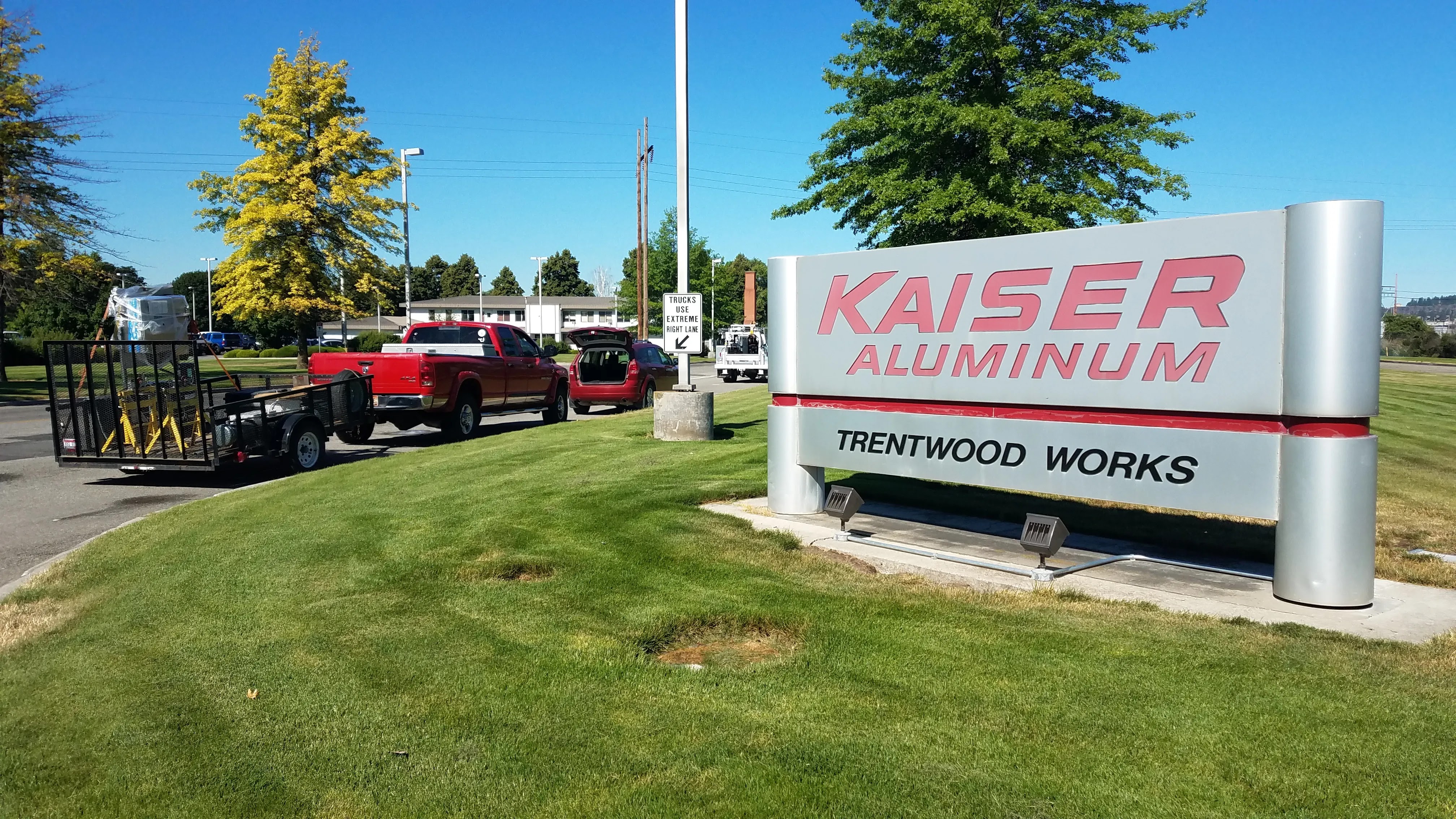
Kaiser Aluminum shipments will also benefit from new capacity investments at key facilities. The company is ramping up a coating line at the Warrick rolling mill in Indiana and has expanded heat-treatment capabilities at Trentwood in Washington. These investments position Kaiser to capture higher-margin demand in packaging and aerospace aluminum products.

Aerospace and Packaging Drive the 2026 Recovery

Aerospace and high-strength aluminum shipments are expected to rise by 10-15pc in 2026. This reflects stronger demand from airframers and expectations that OEM aluminum plate inventories will normalize by the end of the year. The recovery is important because Kaiser’s aerospace and high-strength volumes fell 16pc in 2025 to 205mn lbs.

The Trentwood rolling mill will play a central role in meeting that demand. Kaiser expanded heat-treatment capacity there in the second half of 2025, giving the company more ability to serve aerospace customers that require qualified, high-performance aluminum plate. In aerospace, capacity is valuable only when it meets strict technical and certification requirements.

Packaging is also expected to recover. Kaiser forecasts 5-10pc shipment growth in 2026 as the Warrick coating line ramps to full production. Packaging volumes fell 5.4pc in 2025 to nearly 561mn lbs, but the new coating line supports Kaiser’s move into higher-margin packaging products.

Reshoring Supports General Engineering While Automotive Slows

General engineering shipments are expected to grow by 3-5pc in 2026 as customers restock and tariff-driven reshoring activity supports domestic demand. The segment already showed resilience in 2025, with shipments rising 8.2pc to nearly 243mn lbs. Products such as plate, slab, bar, and tube remain tied to broader industrial activity and manufacturing investment.

Automotive extrusions will be the main weak spot in 2026. Kaiser expects volumes to decline by 5-10pc because select facilities will be taken down for retooling and capacity additions. The near-term decline therefore reflects planned investment rather than a simple demand collapse.

The automotive mix is also shifting in Kaiser’s favor over the longer term. The company said stronger production of light trucks and SUVs with internal combustion engines has increased demand for its products faster than expected. Even so, 2025 automotive extrusion shipments fell 5.9pc to 95mn lbs as elevated interest rates and tariff-related customer uncertainty weighed on the sector.

The Metalnomist Commentary

Kaiser’s 2026 outlook shows that downstream aluminum recovery depends on targeted capacity, not broad market growth alone. Aerospace qualification, packaging upgrades, and reshoring-linked industrial demand could become more important than headline aluminum prices for semi-fabricated producers.

Kaiser Aluminum Faces 2024 Shipment Declines Amid Sector Disruptions

No comments
Kaiser Aluminum

Labor strikes and sector-specific demand shifts disrupt Kaiser Aluminum’s packaging, aerospace, and automotive shipments.

Kaiser Aluminum experienced a decline in total aluminum product shipments in 2024 due to major supply chain disruptions and shifting sector demand. The company’s full-year shipment volume fell to 1.17 billion lbs, down from 1.2 billion lbs in 2023. This decrease was largely attributed to a slump in the packaging sector, which holds the largest volume share in Kaiser’s product mix.

Packaging demand weakened significantly in the first half of the year. This reflected a correction from previous pandemic-related stockpiling. However, in a positive development, fourth-quarter shipments rose 9% year-on-year to 153 million lbs, hinting at potential recovery in 2025.

Sector-Specific Disruptions Drove Declines

Kaiser’s aerospace shipments fell by 9 million lbs to 245 million lbs in 2024. Notably, Q4 deliveries dropped to 60 million lbs, from 68 million lbs in the same period of 2023. The decline coincided with a labor strike by the International Association of Machinists and Aerospace Workers, which disrupted production from mid-September to early November.

In the automotive segment, a United Auto Workers strike that began on September 15 reduced extrusion demand. Full-year automotive shipments fell 3% to 101 million lbs, with Q4 volumes declining 8% to 22 million lbs. This marked another significant impact on overall performance.

General Engineering Remains a Bright Spot

Despite downturns in other areas, general engineering shipments increased 6% to 289 million lbs in 2024. Growth was recorded across all quarters, supported by strong demand for plate, sheet, bar, and tube products. This sector became a rare source of resilience in Kaiser’s portfolio.

The company expects further growth in 2025, citing upcoming shipments from its new roll line at the Warrick, Indiana plant, set to start in Q2 and reach full capacity by H2 2025.

Revenue and Profit Trends Reflect Operational Challenges

Despite shipment pressures, Kaiser posted quarterly revenue growth of 6% to $765 million. However, quarterly profit declined by over 12% to $7 million. Full-year revenue was $3.02 billion, down 2%, and net profit dropped 7% to $41 million.

While general engineering offers a path forward, Kaiser’s reliance on cyclical sectors and vulnerability to labor disputes highlight ongoing risks. The company’s 2025 performance will largely depend on demand stabilization and the success of its Indiana expansion.

Kaiser Aluminum 2024 Shipments Fall on Supply Disruptions and Labor Strikes

No comments
Kaiser Aluminum

Packaging, Aerospace, and Automotive Volumes Drop Despite General Engineering Gains

Company Targets Recovery with New Warrick Roll Line in 2025

Kaiser Aluminum experienced a decline in aluminum product shipments in 2024 as supply chain bottlenecks, labor strikes, and shifting demand patterns disrupted major end markets. The company shipped 1.17 billion lbs of aluminum products, down from 1.2 billion lbs in 2023. Weaker demand from the packaging sector, which holds the largest share of Kaiser’s portfolio, was the primary driver of the decline.

Sector-Specific Headwinds Weigh on Results

Disruptions in 2024 reduced shipments to the packaging, aerospace, and automotive sectors. Packaging demand dropped sharply in the first half, reflecting a correction after pandemic-driven highs and destocking in prior years. Fourth-quarter packaging shipments rebounded, rising 9% year-on-year to 153 million lbs, and Kaiser expects this momentum to carry into 2025.

A strike by the International Association of Machinists and Aerospace Workers from September to November severely impacted aerospace output. Aerospace shipments fell by around 9 million lbs to 245 million lbs for the year, with Q4 showing the sharpest drop.

Similarly, a United Auto Workers strike reduced automotive extrusion shipments by 3% annually to 101 million lbs, with Q4 shipments declining 8% year-on-year.

General Engineering Provides Stability Amid Volatility

The general engineering sector was the lone bright spot, recording a 6% increase in deliveries to 289 million lbs in 2024. Shipments of plate, sheet, bar, and tube grew across all quarters, partially offsetting declines elsewhere.

Kaiser reported a 2% drop in annual revenue to $3.02 billion and a 7% decrease in profit to $41 million for the year. In Q4, sales rose 6% to $765 million, but quarterly profit fell over 12% to $7 million.

Looking ahead, Kaiser is banking on the ramp-up of its new roll line at Warrick, Indiana, which will begin shipments in Q2 2025 and is set to reach full production by the second half.

Kaiser Reports Steady Outlook and Shipments for 2024

No comments
Kaiser Aluminum

Kaiser Aluminum, a leading aluminum roller based in Tennessee, has maintained its outlook for total 2024 shipments, despite flat third-quarter shipments and earnings. The company has projected that demand will remain consistent with previous expectations through the end of the year, but it remains cautious due to ongoing commercial and labor negotiations with its aerospace and high-strength applications customers.

In its general engineering sector, Kaiser Aluminum has destocked its long products and is now shipping products in line with market demand. Although the company did not make strong forecasts for 2025, it highlighted that about 70% of the capacity at its new coating line at the Warrick mill is already contracted.

For the third quarter of 2024, Kaiser Aluminum reported shipments across all sectors of 292 million pounds, a slight decline from the 299 million pounds reported in the same period of 2023. Despite the decrease in shipments, the company reported a profit of $12 million, up from $5 million in the third quarter of the previous year.

Kaiser’s consistent performance in the face of challenges underscores its resilience in the global aluminum market, even amid uncertainties in the aerospace sector and labor negotiations.

Kaiser Aluminum Appoints Keith Harvey as Chairman, Kimberly Glas Joins Board

No comments
Kaiser Aluminum

Kaiser Aluminum, a Tennessee-based rolling mill, has announced the appointment of its current president and chief executive officer, Keith Harvey, as the new chairman of the board of directors, effective January 1st.  Harvey's appointment follows the retirement of Jack Hockema, the former chairman of the board.

New Director Appointed to Board

In addition to Harvey's appointment, Kaiser Aluminum has also named Kimberly Glas as a new director.  Glas will fill the vacancy on the board created by Harvey's transition to the chairman role.  Kimberly Glas currently serves as the president and chief executive officer of the National Council of Textile Organizations.

US Magnesium bankruptcy exposes fragility in US primary magnesium supply

No comments
US Magnesium bankruptcy exposes fragility in US primary magnesium supply
US Magnesium

The US Magnesium bankruptcy marks a major blow to US primary magnesium supply. Filed under Chapter 11 in Delaware, the US Magnesium bankruptcy covers an estimated $100mn–500mn in liabilities. The US Magnesium bankruptcy follows legal rulings over failed deliveries to Kaiser Aluminum Warrick. As a result, the collapse threatens domestic supply from America’s only commercial-scale primary magnesium producer.

Court ruling and force majeure set stage for US Magnesium bankruptcy

A recent court ruling played a central role in triggering the US Magnesium bankruptcy. In August, a court ordered US Magnesium to reimburse Kaiser Aluminum Warrick $55mn for higher magnesium costs. The award included an additional $12.9mn in interest linked to missed contractual deliveries. However, the operational stress began earlier, when US Magnesium declared force majeure in September 2021. That decision later forced Kaiser to declare force majeure at its Warrick rolling mill in July 2022.

These cascading disruptions reveal how concentrated the US magnesium supply chain had become. When the sole producer faltered, downstream rolling and alloy operations had few alternative sources. Therefore, contractual penalties and higher replacement costs quickly translated into mounting financial liabilities.

US Magnesium bankruptcy leaves strategic gap in domestic supply

The US Magnesium bankruptcy removes America’s only commercial-scale primary magnesium producer from the market, at least temporarily. US Magnesium produced primary metal, lithium carbonate and other chemical products from Great Salt Lake brines. Its closure risks deeper import dependence for lightweight alloys used in automotive, aerospace and defense. Meanwhile, lithium carbonate and specialty chemical customers must now reassess sourcing and inventory strategies.

US policymakers have highlighted magnesium as a critical input for aluminum rolling and casting. However, domestic primary capacity now effectively sits in Chapter 11 restructuring. As a result, buyers will lean harder on imports, potentially from jurisdictions with higher geopolitical or ESG risk. Price volatility could increase if logistics disruptions or trade measures limit available supply.

The bankruptcy process may ultimately restructure US Magnesium rather than eliminate the asset base entirely. Creditors and potential buyers will evaluate whether operations at the Great Salt Lake remain economically viable. Therefore, the Chapter 11 outcome will shape how quickly any domestic primary magnesium capacity can return.

The Metalnomist Commentary

US Magnesium’s collapse highlights the risks of single-point dependence for metals with specialised production routes. For aluminum producers and alloy users, diversifying supply and investing in recycling now look less optional and more urgent. Investors should also note how legal liabilities from failed deliveries can cascade into full-scale restructuring when markets tighten.